The first customer arrived before Wei-Shin Lai had finished the website. She and her husband, Jason Wolfe, had made a headband with speakers inside and put it online. They had barely opened the door. Someone had already walked through it, wallet in hand.
Lai asked how he had found them. He had searched for “SleepPhones.” The name seemed to him a reasonable description of what he wanted, and there they were. It is an appealingly literal beginning for a business: a stranger typed a wish into a search box and discovered that a couple in Pennsylvania had been sewing it.
That was the beginning of the commercial story. The habit behind it was older. Lai has been making things for people close to her since childhood. A game for her brother. Headphones for herself. Much later, a book for her daughter. Her projects tend to begin at the point where an existing object becomes tiresome enough to deserve a redesign.
A household with gadgets in it
Lai was born in Taiwan and came to the United States at seven, while her father pursued a doctorate in electrical engineering at the University of Tennessee. Electronics were part of the household scenery. Her parents encouraged mathematics, science, and programming; the tools for making something were never entirely foreign objects.
She learned algebra at ten and was programming in BASIC by eleven. She competed in piano, led science clubs, and published stories in Mandarin. There is something pleasing about that combination: the orderly demands of code alongside the freedom of making up a story. Both require someone to decide what happens next.
In middle school, she made a computer game to help her younger brother with mathematics and spelling. It was a small audience, even by the standards of a young programmer. It also supplied something valuable: a particular person whose needs she understood. Years before there was a company to run, there was already somebody to make things for.
The eventual partnership with Wolfe brought another maker into the picture. He was a video game developer. When the couple began AcousticSheep in 2007, they had their own jobs, a shared kitchen table, and a product that joined fabric to electronics. The equipment was modest. The division of labor was wonderfully clear: he soldered; she sewed.
One kitchen table. Two sets of skills.
The version that was easier for the wrong person
The design was straightforward to describe: thin speakers tucked into a soft, stretchy headband, so a person could listen while lying down. Making a description into an object, however, meant cutting, stitching, assembling, and discovering everything the description had left out. The couple made the first 500 pairs themselves. They sold out within their first year.
One revision exposed a problem that will be familiar to anyone who has tried to make a repetitive job quicker. The second version was easier to sew. Unfortunately, it was harder for customers to use. An improvement at the kitchen table had become a nuisance at the other end of the transaction.
Lai abandoned that version and hired a local factory to sew the headbands. She had found a limit to doing everything personally. The solution required accepting that somebody else could take over the sewing, leaving her free to think about the product and the company. A business can outgrow its founder's hands well before it outgrows her house.
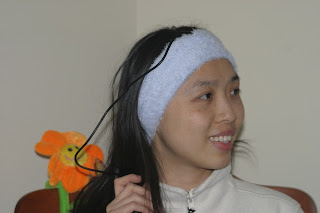
Her early working methods left a remarkably tangible record. In October 2009, she described photographing products in a homemade light box, editing the images on a Windows 98 computer, and making an instruction brochure on a MacBook. The miniature studio, the old computer, the brochure: a new company still meant learning several jobs that afternoon.
The same month's writing weighed Amazon's usefulness against its fees and payment timetable. It was an inventory of practical trade-offs from someone learning retail while participating in it. Finding customers mattered; so did knowing when their money would arrive. There was little room for treating either question as somebody else's department.
Eventually, boxes spread through the home, reaching even the bedroom. Lai and Wolfe had started with an object that fitted around a person's head and ended up with a business that occupied whole rooms. “It was taking over our house,” she recalled. The sentence contains both the excitement and the storage problem.
A company with an Erie address
For roughly six years, AcousticSheep remained a home operation. By the time the couple decided to expand, they had sold 100,000 pieces. They hired their first full-time employee and established a warehouse in Erie. The kitchen table had done its job. Other tables would now be required.
Erie was connected to family: Wolfe had grown up in the area. It was also connected to a purpose the couple had discussed, bringing technology jobs to the city. Lai's ambition had a geographical address. Building something people could buy around the world could also mean creating work near home.
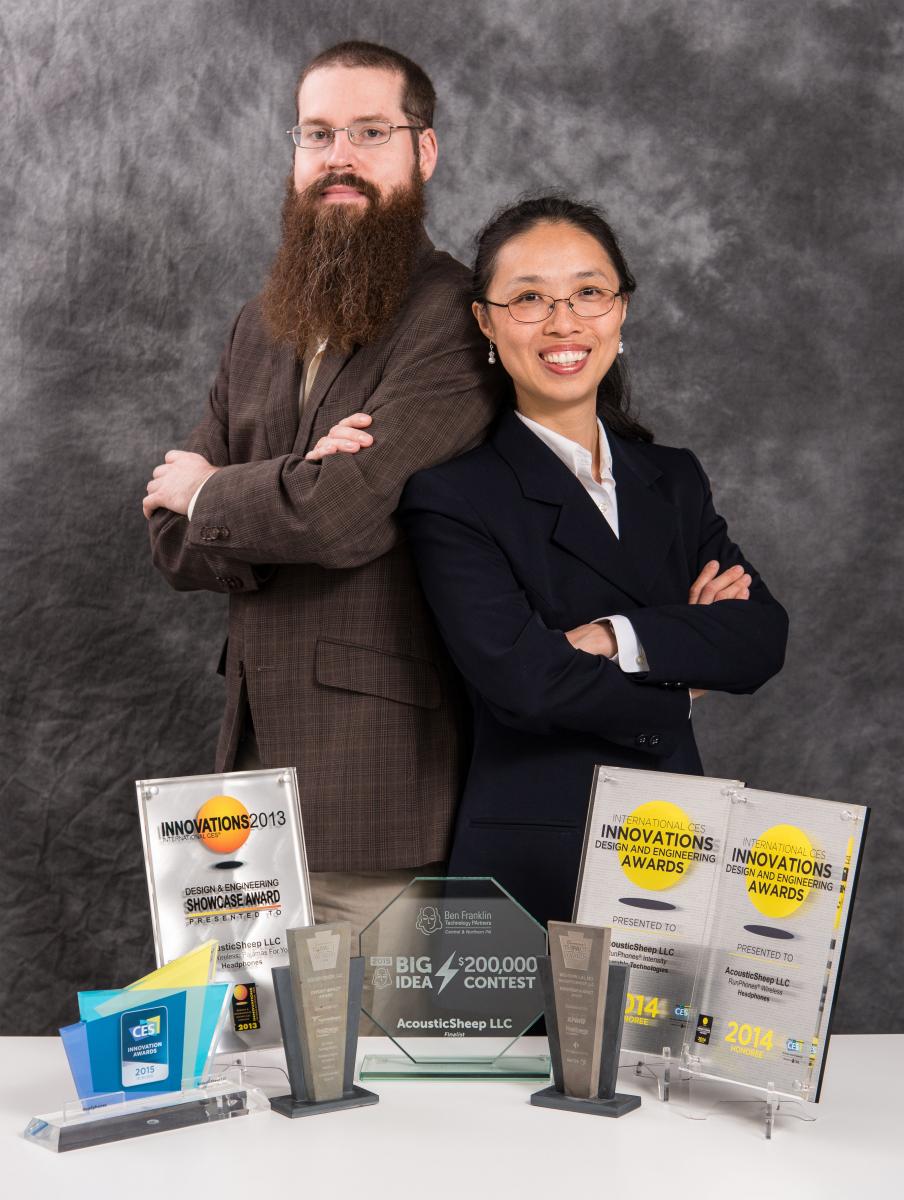
In 2016, she was named Pennsylvania Small Business Person of the Year by the U.S. Small Business Administration. AcousticSheep had received the Consumer Technology Association's Small Business of the Year recognition in 2015. Such titles can sound remote from a sewing machine. Here, they marked the distance between a household experiment and an employer with an expanding market.
International orders brought a less photogenic challenge: getting paid. Some overseas customers defaulted. In 2017, the company began using export credit insurance through the Export-Import Bank of the United States, allowing it to offer terms to distributors with protection against nonpayment.
By 2020, exports accounted for about a quarter of sales, and AcousticSheep had 25 employees. That year, the company received an EXIM Exporter of the Year award. The figures belong to that moment in its history, but they reveal an important part of Lai's work: making a product travel also meant making the transaction dependable.
The international reach continued. By November 2024, SleepPhones had logged millions of sales to more than 80 countries, even reaching Antarctica. A headband is an unusually portable ambassador for a Pennsylvania business. It requires rather less luggage than most trade delegations.
Making room for other people's ideas
The company also worked with Penn State Behrend students on Harmony, a software project involving personalized audio. Eleven students contributed over two years, across engineering, marketing, and digital media. Three became full-time employees. For a business rooted in two people's practical skills, the next stage involved giving other people work substantial enough to learn from.
The students helped with software development and with explaining what the finished product offered. Lai praised the value they brought and the chance to provide experience and employment. The arrangement connected the company's newer ambitions to the same city where it shipped its physical products.
Family, meanwhile, remained part of the working day. Lai has described taking her young son to interviews, brainstorming sessions, networking dinners, and meetings with lawyers. He sometimes sat quietly eating Cheerios. It is a useful corrective to the spotless boardroom photograph: somebody has to bring the small person, and somebody has to bring the cereal.
Her account of the arrangement was practical. Bringing him along could make scheduling easier, although it did not always go perfectly. She also argued for hiring help when needed and respecting the work involved in raising a child. The business and the household had overlapping calendars; pretending otherwise would not make either run more smoothly.
Away from those calendars, Lai's interests have included gardening, archery, swimming, and hunting wild mushrooms. She and Wolfe have grown unusual vegetables and belonged to the Central Pennsylvania Mushroom Club. By 2024, that list had expanded to school volunteering, balloon animals, glitter tattoos, and face painting. There are many ways to be the person who makes things happen at an event.
The next customer wanted a chess trophy
In January 2025, Lai introduced a project with no speakers in it. Her five-year-old daughter wanted to win a chess trophy. Recording moves added a handwriting task to the business of playing. Lai made a scorebook in which a young player could circle printed pieces and coordinates.
AcousticSheep announced a Kickstarter campaign for the book, with a $4,000 goal and plans for printing through Eifrig Publishing. By then, Lai said, her daughter had achieved the original ambition and won a trophy. An extremely small product-development committee had returned a favorable verdict.
The finished design paid attention to details an adult might overlook. Different games have different page colors, making them easier to find. The paper is thick, the covers sturdy, and the binding sits at the top. There is space for notes, stickers, or doodles. A child gets to be a child while keeping a record of the game.
“Chess is great game, and making it more accessible to everyone is my goal.”
Wei-Shin Lai, on her scorebook project
The book holds 12 games, with room for 60 moves each. It is now listed in the company's online store, alongside the products that began with solder and thread. The connection is easy to see: Lai noticed an awkward task, watched the person doing it, and changed the object within reach.
Her daughter had wanted a trophy. Years earlier, a stranger had wanted something he could find by typing “SleepPhones.” Between those two customers sits a company, a warehouse, and a great deal of work. Lai's attention keeps returning to the moment before all of that, when somebody is trying to do something ordinary and the available equipment is getting in the way.
Follow the thread
More of Lai's work, conversations, and early business writing.
Meet Lai at AcousticSheep ↗Wei-Shin Lai on LinkedIn ↗From the notebook: her 2009 business blog ↗Inside the chess scorebook ↗Watch: Lai and Wolfe in conversation with Insivia ↗AcousticSheep's 2020 export award ↗The Penn State Behrend collaboration ↗