A better car stereo begins with an awkward question: where, exactly, is it going to fit? Roger Alves built a business around the space between the equipment people wanted and the vehicles they already owned. In 1980, he and his wife, Scotia, started Scosche in their Southern California garage. Their early work was automotive audio consulting. Before the phone mounts and charging accessories, there was the patient business of understanding a dashboard.
The garage is an appealing place to begin a company history. It supplies a small room and leaves plenty of room for ambition. In the Alves story, however, the useful detail is what happened inside the business: research, instructions, installation accessories and the accounts that kept the whole enterprise moving. Roger and Scotia started together. As the company expanded, other members of their family arrived to do different jobs.
Today Roger remains CEO, with sons Kasidy and Vince as co-presidents. The company operates across the United States, Canada, Asia and Europe. Its headquarters remain in Ventura County. The distance from that first garage can be measured in products and markets, but the family photographs offer another measure. People who once belonged to the next generation now stand beside him at the booth.
The encyclopedia before the empire
One of Scosche’s early undertakings was the Autosound Encyclopedia, a reference work for the car-audio trade. A consultancy that explained installation had a natural reason to publish instructions. The business began with knowledge that other people could use, including installers trying to make equipment fit and work properly.
Its early clients included Alpine and Kenwood. Scosche then began developing its own dash kits, the hardware used when a vehicle’s original audio head unit is replaced with an aftermarket unit. A new stereo is the part a buyer gets excited about. The surrounding kit has the quieter responsibility of making the purchase belong in the car.
In 1984, Scosche received its first patent for a General Motors dash kit. That date matters because it marks a concrete step from advice into proprietary hardware. Roger and Scotia were selling a way to complete the installation, as well as information about how to do it. The work put their company alongside both the equipment manufacturer and the person holding the tools.
The range widened. In 1990 came EFX, a line of power distribution blocks, terminals, wire and connectors. These were practical components in the same world of automotive sound. Collectively, the early products describe a business comfortable with the parts that sit between more conspicuous purchases. The installation was full of work worth doing.
- 1980Roger + Scotia
start Scosche - 1984First dash-kit
patent - 1995Kas joins
the business - 2000Vince joins
the business - 2018Ryder joins
the business
The sons arrive with different luggage
Kas joined in 1995 and helped take Scosche into a different part of the electronics shop. SOUNDKASE offered CD and DVD storage cases, visor organizers and backpacks. The line could sell through the company’s existing automotive retail relationships while also opening a route into consumer electronics.
The products were different, but there was a recognizable connection. Music still needed somewhere to go. A storage case solved a different problem from a dash kit, yet both belonged to the customer’s everyday relationship with audio. The company’s Australian history describes SOUNDKASE as a turning point in its diversification.
Vince joined in 2000, working with his older brother on consumer technology products, key accounts and the car-audio sales team. The two arrivals came five years apart. Their responsibilities involved product development and relationships with buyers, giving the next generation identifiable work within the business.
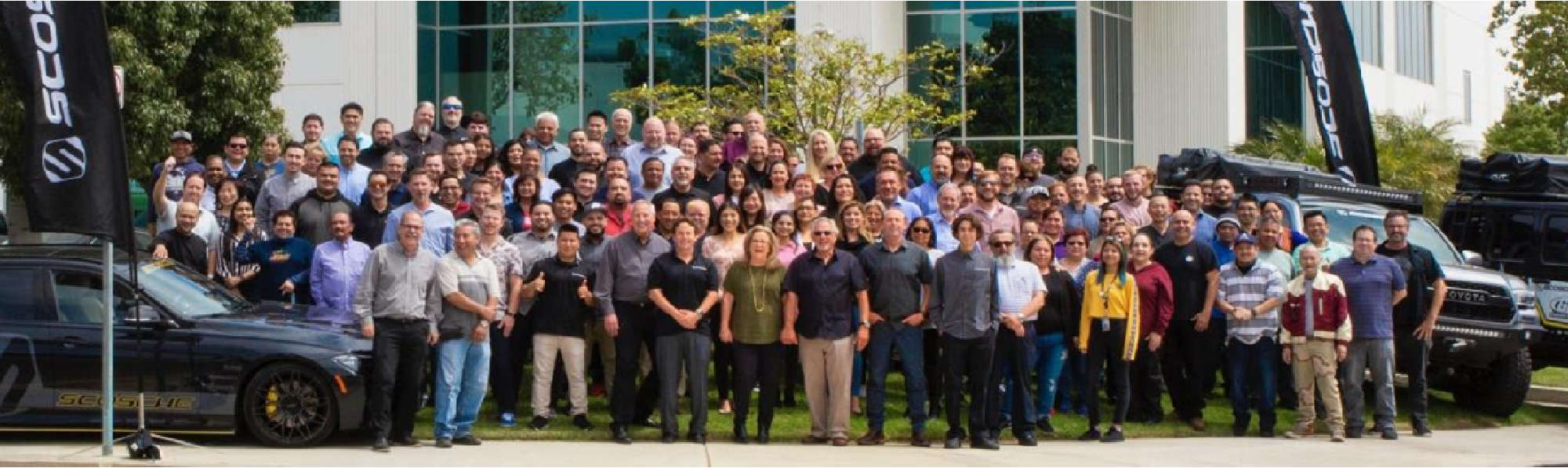
By 2020, the company was marking forty years and describing a catalog of more than 3,000 products. Its accessories included modular charging equipment, wireless charging mounts and dash cameras. Roger’s original field had widened considerably. A company that began by helping audio equipment settle into cars was now addressing the many devices people carried into them.
A name on the drawings
Roger also appears in the technical record. A US application filed in July 2006 names him and Jack DeBiasio as inventors of a wireless media source designed to communicate with devices on a vehicle’s data bus. The proposal addressed getting audio from a portable player into the vehicle’s existing system, with control through the car’s radio equipment.
Another 2006 application names Roger alongside Nathan Perkins and Jeremy C. Prater. It concerns converting a vehicle sound system from an installed source to a portable one. The problem remains recognizable to anyone who has wanted their music to travel with them, even as the equipment used to carry it changes.
In 2011, Roger and Mark Larson were named on an application for a solar-powered wireless speakerphone with stored power for charging external devices. Solar charging, wireless communication and supplying power to another device appeared together in the proposal. These published applications record specific ideas and named collaborators; they do not, by themselves, establish a commercial product’s success.
Across those records, the practical questions keep returning: how should devices communicate, how should existing equipment accommodate something new, and where should the power come from? Those questions connect Roger’s technical work to the installation business he helped establish.
The collaborators matter, too. DeBiasio, Perkins, Prater and Larson appear beside Roger on different proposals. The records give those people names and their work a defined subject. For a company associated so closely with one family, they provide a useful view of invention as shared work. A surname can identify the business without accounting for everyone who contributes to it.
When the arithmetic turned hostile
In September 2019, Roger gave a much less festive account of running Scosche. He described tariff costs, production changes and the difficulty of passing higher expenses to retailers. Most of the company’s product design and development happened in the United States, he wrote, while manufacturing depended heavily on China.
He said the company had moved production of key items to other countries and discontinued certain models. Retailers, meanwhile, had contractual time to implement price increases. A higher import bill could reach Scosche before a higher selling price reached the accounts. His account put the pressure inside the business, where timing mattered as much as the headline rate.
There were other difficult choices about how products reached customers. A dealer letter signed by Roger in 2018 restricted sales of consumer technology products through online marketplaces. It also described limited exceptions for certain installation products needing technical support. The company was drawing rules around its distribution relationships, including which sellers could offer which products and where.
These episodes belong beside the anniversary photographs. The founder’s job continued through pricing disputes, retailer negotiations and decisions about the sales network. A longer product catalog brought more relationships to manage.
“Scosche would not be the company it is today without the dedication and commitment from our employees.”
Roger Alves, on the company’s 28th anniversary, 2008
Three generations, one booth
At the SEMA and AAPEX shows in Las Vegas in 2018, Roger appeared with his sons and grandson Ryder. It was Scosche’s twenty-third year exhibiting at SEMA. Ryder had joined that year, working in marketing and video editing. The family’s newer skills included explaining and showing the products as well as designing and selling them.
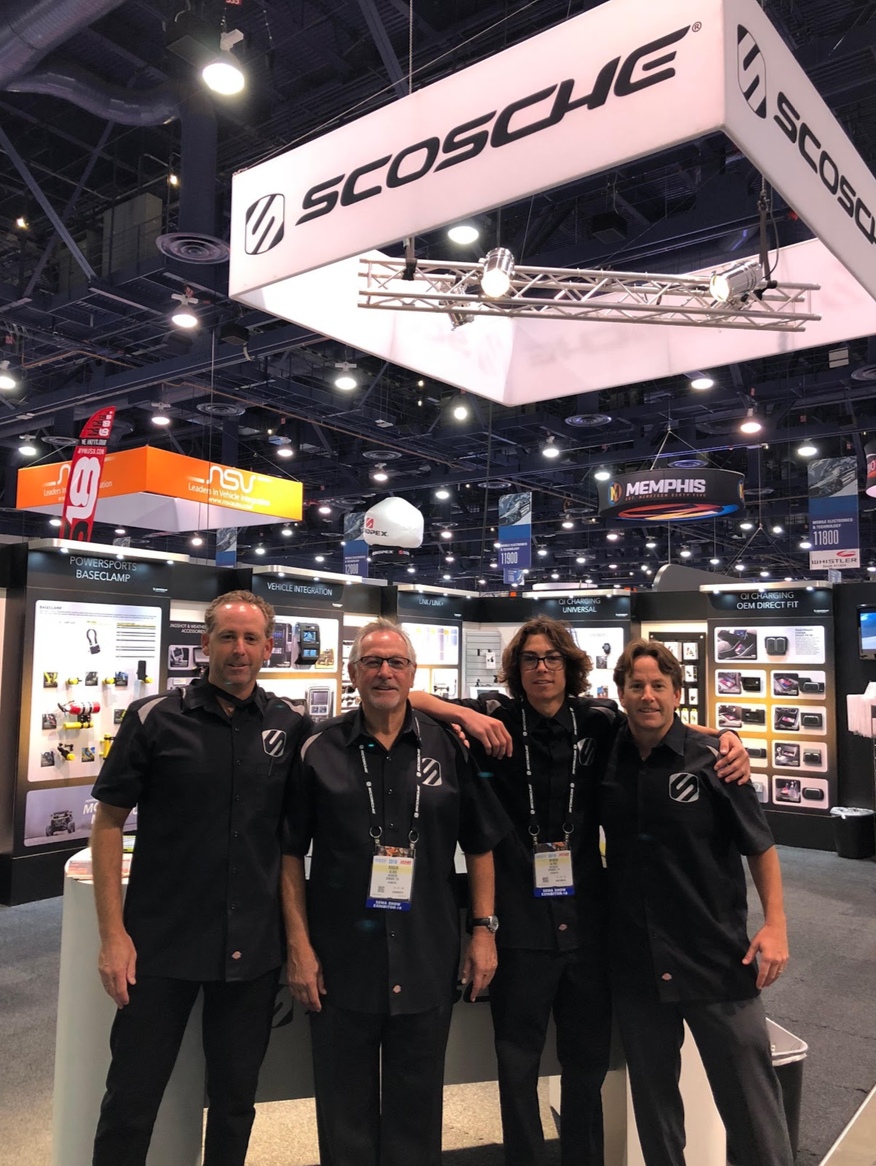
Roger used the occasion to compare the early dash kits, priced around five dollars, with sophisticated integrated kits costing upwards of around five hundred dollars. The comparison described how much the vehicle itself had changed. Installing equipment now meant accommodating more complicated systems, with products to match.
He also looked ahead to Ryder developing products for autonomous vehicles. It was a grandfather’s stated hope for the future, rather than an announced program. His pleasure in the next generation’s work was already visible in his comments about his sons running the company as it approached forty years.
In May 2021, Roger and Vince appeared together on The BAM School Podcast. Their forty-one-minute conversation was presented as a discussion of business’s ups and downs and the faith supporting them. Father and son had another setting in which to tell the company’s story together.
The family connection also reaches beyond the office. Scosche identifies Roger and Scotia’s granddaughters Skylar and Pfeiffer as rodeo ambassadors. Their activities belong to another part of the company’s public life, where relatives appear as people who use and represent the brand. Ryder’s marketing work, his cousins’ ambassador roles and the generation before him in management give the phrase family business several different meanings.
The books came on holiday
Roger’s public tribute to Scotia supplies a particularly useful detail about the early years: even a weekend away could involve finishing the company books in the hotel. She handled invoicing and proofreading, then took on further administrative work as Scosche grew. He credited her with the company’s emphasis on family and its principles of collaboration, cooperation and communication.
That memory gives the garage story its working hours. The business had invoices to send, instructions to check and accounts to finish before the founders could go out. Roger’s acknowledgment keeps Scotia’s contribution in view alongside the products. The partnership that began Scosche remains part of how he tells its history.
Scosche’s 2026 fleet catalog still names Roger as CEO beside Vince and Kas as co-presidents, with Ryder identified as a photographer and videographer. The roles have changed since 1980, as have the devices the company serves. The business has found room for another generation’s work while retaining the people who began it. For Roger, the family photograph remains a picture of colleagues, too.
Further reading & listening
Meet Scosche Company history ↗Roger’s tribute to Scotia Shared on LinkedIn ↗Three generations at SEMA THE SHOP · 2018 ↗Tariffs Could Tear Apart My Family Business Roger Alves · 2019 ↗Scosche at twenty-eight eCoustics · 2008 ↗Roger & Vince on The BAM School Podcast 41 minutes · 2021 ↗Wireless vehicle audio application Technical record ↗Installed-to-portable audio application Technical record ↗Solar speakerphone application Technical record ↗From car audio to consumer technology Scosche history ↗Forty years of Scosche 12VoltNews · 2020 ↗2018 dealer letter Signed by Roger Alves · PDF ↗Scosche’s channels: LinkedIn · Instagram · YouTube · X · Facebook · TikTok