An appliance can look perfectly reasonable until you try to wash it. Then the little openings, concealed corners and stubborn fittings begin to express opinions. Dr. Hyung Joo Kim encountered that problem at home. He bought humidifiers, used them, and found that taking care of them was far more difficult than it ought to be. Eventually, buying another one ceased to feel like an answer.
That familiar irritation became the starting point for Carepod. Kim, its founder and inventor, wanted a household object whose inside received the same attention as its outside. The result centred on removable components and a stainless-steel interior. It is a modest-sounding brief with a demanding consequence: somebody has to reconsider how the whole object goes together.
There is something pleasingly domestic about this beginning. A humidifier does not usually invite a career change. It occupies a table, makes mist, and waits for someone to refill it. Yet Kim saw a design problem in the work it left for its owner. His invention story begins at the point where most of us sigh, fetch a sponge, and carry on.
A complaint with useful dimensions
Kim’s account starts with the products he brought into his own household. Their maintenance frustrated him enough to look beyond the next purchase. He also discussed his experience with neighbours and professional peers. The problem had an audience before the proposed solution had a brand.
Consider the difference between a complaint and a design requirement. “This is annoying” is an excellent opening line for a conversation and a rather incomplete instruction to a manufacturer. A requirement has to become physical. Which component comes out? Where can a hand reach? What happens when the owner needs to put everything back?
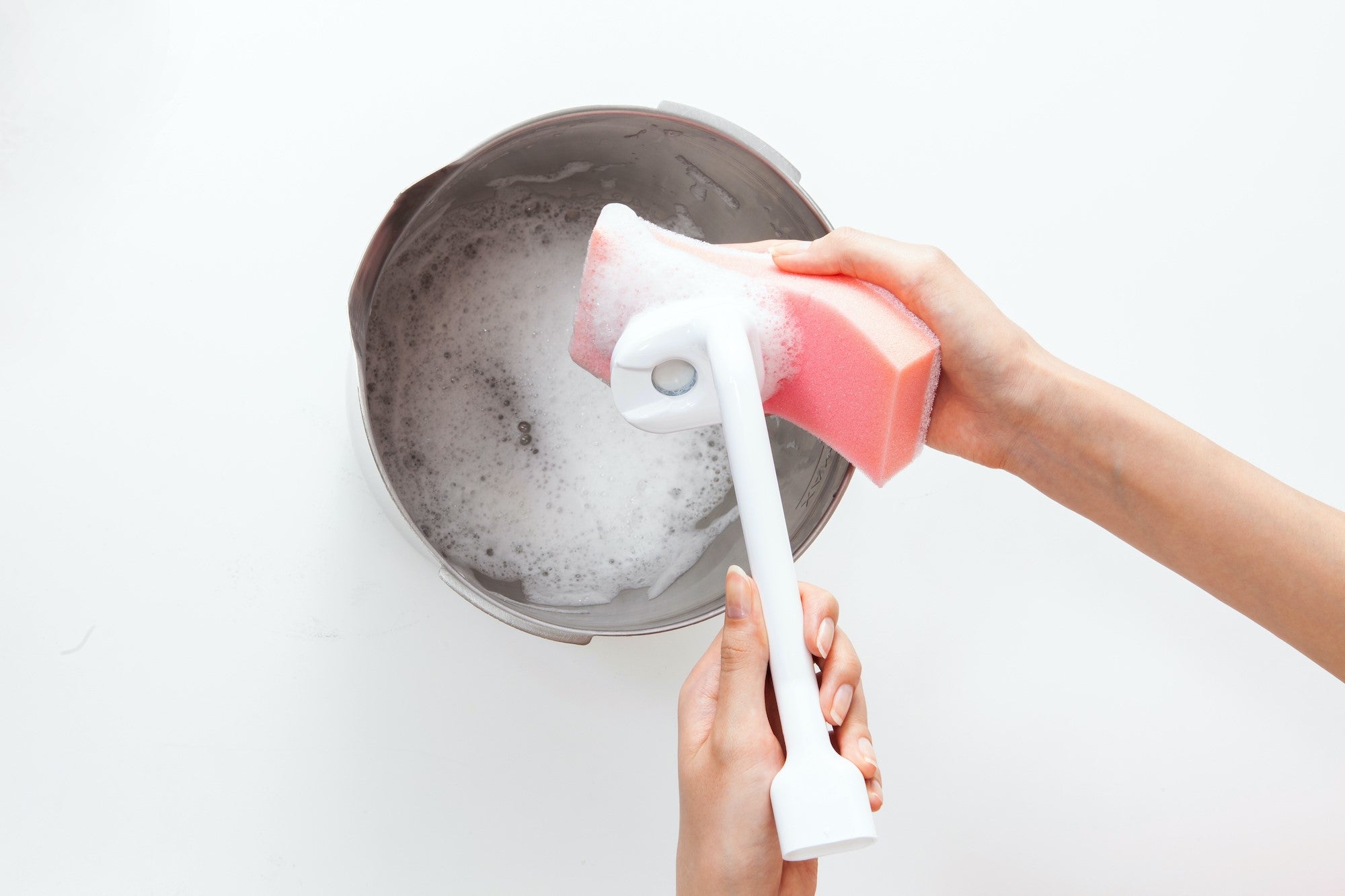
Carepod’s answer gave the tank, lid and oscillator accessible roles in that routine. Stainless steel became a defining material inside the appliance. Those decisions made the owner’s next encounter with the object part of the invention itself. The product had to be usable during the unphotogenic interval between being switched off and being switched on again.
For a founder, that is a useful kind of specificity. The problem can be demonstrated rather than merely described. Lift a component. Show the interior. Put it back. The explanation has something to do with the customer’s hands, which are a demanding audience: they have little patience for a slogan when a fitting refuses to cooperate.
The other hands in the room
Kim developed his initial design and worked with a design firm and a manufacturer to turn the idea into products. This is an important part of his career as an inventor. An observation can be personal; a manufactured object requires agreement among people who understand different aspects of making it.
The design credits give those collaborators names. Red Dot’s record for the CarePod Cube X40 lists manufacturer Health&Bio and JEI Design Works, including Hyunwoo Jo and Kyeongil Ohn. The iF record also identifies JEI Design Works. Kim belongs at the beginning of the story, and the designers belong in its telling.
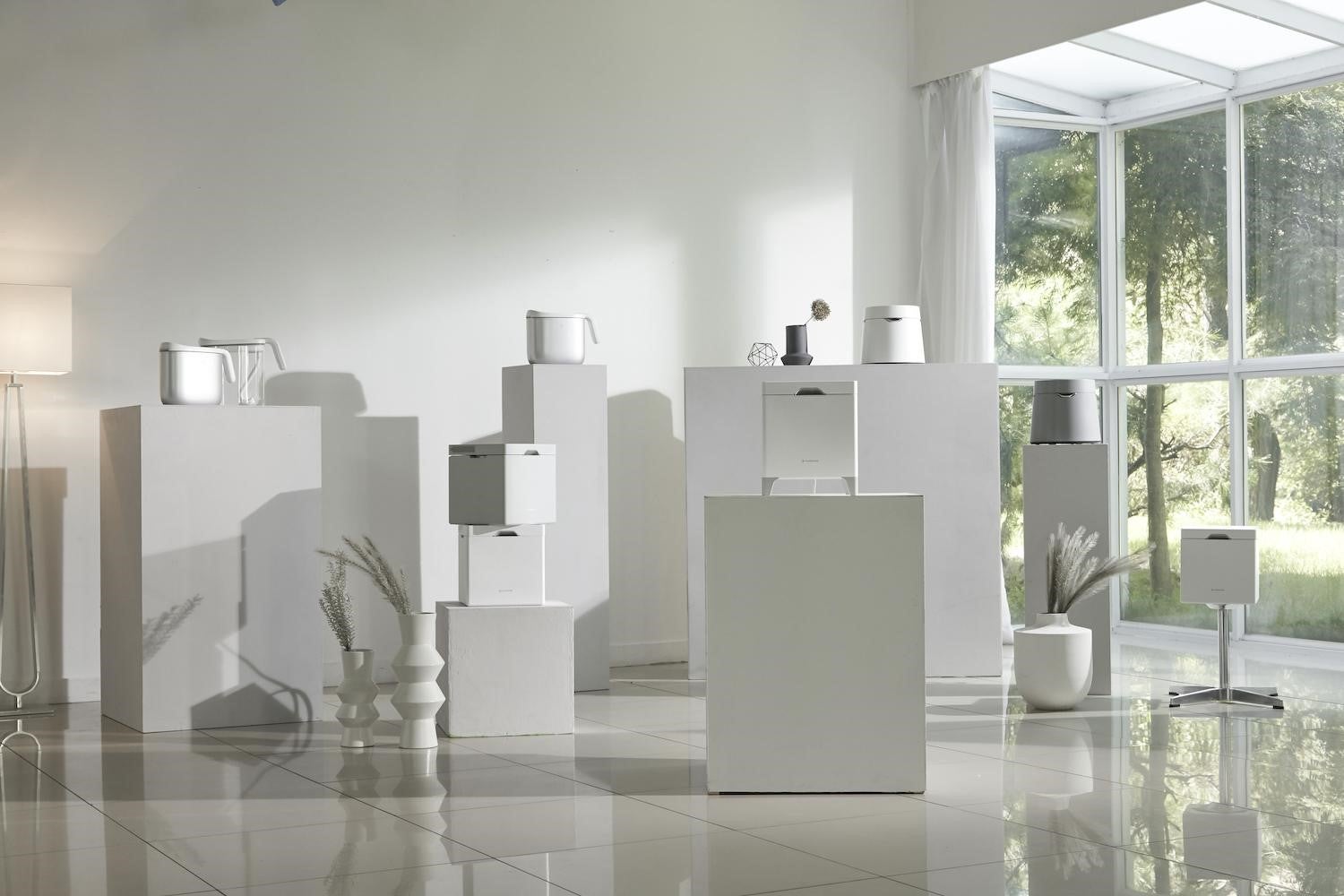
The Cube adds a small visual joke to an otherwise practical proposition: legs. Depending on its configuration, the appliance can sit on a surface or stand on the floor. Its shape places it in conversation with furniture. A room has other inhabitants besides electrical equipment, and this object appears to have noticed them.
Red Dot’s jury praised the design’s resemblance to furniture and its reduced visual language. That recognition addresses a second problem of ownership. Once an appliance enters a home, it must live somewhere. A product that is easy to handle but awkward to place has simply moved the inconvenience across the room.
These choices help explain why Kim’s founding complaint could support more than a single modification. Access and appearance become related obligations. The exterior has to make sense when the object is assembled. The interior has to make sense when it is opened. A designer gets to answer both, preferably without requiring the owner to become an amateur technician.
A cube gets an invitation
In 2022, Carepod announced recognition from both iF and Red Dot for its Cube range. Kim called the recognition an honour. The award organisers’ records identify the Cube X40, while Carepod’s announcement names the X50. The common thread is the Cube’s approach to form, removable components and its stainless-steel interior.
“We are honored to have Carepod Cube X50 recognized by iF Design and Red Dot, two prestigious international competitions.”
Dr. Hyung Joo Kim, 2022
An award is a public moment for work that often happens in small decisions. The angle of a surface, the way a part separates, the position of a control: each becomes part of the thing a customer encounters without necessarily thinking about who decided it. Recognition gives that accumulated work a date and a place on the company’s record.
For Kim’s story, the interesting change is one of audience. The original complaint belonged to a household. The finished design could now be considered by international juries. That distance measures a kind of translation: an irritation at home had become an object legible to people who evaluate design for a living.
It also gives the founder’s idea a useful test. A design must communicate beyond the circumstances that produced it. The customer in another country will not share the founder’s kitchen or his memories of awkward appliances. The object has to carry enough of the answer on its own.
The Pacific had other plans
Sean Kim became a key partner in taking Carepod to new markets. His work on the American launch included positioning, an ecommerce website, social channels and advertising. The launch attracted preorders. Then the practical machinery around the product became less cooperative: parts and deliveries were delayed, and inventory was held aboard a ship in the Pacific.
A removable tank is a tractable problem compared with a vessel unable to dock. You can redesign a fitting. You cannot persuade an ocean to respect a marketing calendar. For a company selling physical objects, this is the awkward meeting between a promise on a screen and a box somewhere else.
The team responded by communicating with customers and following up with supply and manufacturing partners. Sean described colleagues supporting one another through the disruption. It is a revealing episode in Kim’s business story because the company’s responsibilities had expanded beyond the object he originally wanted to improve.

Kim and Sean also appeared together on The Donna Drake Show. The remote conversation puts the founder beside the person helping explain the product to a new audience. It offers a compact picture of their partnership: invention has company when it goes out into the world.
The relationship matters because international expansion asks a founder to share the work of interpretation. Another person must understand which details deserve emphasis and which customer questions need answering. The product remains physical, but its introduction depends on language, images and the credibility of people willing to put their names beside it.
The object meets ordinary life
The marketing work around Carepod took Kim’s family origin as a starting point. Sean’s agency developed a warm brand voice and carried it across the website, email, social channels and advertising. The intention was to make the experience feel supportive and approachable. That is a coherent choice for a product whose appeal rests partly on making a routine less troublesome.
There is also a danger in any appealing origin story: eventually, the object has to justify the story. The customer still has a tank to empty. A personal beginning can explain why a founder cared, but it cannot perform the owner’s next task. The design must continue the conversation when the advertising is gone.
Carepod One’s cleaning score in published RTINGS testing.
A score for the One model, not every Carepod product.Independent testing of the Carepod One gave its cleaning design a 9.5 out of 10. The same evaluation noted limitations, including no built-in humidistat and a relatively short runtime. Those details keep the invention in the world of actual products, where a clear strength coexists with choices a buyer may weigh differently.
That is a more interesting place for Kim than a catalogue of compliments. His original concern can be examined against use. Maintenance is observable. Accessibility is observable. A product’s success in addressing one complaint does not settle every question about it; it gives people a specific reason to consider it.
The next room
Carepod’s international story continued through new markets and product variations. A Japanese company established in August 2023 named Kim as a co-representative CEO. In September 2025, Carepod announced the arrival of the One Plus ahead of schedule. That model adds a mood light and a dark mode, bringing another ordinary preference into the brief: sometimes an owner wants light, and sometimes they want the lights to disappear.
Kim’s stated ambition has always extended beyond his household. The practical question is how to preserve the founding idea as the range and the audience grow. Different rooms, different controls and different countries create opportunities for additional complexity. The original demand for simplicity remains a useful way to judge what gets added.
His story leaves a founder at an unusually approachable starting point. Before there were collaborators, overseas launches or design awards, there was something at home that was harder to use than it needed to be. Kim paid attention to the difficulty. He took the complaint seriously enough to turn it into an object. Somewhere, another owner now lifts out a tank, and gets on with the evening.
Follow the work
Kim’s founder letter · Carepod website · Carepod on Instagram · Carepod on Facebook · Carepod videos on YouTube
Sean Kim’s launch account · The brand and marketing work · Red Dot’s Cube record · iF’s Cube record · The One tested · Carepod’s award announcement · One Plus controls and video demonstrations