water-treatment
(17)
The Poison Gas That Became a Product
Streamline Innovations built a business around an ugly molecule: hydrogen sulfide. Its trick is to make the poison disappear without making a second mess.

The $106 Million Bet on a Membrane That Refuses to Stay Dirty
Industrial membranes often fail first where the water gets interesting. ZwitterCo built its business around that ugly moment - and is turning cleanability into an operating advantage for factories, dairies and wastewater plants.
The Guy Buying Up America's Water Guys
Peter Brooks left the Marines, studied water policy at Harvard, and decided the least glamorous corner of American infrastructure was the best place to build something that lasts. His pitch to the family businesses that keep the water running: sell to us and we will never sell you.
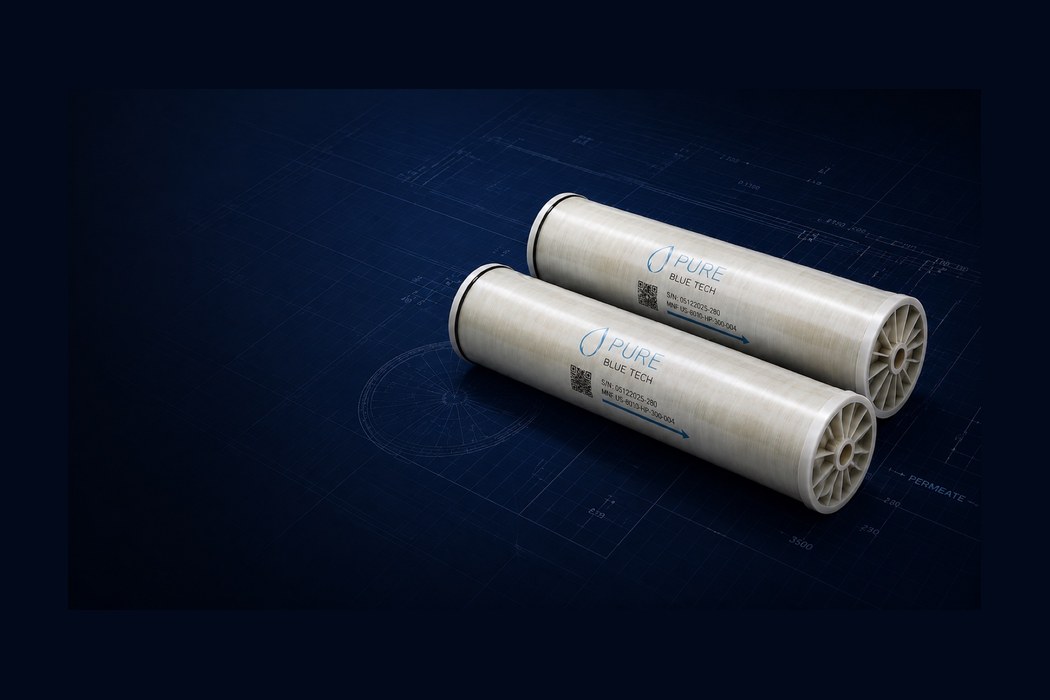
Pure Blue Tech Put a Tiny Speaker Inside a Water Filter - and Found a Cheaper Way to Fight the Gunk
Reverse-osmosis plants spend their lives fighting what sticks to a membrane. This 13-person Washington manufacturer wants to make the filter defend itself - without making operators rebuild the plant around it.
Nine Siblings, One Store, and 75 Years of Not Selling Out
A St. Paul bookkeeper bought the store he balanced the books for, plastered his family's name on it, and left it to all nine of his kids. Three generations later, they still won't sell.
The 91-Year-Old Company That Keeps America's Biggest Job Sites From Drowning
For 91 years, one Houston company has quietly answered a question nobody thinks about until their trench floods: where does all the water go?

The Water Roll-Up That Lets Local Names Stay Local
H2O Care Partners is buying the plumbing behind better tap water - then leaving the trusted name on the truck. Its wager is that national resources and local reputations can occupy the same house.
The Family Business Behind 34 Local Water Shops
Packard Culligan sells sophisticated treatment systems, but its real product is local follow-through - the test, the truck, the technician and the next service call.
Culligan’s Real Product Isn’t the Filter. It’s the Return Visit.
The 90-year-old water company has built a $3.4 billion business by pairing filters, softeners and taps with something harder to copy: 8,000 service routes that keep coming back.
Zoeller Company
Zoeller built an 87-year business around a machine most people notice only when it stops. Its edge is not novelty for novelty's sake, but obsessive testing, contractor trust and a family portfolio that follows water almost everywhere it needs to go.
Pentair
Pentair began with five engineers and a plan to build high-altitude balloons. Sixty years later, its pumps, filters, ice machines and pool controls reveal the sprawling business hidden inside an ordinary glass of water.
Allonnia
Allonnia is a Boston-based environmental biotechnology company that uses biology and engineered systems to solve stubborn contamination and resource-recovery problems. Spun out of Ginkgo Bioworks' Ferment Consortium in 2020, it removes PFAS from water at scale using SAFF foam-fractionation technology and is commercializing biological methods to recover critical minerals and rare earth elements from ore. The company has raised more than $100 million to bring 'bio-ingenuity' to water treatment and mining.

Pani
Pani (Pani Energy Inc.) is a Canadian climate-tech software company that puts a digital brain on top of the world's water treatment plants. Its flagship cloud platform, Pani Zed, consolidates messy sensor data from desalination, industrial and municipal facilities, builds a digital twin of each plant, and uses machine learning to tell operators exactly how to cut energy use, extend membrane life, and lower emissions - without new capital equipment or retrofits. Founded in 2017 by Devesh Bharadwaj and based in Victoria/Vancouver, British Columbia, Pani deploys across facilities in multiple countries and has landed on the Global Cleantech 100 list.
Capture6
Capture6 is a climate-tech company that turns the salty waste brine left over from desalination and water treatment into two things the world needs: fresh water and permanently removed atmospheric CO2. Its integrated platform converts brine into a CO2-absorbing solvent in a single step, eliminating costly brine disposal while producing freshwater, green chemicals, and durable carbon removal. Founded in 2021 and based in the San Francisco Bay Area with operations in New Zealand, the public benefit corporation works with water utilities, industry, and governments across California, Western Australia, New Zealand, and South Korea.
Moleaer Inc.
Moleaer is a California-based cleantech company that pioneered the industrial-scale production of nanobubbles - gas bubbles roughly 2,500 times smaller than a grain of salt. Its patented nanobubble generators inject oxygen and other gases into water with extreme efficiency, helping farms, fish operations, wastewater plants, lakes and industrial sites use less water, fewer chemicals and less energy. Founded in 2016 and led by CEO Nick Dyner, Moleaer has deployed thousands of systems across more than 55 countries and raised about $61 million through a 2022 Series C led by Apollo funds, followed by a 2025 global partnership and strategic investment from water-tech giant Xylem.

Gradiant
Gradiant is an MIT spinout turned global water-technology company that designs, builds, and operates advanced systems to treat, reuse, and recover industrial water and wastewater. Using a stack of proprietary technologies - from Carrier Gas Extraction to Counterflow Reverse Osmosis and an AI control layer called SmartOps - Gradiant helps semiconductor fabs, food and beverage giants, pharmaceutical makers, miners, and refiners cut freshwater use, recover lithium and other minerals, and destroy 'forever chemicals.' The first unicorn in the water industry, it reached a $2 billion valuation in 2026.
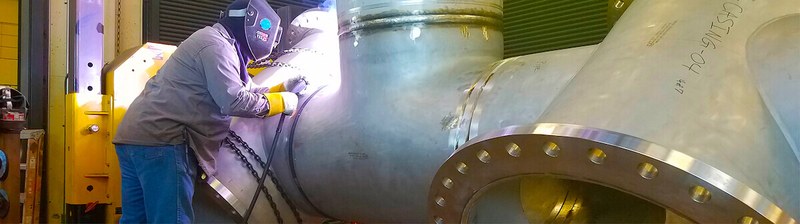
Performance Mechanical, Inc.
Performance Mechanical, Inc. (PMI) is an award-winning industrial mechanical contractor founded in 1985 in Pittsburg, California. The union-craft company builds and maintains the heavy machinery behind refineries, power plants, water treatment facilities and manufacturing sites - handling process and utility piping, boiler and HRSG erection, structural steel, pipe fabrication, ASME code vessel repairs, and modern BIM and 3D laser scanning. A subsidiary of EMCOR Group since 2007, PMI serves the San Francisco Bay Area, Southern California, Sacramento, Oregon, Nevada and Hawaii with roughly 750 employees and an estimated $73M+ in annual revenue.