Who They Are Now
A plant doesn't go down. Somebody made sure of that.
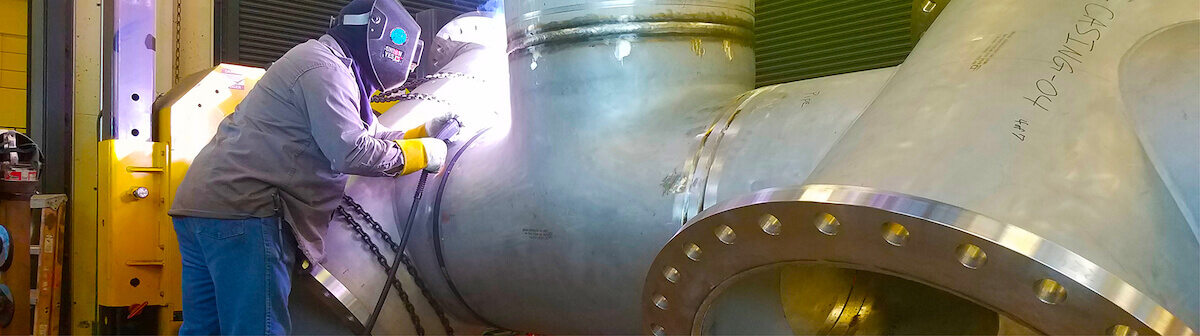
At 4 a.m. inside a Bay Area refinery, a crew is already mid-turnaround. Scaffold is up, the boiler is open, and a certified welder is laying bead on pressure pipe that will run hot for years before anyone thinks about it again. That crew works for Performance Mechanical, Inc. - PMI - and the entire point of their job is that you never hear about it.
PMI is an industrial mechanical contractor headquartered at 701 Willow Pass Road in Pittsburg, California. It builds and maintains the unglamorous machinery that civilization runs on: process and utility piping, boilers and heat-recovery steam generators, structural steel, rotating equipment, and the pressure vessels that have to hold or else. Roughly 750 people. Two fabrication shops. An estimated $73 million in annual revenue. A reputation built almost entirely on not failing.
"The best industrial contractor is the one you forget you hired - right up until the day the plant stays online and you remember why."
- The PMI value proposition, unofficially
The Problem They Saw
Heavy industry is built on trust nobody can see.
Here is the uncomfortable truth about a refinery, a power plant, or a water treatment facility: the most critical work is invisible the moment it's finished. A weld is buried in a pipe rack. A vessel repair sits behind insulation. The quality of the craftsmanship only reveals itself years later - usually in the form of a leak, a shutdown, or a very bad afternoon for the plant manager.
That creates a problem PMI exists to solve. Owners cannot easily inspect their way to confidence. They have to trust that the contractor's welders are actually certified, that the code stamps are real, that the schedule was met without cutting corners. In an industry where a single failure can cost millions and endanger lives, trust is the entire product. Most contractors sell hours. PMI sells the absence of catastrophe.
"In this trade you don't get graded on what you built. You get graded on what didn't break."
- The logic of industrial maintenance
The Founders' Bet
Bet on the craft. The rest follows.
In 1985, PMI started as a small industrial construction company in Pittsburg with a narrow specialty - process piping systems and equipment installation - and a slightly stubborn conviction: that union craftsmanship, done to a standard higher than the job technically required, would eventually beat the lowest bid. It's a bet that sounds quaint until you remember the cost of getting it wrong.
Andrew Hosler, who today leads the company as President and CEO, sits at the center of that thesis. The wager was never about being the biggest. It was about being the one a refinery would call back. So PMI poured money into the least glamorous line items imaginable: a safety program, an employee training and education program, and certifications that exceed industry minimums. Wildly romantic, in a hard-hat sort of way.
"We strive to meet the expectations and requirements of our customers, internal and external, through an ongoing quality process of communication, education and training."
- Performance Mechanical, Inc., mission statement
The bet paid off in the most concrete way possible. By 2007, PMI had grown into a full-service industrial mechanical contractor with around $90 million in annual revenue and a No. 47 ranking on that year's Plumbing & Mechanical Pipe Trades Giants list. That November, EMCOR Group - the Fortune 500 mechanical and electrical construction firm traded on the NYSE as EME - acquired the company. The hard hats didn't change. The standard didn't either.
The PMI Timeline
1985
The startup. PMI opens in Pittsburg, CA, focused on process piping and equipment installation, built on union craftsmanship.
1990s
The expansion. Services grow into civil, structural, instrumentation, boiler installation and repair for power, food & beverage, and water clients.
2007
The acquisition. EMCOR Group buys PMI (~$90M revenue, ranked No. 47 Pipe Trades Giants). Terms undisclosed; PMI becomes an EMCOR subsidiary.
2010s
The technology. PMI brings BIM, 3D modeling and laser scanning with robotic total stations to a trade long run on tape measures.
Today
The scale. ~750 employees, two CA fab shops, ASME/NBIC code stamps, serving the SF Bay Area, Southern California, Sacramento, Oregon, Nevada and Hawaii.
The Product
What PMI actually does for a living.
Strip away the jargon and PMI does one thing: it moves fluids and steam through industrial plants safely. Everything else is a variation on that theme. The company designs and fabricates process piping, erects boilers and SCR units and heat-recovery steam generators, repairs ASME code vessels, installs and aligns rotating equipment, and handles HVAC hydronic piping and structural steel. Two California fabrication shops let it build pipe spools in a controlled environment and bolt them up on site.
The genuinely modern part is how PMI plans the work. It runs Building Information Modeling, 3D modeling and laser scanning - robotic total stations scanning a live plant down to the millimeter - so a new pipe run can be modeled against existing steel before a single piece is cut. Fewer surprises in the field. Fewer reworks. In an industry where a clash isn't a calendar conflict but a forklift, a crane, and a wasted shift, that matters.
Process & Utility Piping
Design, fabrication and installation of process piping systems - the founding specialty, still core.
Boiler & HRSG Erection
Boiler installation and repair, SCR and heat-recovery steam generator erection for power generation.
Code Vessel Repairs
ASME / NBIC code-stamped pressure vessel repair and inspection by certified crews.
Pipe Fabrication
Union pipe fabrication from two fully equipped California shops, including code work.
Structural & Millwright
Structural steel erection, rotating equipment installation and millwright services.
BIM & 3D Laser Scanning
Modeling, detailed drawings and robotic total station scans that catch clashes before the field does.
"Tape measures don't argue with reality. Neither does a laser scan - it just shows you where the steel actually is, not where the drawing says it should be."
- On why PMI invested in BIM
The Proof
The numbers behind the handshake.
Trust is a nice word. Repeat business is a measurable one. PMI's clients are not consumers who churn - they are refineries, electrical generating plants, food and beverage producers, pipeline compressor and metering stations, manufacturing facilities, chemical plants and water treatment plants. These owners hire the same contractor for decades precisely because switching is risky. The proof of PMI's quality is that those long-term relationships exist at all.
Performance Mechanical, by the numbers
Figures are public/estimated. Revenue values are approximate and span different reporting years.
The 2007 EMCOR acquisition is its own form of proof. EMCOR doesn't buy contractors for sentiment; it buys durable, well-run operations. PMI's safety and training programs - the ones that exceed industry standards and have earned safety awards - are exactly the kind of operational discipline that survives an acquisition intact. The partnership gave PMI the backing of a Fortune 500 parent without diluting the craft culture that made it worth buying.
"You can't acquire a reputation. You can only acquire the people who earned it - and then try very hard not to ruin them."
- The case for keeping PMI's crews intact
The Mission
Quality as a safety system.
PMI's mission reads like a quality-management memo, and that's the point. Communication, education, training - repeated until they become reflex. In an industrial setting, quality and safety are the same conversation. A poorly fabricated joint isn't just a defect; it's a future incident waiting for a witness. So PMI treats its training program less as an HR perk and more as a load-bearing wall.
This is also where the union model earns its keep. Certified welders, code stamps, apprenticeship pipelines - the union structure supplies a steady stream of vetted, credentialed labor in a trade where skill is genuinely scarce. PMI's bet on craftsmanship only works if the craftspeople keep coming. The mission is the recruiting tool.
Why It Matters Tomorrow
The energy transition needs hands.
Decarbonization is often discussed as a software problem - dashboards, carbon offsets, optimistic slide decks. It is mostly a piping problem. Retrofitting plants for cleaner fuels, building water treatment capacity, installing emissions controls and SCR systems, erecting the steam generators behind new power: all of it is heavy mechanical work that someone has to physically build. PMI's keyword list now includes energy transition, environmental compliance and sustainable energy solutions - not as marketing, but as the next two decades of backlog.
That's the quiet leverage of a contractor like PMI. Whatever the energy future looks like, it arrives as steel, pipe and pressure vessels - and those don't install themselves. The companies that can field certified crews, model the work in 3D before touching a wrench, and hit the schedule will build it. PMI has been training exactly those crews since 1985.
"The future of energy will be welded together by people who can read a P&ID. PMI has had that crew on the payroll for forty years."
- Why the old trade is the new trade
So return to that 4 a.m. refinery. The turnaround wraps. The boiler closes up. The plant comes back online on schedule, and the night shift goes home without a single headline written about them. That's PMI's whole business model in one image: the absence of drama, manufactured on purpose. Forty years in, the crew that keeps the plants running is still just doing the work - and the work, it turns out, is everything.