The villain in ZwitterCo's story is a brown film nobody wants to photograph. Put an ordinary industrial membrane in water rich with proteins, fats, oils or decaying organic matter and the surface begins collecting trouble. Flow falls. Pressure rises. Operators stop the line, circulate cleaning chemicals and hope the membrane returns to form. Often it does not. Then an element designed as infrastructure starts behaving like a consumable.
That failure is mundane enough to hide in a maintenance budget and large enough to spoil the economics of water reuse. It can also bottleneck a dairy, a biotechnology process, a power plant or a landfill treatment system. ZwitterCo, founded near Boston in 2018, has raised roughly $106 million to argue that the membrane surface itself can be made less hospitable to organic grime.
Its answer is zwitterionic chemistry. A zwitterion carries a positive and negative charge in the same molecule. Those charges attract a tight layer of water to the membrane. Hydrophobic contaminants encounter that hydrated surface and have a harder time settling in for good. The membrane may still get dirty - feed channels can block and inorganic scale remains real - but organic fouling is less likely to become permanent. In this business, a reliable recovery after cleaning can matter more than a heroic first-day flow rate.
The useful contradiction
Opposite charges pull water close. The hydrated layer makes the surface less inviting to oils, fats and proteins.
Sell the recovery, not the molecule
The company's origin was scientific, but its wedge was operational. Professor Ayse Asatekin's Tufts University lab developed the foundational polymers. Co-founders Alex Rappaport, Christopher Drover and Chris Roy built a company around applying them to water. Their early pitch focused on produced water from oil and gas extraction, where a barrel of oil can bring up several barrels of ugly water and conventional filtration faces a buffet of foulants.
ZwitterCo's first commercial product, launched in 2021, was a superfiltration membrane. The company coined the category because the membrane sits awkwardly between ultrafiltration and nanofiltration. It removes suspended solids and many dissolved organics larger than roughly one nanometer while allowing salts and other small molecules to pass. That keeps operating pressure relatively low and can prepare water for a downstream reverse-osmosis step.
The insight worth stealing is not the new category name. It is the choice to enter a mature market at its most visible failure. A generic claim of “better filtration” invites a long technical argument. A membrane that replaces one dying every two months invites a payback calculation. A drop-in element that fits existing pressure vessels lowers the buyer's risk again.
“The best climate pitch in a factory is often a maintenance ticket with a line through it.”YesPress analysis02 / What changed the buyer's mind
When the incumbent became absurd
At Solugen's Houston bioprocessing operation, the job was not simply to clean wastewater. The company needed to retain valuable enzymes while letting water and impurities pass. Hollow-fiber membranes fouled quickly, forcing frequent replacement and threatening the economics of the process. ZwitterCo's spiral elements were installed as a direct replacement. According to the companies' case study, cycle duration improved by more than 100 percent, membrane-cost savings exceeded 400 percent over nine months, and a warm rinse followed by a caustic wash restored nearly all original performance.
That result answers the question every industrial founder eventually hears: what changed the customer's mind? Not a climate pledge. The old equipment failed first, repeatedly, in a way tied to throughput and gross margin. ZwitterCo offered a testable replacement without asking the plant to rebuild the system around it. The customer could compare cycles, cleanings and element purchases on the same line.
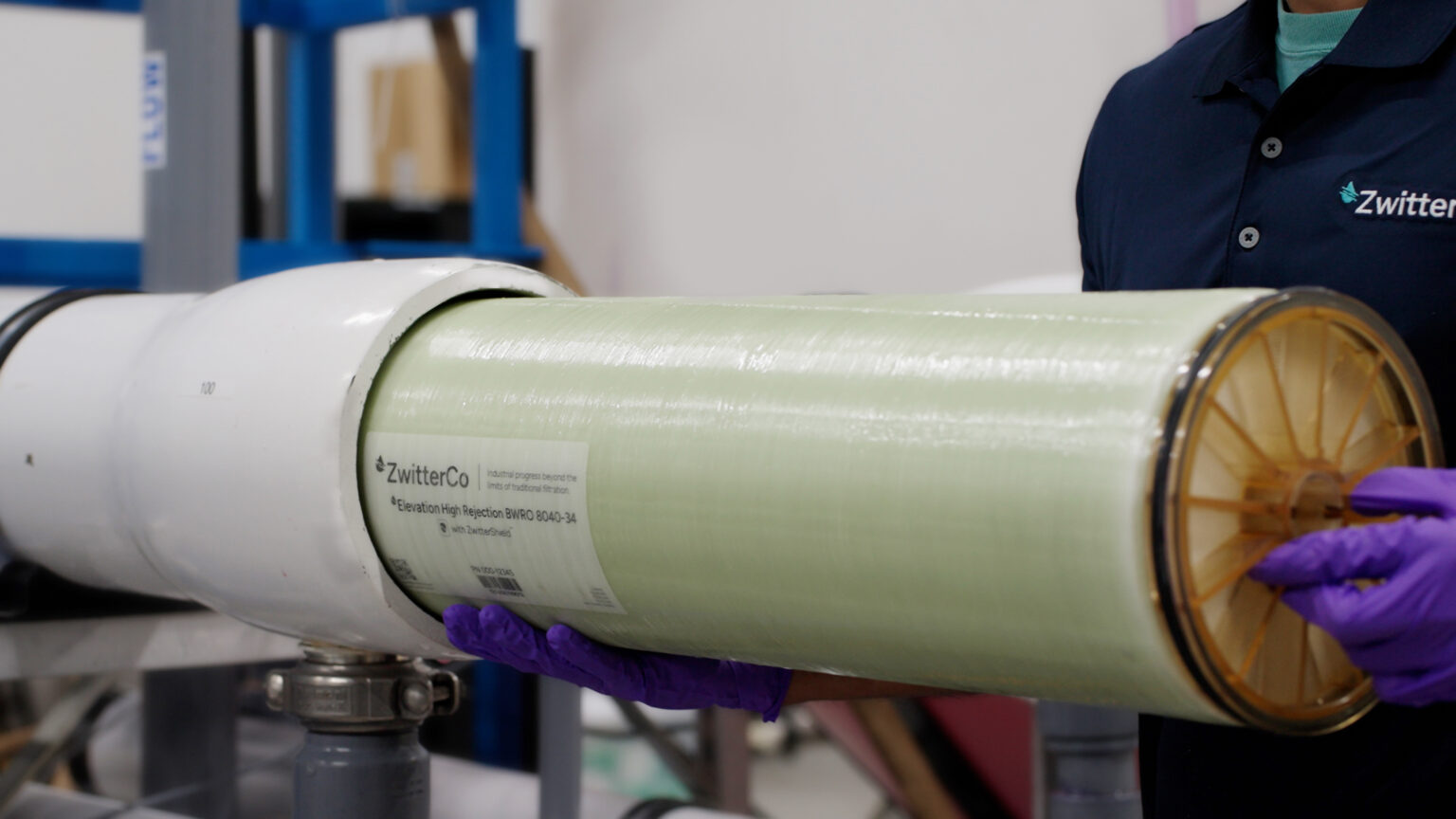
Other field work repeats the pattern with different dirt. A French landfill site treated leachate so variable that conventional brackish-water RO elements required daily cleaning and replacement every two or three months. After testing several cleaners and alternative membranes, operator Serpol trialed ZwitterCo's Elevation RO. The published evaluation reported stable separation, about half the cleaning cost and a 65 percent drop in replacement frequency.
At another leachate demonstration with AST, the cleaning recipe changed from a formulated product costing about €28 per clean to commodity chemicals costing about €1. At a U.S. power plant handling difficult river water, the ZwitterCo train went more than seven months before its first chemical clean and cut cleaning frequency by over 70 percent versus the conventional train. At a Midwest whey processor, a shorter cleaning program cut cleaning-related water use by nearly 42 percent - just over one million gallons in 10.5 months - while reducing cleaning cost by more than half.
03 / The company inside the chemistryThree families, one expensive nuisance
ZwitterCo now packages the platform in three product families. Elevation covers brackish-water reverse osmosis for challenging surface water, wastewater and landfill leachate. Expedition is the rugged superfiltration line for high-strength industrial streams, including produced water and feeds rich in fats, oils and grease. Evolution serves food, dairy and biotechnology processing with sanitary superfiltration, protein-concentration and RO elements.
The names conceal a useful market design. A dairy and a landfill do not buy from the same brochure, follow the same regulations or evaluate the same output. Evolution therefore pursued FDA compliance for whey and milk processing. Elevation earned potable-water certifications on selected elements. Expedition is sold around tolerance, integration and treatment trains. The core polymer travels; the sales proof does not.
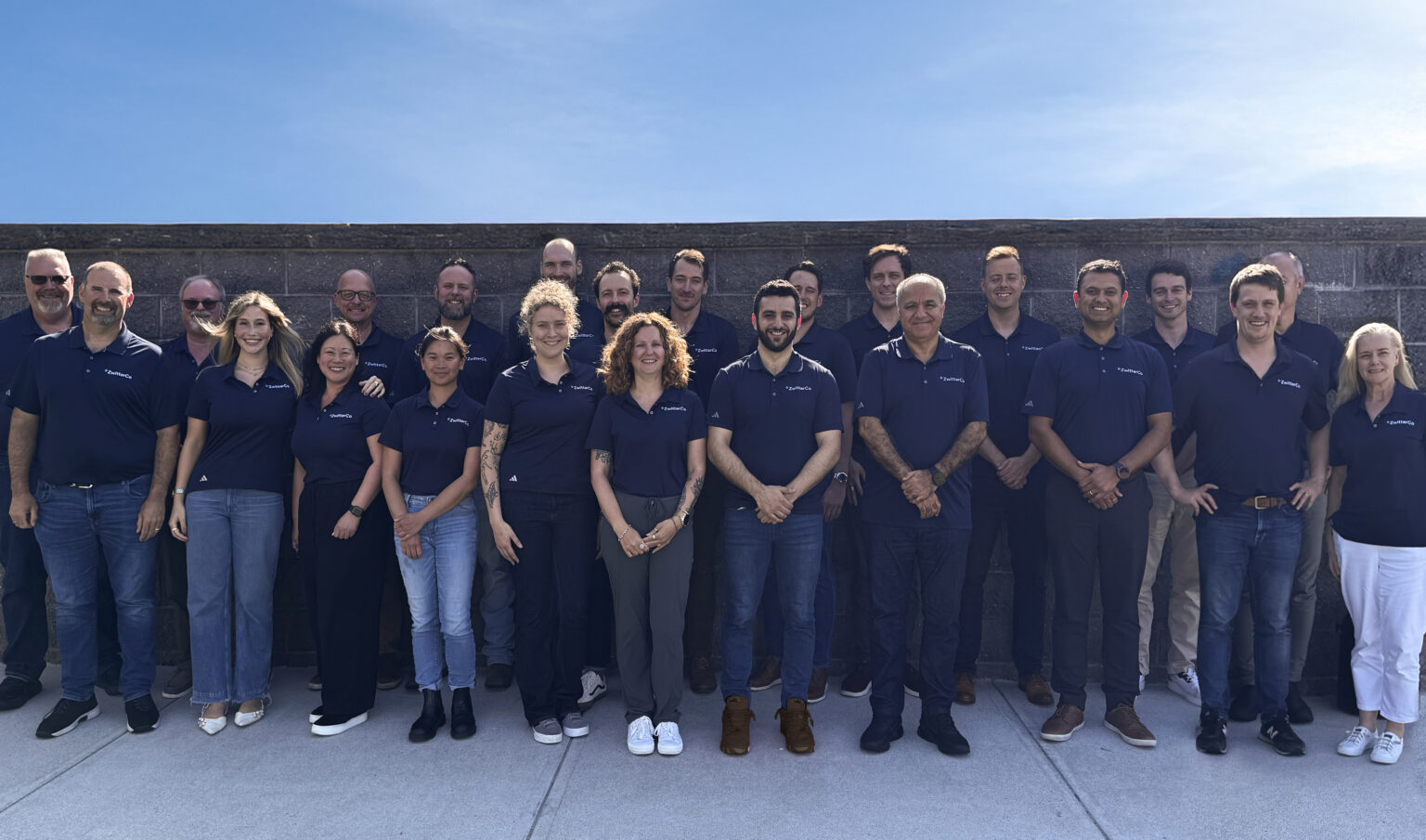
Customers include food and beverage processors, dairies, bioprocessors, power plants, landfill operators and industrial-water specialists. ZwitterCo says its products are used in more than 20 countries. By its July 2024 Series B, it reported orders or installations at more than 50 industrial facilities across North America, Europe and Asia. Partners and reference accounts include Solugen, Serpol, AST and Esmil; strategic investors include filtration specialist MANN+HUMMEL and mining company BHP.
The business is classic industrial B2B: sell elements into new or existing systems, work through original-equipment manufacturers and engineering partners, then support feasibility work, pilots and deployment. The company also offers engineered systems and rental equipment. Pricing is project-specific. The relevant cost is total operation - element purchases plus chemicals, heating, flush water, labor, lost production and discharge fees - rather than the sticker on a cylinder.
04 / The honest boundaryFouling-resistant is not physics-resistant
The phrase “fouling-immune” is memorable and should make a careful buyer reach for the feed analysis. Zwitterionic chemistry targets organic adsorption. It does not repeal inorganic scaling, prevent every microbe from growing, or make a blocked feed spacer disappear. Superfiltration intentionally passes salts and small molecules, which is useful before RO but wrong when the single step must desalinate. In food processing, an SF membrane that retains protein while passing lactose may create a permeate-disposal problem for salted whey.
When the playbook does not travel
- Organic fouling is not the limiting failure.
- The target molecule sits outside the membrane's rejection range.
- Scaling, solids or feed-channel blockage dominate the system.
- Cleaning and downtime are already cheap enough that a premium element has no payback.
- A pilot cannot reproduce the temperature, chemistry and variability of the real feed.
This is why ZwitterCo's application lab and field pilots are as important as its patents. Industrial water is not a software environment with tidy inputs. A promising membrane meets actual cleaning crews, seasonal feed changes and operators who may not follow the laboratory recipe. The company must prove rejection, flux, recovery and element life for each use case, then make the economics survive a customer's cost of capital.
Its $58.4 million Series B, led by Evok Innovations in 2024, finances that grind: international expansion, an Innovation Center near Boston and faster development of the platform. The round followed a $5.9 million seed and a $33 million Series A. In 2025 the company reported more than 30 new European projects, FDA milestones in dairy and a portfolio reorganized around Evolution, Elevation and Expedition. The latest phase is less about proving a clever molecule exists and more about proving a repeatable industrial company can grow around it.
05 / What to copyStart with the bill nobody frames
Founders can copy five moves without copying the chemistry. Start with a failure already measured in labor, replacements or lost production. Make the new component fit the old system. Choose a first market where conventional performance is not merely mediocre but untenable. Publish paired operating data, not adjectives. Then divide the platform into products that match how each industry buys, certifies and maintains equipment.
ZwitterCo's broader ambition is to turn unconventional water into a dependable industrial input. That matters for factories in water-stressed regions and for low-carbon industries whose demand for clean water grows alongside their output. Yet the company is most convincing at a smaller scale: one wash removed, one element kept in service, one production hour handed back. The water crisis is enormous. The purchase order is local.
A billion-gallon vision may open the meeting. A €27 saving on every clean keeps the spreadsheet open.The operating case for water reuseExplore / Watch / Contact