Every skyscraper, subway tunnel, and power plant begins with a hole in the ground - and almost every hole hits water before it hits its target depth. Groundwater sits patiently under most job sites, and the moment a crew digs below the water table, it seeps in, floods the trench, and stops the work cold. Somebody has to make it go away. Since 1934, that somebody has often been Griffin.
Griffin Fluid Management, headquartered in Houston, Texas, is a specialty contractor and equipment-rental firm built around a single, unglamorous premise: before you can build anything, you have to control the water. For most of its life the company was called Griffin Dewatering, a name that told you exactly what it did. In June 2024 it rebranded to Griffin Fluid Management - a change that, as we'll see, was less about a new logo than about a bigger map of the business.
01 / The ProblemWater in the hole
The technical term is "dewatering," and it is one of the oldest and least-celebrated disciplines in construction. When a foundation, pipeline, or containment structure has to go below the local water table, the surrounding groundwater has to be lowered first - and kept low - for the entire time crews are working in the excavation. Get it wrong and the walls slump, the base heaves, pumps run all night, and the schedule slips. Griffin's entire business is getting it right.
What makes the work hard is that no two sites drain the same way. Soil type, permeability, depth, nearby structures, and discharge rules all change the answer. So Griffin doesn't sell a pump off a shelf; it engineers a system. Its crews design the layout, handle permitting, install the equipment, run it, and increasingly monitor it remotely. That combination - engineering plus a national fleet - is the moat.
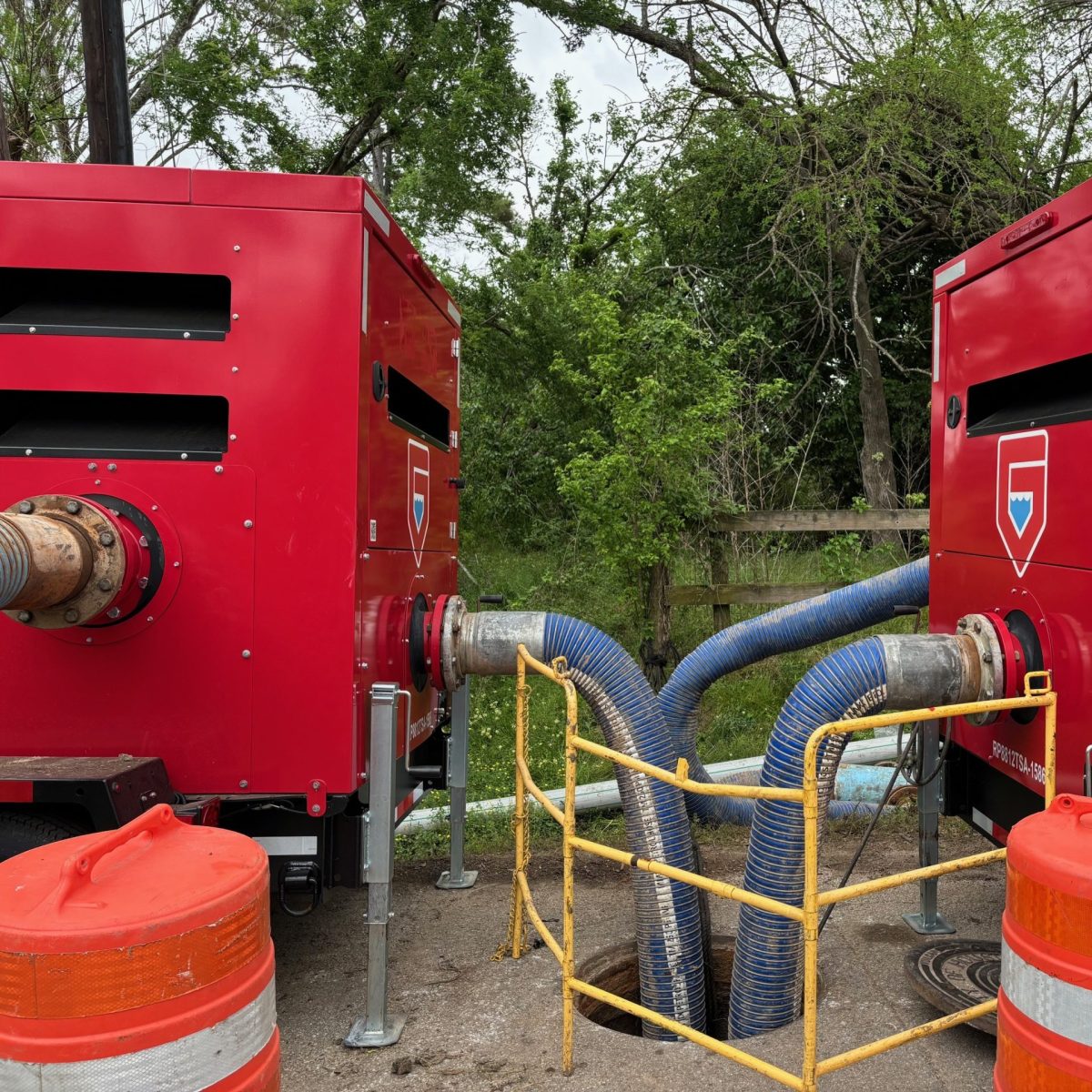
02 / The MethodsFour ways to move water out of the way
Griffin's dewatering work generally comes down to a handful of engineered approaches, matched to the ground conditions on each site.
Wellpoint
Closely spaced shallow wells connected to a header and vacuum pump - the workhorse for trenches and shallow excavations.
Deep Well
Large-diameter wells with submersible pumps for deep excavations and high-volume groundwater.
Eductor
Jet-driven systems that pull water from low-permeability soils where wellpoints struggle.
Sump
Collection pits and pumps for controlled removal where geology allows the simplest approach.
03 / The BusinessRent the pumps, own the water problem
Griffin makes money two ways that reinforce each other. It bills for engineered project services - design, permitting, installation, operation, and monitoring - and it rents out a national fleet of pumps, water-treatment rigs, and trench-safety gear. Renting bare equipment is a commodity game with thin margins. Wrapping that equipment in engineering and site management is not. It raises switching costs and gives Griffin a bigger share of each project's wallet.
This is why the 2024 rebrand mattered. "Dewatering" described one service. "Fluid Management" described a category - dewatering, water treatment, sewer bypass, pipeline integrity testing, trench safety, and system flushing - that Griffin could sell to the same customers with the same trucks and crews. The name caught up to a company that had already grown past its original job description.
04 / The CustomersWho calls Griffin
Griffin's customers are the builders of things most people never see the underside of: general contractors on large civil and heavy-highway jobs, industrial and power-plant operators, utilities, and environmental-remediation firms. One of its more specialized niches is ash pond dewatering - draining the coal-ash containment ponds that come with heavy federal oversight, a job many contractors would rather not touch. When water is in the way of a big, regulated, deadline-driven project, Griffin is the kind of firm that gets the call.
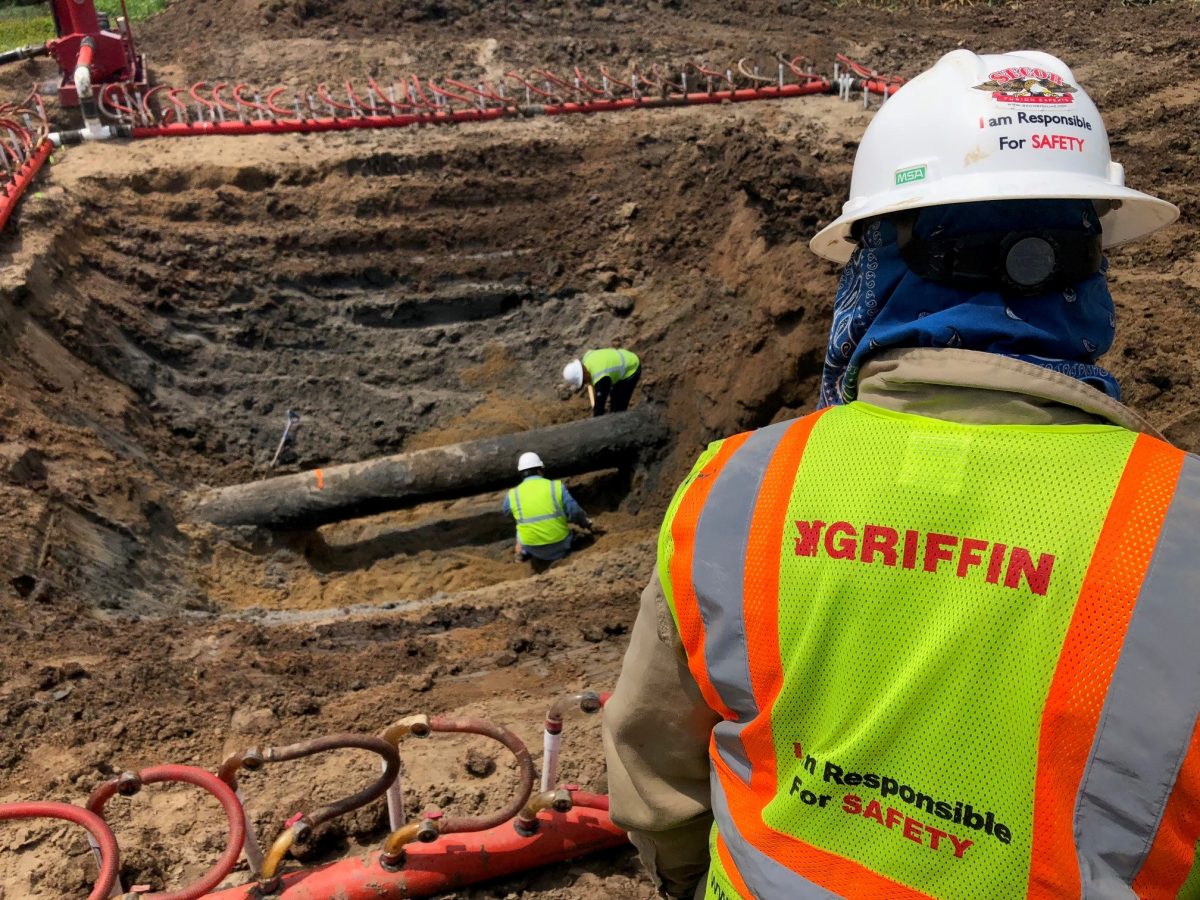
05 / The EdgeWhy 91 years is the moat
Griffin's history is one of continuous problem-solving. Early on, it began manufacturing its own pump equipment - not for the romance of it, but because off-the-shelf gear couldn't handle the situations its field crews kept running into. That instinct, building what the job actually needs and then renting it to everyone else with the same problem, compounded across nine decades into deep institutional knowledge that a new entrant can't simply buy.
The company also carries the credibility of a long track record. It ranks among Engineering News-Record's Top 600 Specialty Contractors, and it has operated through every recession since the Great Depression. In a market where a flooded excavation can cost a general contractor far more than the dewatering contract itself, that durability is part of the product.
06 / The OwnersA legacy asset, reframed as a platform
In December 2020, Dallas-based private equity firm Crossplane Capital acquired Griffin. Where an outsider might have seen a sleepy 86-year-old dewatering firm, Crossplane saw a platform to build on. In December 2022 Griffin added the Pump & Integrity rental segment of Cross-Country Infrastructure Services, bringing pipeline-testing capability in-house. The 2024 rebrand and the 2026 launch of HydroFlush followed the same buy-and-build logic: take a durable core and extend it into adjacent, higher-growth work.
07 / The New BetFlushing the pipes behind the AI boom
In July 2026, Griffin launched HydroFlush LLC, a division dedicated to high-velocity mechanical flushing - the process of cleaning and conditioning piping systems before a facility goes live. Its target market is the data center construction wave driving so much infrastructure spending. Before a mission-critical data center can run, its cooling and process piping has to be flushed to spec, and HydroFlush aims to be the specialist that owners, contractors, and commissioning teams call.
It's a telling move. A company founded during the Great Depression, whose Twitter handle is still @griffinpump and whose YouTube channel is named for its founding year, has found a distinctly 2026 problem to solve - using the same core competence it has honed since 1934.
08 / The TimelineNine decades, one water problem
The company enters the construction dewatering and groundwater pumping market in Houston, Texas.
Griffin starts building its own pump equipment to solve problems its field crews encountered.
The Dallas-based private equity firm buys Griffin Dewatering in December.
Griffin acquires the pipeline-testing rental segment of Cross-Country Infrastructure Services.
The name changes to reflect a portfolio that had grown well beyond dewatering.
A new division targets mechanical flushing for the data center construction industry.
09 / The TakeawayThe most durable moat is a problem that never goes away
There is a lesson in Griffin for anyone who thinks the best businesses have to be exciting. Groundwater is not going anywhere. As long as people build below the water table - and they build more of it every year, from transit tunnels to power plants to data centers - somebody has to move the water out of the way and keep it moving. Griffin picked that problem in 1934, got very good at it, and let nine decades of compounding do the rest. Boring, it turns out, can be a moat.
Where would this not work? A model this rooted in field engineering and heavy equipment is capital-intensive and regional by nature - it scales one location at a time, not with a software deployment. And its fortunes track construction and infrastructure cycles closely; when big projects stall, so does the demand for keeping their holes dry. But those are the terms of the trade, and Griffin has weathered them longer than almost anyone still in the business.