sustainable-construction
(15)
Ciinova built a showroom you can work inside
In Querétaro, a construction company made its own headquarters a demonstration of sustainable building. Today, its catalogue puts the same practical ambition into storage units, classrooms and modular homes.

Aurimas Sabulis Is Teaching Skyscrapers to Think Like Factories
After architects rejected a faster design system, the Dextall founder learned to return control to the people holding the pencil. Now software, factory panels and a stubborn appetite for proof are converging on New York’s skyline.

Loren Burnett Is Teaching Concrete to Borrow a Trick From the Sea
After five exits, the Colorado founder chose a harder material problem: turning microalgae, mineral chemistry and patient commercialization into concrete with a smaller carbon bill.

Émilie Gagné-Prud'homme Makes the Technical Feel Human
Before she marketed membranes and insulation, Émilie Gagné-Prud'homme worked behind the scenes in theatre and photography. Her career shows how creative production, customer empathy and technical fluency can meet inside one of Canada's most material businesses.
The Company Under Canada’s Roofs Is Turning Membranes Into a Climate Data Business
SOPREMA spent decades making the layers nobody sees. Now the Drummondville manufacturer is making those layers legible - with local factories, trained installers, carbon data and a growing stack of services around the building envelope.
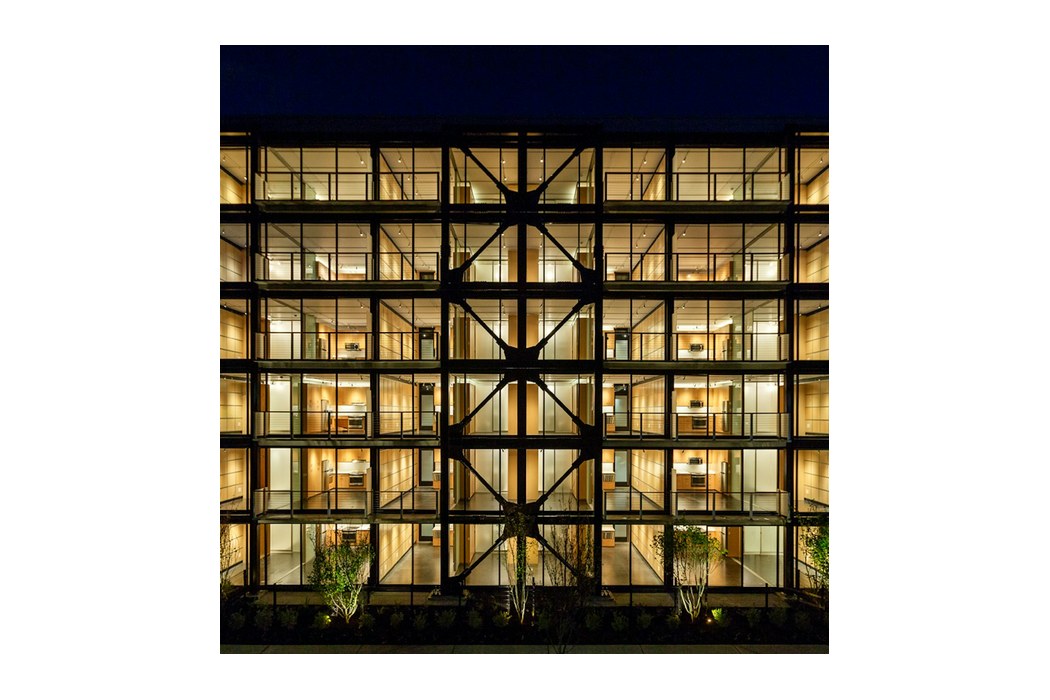
They Tried to Build Apartments Like Airplanes - Then the Construction Site Fought Back
Sustainable Living Innovations spent 16 years turning apartment towers into a kit of parts. Its Seattle buildings prove the hardware works - and its bruising flagship reveals why fixing construction takes more than a factory.
The Concrete Company Teaching Seawalls to Grow a Pulse
Ports and coastal cities already have to pour concrete. ECOncrete charges a premium to make that concrete useful to oysters, fish and engineers - then argues the habitat can pay for itself in permits, durability and avoided mitigation costs.

Meritage Homes
The Scottsdale builder made energy efficiency standard equipment instead of a luxury upcharge - and used it to close more than 15,000 homes a year.

Holcim
Holcim is trying to turn the oldest ingredients in construction into a newer kind of business - one that sells lower-carbon materials, recycles yesterday’s buildings and captures the emissions its kilns cannot yet avoid.

Alquist 3D
Alquist 3D is a Greeley, Colorado-based construction technology company that uses robotic 3D concrete printing to build homes, commercial buildings, and infrastructure. Founded in 2020 by Zachary Mannheimer, the company completed one of the first 3D-printed Habitat for Humanity homes in the U.S. and printed an ~8,000-square-foot addition to a Walmart in Athens, Tennessee - billed as the largest 3D-printed commercial structure in the country. In late 2025 it announced a landmark deal to print more than a dozen Walmart and retail buildings, positioning itself to commercialize 3D concrete printing at national scale.
Sam Richardson
Sam Richardson is the CEO of Volley Automation, a robotics and software company that uses AI-enabled automated guided vehicles to densify parking garages, fitting up to twice as many cars in smaller footprints. A former Hamilton College quarterback turned channel-sales and operations leader at companies like Hewlett-Packard, Fellowes Brands and SGS & Co, he now runs Volley from a 35,000-square-foot research and demo facility the company opened in Denver in 2026 after relocating from South San Francisco. Based in Nashville, he is steering robotic parking projects across New York, Tennessee, Florida, California and Massachusetts.
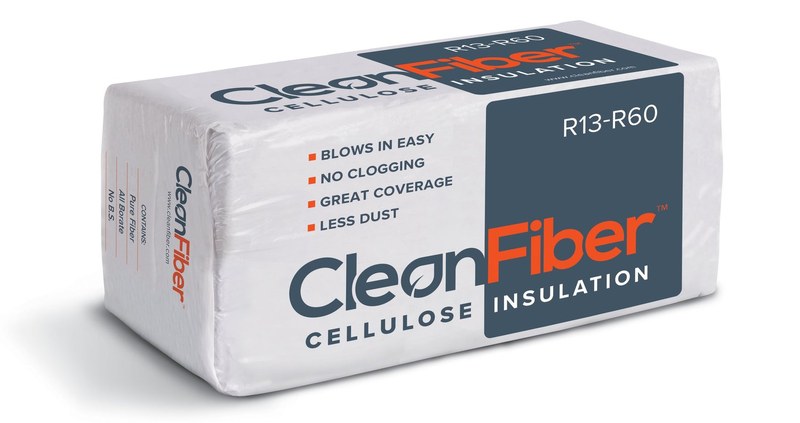
CleanFiber
CleanFiber makes high-performance, carbon-negative cellulose building insulation from recycled corrugated cardboard. Using a proprietary wet separation and liquid borate infusion process, it produces a cleaner, lower-dust insulation that performs better than legacy newsprint-based cellulose. Based in Buffalo, New York, the company has scaled rapidly since opening commercial production in 2020 and was named the #1 fastest-growing manufacturing company in America on the 2024 Inc. 5000.

Sami Rahman
Sami Rahman is the CEO of CleanFiber, the Buffalo-based maker of high-performance cellulose insulation spun from recycled corrugated cardboard. A chemical and environmental engineer turned building-materials operator with 20+ years across James Hardie and ICP Group, he joined CleanFiber in January 2025 as President and General Manager and was elevated to CEO after sharpening its sales and operations. He is steering a company that ranked #1 in manufacturing on the 2024 Inc. 5000 list through a Series C raise and the ramp of a plant built to ship over three million bags a year.
Chris Wolf
Chris Wolf is the Chief Executive Officer of Walters & Wolf, one of the leading glass and glazing contractors in North America. Based in Fremont, California, he leads a 650-person employee-owned company that designs, engineers, fabricates, and installs architectural glazing, curtain wall systems, and door openings for clients including Google, Apple, Adobe, and Kaiser. Wolf rose through the company over 15 years as Vice President before taking the helm as CEO around 2022. Under his and prior leadership, Walters & Wolf has become widely recognized for its deep commitment to lean manufacturing and the Toyota Production System, maintaining a library of over 6,000 improvement videos and earning recognition from lean manufacturing expert Paul Akers as 'the best lean company I know.'

Kevin O'Riordan
Kevin O'Riordan is President and CEO of Hathaway Dinwiddie Construction Company, the 117-year-old, employee-owned San Francisco general contractor behind a generation of California's most photographed buildings. He took the top job on April 1, 2025 after four decades in the trade and five years running the Northern California region. In the same window he was elected 2025 President of the Construction Employers' Association.