BREAKING: CleanFiber named #1 fastest-growing manufacturer in America - Inc. 5000 (2024)
FUNDING: $40M Series C closed September 2025
FEEDSTOCK: Insulation made from recycled cardboard boxes
GROWTH: 5,684% over three years
BUILT IN: Buffalo, New York - 3M+ bags/year capacity
CERTIFIED: ASTM-C739 all-borate formulation
BREAKING: CleanFiber named #1 fastest-growing manufacturer in America - Inc. 5000 (2024)
FUNDING: $40M Series C closed September 2025
FEEDSTOCK: Insulation made from recycled cardboard boxes
GROWTH: 5,684% over three years
BUILT IN: Buffalo, New York - 3M+ bags/year capacity
CERTIFIED: ASTM-C739 all-borate formulation
The Scene · 2026
A factory in Buffalo is quietly eating America's cardboard problem
On the floor of a plant on Buffalo's east side, a river of shredded corrugated cardboard moves toward a wet bath. Contaminants float up and get skimmed off. What sinks is fiber - clean, soft, and about to become something that will sit inside a wall for the next fifty years. This is CleanFiber, and on any given shift it is converting the throwaway packaging of the e-commerce economy into building insulation that stores more carbon than it emits.
The pitch is almost suspiciously simple. Buildings leak energy. Insulation stops the leak. Most insulation is either petroleum-based foam or fiberglass, and the greener alternative - cellulose made from old newspaper - has a supply problem: nobody reads newspapers anymore. CleanFiber's answer was to stop fighting that decline and switch feedstock entirely. Cardboard is everywhere, and the pile grows every time someone clicks "buy now."
"The purest, cleanest, best-performing cellulose insulation available."
- CleanFiber, on its own product
That is a bold sentence to print on your own homepage. The interesting part is that the people who actually shoot the stuff into walls - the installers - tend to agree. Which, in a trade not known for sentimentality about materials, is the only review that matters.
The Problem They Saw
Green cellulose was running out of garbage
Cellulose insulation has always told a good story: take recycled paper, treat it with borate so it resists fire, mold and pests, blow it into a wall. Low embodied carbon, high recycled content, cheap. The catch was buried in the supply chain. For decades that recycled paper meant old newsprint, and the internet has spent twenty years quietly killing newsprint.
Less newspaper meant a tighter, dirtier, more expensive feedstock. Legacy cellulose carried the consequences: dust, contamination, inconsistency from bag to bag. Installers learned to live with clogged blowers and grit in the air. The industry's founding promise - clean, affordable, green - was slowly being undercut by the material it depended on.
"Founded by veteran cellulose installers who saw declining newsprint supplies as a threat - and built the alternative."
- The origin story, in one line
So the question that started CleanFiber was not "how do we make insulation?" It was "what do we make it from when the newspapers are gone?" The answer was sitting on every loading dock in the country.
The Founders' Bet
Nine years of R&D before a single bag shipped
CleanFiber - then called Ultracell Insulation - began in Maine in 2013, founded by installers led by Jonathan Strimling who refused to watch their trade run out of raw material. The bet was that corrugated cardboard, properly processed, would outperform the newsprint it replaced. The risk was that "properly processed" turned out to require an entirely new manufacturing method.
It did. Cardboard is glued, printed, taped and stickered. Turning it into clean insulation meant inventing a wet separation process that floats contaminants away, then infusing fire-retardant borate directly into the fiber walls rather than dusting it on top. That took nine years and a lot of other people's money before commercial production opened in 2020.
Caption: nine years is a long time to tell investors "almost." Most cleantech founders would have pivoted to an app by year three.
The company moved to Buffalo after winning the 43North startup competition in 2016 - a half-million-dollar prize and a city betting on its own manufacturing comeback. There was no cardboard mine nearby. There was cheap power, available industrial space, and a region that wanted the jobs.
"We're making it easier for you to give your customers the very best."
- CleanFiber's promise to installers
The Product
Borate baked in, contaminants floated out
What ships is blown-in cellulose insulation that looks, at a glance, like every other gray fluff in the trade. The differences show up at the nozzle. CleanFiber reports low dust, low clogging, consistent coverage and a fire-retardant that is infused into the fiber rather than coating it - which is why there is less of it hanging in the air when an installer pulls the trigger.
CleanFiber Insulation
Carbon-negative blown-in cellulose made from recycled corrugated cardboard via a proprietary wet separation and infusion process. Low dust, low contamination, consistent coverage.
All-Borate Formulation
Liquid borate fire retardant infused directly into the fiber walls, tested per ASTM-C739. Resists fire, mold and pests - without the dust of surface-applied treatments.
"I want it."
- An installer, after watching it spray (per CleanFiber)
The supply story is the quiet competitive moat. While newsprint shrinks, e-commerce buries the country in cardboard. That gives CleanFiber something legacy cellulose makers struggle to promise: a feedstock that gets cheaper and more abundant over time, and the ability to lock in pricing because of it.
The Proof · By The Numbers
Capital followed the cardboard
Growth this steep usually comes with an asterisk. CleanFiber's asterisk is that it spent nine years building before it built anything fast. Once the plant was running, the funding rounds escalated - culminating in a $40M Series C in 2025 and a total north of $180M raised across equity and project finance.
Funding rounds over time (USD millions, approximate)
Figures rounded from public reporting (Crunchbase, PitchBook, company releases). Bar heights are relative, not to scale of total capital (~$180M+).
#1Fastest-growing US manufacturer 2024
5,684%3-year growth rate
$182M+Total capital raised
3M+Bags/year capacity
Caption: the U.S. Department of Energy does not hand out grants for vibes. The $20M is a vote of confidence with a paper trail.
The Mission
Decarbonizing buildings, one wall cavity at a time
Buildings are one of the largest sources of carbon emissions on the planet, and most of that comes from energy they waste. Insulation is the least glamorous climate technology imaginable - no software, no dashboard, no founder on a keynote stage. It just sits in the dark and stops heat from leaving. CleanFiber's mission is to make the greenest version of that boring thing also the best-performing and the most affordable.
The leadership reflects a shift from invention to scale. In 2025, Sami Rahman - two decades in building materials, with stints at James Hardie and ICP Group - took over operations, while co-founder Jonathan Strimling moved toward an advisory and board role. The handoff reads like a company that has proven the science and now wants someone who can sell pallets at volume.
"Hungry, loyal, and - if you play nice - a lot of fun."
- How CleanFiber describes its own team
Five things worth knowing
- Your discarded shipping boxes can return as the insulation in someone's attic.
- The company started in Maine because installers were literally running out of old newspaper.
- Its 2024 growth rate of 5,684% works out to roughly 57x in three years.
- The fire retardant is infused wet into the fiber - which is why installers report far less dust.
- It moved to Buffalo for a pitch-competition prize, not because of any nearby cardboard supply.
Why It Matters Tomorrow
Back on the factory floor
Return to that river of shredded cardboard in Buffalo. Every box in it represents two problems solved at once: a piece of waste that does not go to a landfill, and a wall somewhere that will waste less energy for decades. The genius of CleanFiber is not a breakthrough material so much as a refusal to accept that the green option had to be the worse option.
The skeptic's question is fair: can a company that makes insulation from trash actually scale to matter? The 2024 Inc. 5000 ranking, the DOE's grant, and a $40M Series C suggest the market and the government both think so. The harder test is the next one - turning fastest-growing into biggest, and a Buffalo plant into a national supply.
For now, the boxes keep coming. The blower keeps running. And somewhere a house stays warm on less energy because of what used to hold a pair of sneakers. CleanFiber didn't reinvent insulation. It just noticed the raw material the rest of the industry was throwing away.
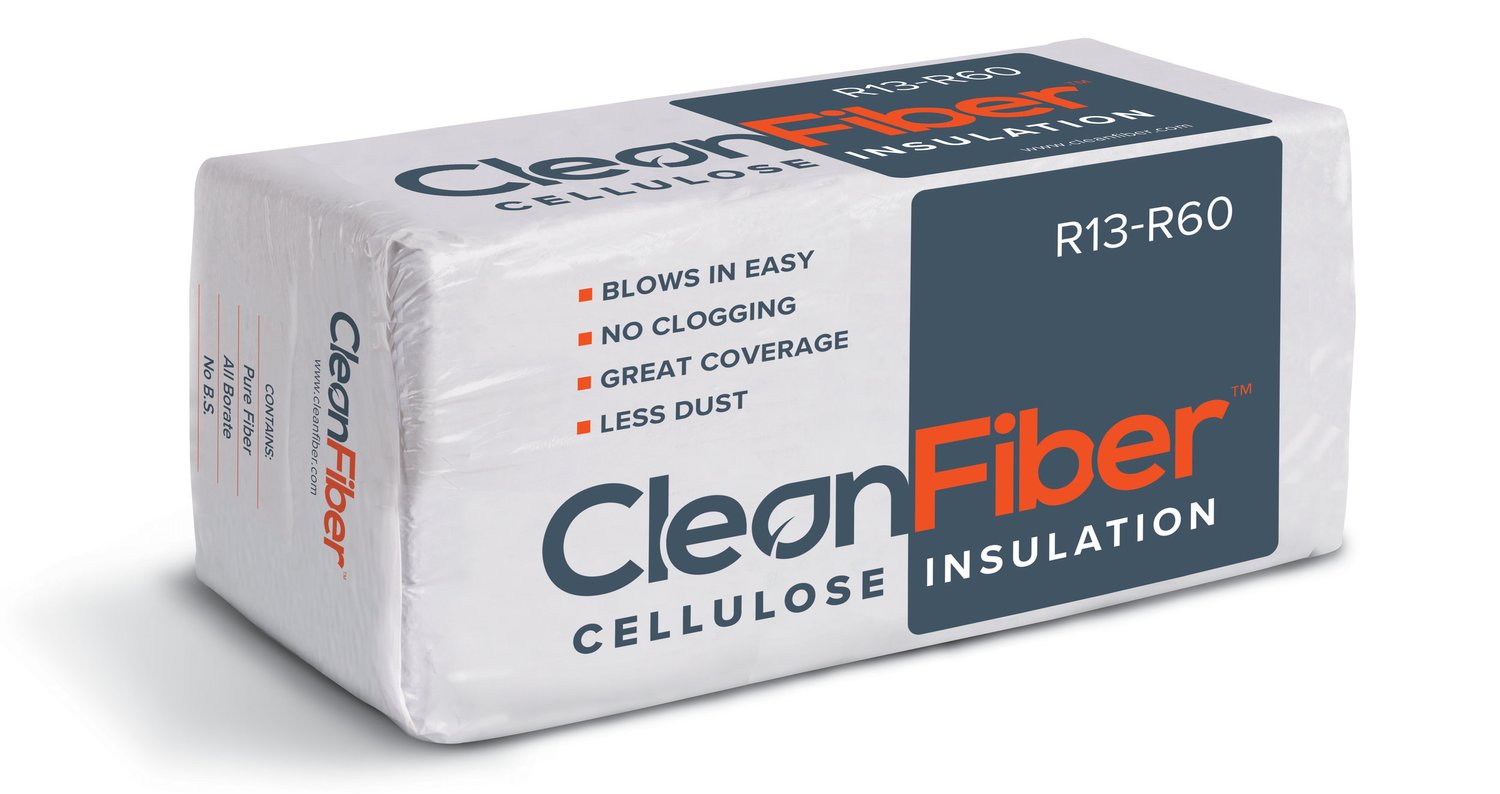 CleanFiber, bagged and ready for the blower. Yes, it used to be a box. // photo: company