A showroom usually asks you to admire something you cannot yet use. Ciinova took a more interesting approach. In an industrial park in Querétaro, it built a place where the demonstration had offices, working spaces and a roof. The building could host a meeting while making an argument about how buildings should be made. Visitors did not have to imagine the product at full scale. They were already inside it.
- The proposition: Mexican-made, modular and bolted construction systems.
- The buyers: storage developers, schools, households, businesses and public institutions.
- The proof you can visit: a headquarters certified LEED Platinum in March 2015.
That arrangement helps explain a company whose catalogue moves from little metal storage units to classrooms and industrial structures. Ciinova combines manufacturing, project delivery, technical instruction and rentable rooms. The connecting idea is practical: turn a construction method into something another person can inspect, order and put to work.
A building with something to prove
Ciinova dates its founding to 2010. Its roots reach into Grupo Metal Intra, the Mexican construction group behind the centre. In 2012, director Alejandro Saracho Luna described a project intended to serve both GMI companies and outside construction businesses. Partners would contribute products to the building; the centre would return that contribution through services. Even during construction, the premises were part demonstration, part working agreement.
The environmental credentials became concrete on 2 March 2015, when the headquarters received LEED Platinum under the New Construction rating system. Sustainability organisation SUMe records 94 points. It also reports an 87% reduction in potable-water consumption and energy savings of 56% against the project baseline. Those figures describe this building. They give the showroom substance without turning every item in the catalogue into a certified green building.
Platinum certification
Obras described the complex as a didactic building, showing its materials and systems rather than hiding the method behind the finish. That is an unusually useful sales device. A technical explanation becomes easier when the customer can point to the thing being explained. Sustainable architecture acquires the persuasive advantage of a chair: you can try it.
The idea had to pass three tests
In November 2016, Ciinova opened a broader chapter in its innovation services. An alliance brought together 15 universities and five research centres. The Mexican intellectual-property institute, IMPI, would advise projects on patents, utility models and industrial designs. The ambition was to shorten the distance between an academic idea and a construction product somebody might buy.
“Nuestra visión es constituir un polo de desarrollo para la industria verde nacional”
Óscar Peralta, 2016
“Our vision is to establish a development hub for the national green industry.”
The mechanism was more selective than the word “innovation” sometimes suggests. Director of innovation Hugo Salazar described three initial requirements: the idea had to be novel, useful and have a market. Only then came the prototype, patent process, business model and search for funding. A clever object with no buyer would struggle at the entrance, before anyone congratulated its inventor on the prototype.
Novel?02
Useful?03
A market?
Then: prototype → intellectual property → business model → funding
Obras reported a $10 million investment in the GMI-backed centre. It also described laboratory memberships and support connecting innovators with investment funds. This was a capital-intensive attempt to put the means of development in one place. The useful lesson is the order of operations: ask about demand while changing the idea is still cheaper than changing a manufactured product.
Small doors, large implications
Today, the catalogue makes that commercial instinct visible. IntraBox is a compact steel storage module for tools, equipment and supplies. Ciinova advertises self-assembly in four hours and includes basic tools, an installation manual and a maintenance manual. The customer is being sold both a finished space and a procedure for getting there.
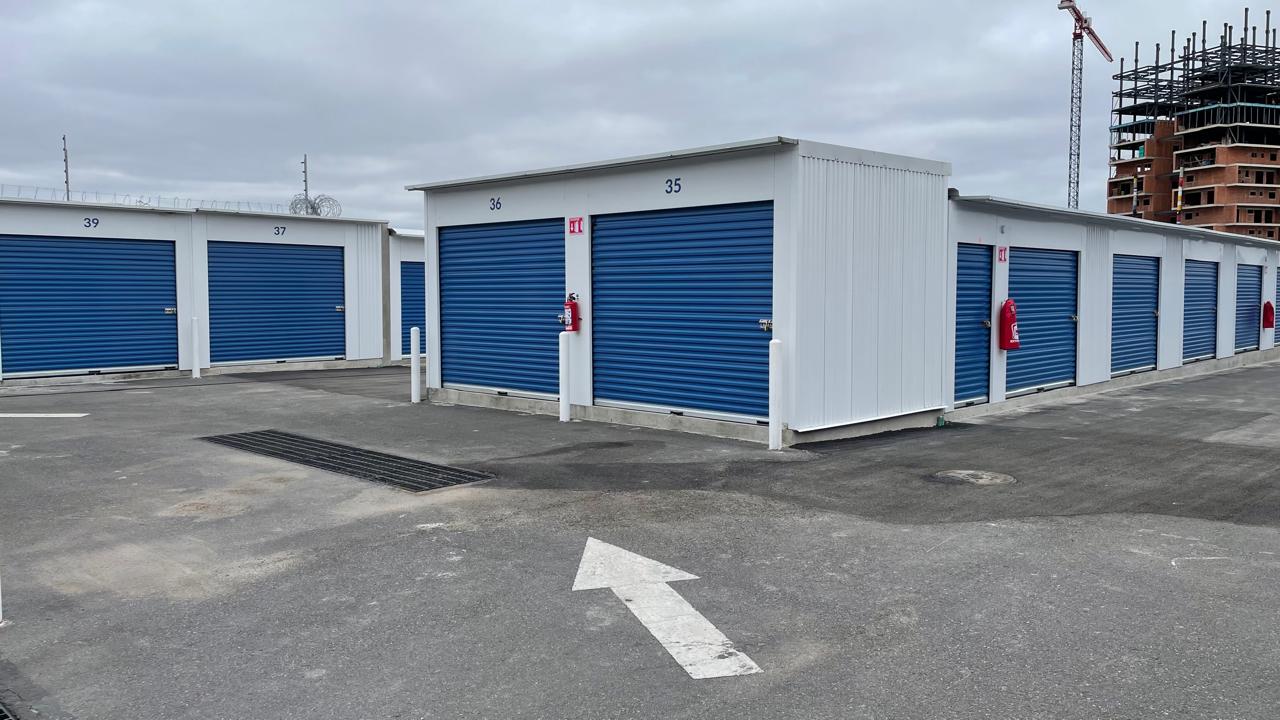
The larger storage offering serves developers fitting out interiors or creating outdoor complexes. Options include lockers, floor-to-ceiling partitions, two-level systems and IntraSteel structures. BPM portable metal warehouses come in 9.30 and 18.60 square-metre configurations. This places Ciinova upstream of the storage operator: it supplies the physical system from which somebody else can build a storage business.
Industrial customers have a different shopping list. IntraMet offers standard clear spans of 12 to 20 metres; other systems address larger structures. Ciinova also offers structural calculations and foundation design. Here, the value of modularity is room to configure, relocate or expand a facility, depending on the system. The engineering remains specific to the job.
A classroom, with the crew included in the sentence
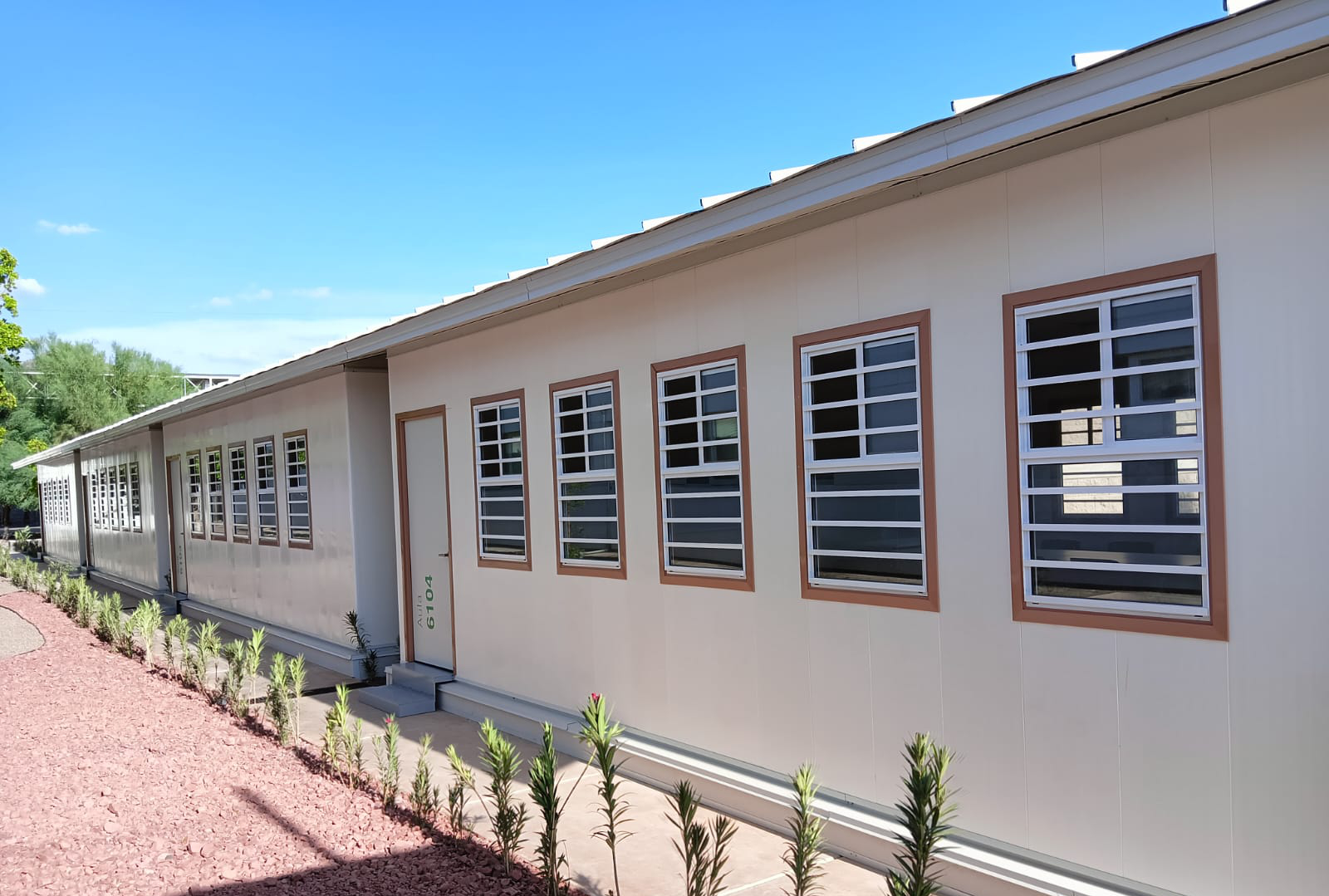
The education range gives the approach a human scale. Ciinova lists a 52-square-metre single classroom for 32 to 36 pupils, with a published installation estimate of five days using four people. Double and triple classrooms follow. Schools and public authorities can start a purchasing conversation with dimensions, capacity and an explicit crew assumption, rather than a photograph and a hopeful adjective.
Housing, clinics and operational camps extend the same family of solutions. EcoHouse models range from the 68-square-metre Natura to the 200-square-metre Jacaranda. Camps can combine sleeping rooms, kitchens, offices and sanitary spaces. These are different customers sharing a similar problem: they need usable infrastructure, often with a timetable that makes conventional site construction inconvenient.
An installation estimate still needs a boundary. Foundations, transport, utility connections, approvals and site readiness belong in the buyer’s questions. A short erection period becomes useful when everyone agrees where it starts and stops. Modular construction suits repeatable requirements; a complicated site or unusual specification can make the apparent simplicity less simple.
The instructions are part of the product
Ciinova’s installer school follows naturally from the kits. Teaching people to erect a system helps connect factory production with what happens on site. Materials distribution adds another commercial layer: the company advertises wholesale Metecno and USG products. Revenue opportunities sit around the construction method, from components and project work to training.
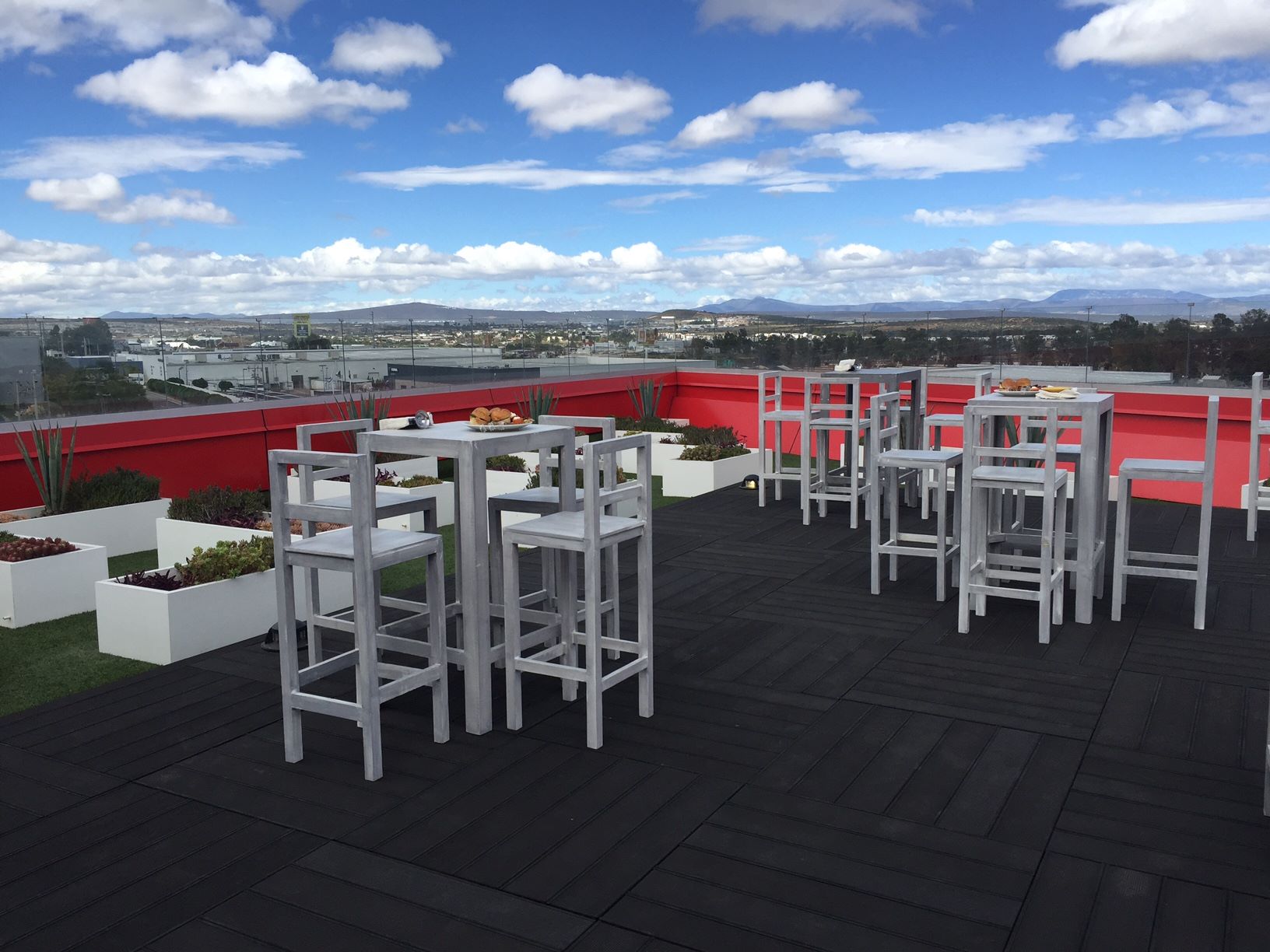
The headquarters has its own use beyond demonstration. Meeting rooms, classrooms, a 120-person auditorium and an outdoor event area are offered for rental. The building that began as an argument can also accommodate the discussion. For another manufacturer, that is the detail worth borrowing: make the method visible, give the customer usable instructions, and let the demonstration earn its keep.