options-trading
(14)
TRAFiX and the six-week switch
Changing a trading system sounds like a project measured in quarters. One Canadian broker did it in six weeks. TRAFiX built a business around making that kind of change less painful.

TradeStation built a laboratory for the trading mind
Before a trade becomes an order, it starts as a hunch. TradeStation built a business around what happens in between: writing rules, testing them, and putting them to work.

Simplex Trading makes a market out of uncertainty
An options trade needs someone on the other side. Simplex Trading built a Chicago business around being there - with its own software, its own capital, and a very practical interest in risk.
E*TRADE put Wall Street on your desk. Then Wall Street bought it.
A Michigan dentist helped prove that a personal computer could place a stock trade. Four decades later, E*TRADE’s bigger experiment is how much of your financial life can fit behind one login.
Dhan put the trade inside the chart
A late entrant to Indian stockbroking won a place on the trader’s screen by removing the awkward steps between analysis and action. Now Dhan has to make that focus travel beyond the trading desk.

Public grew up. So did its investors.
The app that made investing social is building a brokerage that can follow instructions. Its bigger bet: customers will bring their whole portfolio along.
CQG: The quiet machinery behind the trade
A chart can suggest a trade. CQG handles much of what happens next: the data, the route to an exchange, and the controls around the order. Broadridge has now bought its way into that machinery.
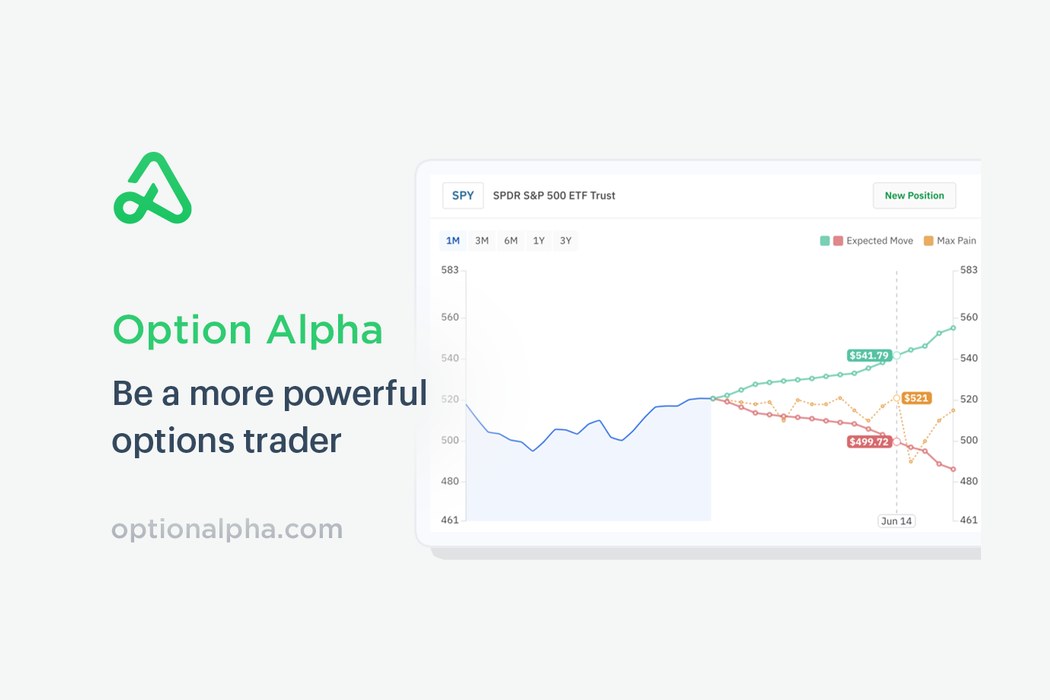
Option Alpha Put Options Trading on Autopilot - Then Made the Software Free
A scrappy options blog swallowed a coder-first automation startup and emerged with a stranger, smarter pitch: the bot is not here to predict the market. It is here to stop you from improvising in it.

Trading Academy Is Selling the Hardest Trade: A Repeatable Process
The nearly 30-year-old education company has moved from rented trading desks to hybrid classrooms, practice tools and broker-connected software. Its real product is not a hot tip - it is a system for deciding when not to trade.

The Exchange That Ripped Its Own Name Off the Wall
It dropped the "E," paid the fine, opened in San Jose, and put its reserves on a Merkle tree. Inside OKX's bet that self-custody - not the exchange - is the actual product.
MIAX
MIAX started as a bet that exchange technology could be faster, more reliable and more attentive to customers. It has since assembled eight marketplaces across options, equities, futures and international listings - and turned the machinery behind a trade into the product.
Gotrade
Gotrade is a Singapore-based, YC-backed fintech that lets people in 140+ countries buy fractional shares of US stocks and ETFs commission-free, starting from just $1. Often described as a 'Robinhood for Southeast Asia,' it uses nine-decimal-place fractional trading to make high-priced US equities accessible to first-time international investors on a mobile-first app.

Lime Trading
Lime Trading (Lime Trading Corp., operating as Lime Financial) is a New York-based broker-dealer that gives independent and institutional traders access to institutional-grade trading technology. Born in 2000 inside a quantitative hedge fund as Lime Brokerage, the firm built low-latency infrastructure for high-frequency trading and now offers direct market access, trading APIs, colocation, and proprietary web and mobile platforms for trading U.S. equities, options, and futures. It positions itself in the gap between bulge-bracket banks and retail apps, serving sophisticated traders and developers who want speed, transparency, and quality execution.

SignalPlus
SignalPlus is a Hong Kong-based, venture-backed technology company building institutional-grade infrastructure for digital asset derivatives. Its software sits on top of exchanges like Deribit, Binance, Bybit, OKX and Coincall, giving professional traders, market makers and institutions a free, Wall Street-grade options terminal with pricing, analytics, execution algorithms, automated delta hedging and, increasingly, agentic AI - all aimed at democratizing options for crypto markets.