The most important thing to understand about Option Alpha is that its bots are obedient, not clever. They do not wake before dawn, scan the S&P 500 and experience a flash of market intuition. They follow instructions. If the plan says open an iron condor when a set of conditions is met, size it within a limit and take profit at a specified threshold, the bot handles the ritual. This sounds less cinematic than artificial intelligence. It is also the point.
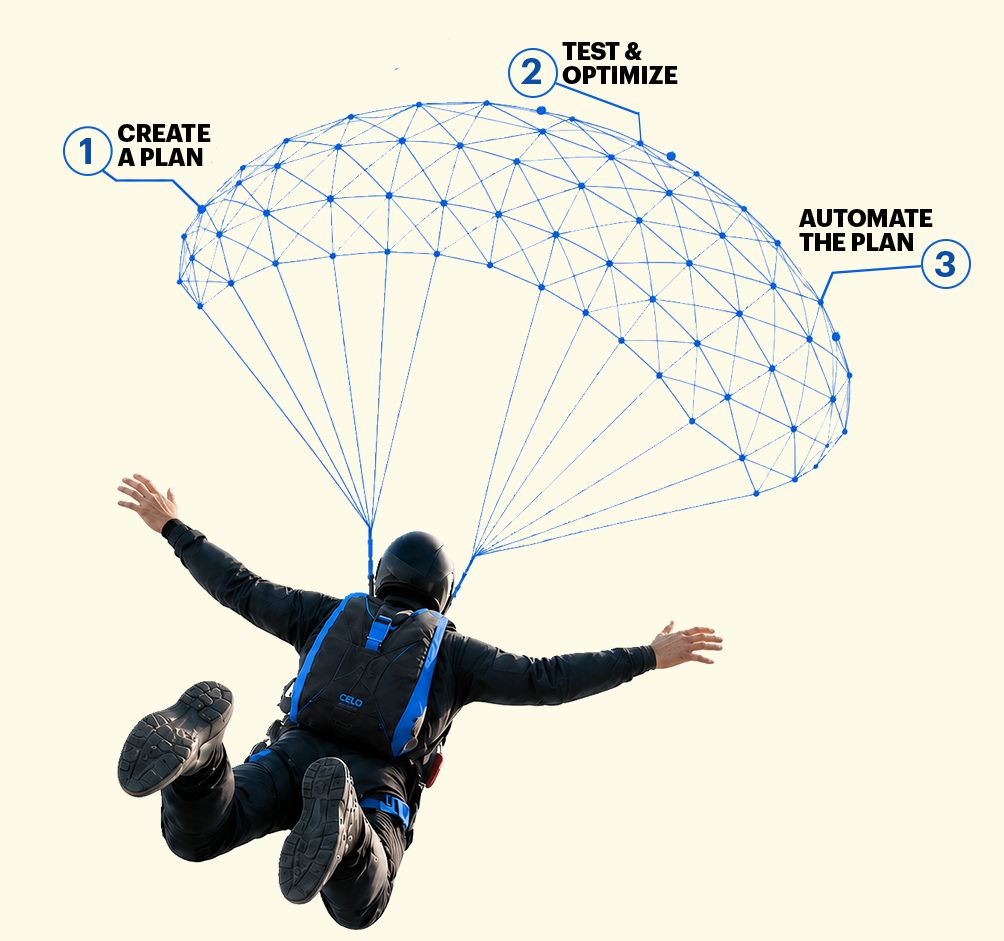
Retail options trading is a factory for last-minute exceptions. A position dips, a headline lands, the bid-ask spread widens, and the trader who promised to follow a rule begins writing footnotes to it. Option Alpha sells an antidote to that scene: decide the entry, exit and risk logic in advance; test it against historical data; then let software carry out the dull part while the market does its theatrical part.
Company-reported counters viewed August 20, 2026. They describe activity, not audited customer returns.
The originFirst came the classroom. Then came the machine.
Option Alpha's story starts in 2008 with Kirk Du Plessis posting to what the company now cheerfully calls a “terribly self-designed” Blogger site. There was no audience. By 2010, Option Alpha had become an education business teaching retail traders how options work. Research followed. In 2016, the company released Watchlist, software that sorted opportunities using pre-calculated expected ranges. In 2017 came Toolbox, adding backtesting and strategy optimization.
Running on a separate track was Alta5. Jack Slocum, a software entrepreneur who had previously co-founded developer-tools company Sencha, started Alta5 in 2014 with Rocco Savage and Adam Mischon. The team raised friends-and-family money in 2015, entered 500 Startups' Batch 20 in late 2016, and released its automation platform publicly in October 2017. CB Insights reports Alta5 raised $150,000.
Here is what failed first, or at least failed to travel far enough: Alta5 made automated investing programmable with JavaScript. That earned traction among algorithmic traders, according to Option Alpha's history. But “people who can code their own trading system” is a much smaller addressable market than “people who trade options.” The product had an engine and a narrow door.
Option Alpha had the opposite assets: a broad educational audience and analytical tools, but no live automation engine. Savage contacted Du Plessis after the Watchlist launch. Partnership conversations dragged on until December 2017, when Savage proposed the simpler arrangement: “We should merge.” They did in March 2018 and kept the Option Alpha name. The change of mind was not about abandoning automation. It was about removing code from it.
“We should merge.”Rocco Savage, after discussions about connecting Alta5's automation with Option Alpha's education and backtestingThe product
A trading plan with plumbing
The modern platform is a loop. Traders can scan Trade Ideas, inspect community templates, define a strategy, backtest it and turn it into a bot without writing code. Bots run scheduled scanners, evaluate conditions, submit orders to connected brokerages, monitor positions and trigger exits. Manual traders can use the analysis and position-management tools without handing every decision to a bot.
The June 2026 release made that middle stage considerably more serious. Option Alpha expanded backtests to strategies as far as 45 days to expiration, with data back to January 2, 2013 for most supported symbols and 2015 for XSP. It added event avoidance, position-frequency controls, concurrent-position limits, bid-ask guards and downloadable position histories. In August, Strategy Insights and new tools for comparing and combining tests pushed the product toward automated portfolios rather than isolated bots.
The company has also leaned hard into 0DTE options - contracts expiring the same day. It offers one-minute historical testing, opening-range-breakout logic, gamma-exposure charts and recipes, plus controls for profit targets, stop losses and expiration. This is useful precisely because 0DTE trading compresses the time available to think. It is risky for exactly the same reason.
The billIt costs $149 a month. It also costs $0.
Option Alpha Pro is listed at $99 per month when billed annually, or $149 month to month. It includes 50 bots, a $100,000 allocation limit per bot and unlimited backtesting. There is a 30-day trial without a credit card. The more interesting price is zero: qualifying Tradier accounts with at least $5,000 and TradeStation accounts with at least $10,000 receive Pro access without a subscription fee.
That is not charity. It is a distribution bargain. A broker gets an active options customer routing trades through its rails; Option Alpha gets subsidized acquisition and a lower price objection; the trader gets the full tool, subject to the partner's balance requirement and the rule that live trading stays with the sponsoring broker. Options, index and clearing fees can still apply. Free software is not free trading, and it certainly is not free risk.
Active connections currently include Tradier, TradeStation, tastytrade and Charles Schwab. Webull and Public are marked “coming soon,” with signed agreements but no public release date. Interactive Brokers is not connected. That broker map matters: automation depends on APIs, and a beautiful bot builder cannot send an order through a broker that does not support the relationship.
The marketNot the deepest tool. The shortest trip.
The alternatives arrive from four directions. Option Omega and other specialist tools compete on options backtesting. Composer and Capitalise.ai sell visual automation across different assets and workflows. tastytrade and thinkorswim wrap analysis around their own brokerage ecosystems. QuantConnect and direct broker APIs give programmers more control. A spreadsheet remains undefeated on price.
Option Alpha's distinction is continuity. A retail trader can learn an iron butterfly, inspect an idea, test the conditions, clone a template, connect an account and monitor the result without switching from classroom to code editor to execution terminal. A competitor may be more rigorous at one station. Option Alpha wants to own the trip.
That education layer is not decorative content marketing. Options contain expiration, volatility, assignment, liquidity and non-linear payoffs - several ways to be directionally right and financially wrong. Years of courses, podcasts, research and community discussion lower the activation energy for a product that would otherwise look like a cockpit.
The stealWhat another company can copy
Teach the workflow first
Content revealed the repeated calculations and decisions worth turning into software. The classroom became both acquisition channel and product research.
Merge complementary bottlenecks
Alta5 needed a larger, less technical market. Option Alpha needed execution. The combination made each side's existing work more useful.
Build a closed loop
Discovery leads to testing; testing leads to automation; live results lead back to analysis. Each module creates demand for the next.
Let partners buy access
Broker-sponsored plans turn a consumer subscription into shared distribution economics, with clear conditions attached.
There is a cultural lesson too. Option Alpha's best language is about process, not clairvoyance. Jack Slocum has written that his own worst moments come when impulsive decisions override a tested plan. That admission is more persuasive than a screenshot of a winning trade because it names the enemy the software can plausibly fight.
The catchA bot is an amplifier with excellent attendance
Under which conditions does this not work? When the backtest is overfit. When historical fills ignore live liquidity. When a stop order meets a gap. When the user does not understand assignment or pin risk. When the desired broker is unsupported. When strategy size changes the quality of execution. When a trader treats ten years of data as a promise about tomorrow.
Automation removes hesitation, fatigue and screen time. It also removes the hesitation that might have interrupted a foolish rule. Option Alpha improved its backtester in June 2025 so simulated slippage could not produce fills beyond the displayed bid or ask, and in June 2026 adjusted its paper engine to prevent fills above a spread's width. Those are healthy changes. They are also reminders that simulation details are not footnotes; they are the floor.
The bot cannot make a weak strategy strong. It can make a weak strategy punctual.
The sensible path is boring: learn the instrument, test across multiple regimes, include conservative assumptions, paper trade, begin live with capital one can afford to lose, and review the difference between modeled and actual execution. Option Alpha supplies tools for that path. It cannot supply the patience.
Still, the company has built a coherent answer to a real problem. The options industry is fragmented across education, data, brokerage and automation. Option Alpha connects those pieces and gives the small retail trader something institutions have long valued: rules that keep working when the person who wrote them is at lunch, asleep or briefly convinced that this time is different.
Keep exploringThe useful rabbit holes
- Option Alpha website
- Plans and broker promos
- Broker integrations
- Company history
- Product updates and research
- Product documentation
- Videos and product demos
- Option Alpha on LinkedIn
- Option Alpha on X
- Option Alpha on Instagram
Options involve risk and are not suitable for every investor. This profile describes the company and its software; it is not investment advice or an endorsement of any trading strategy.