Consider the small absurdity of a trading screen. A person studies a chart, decides what to do, then leaves the chart to tell another piece of software to do it. The decision and the action occupy different places. Dhan, the Mumbai trading company launched in November 2021, built much of its appeal around closing that distance. In a market crowded with brokers, the next click was a useful place to look.
- The customer: Indian active traders and long-term investors.
- The product bet: join charting, analysis and order placement.
- The business tension: frequent trading earns fees; quieter markets test the model.
The customer who would not switch
Arriving late has a peculiar disadvantage. Your prospective customer may already have an account, a watchlist and habits elsewhere. A slightly nicer app must overcome all three. Zerodha, Groww, Upstox and other brokers gave Dhan a crowded field to enter. The company needed a reason for someone to disturb an arrangement that already worked.
Pravin Jadhav had helped build Paytm Money before starting Raise, Dhan’s parent venture. His colleagues brought broking and trading-system experience: Jay Prakash Gupta, Alok Pandey and Raunak Rathi are identified as Raise’s co-founders. That background did not make adoption automatic. In a September 2025 public AMA, the Dhan team recalled that “practically no one joined us” during the first six to nine months. This was their retrospective description, rather than an audited customer count.
The useful distinction was between someone discovering investing and someone already frustrated by the mechanics of trading. The second person could recognise a better option chain, a quicker position adjustment or an order placed directly on a chart. Dhan called that customer a “Super Trader.” The name is exuberant; the product requirements are quite concrete.
Put the order where the decision happens
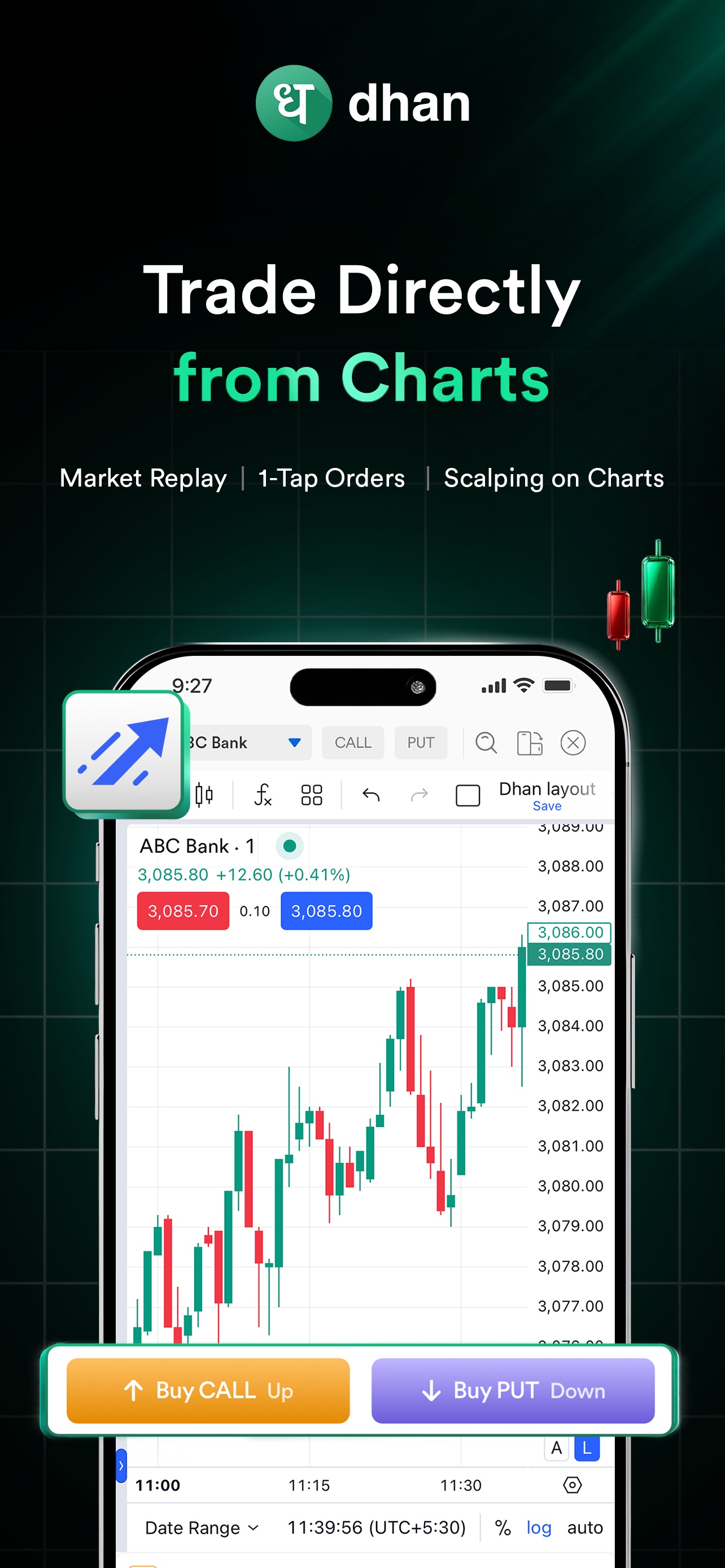
In November 2022, TradingView announced Dhan as its first Indian trading integration partner. Traders could connect their brokerage account to a charting environment they already used. Dhan also offers a TradingView-powered experience at tv.dhan.co. These are related routes with different feature entitlements; neither automatically gives someone a paid TradingView subscription.
For a chart trader, the attraction is easy to understand. Analysis, order placement and position management can happen close together. Dhan’s web tools include an option chain with Greeks, volume and open interest, with orders available from the chain itself. Information stops being a separate destination. It sits beside the action it is meant to inform.
“Quality over quantity”
A PUBLISHED DHAN VALUE
There is a product lesson here that travels well beyond finance: watch the handoff. Where does a customer copy something, reopen something or change tools? Dhan’s chart integration addressed a visible interruption. Copying that approach requires customers whose repeated tasks you can observe, and enough technical control to improve those tasks. Adding more buttons would miss the point.
A desk with more than one drawer
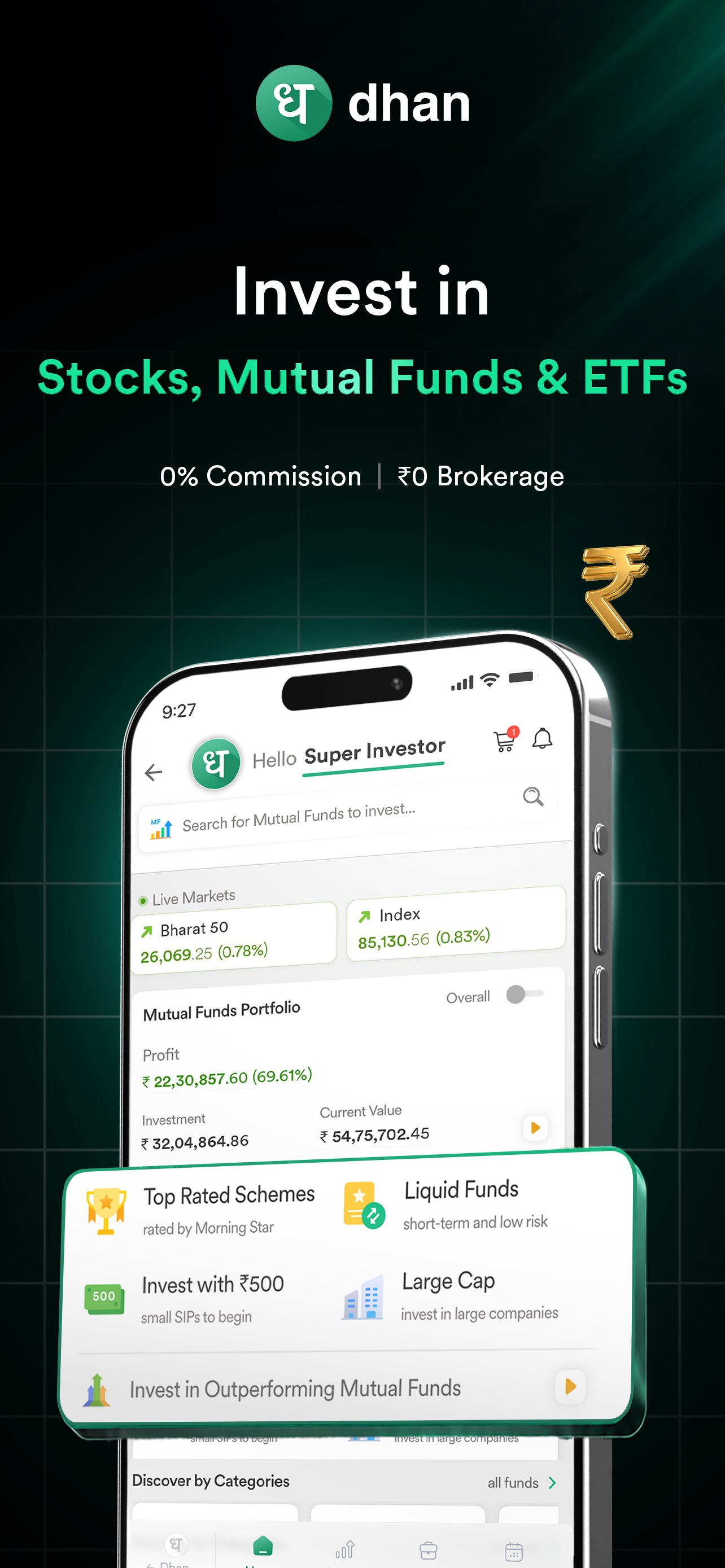
Dhan’s main app and web platform cover stocks, ETFs, mutual funds, IPOs, futures, options and commodities. The surrounding products acknowledge that these customers do different jobs. Options Trader gives derivatives users a dedicated place to build strategies and examine multi-leg positions. ScanX handles screening and market discovery. DhanHQ provides trading APIs so developers and systematic traders can connect their own software.
That last choice is revealing. A customer does not have to love the broker’s interface to use the broker’s infrastructure. Trading API access is offered free, though data services and other subscriptions can carry charges. The GitHub organisation publishes developer resources, including a Python SDK. It gives technically capable users another route into the business.
In March 2026, Dhan launched DEXT T3, a configurable trading terminal powered by its internally built DEXT system. Linked widgets, keyboard controls and adjustable layouts let users arrange the desk around their habits. The practical promise is fewer repeated setup steps. Speed claims remain company claims; a terminal cannot promise the price at which an order will fill.
Free has a business model
The price list helps explain the customer choice. Indian equity delivery carries zero brokerage, and direct mutual funds carry zero commission. Equity and ETF intraday brokerage is the lower of ₹20 or 0.03% per executed order. Equity and commodity futures and options cost ₹20 per executed order. Taxes, exchange fees, demat charges and applicable services still belong in the calculation.
A hypothetical ten executed F&O orders therefore incur ₹200 in brokerage before those other charges. For the broker, activity matters. For the customer, a small order fee can accumulate. Margin financing adds an interest-bearing revenue line and introduces its own borrowing costs.
Selected brokerage rates, not total transaction costs.
By June 2026, Dhan reported roughly 1.07 million active traders, citing NSE. Downloads are a different denominator. Its parent’s financials tell another part of the story: Raise’s audited consolidated total income reached ₹904 crore in FY25, with ₹419 crore profit after tax. Those are group figures, not a standalone revenue statement for the Dhan brand.
The market gets a vote
In October 2025, Raise announced a $120 million Series B at a reported $1.2 billion valuation. Hornbill led the round, with MUFG and BEENEXT among the participants. The deal included both investment into the business and sales of existing shares; the headline amount should not be read as a product-development budget.
Regulatory changes and weaker trading volumes supplied a reason to widen the business. Discussing possible insurance distribution that month, Jadhav said “we don’t plan to be manufacturers, we’ll operate as distributors.” Those were plans, with no launch timetable. In June 2026, Dhan added US-stock and ETF investing through GIFT City, extending what Indian customers could buy.
The constraint follows directly from the strategy. A trader-focused broker needs customers who keep trading. Quieter markets, changing rules and competitors copying useful features can weaken that advantage. A person who only wants an occasional fund purchase may attach little value to a configurable terminal. Dhan’s story is useful because it makes the choice visible: a particular customer, a particular interruption, and a business built around removing it.