At 17, Nikhil Kamath worked a shift that began at five in the evening and ended at two in the morning. The job was selling accidental insurance over the phone to people in Britain. Bangalore, as he remembered it in a graduation speech two decades later, was greener and less crowded then. His monthly pay was about ₹8,000. He had already left formal school and had already tried another trade: buying and selling used mobile phones to children in his neighborhood.
It is tempting to tidy this into a fable about a young entrepreneur who saw what others could not. Kamath's own recollection is more entertaining. He was about 15, had perhaps 10 or 20 phones in inventory, and was having fun. The early venture was small enough to fit in a cupboard. The night job gave him a wage. Neither supplied the credential he had left behind. Both gave him the habit of doing business before anyone had formally invited him to.
Chess came first. He played from childhood and competed through school, district, city, state and national levels. In a 2018 interview, he said he quit school around ninth standard to play full time. Later, he qualified that account: chess was only part of the decision, alongside poor marks and his side businesses. His older brother Nithin was already interested in markets. Nikhil began trading, then kept trading. The move from a chessboard to a screen sounds neat in retrospect; the work itself involved losses, rules and long periods when the next move was unclear.
The brothers and the brokerage
The enterprise that made Kamath widely known began as a partnership with Nithin. They founded Zerodha in 2010, bringing their own trading experience to a brokerage built around lower costs and online access. Nithin became its CEO. Zerodha lists Nikhil as chief investment officer and says he heads financial planning. Their jobs overlap in a family business, but the titles reveal a useful distinction: one brother is the company's public chief executive; the other has spent much of his working life thinking about where capital should go.
The numbers became difficult to ignore. Forbes reported more than seven million active Zerodha clients in 2026. That is a company scale, not a description of either brother's personal trading record. It also marks how different the brothers' second venture was from the first phone business. A handful of handsets could be checked one by one. Millions of brokerage accounts require systems and people that continue working when a founder is asleep.
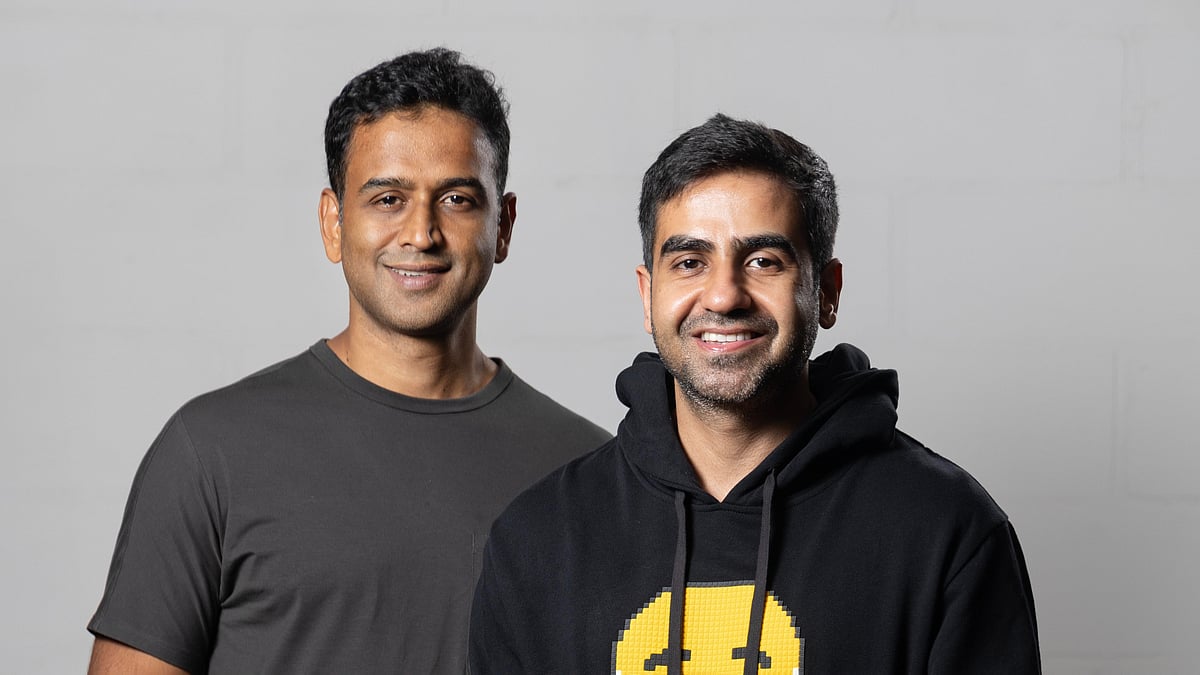
One can see why the story of a school dropout building a brokerage travels so easily. Its compact form makes the choices look inevitable. Kamath has resisted that simplicity when speaking about education. In one interview he said he regretted missing aspects of college life, including friendships. At a 2025 school graduation, he joked about the oddity of giving a convocation address when he had never had one himself. Success did not retroactively hand him a campus. The joke landed because the absence was real.
How to carry a question forward
Zerodha did not exhaust his interest in money. True Beacon, an investment management firm for wealthy clients, followed in 2019. Gruhas, a venture investment platform he co-founded with Abhijeet Pai, brought him closer to companies working on practical problems, from energy to the built environment. These are different forms of investing, with different clients and risks. Together they show Kamath moving beyond the daily act of placing a trade toward choosing what kinds of enterprise might be built.
He has also described a trader's mental discipline in terms borrowed from chess: protect a position, understand the cost of a mistake, and decide how much risk a move can bear. Yet the chess analogy has an uncomfortable chapter. In 2021, during an online charity event against former world champion Viswanathan Anand, Kamath received outside help. Chess.com closed his account under its fair-play rules, and he apologized. The episode is a reminder that the game has rules beyond winning. It belongs in the account of someone who speaks often about judgment and risk.
“As a young philanthropist, I expect to have more questions than answers.”Nikhil Kamath, in his Giving Pledge letter
By 2023, Kamath had made a public commitment that took those questions beyond a portfolio. He joined the Giving Pledge, promising to give the majority of his wealth to charitable causes during his life or through his will. His letter named climate, energy and education among his interests. It also admitted uncertainty. That is a useful sentence from a man whose profession is often mistaken for the art of sounding certain. Wealth can buy time and access; it cannot eliminate the need to learn what helps.
The smaller and more immediate experiment was WTFund. Its premise was direct: founders under 25 could receive grants of up to ₹20 lakh without giving up equity. The program's site reports 5,000 applications evaluated and 26 portfolio companies. Those are the fund's own figures, and they describe an effort to lower the price of a first attempt. For someone whose own first businesses began before college age, the target group is hardly abstract.
In late 2025, Kamath and retailer Kishore Biyani launched The Foundery, a more hands-on venture studio. Its 90-day residential program brings aspiring founders into the work of making consumer businesses, with Ronnie Screwvala also involved. At a July 2026 showcase, 18 companies met investors. The model is different from WTFund's grants: here the point is to build alongside a team. The common interest is the first awkward stretch of company making, when an idea must acquire a product, a customer and someone willing to keep going after the pitch ends.
A microphone at the table
Another venture began in a far less formal setting. Kamath wrote that WTF started with a group of friends and a camera in his Bangalore apartment one weekend a month. The conversations became a podcast. Then came related shows, a community, offline gatherings and the fund. The website now calls the whole operation a platform for young India. It is a large description for something with a modest origin, but that distance between apartment and audience is exactly what makes the story interesting.
Kamath's role at the microphone is unlike the role investors are usually assigned in public. He is there to ask, listen, interrupt and sometimes expose the limits of what he knows. His guests have included founders, artists, technology executives and political figures. In January 2025, Prime Minister Narendra Modi appeared on People by WTF for his first podcast. The meeting put the former night-shift worker across a table from the country's head of government. Whatever one makes of the conversation, the route to that table was peculiar enough to deserve its own diagram.
A broker builds tools for people to make decisions. A podcast host asks how decisions are made. Kamath's subjects range widely, but that common thread helps explain why he has kept moving from finance into media. He has spent years examining price, incentives and belief in markets. Conversation lets him examine those same forces in a person. An answer may run for several minutes and still fail to settle the question. The format allows that, which is one reason it keeps drawing him back.
There is a risk in this kind of expansion. When an entrepreneur makes a media company around his own curiosity, the questions can become as much a brand as a method. Kamath seems aware of the pull: in September 2026, he introduced WTF: Discourse, designed to place people with opposing views in one discussion. Its stated aim is to let arguments meet rather than merely gather agreement. Whether the format can sustain that ambition will be judged by the conversations, not the announcement.
The price of an open door
Kamath is 40 in 2026. Forbes put his net worth at about $3.1 billion in mid-September, a changing estimate rather than cash stacked in a room. Such figures can make a profile feel finished. They are only a snapshot of what a stake in a business is thought to be worth. The more useful measure of his present work may be how many different doors he now tries to open: to a brokerage account, to a young founder's first capital, to a long public conversation, to philanthropic giving.
He has made public mistakes as well as public promises. His path out of school was unusual, and he has been candid about some of what he missed. Those details keep the story from becoming a poster about dropping out. They also make the chessboard a better image for his career than the finish line. A chess player looks at the position in front of him, with old choices already fixed and new ones still available. The board does not congratulate him for the last move.
In his 2025 graduation speech, Kamath remembered the simple answer he might have given as a teenager about what he wanted: money. The answer at 40 appears more crowded. It includes companies and investments, certainly, but also grants, a pledge, and a widening list of people he wants to question. His first inventory was a few used phones. His present inventory is less countable: relationships, doubts, ideas and the willingness to sit down for another conversation. The night shift ended long ago. The questioning has not.
Keep the conversation going
- WTF - shows and community ↗
- Nikhil Kamath on YouTube ↗
- Nikhil Kamath on X ↗
- Nikhil Kamath on Instagram ↗
- Nikhil Kamath on LinkedIn ↗
- WTFund ↗
- The Foundery ↗
- Watch his NDTV interview ↗
- The 2025 Modi conversation ↗
Cover photo: Forbes. Story photo: Fortune India.