On February 1, 2026, a Dhan authorised partner opened its first office in Surat. For a business built around screens, an office makes an interesting milestone. It has an address. Someone can walk in. A conversation can continue beyond a help window. Ketan Shah, who leads Dhan's omnichannel business, celebrated the opening as part of a network connecting technology with trust.
The event offers a useful way into his career. Shah spent more than 25 years at Angel One before joining Dhan in September 2025. His work has taken him through technology, partner distribution, revenue and strategy. Those subjects can occupy separate floors in a company. In his professional history, they keep meeting at the same practical question: how does a customer actually get from wanting to invest to using the service?
An app can be downloaded in moments. Confidence is less obedient. Dhan's partner office was intended to give traders and investors access to its technology with local support. Shah's new brief puts that combination at the centre of his work. The digital platform supplies the tools; people in the community help customers approach them. The word “omnichannel” is ungainly enough to deserve its own waiting room. The idea behind it is considerably more approachable.
“a network of partners who are bridging technology with trust”
Ketan Shah, on the Surat partner opening
Broking first, technology next
Shah's route into technology began inside the business he would spend decades serving. He chose broking because of his interest in equities. After several years, he began looking for fresh challenges and saw information technology as a way to make the business more structured. He completed IT management certifications and moved into the technology side of the industry.
By 2014, his responsibilities at Angel included IT policy, planning, budgeting, implementation and maintenance. He was also responsible for franchise business development: partner experience, platforms, analysis, training and the economics of existing franchisees. The pairing is revealing. A partner's business could depend on a system that someone else had designed; a system's usefulness could depend on whether a partner understood it.
This was a job that required attention to the less photogenic parts of financial technology. Budgets rarely make a stirring photograph. Maintenance is unlikely to get an ovation. Yet both are part of the distance between a promising idea and a service that people can use repeatedly. Shah's responsibilities placed him on both sides of that distance, where the technology plan met the business plan.
The career change also complicates a familiar assumption about executives in financial technology. Technical interests need not begin with a desire to build software for its own sake. They can begin with a business problem. In Shah's case, the attraction was the possibility of organising broking better. His later move into distribution did not erase that concern. It gave it another set of customers: the partners whose working day depended on the platform.
The paperwork had to move
One of Shah's published technology arguments concerned the beginning of the customer relationship: opening an account. Writing about Angel's digital know-your-customer process, he described the use of a thumb impression as a digital signature and integration with the UIDAI identity database. The purpose was to reduce paperwork and speed up verification.
His description was strikingly physical for an article about digital finance. A sales team could carry a biometric device to a customer's location. The customer could complete the process at home or at work. Angel said a fully verified account could be ready for trading within an hour. This was the company's account of its process at the time, rather than a promise about account opening today.
The example explains his approach better than a catalogue of job titles. A branch visit, signatures and waiting were all pieces of the experience. Changing the back end altered what the customer had to do in the real world. The technology travelled with a person, and the person brought the service closer to someone who might otherwise have postponed the whole exercise.
There is an appealing modesty to this kind of innovation. The customer need not admire the integration or applaud the architecture. They can simply get on with their day. A well-designed process often succeeds by giving people less to think about. In this example, the executive's attention was on the point of entry, where an administrative inconvenience could become a reason never to begin.
The partner business, in plain language
Shah's move through Angel's senior roles eventually took him onto its board. He became a whole-time director in May 2021. By April 2024, he was listed as chief strategy officer on the company's earnings call. In October that year, the management list identified him as chief sales and revenue officer. The changing titles reflect a career extending beyond the original IT remit.
His public exchanges with investors sometimes brought the conversation back to distribution's everyday details. On Angel One's July 2023 earnings call, an analyst asked about the authorised-person network. Did these partners have a brick-and-mortar presence, or could they be individuals working from home? Shah explained that the network included a mix of individuals and corporate entities.
That answer matters because the phrase “partner network” can suggest identical offices arranged across a map. The actual participants can have different structures and different ways of working. Distribution is a business of accommodating those differences while keeping the service coherent. An individual operator and a corporate partner may arrive with different resources, even when both are connecting customers to the same broker.
Angel's 2021 description of Shah also stressed operating efficiency, digital customer engagement and the use of analytics to improve service and revenue. These are company assessments of his work, but they place the same concerns together: what the system does, how the customer experiences it, and whether the business can sustain it. A trading platform must work on more than the day of its demonstration.
Twenty-five years, then a new brief
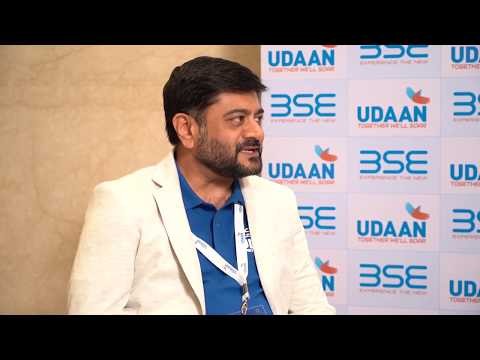
The move to Dhan in September 2025 brought Shah to a platform whose growth had been largely online. Founder and CEO Pravin Jadhav wanted the company to expand distribution through partners and bring additional financial products into that effort. Shah was appointed chief executive officer of the omnichannel business, a specific remit within Dhan's leadership.
The distinction is useful. Jadhav remained Dhan's founder and CEO. Shah's task was to build the business across online and offline channels. His appointment brought experience of a broker's technology, revenue and distribution into a younger organisation. Dhan's leadership welcomed him as someone who had worked through Angel's evolution into a digital business and its public listing.
It would be easy to tell this move as a simple exchange of an old company for a new one. The work suggests a more interesting continuity. The experience accumulated at Angel was directly relevant to the part of Dhan that was now being built. Shah had already spent years dealing with the relationship between central platforms and people running businesses around them.
A long tenure also gives a move its particular weight. More than a quarter of a century at one organisation is enough time for responsibilities to change repeatedly. Shah's next role did not require him to reproduce every part of that history. It required him to use it in a new setting, alongside a team that had reached customers primarily through its product and technology.
- May 2021
- Whole-time director at Angel Broking
- Sep 2025
- Omnichannel CEO at Dhan
- Feb 2026
- A partner’s first Surat office opens
The people inside the systems
There is a smaller, more personal detail in how colleagues have described Shah. In a public account of her career development, Angel One's Subbulakshmi S K thanked him for recognising her talent and supporting her as she took on new assignments. It is one person's account, but it adds something a management biography cannot supply: the experience of being noticed by a senior colleague.
Shah has also spoken positively about the work of an organisational consulting team during Angel's transition from physical operations through a combined physical-and-digital model to digital business. His testimonial discussed identifying areas for improvement, bringing organisational values into daily practice and helping people adopt changes. The story of transformation included the employees who had to carry it out.
Taken together, those accounts offer a useful counterweight to the vocabulary of efficiency. A system changes on paper when a plan is approved. It changes in practice when people can work with it. The colleague taking on a new responsibility and the partner learning a platform belong in that account of change, even when they do not appear in a product launch photograph.
That is also why the Surat opening is a fitting episode in Shah's current chapter. It gives his mandate a visible form without pretending that an office alone completes the job. A partner must still build a business. Customers must still understand the service. Technology must still support both. The opening establishes a place where those responsibilities can meet.
A screen with someone on the other side
Dhan today offers mobile and web platforms, tools for options traders, trading APIs and a desktop trading terminal. The range gives Shah's distribution brief a substantial product base. It also means that helping a customer can involve choosing the right entry point, rather than merely explaining where the download button lives.
The company also provides access to mutual funds, IPO applications and US stocks. This is the setting for the expansion into other financial products described when Shah joined. The product menu is broad; his role concerns how that menu reaches people through several channels. Availability and understanding are separate pieces of a customer's experience, and an organisation has to work on both.
His career makes the Surat office feel less like a detour from digital finance than another stage of a long-running concern. He entered technology from broking, worked on processes that brought account opening to customers, managed partner development and later took responsibility for strategy and revenue. At Dhan, that experience is being put to work around a platform that is adding local presence.
The story ends, for now, with an office and an invitation to potential partners. Neither needs the language of a revolution. Shah's next chapter will be made in the ordinary work that follows an announcement: equipping partners, serving customers and making several ways of accessing a financial service work together. The app remains in the customer's hand. His business is concerned with who can help them use it.