Money has a talent for making competent people feel briefly incompetent. A portfolio may contain familiar names, sensible purchases and years of careful saving, yet its owner can still face a screen full of figures and wonder what, exactly, requires attention. Nikhil Golatkar’s public work circles this gap between having information and knowing what to do with it. For a technology founding partner, it is an unusually human place to begin.
Golatkar is based in Mumbai and belongs to Centricity WealthTech’s founding team. His place in the business is technology, product and engineering. The company connects financial professionals and investors through digital tools, but his writing repeatedly returns to the usefulness of the professional beside the tool. A well-arranged screen can save time. A conversation can establish what that time is supposed to achieve.
There is a small irony here. People building financial software are often asked to add things: another capability, another choice, another view. Golatkar has made simplification a theme of his public commentary. Read across his writing and a question begins to emerge: how much work should the investor have to do simply to understand the investment experience?
The idea was there in 2022
In October 2022, Golatkar published an essay about wealth technology and millennial investors. He was already identified as a founding partner at Centricity. His subject was a generation comfortable with digital life but facing an expanding menu of financial choices. Familiarity with an app, he argued, did not automatically resolve the difficulty of choosing an investment.
He described two approaches: an entirely digital service and a service that joined digital convenience with personal guidance. He discussed consolidated dashboards, easier documentation and the value of expert advice. The appeal of the second approach lay in the combination. Technology could take some of the administrative burden away while a person helped make the choices understandable.
That early essay is a useful starting point for his story because it gives his later thinking a history. The human role was present before the more recent discussion of AI. The recurring interest was the investor’s experience of complexity, including the possibility that more accessible information could still leave someone unsure.
A menu can be wonderfully comprehensive and still leave you wishing someone would recommend lunch. Financial choices carry considerably more consequence. The useful design question is how an experience helps people move from looking at possibilities to understanding their own priorities. Golatkar’s writing puts that question close to the centre of the technology discussion.
A builder among wealth managers
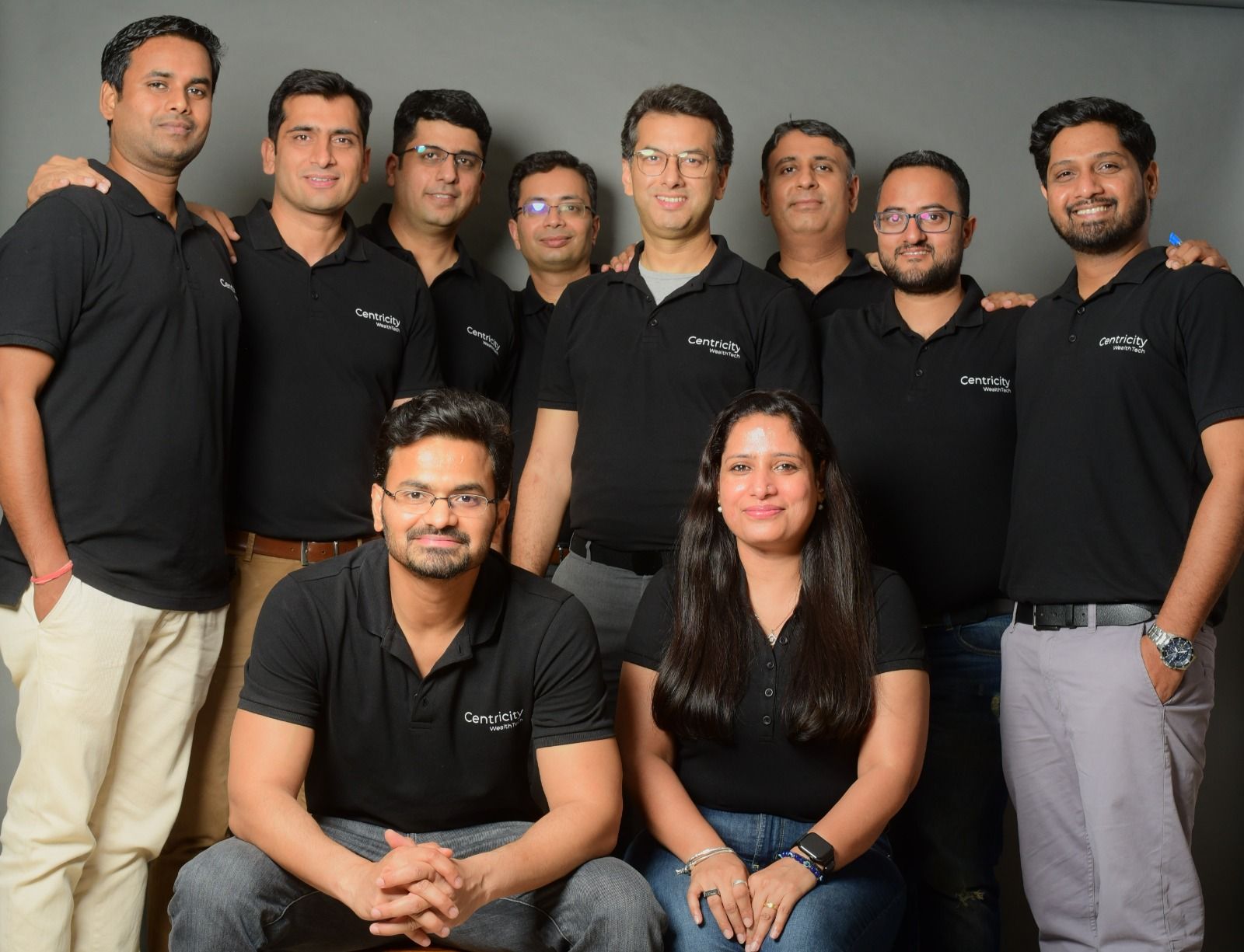
Centricity’s early team brought together people from private banking, wealth management, investment products, operations and technology. Golatkar and Kunal Shrivastav were identified as the technology founding partners. Their earlier experience included developing wealthtech solutions for domestic and foreign wealth management firms. That background placed them alongside colleagues whose experience was closer to the client relationship and the distribution of financial products.
By September 2023, the business was describing two related product settings. OneDigital served financial product distributors. INVICTUS addressed single-family offices and wealthy clients with tools for investment oversight and reporting. These were different audiences with different working days. A distributor needed to serve clients; a family office needed to understand a collection of investments. The technology work sat across those practical demands.
By then, Centricity had begun operations in April 2023 and reported more than 700 financial product distributors in its early network. That gives the founding technology role a concrete setting: software being used by a growing group of professionals, rather than an idea waiting for an audience.
It also gives collaboration a purpose. Someone who knows how a client asks a question may notice a problem that never appears in a technical specification. Someone who builds the system may see why a seemingly small request changes several other steps. A founding team has to translate between those perspectives. The quality of that translation eventually reaches the person using the product.
When the feature list stops helping
In a later public post, Golatkar argued that wealth platforms were entering a period in which access and familiar capabilities increasingly became expected. He wrote: “Features are no longer the moat.” His emphasis shifted towards how the parts of an experience worked together, with less friction for investors and advisors. The claim was about where he believed differentiation would come from, rather than a declaration that a particular product had already solved the problem.
The distinction is useful. A feature list describes what exists. A person using a service experiences the sequence: what they understand first, what they must supply next, where they need assistance, and whether they can recognise the result. Integration is felt in those transitions. It can be difficult to photograph for a product announcement, which is perhaps why announcements so rarely linger over it.
Consider a simple design question, offered here as an illustration: after showing someone a portfolio, what should the screen help them understand next? The answer might depend on their purpose for opening it. An impressive collection of numbers can still demand considerable interpretation. The challenge is to arrange the experience so that the next useful question becomes easier to ask.
Golatkar’s argument is therefore interesting as a test of product priorities. If the investor or advisor has to keep assembling the meaning of the service, the product team still has work to do between its individual capabilities. A smoother beginning is welcome. The rest of the journey deserves the same attention.
The advisor keeps the chair
Golatkar’s writing on AI draws a boundary around the kinds of work he thinks machines should take on. He identifies analytical and routine tasks as useful applications, while reserving complex decisions and relationship-led planning for human judgment. His examples include administrative work and security monitoring on one side, and consequential financial choices or unusual client circumstances on the other.
“AI the work, Keep the Wisdom.”
Nikhil Golatkar
This is his stated view of the division of labour. It should not be mistaken for a report that every capability he discusses has been deployed at Centricity. The distinction matters because a philosophy about a technology and an inventory of a finished product answer different questions.
The phrase about wisdom is memorable because it leaves room for responsibility. A system can produce an output; a professional must decide how that output fits the person in front of them. Read as a design principle, the idea asks builders to think about handoffs. Where does an automated task finish? What does the advisor need to review? How does the client understand who is helping with which part?
Those are ordinary questions with substantial implications for an interface. The simplest-looking screen can conceal several decisions about authority. A helpful prompt and a definitive instruction create different expectations. The interest in Golatkar’s position lies in his willingness to leave a place for judgment inside a conversation about automation.
The work leaves small traces
There is also a modest glimpse of Golatkar’s place in the engineering team. When developer Nikhil Pawar announced that he had joined Centricity in November 2024, he thanked Golatkar, Pushpendra Singh and Kunal Shrivastav for support and guidance during project onboarding. It is a narrow anecdote, but a concrete one: a colleague beginning work and naming the people who helped him enter the project.
Such acknowledgments have a different scale from funding announcements. They concern the work of making a team usable to a new member. They cannot describe a whole management style, but they do show a moment of collaboration. For a profile concerned with how systems fit together, it is a fitting detail. Products are built by people who also need context.
Centricity’s current leadership structure places Golatkar in its technology, product and engineering group as a founding partner. Kamal Kishore is separately listed as Chief AI & Technology Officer. The distinction gives the reader a clearer picture of the team around him and keeps the founding role in its proper setting.
More capital, the same practical question
In August 2026, Centricity raised ₹280 crore in a round led by SMBC Asia Rising Fund. The round combined ₹230 crore in equity with ₹50 crore in venture debt. The stated direction included expanding the company’s private wealth and global private client businesses. It was a company milestone, shared across a team, and it enlarged the context in which the founding partners were working.
For the story of Golatkar, the interesting question is what follows from a larger setting. More resources can support more work. They also make the choices about that work more consequential: which improvements deserve priority, which interactions need care, which burdens should the software carry for its users?
His public writing offers a way to approach those questions. Across the years, the subject changes from digital investing to connected platforms and AI, while the person making the decision keeps returning to the frame. That continuity is what makes the profile more than a list of roles.
A useful financial experience gives someone a little less to wrestle with before the important conversation begins. In Golatkar’s case, the story worth following is how a founding technology partner thinks about creating that room. The dashboard may become more capable. The investor still deserves to understand what happens next.