open-source-ai
(45)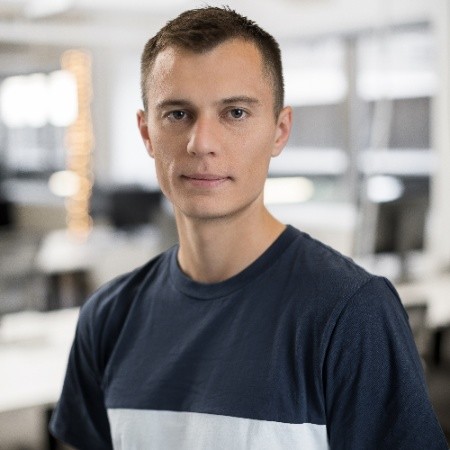
Denis Yarats and the Five-Hour Bet on Better Answers
A competitive programmer became a research scientist, then helped turn citations into a consumer habit. The revealing part of Denis Yarats's story is not a single breakthrough, but his stubborn preference for building the next small thing correctly.
The $2,000 AI Company That Learned to Think in Trains, Proteins and Genomes
InstaDeep began in Tunis with two laptops, about $2,000 and no tidy business plan. A decade later, its algorithms route circuit boards, read genomes and sit inside BioNTech's bet on AI-designed medicine.
Dify Gives AI Workflows a Place to Grow Up
The open-source favorite turns prompts, company knowledge, tools, and human approvals into visible machinery. It is a convincing shortcut to production - provided your team is ready to own the plumbing it reveals.

CrewAI Puts the Grown-Ups in the Agent Room
CrewAI began as a tidy way to make AI agents work as a team. Its bigger bet is less theatrical and more useful: giving those agents schedules, supervision, audit trails, and a route into production.

Eugene Cheah Is Asking AI’s Most Expensive Question: How Small Can We Go?
The Featherless AI co-founder turned a side-door pricing test into an open-model platform. His bigger wager is stranger and more consequential: useful intelligence should be smaller, steadier and owned by more people.

Mike Henry Is Building the Air-Traffic Control for AI Compute
After a decade spent trying to make one chip do more, the Parasail co-founder is taking a wider view: connect the scattered machines, hide the plumbing, and let builders ask for tokens instead of servers.
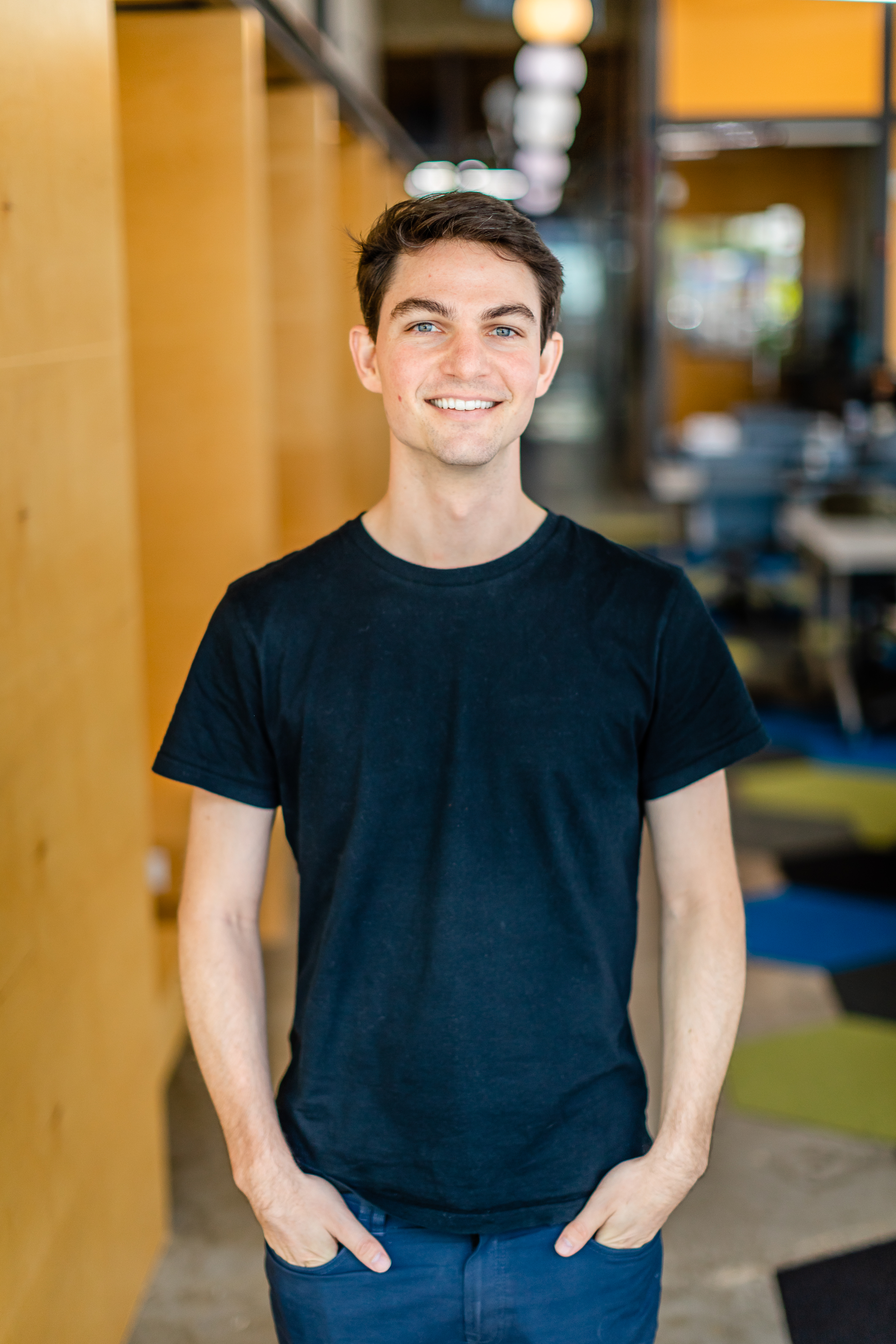
Joseph Nelson Put Computer Vision to Work - One Annoying Sudoku Grid at a Time
Before Roboflow reached a million developers, there were two childhood friends, a phone pointed at a puzzle, and a supposedly easy machine-learning problem that refused to behave.

Ha Dao Is Building the Less Glamorous Half of AI
Models get the applause. Ha Dao has spent six years working on the data, people and privacy architecture that determine whether those models are useful at all.
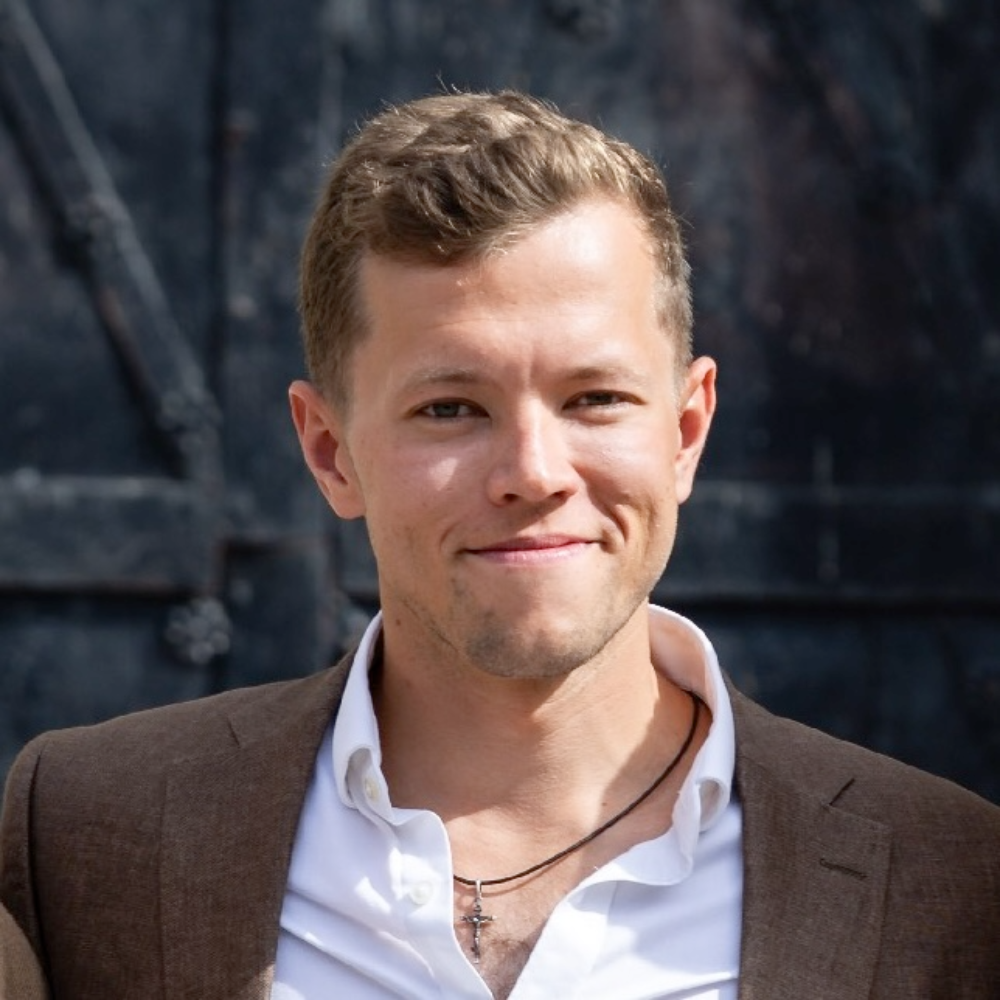
Roman Shemet Wants AI to Get Off the Cloud and Into Your Pocket
The former quant behind Cactus is treating compute like capital: spend it where it earns its keep, and let a five-year-old phone handle the rest.
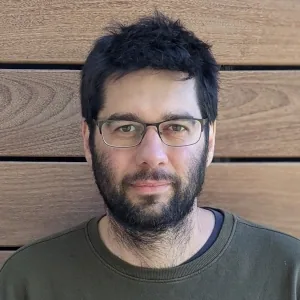
Etienne Bernard Is Teaching AI to Read the Fine Print
The physicist who helped make machine learning automatic at Wolfram is now shrinking document AI into focused models that turn unruly files into useful data - with privacy, precision, and a well-placed null.

Arjun Maheswaran Is Teaching AI to Remember Where the Work Happened
After Twitter, an AI startup, and a Coinbase acquisition, the Bengaluru engineer has returned to an old problem with a sharper thesis: intelligence matters less when it arrives in the wrong place.

Krithik Puthalath Is Building AI for a World Beyond the Nvidia Queue
The Zyphra founder has turned a physicist's instinct for first principles into a full-stack bet on efficient models, open weights and an AMD-powered alternative for training and inference.

Andriy Mulyar Is Teaching AI to Read the Blueprints
The Nomic founder went from clinical language models to open-source AI on a laptop. Now he is narrowing the map, building agents that can navigate the drawings, specifications and institutional memory behind the physical world.

Lucas Nivon Is Building the Bridge Between Protein Code and the Wet Lab
He started with a stubborn software problem: brilliant protein-design tools were too hard to use. A decade later, Lucas Nivon is still widening the doorway - now between algorithms, experiments, and open scientific infrastructure.

Vsevolod Leonov Has Spent a Career Moving Toward the Machine Room
He learned the internet through portals, games and partnerships. Now the former Google executive is testing the economics and infrastructure of open-source AI with his own hands.

Mahesh Sathiamoorthy Is Building the Practice Worlds AI Agents Need
After a decade improving the systems behind YouTube recommendations, Mahesh Sathiamoorthy left Google DeepMind to work on a new bottleneck: the data, tests and realistic environments that teach AI agents how to finish the job.
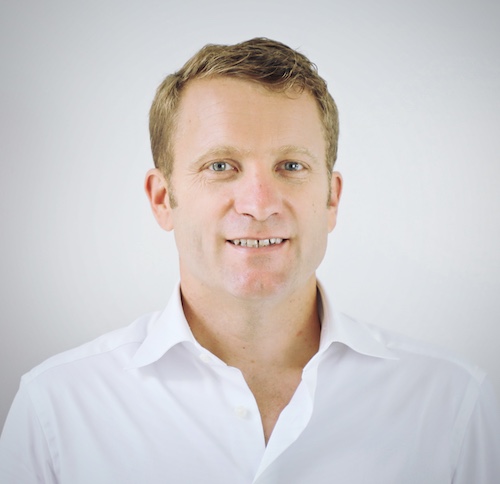
Adam Wenchel
He was studying how AI fails before most people believed it worked. Now he builds the guardrails that keep everyone else's models honest.

Cactus
Cactus is a cross-platform, open-source AI inference engine built in C/C++ to run language, speech, and vision models directly on smartphones, laptops, wearables, and other low-power edge hardware. It gives mobile developers Flutter, React Native, Kotlin, and Swift SDKs to deploy quantized models on-device - cutting latency to under 100ms, keeping data private, working offline, and avoiding cloud API bills - with automatic cloud fallback for heavier tasks. A YC Summer 2025 company, Cactus already powers production apps serving 500,000+ weekly inference tasks.
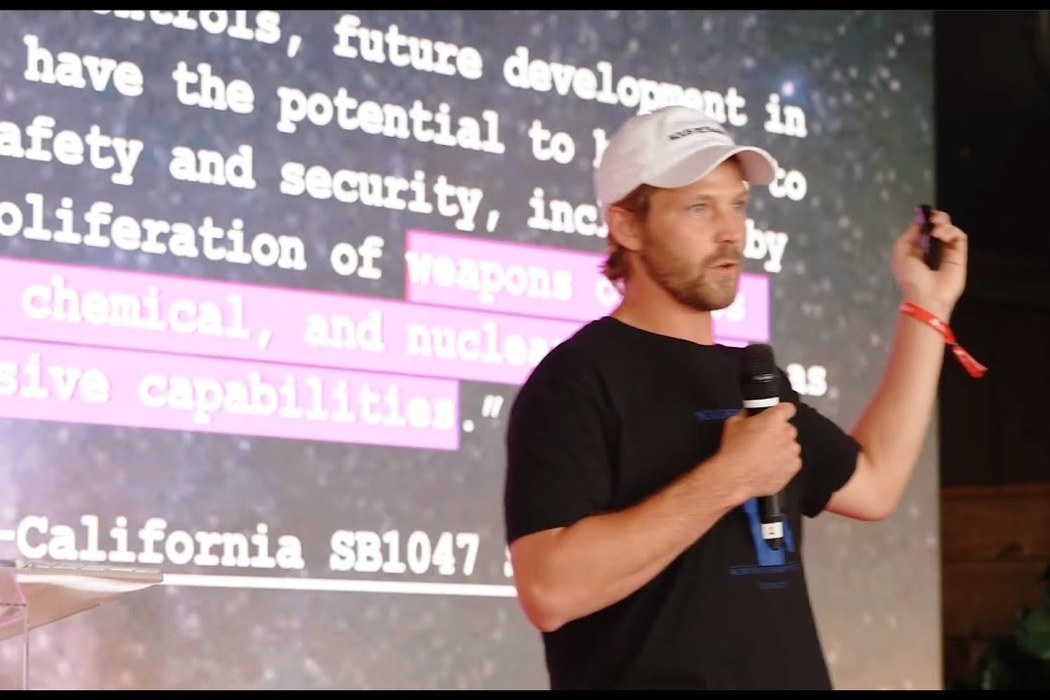
Dillon Rolnick
Dillon Rolnick is the chief executive of Nous Research, an applied AI lab building open-source, human-centric language models and the decentralized Psyche training network. A Vanderbilt graduate who came up through quantitative FX trading at Effex Capital and founded the litigation-claims firm Crysknife Capital, he moved from finance into AI research leadership, helping steer Nous through a Paradigm-led $50M Series A and, by 2026, a reported $75M round near a $1.5B valuation. His focus is proving that world-class models can be trained openly and over the internet rather than behind the walls of a few large labs.

Nomic AI
Nomic AI is a New York-based artificial intelligence company building tools to make large, unstructured datasets and AI models understandable and usable by everyone. It is best known for Atlas, a browser-based platform for visualizing and interacting with massive datasets; the open-source Nomic Embed family of text, code, and multimodal embedding models; and GPT4All, an ecosystem for running large language models privately on everyday hardware. Since 2025 the company has focused its platform on the architecture, engineering, and construction (AEC) sector, applying its embedding and retrieval technology to drawing review, code compliance, and document-heavy construction workflows.

Nous Research
Nous Research is an open-source AI lab founded in 2023 that builds world-class open-weight language models - most notably its Hermes family - and decentralized infrastructure for training them. Its Psyche network coordinates heterogeneous GPUs across the internet via the Solana blockchain, offering a community-driven, transparent alternative to closed labs like OpenAI. Backed by Paradigm and others, the company positions open, unrestricted models as a counterweight to centralized AI.

All-In Podcast E280: The Trillion-Dollar IPO Rush, AI Token Wars & Trump Accounts
In episode 280 of the All-In Podcast, hosts Jason Calacanis, Chamath Palihapitiya and David Sacks are joined by 'bestie' Brad Gerstner (David Friedberg is on vacation) to unpack a trillion-dollar rush to the IPO exits led by SpaceX and expected to be followed by Anthropic and OpenAI. The group debates the sustainability of exploding AI token spend, the tug-of-war between frontier labs and cheap open-source models, sovereign AI ambitions, and whether enterprises can actually prove ROI. The emotional centerpiece is the launch of 'Trump Accounts' (the Invest America Act), a $1,000-at-birth investment account for every American child that Gerstner championed for four years, now live as the number-one app in the App Store, with billionaire philanthropists like Michael Dell and Gwynne Shotwell seeding accounts for lower-income kids.

Arcee AI
Arcee AI is a San Francisco-based open intelligence lab that builds small, efficient, US-made language models enterprises can own, customize and run inside their own infrastructure. Founded in 2023 by former Hugging Face and Roboflow operators, the company pioneered practical techniques like model merging (via its acquisition of mergekit) and Spectrum training, and has expanded from small language models into its own open-weight Arcee Foundation Model family, the Trinity mixture-of-experts models, and agentic products such as Arcee Conductor and Arcee Orchestra. Its pitch: smaller, domain-adapted models that rival frontier systems at a fraction of the cost while keeping data private.
Featherless AI
Featherless AI is a serverless inference platform that gives developers and enterprises a single API key to run more than 40,000 open-weight AI models across language, vision, audio and multimodal tasks - without provisioning or managing any GPUs. Founded in 2023 by the team behind the RWKV open-source model architecture, the company sells flat-rate subscriptions with unlimited tokens and positions itself as a neutral infrastructure layer for open-source AI, independent of the major cloud hyperscalers. It raised a $20M Series A in April 2026 co-led by AMD Ventures and Airbus Ventures, bringing total funding to about $25M.

Simular
Simular is a Palo Alto-based AI company building autonomous computer-use agents that operate desktops, browsers, and phones the way a person does - clicking, typing, and navigating graphical interfaces. Its open-source Agent S framework and its always-on assistant Sai use a neuro-symbolic approach that turns exploratory agent runs into deterministic, auditable code to reduce hallucinations. Founded in 2023 by former Google DeepMind researchers Ang Li and Jiachen Yang, Simular has raised about $26.5M and posts state-of-the-art results on computer-use benchmarks.

Cake
Cake is a New York-based startup that bundles the sprawling open-source AI stack into a single managed platform, so companies - especially in regulated industries like finance, insurance and healthcare - can deploy AI inside their own cloud without wiring together 100+ tools by hand. Founded in 2022 by Misha Herscu and Skyler Thomas and launched from stealth in December 2024 with a $13M seed led by Google's Gradient Ventures, Cake handles the integration, security, governance and cost-monitoring glue around open-source components like LangChain, Ray, MLflow and vector databases, all deployed inside a customer's own VPC so data never leaves.

Deep Cogito
Deep Cogito is a San Francisco AI research company building open-source large language models with hybrid reasoning - the same model can answer instantly or stop to reason before responding. Founded in 2024 by former Google engineer Drishan Arora, the company trains its Cogito models with a method called Iterated Distillation and Amplification (IDA), which lets a model improve by learning from its own reasoning rather than from human labels. Its stated goal is general superintelligence, and its flagship 671B open model competes with the strongest open systems from DeepSeek and Meta.

Oumi
Oumi (Open Universal Machine Intelligence) is a Kirkland/Bellevue, Washington-based public benefit corporation building a fully open-source, end-to-end platform for foundation models. Founded in 2024 by ex-Google, Apple, Meta and Microsoft engineers, its open software stack lets researchers and enterprises prepare data, pretrain, fine-tune, evaluate and deploy LLMs and vision-language models - from 10M to 405B parameters - anywhere from a laptop to a cloud cluster. Backed by $10M in seed funding and a coalition of 13 top research universities, Oumi pitches itself as the 'Linux of AI': a neutral, collaborative, unconditionally open alternative to closed frontier labs.
Pokee AI
Pokee AI is a Bellevue-based startup building foundation AI agents that plan, reason, and act across thousands of internet tools. Founded in 2024 by former Meta applied-reinforcement-learning lead Zheqing (Bill) Zhu, the company uses reinforcement learning rather than pure LLM function-calling to sequence tool use reliably, claiming its foundation model outperforms GPT-4o, Claude 3.7, and Gemini 2.5 Pro on tool selection. Pokee raised a $12M seed round in 2025 led by Point72 Ventures, ships an enterprise platform with private/on-prem deployment, and open-sourced PokeeResearch-7B, a state-of-the-art small deep-research agent.
Voio
Voio is a Berkeley-based frontier AI lab building a unified reading platform for radiology. Spun out of UC Berkeley and UCSF, it develops the open-source Pillar family of models that interpret CT, MRI and X-ray scans across hundreds of conditions, aiming to help radiologists work faster without trading away accuracy. The company exited stealth in November 2025 with $8.6M in seed funding.