A useful artificial intelligence can still be an irritating colleague. It knows a great deal, forgets what happened yesterday, and waits in a separate tab while the actual work takes place elsewhere. Arjun Maheswaran has spent much of his career closing that distance. At Twitter, the work involved finding harmful patterns at scale. At Agara, it meant helping support teams understand customers in the middle of a conversation. At Coinbase, it meant operating inside a large financial platform. Now, at Rowboat, the unit of attention is the ordinary working day: the email that needs an answer, the meeting whose decision will vanish by Friday, the project with a history scattered across six tools.
Maheswaran is a Bengaluru-based machine-learning engineer and repeat founder. His biography can be read as a procession of increasingly intimate contexts. First came a social network, then enterprise customer service, then the private thicket of one person's work. The models became more capable along the way. His central concern became more practical: where does the help appear, and what does it remember when it gets there?
“LLMs are getting smarter every day. But they're only as useful as the context you provide them.”Arjun Maheswaran, announcing a Rowboat update
01 / The first apprenticeshipScale before conversation
Before he became a founder, Maheswaran spent five years as a data scientist at Twitter. One public account of his work places him on the deep-learning team, leading efforts to apply AI to spam and abuse detection. It was the sort of problem that strips machine learning of stage magic. The data is noisy, adversaries adapt, and a classifier's elegant benchmark matters less than what it does to millions of people's experience.
He had trained at the Georgia Institute of Technology, where he earned a master's degree. Twitter gave that education a vast and unruly laboratory. Spam does not follow a polite script. Abuse is contextual. People invent new evasions as soon as an old one is caught. The lesson would reappear later: real behavior is forever stepping outside the flowchart.
In 2017, Maheswaran moved from detecting bad conversations to improving difficult ones. He co-founded Agara and became its chief technology officer. The company built deep-learning systems for customer support, eventually working with large enterprises. Its models listened, took live notes, suggested replies, and recommended actions while human support representatives handled calls and emails.
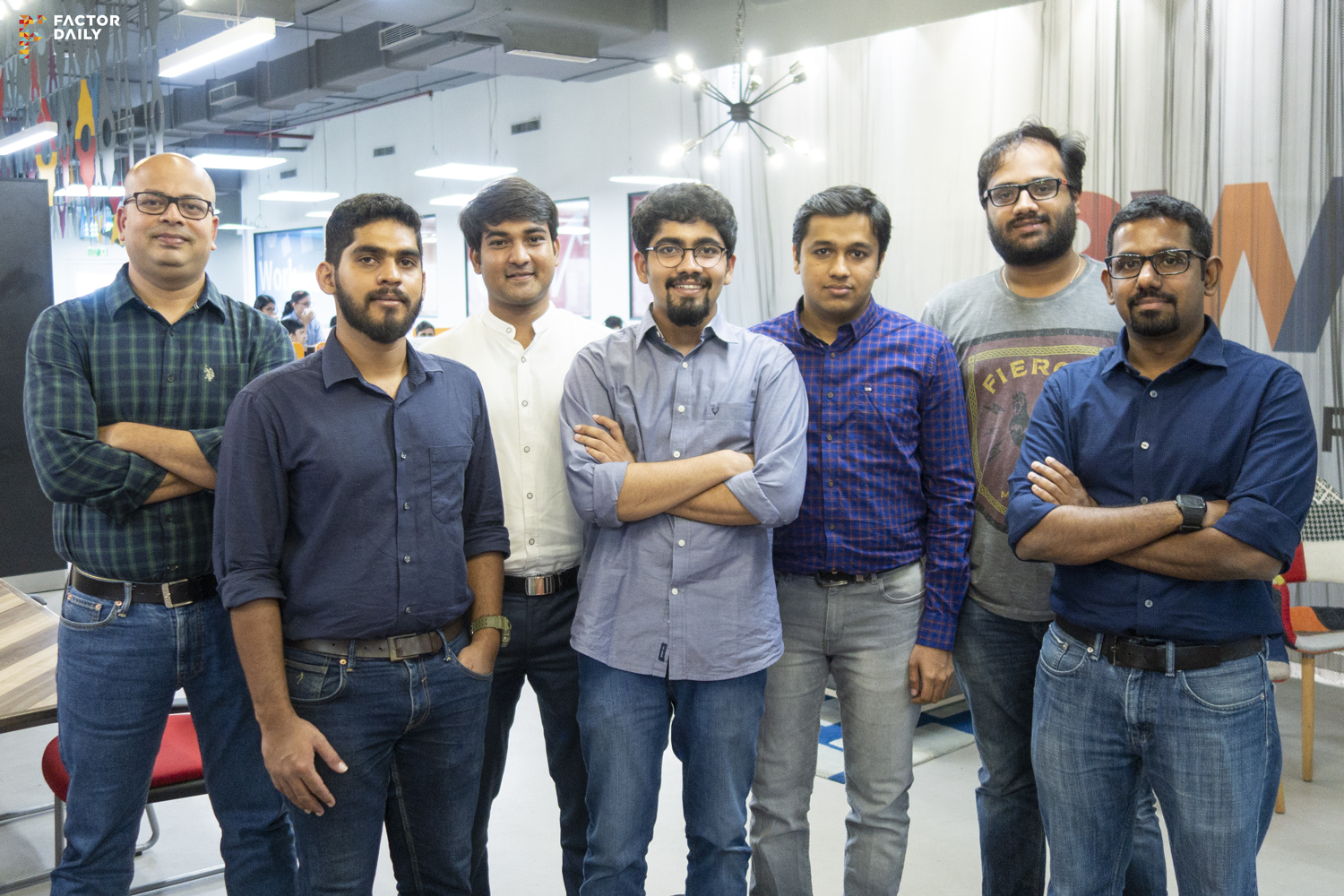
A visit to Agara's Bengaluru office in 2018 captured the technology in miniature. Maheswaran and colleague Akhilesh Sudhakar showed a reporter an angry customer email with the personal details removed. Agara's system produced an apology, thanked the customer for writing, and proposed steps to prevent the problem from recurring. It was not a moonshot demonstration. It was a tense little office moment made calmer by software. That modesty was precisely what made it interesting.
“There could be hundreds of issues a customer is calling in about.”Maheswaran on the vocabulary problem in customer support
Voice added another layer of mess. Product names, unusual terms, accents, background noise, and brand-specific language all had to survive transcription before a system could reason about a customer's intent. Agara raised outside capital and developed its work across machine learning, natural-language processing, and conversational AI. In November 2021, Coinbase announced that it would acquire the company, bringing Agara's technology and team into its engineering organization. Maheswaran then worked at Coinbase as a senior staff machine-learning engineer through 2023.
One long inquiry, four working contexts
02 / Starting againThe value of a useful scar
An acquisition can make a founder sound finished. Maheswaran treated it as fieldwork. In 2024 he co-founded Rowboat Labs with Ramnique Singh and Akhilesh Sudhakar, entered Y Combinator's Summer batch, and returned to the same broad question with new tools. How should AI participate in work when the work refuses to behave like a tidy tree of choices?
Rowboat's first public forms changed quickly. It appeared as a customer-support product, then as an open-source environment for building multi-agent systems with a copilot named Skipper. Developers could describe a meeting-prep assistant or support bot in plain language, connect tools, test it, and adjust the instructions. By 2026, Rowboat had widened into an AI coworker with memory, one that handles email, meetings, notes, browsing, and coding from connected work surfaces.
The changes look less like indecision when viewed through Maheswaran's career. Each version asks where context should live and how an intelligent system should act on it. Customer support supplied the hardest examples. A person may ask about baggage, interrupt with a ticket question, return to baggage, and mention a refund that belongs to another process entirely. Traditional automation answers by adding branches. Then it adds jumps between branches. Soon the diagram resembles an anxious plate of noodles.
03 / Against the giant flowchartInstructions, judgment, evidence
During a Rowboat launch discussion on Hacker News, Maheswaran described an earlier Coinbase chatbot built with an intent-and-entity system and a flowchart-style builder. It began well. As users asked things out of turn or moved between topics, the team introduced “jumps” from one path to another. Those jumps solved immediate problems while making the whole system harder to maintain.
His proposed alternative borrows from the way people assign work. A manager rarely hands a colleague a wall-sized diagram covering every possible sentence a customer might speak. The colleague gets a goal, relevant context, available tools, clear limits, and feedback. Rowboat applies that structure to agents. Some converse with users. Some perform internal tasks. Others run deterministic pipelines where predictability matters. Control can pass between them through handoffs.
The Rowboat loop: memory has to meet the work
Autonomy creates its own problem: trust. A visible flowchart is comforting because a reviewer can point to the approval box. An agent that reasons across tools is less easy to inspect. Maheswaran's answer is blunt and engineering-shaped: “Trust in agent systems has to be empirical.” Start with manual testing. Add simulations. Divide the system so individual agents can be isolated and evaluated. Keep deterministic sequences for the places where a fixed sequence is valuable.
It is a position with tension still inside it. Tests do not make an agent infallible, and flexibility can create surprising behavior. Rowboat's response is not to pretend that tension disappeared. It is to make testing and decomposition part of the product model. The software does not need to choose between a railway timetable and a jazz solo every time. Some passages can be scored; others need careful improvisation.
04 / The memory belongs somewherePlain files, accumulating context
The most revealing Rowboat feature may be its least futuristic. The product stores its knowledge graph as plain Markdown files on the user's computer. The files can be read, edited, deleted, and used with tools such as Obsidian. Rowboat connects information about people, projects, meetings, and topics, then updates those notes as new work arrives.
This matters because an AI coworker faces a peculiar employment test: does it remember the company? A blank chat can answer a general question beautifully, yet it cannot know that last Tuesday's decision reversed Monday's plan. A search system can retrieve a transcript, but retrieval alone does not maintain a changing account of who decided what and why. Rowboat's “Brain” tries to turn a pile of records into a living working memory.
The same memory feeds distinct surfaces. In email, Rowboat can sort incoming messages and prepare drafts, learning from edits. In meetings, a local notetaker returns new information to the graph. A built-in browser gives the assistant a contained place to navigate selected accounts. Notes have graph and database-like views. Coding mode can coordinate parallel instances of coding agents using the context of the work around them.
Maheswaran and his co-founders describe the principle with the authority of having built the previous version of the problem. At Agara, it was insufficient for the AI to produce the right answer in isolation. The help had to appear while a representative was on a call or answering an email. Rowboat turns that enterprise lesson inward. The person living in email and meetings should not have to stop, gather context, visit a chatbot, paste a dossier, and translate the answer back into the job.
05 / The public workshopLet the objections touch the product
Maheswaran's Hacker News exchanges reveal a useful operating manner. He explains technical choices without pretending the tradeoffs are settled. When someone challenged the trustworthiness of agent systems, he discussed approvals, testing, and simulation. When a user reported a broken Instagram connection, he invited the user to debug it with the team. When another commenter said Rowboat's game-like interface felt childish for business software, Maheswaran did not compose a manifesto about whimsy. He acknowledged that the lighter design could read as overly playful and said the team would keep iterating.
That response supplies a small portrait of the founder. He has strong opinions about architecture and softer attachment to ornament. Flowcharts receive a long argument. A criticized color palette receives a note to revise. The hierarchy is sensible.
Rowboat itself has been revised in public. Major chapters appeared on Hacker News: a command-line agent, a knowledge layer, and then work surfaces. The company page reports that those releases reached the front page, and the open-source repository accumulated more than 16,600 stars by 2026. Public attention is not the same as durable use, but it creates a demanding room. People ask why the product should exist, how it differs from familiar automation tools, how it handles security, and whether the bill will surprise them. A founder gets little protection from his own adjectives there.
06 / What he carried forwardA career shaped like one question
The neat version of Maheswaran's story would contain three separate acts: engineer, acquired founder, founder again. The more accurate version looks continuous. Twitter taught him that people create adversarial, changing patterns. Agara taught him that conversation escapes prescribed paths and that help must arrive inside the task. Coinbase gave those lessons a larger operational setting. Rowboat is where the pieces are being recombined around personal context.
His aspiration is visible in the product rather than printed as a grand declaration. He wants complex agent systems to be easier to create from high-level goals. He wants the assistant to retain the history of the work. He wants that history stored somewhere a user can inspect and control. He wants intelligence to show up in the inbox, meeting, note, browser, or project where it can change the next action.
There is a quiet discipline in choosing such unglamorous nouns: context, memory, handoff, test, file. None performs particularly well in a movie trailer. Together, they decide whether an AI product becomes part of a working day or remains a clever destination people visit when they remember.
Maheswaran has already watched one generation of conversational AI collide with real customers. Rowboat is his attempt to preserve the lesson in a new generation of tools. The model can be brilliant. The interface can be charming. Yet work keeps its own calendar, its own history, and its own inconvenient habit of happening somewhere else. His project is to make sure the intelligence finally arrives on time.