The first surprise was that the easy part was hard. In 2017, Joseph Nelson and his childhood friend Brad Dwyer set out to make an augmented-reality Sudoku app. Point a phone at a puzzle, let the camera read the grid, and watch the solution appear. Digit recognition was a classroom classic. Surely the machine-learning piece would be a formality.
It was not. The pair spent their precious building time collecting images, cleaning data, arranging annotations, translating formats, and pushing a model toward something dependable. They finished the app anyway. Magic Sudoku caught attention online and won Product Hunt's augmented-reality app of the year. It was a lovely trick: a paper grid becoming software through a camera.
Then the trick receded, as clever weekend projects often do. Nelson went back to his company. Dwyer went back to his. The more consequential artifact was the irritation they carried away. If two experienced builders had to waste this much time preparing a small vision project, what would happen when thousands of developers tried to make cameras useful?
“I tell people that Roboflow makes developer tools to create a sense of visual understanding.”Joseph Nelson, describing the company in 2024
The long way to an obvious problem
Nelson did not arrive at computer vision by walking a tidy engineering-school corridor. He studied economics at George Washington University, spent time at the London School of Economics, and moved through political offices and public-affairs work. He interned with the U.S. Senate and Facebook. At GW, he debated competitively, helped organize a hackathon with the French Embassy, and became the best speaker at the 2014 Lafayette Debates.
Politics taught him about queues. Congressional offices receive a punishing volume of constituent messages, much of it arriving through systems built for an earlier century. Nelson co-founded Represently to help offices understand, organize, and respond to that mail with natural-language processing. The company placed third in GW's 2016 New Venture Competition, then joined Fireside21 in 2018. The technology changed; the instinct did not. Find the repetitive work consuming human attention, then build a cleaner way through it.
He also taught. At General Assembly, Nelson says he built and delivered more than 2,000 hours of data-science curriculum. That is a large amount of time to spend watching where intelligent people become confused. A classroom exposes every hidden assumption. Instructions that sound obvious to the expert can devour an afternoon for the beginner. The teacher learns to see friction before the student has a name for it.
Between teaching and startups, Nelson ran ROC AUC, later BetaVector, a consultancy that built data products. His project list had cheerful range: bicycle-route safety, hockey defensemen, snow-day forecasts, Michelin-star predictions, and a quantitative reading of The Onion's Obama years. He seems to learn by making a small machine and seeing what it catches. Magic Sudoku belonged to that habit. Roboflow emerged when one small machine pointed toward a very large missing workshop.
Joseph of Iowa
The public handle is @josephofiowa, and it is not an accidental bit of geography. Nelson grew up in Des Moines and makes the state part of his introduction. When classmates in Washington treated Iowa as a distant curiosity, he joked that the Pony Express happened to be running on the day he applied. The line is a compact Nelson performance: mild self-mockery, a regional wink, and an invitation to keep talking.
He met Dwyer in 2000. They checked the year while preparing their Y Combinator application and realized they had known each other for more than half their lives. That history gave their arguments a useful sturdiness. In the Sudoku project, each believed the other's part would be easy. Both were wrong in productive ways.
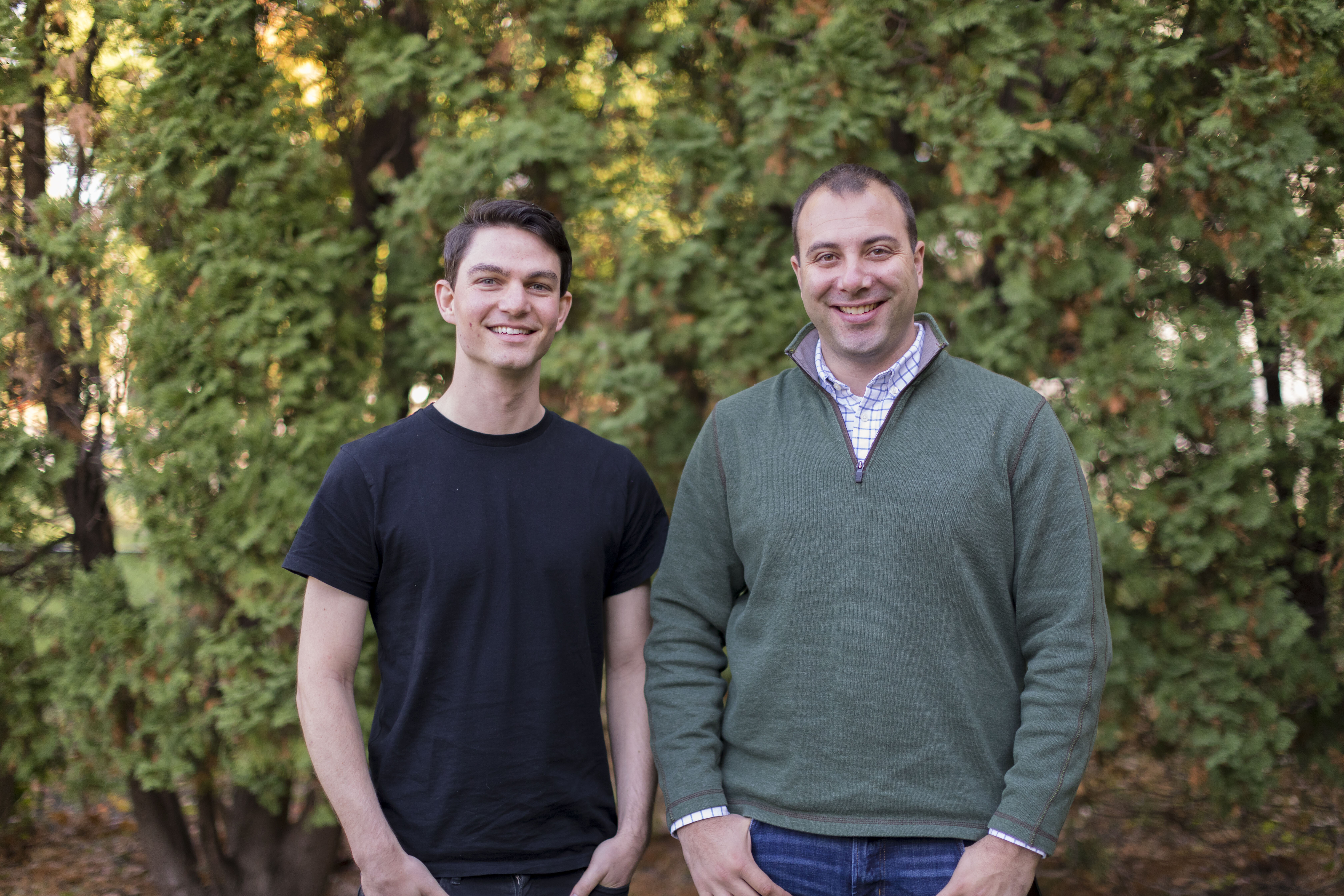
In the summer of 2020, Y Combinator was remote. Nelson moved back from Washington, D.C., and joined Dwyer and early teammate Jacob Solawetz in a Des Moines house. They called it their hacker house. Roboflow was headquartered in Des Moines on paper, even as its people spread across cities and countries. Later, the company would bring its distributed team to Iowa for a retreat.
There is a practical lesson in the sentimentality. Long relationships hold context that no onboarding document can reproduce. Place can perform the same function. Roboflow sells tools for a borderless technical community, yet its origin remains unusually specific: two friends from the same city, a puzzle on a table, and a shared impatience with avoidable chores.
Packaging the unglamorous work
Computer vision demos favor the reveal. A box snaps around a dog. A camera counts packages. A model spots a defect before a part leaves the line. The invisible preparation is less photogenic: collect the right images, label them consistently, version the dataset, choose a model, evaluate mistakes, and deploy the result somewhere it can act quickly.
Roboflow turned that sequence into the product. Its tools cover image and video collection, annotation, dataset management, training, and deployment through hosted systems, APIs, and edge devices. The company also built in public. Roboflow Universe hosts shared datasets and models. Its open-source projects include Supervision for reusable vision utilities, Inference for running models, and RF-DETR, a real-time detection architecture accepted at ICLR 2026.
images + video
version data
inspect models
improve
The open work matters because vision is irreducibly varied. A benchmark built from street scenes does not automatically explain aerial photographs, microscope slides, factory parts, or a tennis court. Nelson co-authored Roboflow 100 in 2022 to test object detectors across 100 datasets, seven imagery domains, and more than 224,000 images. Its argument was quietly radical: a system should be measured against the mess of the world it claims to see.
Nelson explains this broad market through jobs. A firefighter wants earlier notice of smoke. A manufacturer wants to catch a flawed part. A broadcaster wants to understand play on a field. The examples keep the platform from dissolving into abstraction. Visual AI becomes a pair of useful eyes attached to an existing workflow.
From a tool to a point of view
Roboflow announced a $20 million Series A in 2021 and a $40 million Series B in 2024. The money made a larger organization possible, but Nelson's public case for the company stayed focused on access. Computer vision should not be restricted to teams that can assemble specialized infrastructure before they test an idea. A developer should be able to train a model in an afternoon and move from an image to a working system without first becoming a curator of file formats.
His favorite phrase for the destination is “making the world programmable.” It can sound enormous until he gives it a camera and a task. At Wimbledon, visual systems can help analyze instant replays. In electric-vehicle production, they can support quality inspection. On rail networks, cameras can help monitor physical infrastructure. The phrase is less about turning life into an app than giving software a reliable way to notice what people already notice.
“If software is eating the world, computer vision makes the aperture infinitely wide.”Joseph Nelson on the relationship between software and sight
In a 2026 conversation, Nelson placed the next chapter beyond chat windows: smaller task-specific vision systems, faster inference, robotics, wearables, and machines that must understand a changing physical scene. These systems cannot merely be impressive. They must run within budgets of latency, compute, power, and trust. A model that sees brilliantly but arrives too late is a critic, not a coworker.
That emphasis brings his story back to the Sudoku table. The founders did not lack a model in theory. They lacked a smooth, repeatable route from messy pixels to a working experience. Nearly a decade later, the scale has changed and the same discipline remains: shorten the route between seeing and doing.
The builder in the byline
Nelson's side projects explain as much about him as his job titles. He has looked for signals in bicycle crashes, hockey performance, weather searches, political satire, restaurant guides, and fundraising data. The subjects wander; the method repeats. Take an ordinary corner of life, make its evidence visible, and build something small enough to argue with.
There is play in the pattern. A founder biography can become a parade of financing rounds, but Nelson's more revealing milestones are arguments with friends, jokes about Iowa, classroom hours, and an app that briefly made paper puzzles feel enchanted. He has managed to keep the experimenter's delight while turning the supporting machinery into a serious company.
Roboflow's current ambition reaches factories, fields, laboratories, sports venues, and robots. The useful part of Nelson's story is smaller. Do the side project. Notice which task steals the weekend. Ask whether everyone else is rebuilding the same miserable step. If they are, the glamorous demo may be temporary. The annoyance may have a much longer life.