visual-ai
(8)
Joseph Nelson Put Computer Vision to Work - One Annoying Sudoku Grid at a Time
Before Roboflow reached a million developers, there were two childhood friends, a phone pointed at a puzzle, and a supposedly easy machine-learning problem that refused to behave.

David Edri Is Teaching Business Software to Put on a Show
After two decades across social networks, ad tech and presentation software, the emaze.ai CEO is betting that the next business message should feel less like a form letter and more like an occasion.

TechSee
TechSee is an Israel-based enterprise software company that uses computer vision, augmented reality and multimodal generative AI to add sight to customer service. Its Sophie AI platform lets customers and technicians point a smartphone camera at a device so the system can recognize the product, diagnose the issue and guide a step-by-step fix - either fully self-service or as an assist for a human agent. Founded in 2015, TechSee works with global brands such as Verizon, Vodafone, Orange and Telus to raise first-call resolution and cut costly truck rolls.

Eitan Cohen
Eitan Cohen is the CEO and co-founder of TechSee, a Tel Aviv-based company that pioneered visual and agentic AI for customer service. Trained in computer science and psychology at Tel Aviv University, Cohen has spent two decades building and selling technology companies. He started TechSee in 2015 after realizing that voice and text support could not solve the everyday frustration of guiding someone through a technical problem they could see but not describe. Under his leadership, TechSee's computer-vision and augmented-reality platform now serves more than 1,000 customers, including Fortune 500 brands, and reports avoiding millions of technician visits each year.
Napkin AI
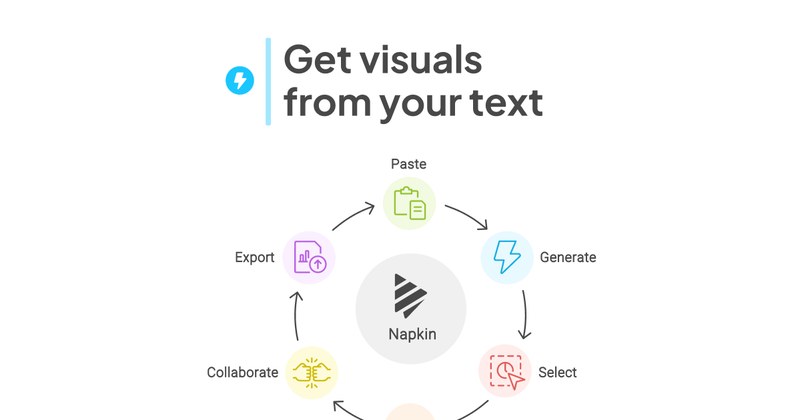
Napkin AI turns plain text into editable visuals - diagrams, flowcharts, infographics, mind maps - in about five seconds. Built by two ex-Google engineers who previously co-founded the children's learning platform Osmo, Napkin uses an orchestrator LLM and a 'design agency' of specialized sub-agents to do the work most knowledge workers used to outsource to a designer or a PowerPoint smart-art menu.

Collov AI
Collov AI (Collov Labs) is a Redwood City visual-AI company that turns a single phone photo of a room into a fully furnished, photorealistic redesign in seconds. Founded by Stanford PhD Xiao Zhang, it started as an AI interior-design and virtual-staging tool for homeowners, designers and real-estate agents, and is now expanding into broader 'agentic visual intelligence' - systems that read camera input and act on it. The company reports more than 6 million users across 200+ countries and 300+ business customers, and raised a $23M Series A in April 2026 to launch a dedicated research lab.

Xiao Zhang
Xiao Zhang is the co-founder and CEO of Collov Labs (Collov AI), a Redwood City visual-AI company that turns a single photo of a room into reimagined interior designs and staged real-estate listings. A Stanford applied-physics PhD who trained machine-learning models on free-electron lasers before pivoting to product, he is betting that the next interface for AI is the camera, not the chat box. In April 2026 Collov raised a $23M Series A and launched a research lab to push diffusion models, spatial reasoning, and agentic workflows toward AI that understands and acts on the physical world.
Pramod Sharma
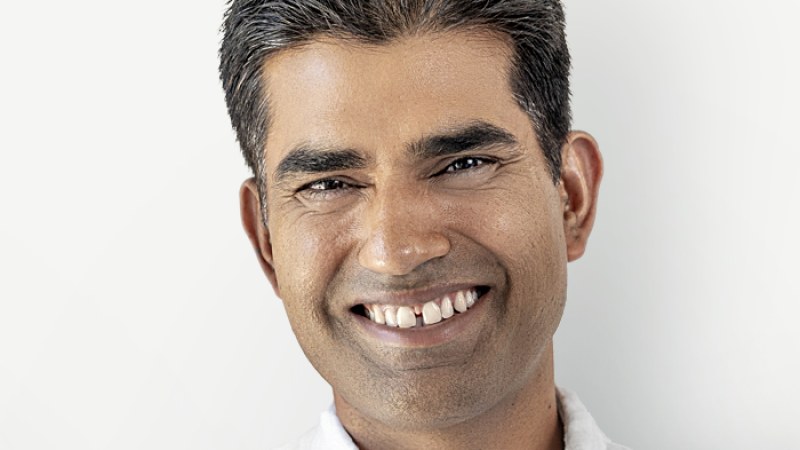
Pramod Sharma is the Founder and CEO of Napkin AI, a generative-AI platform that converts plain text into editable business visuals - diagrams, flowcharts, infographics, and charts - in seconds. A farmer's son from Rajasthan who cracked IIT Delhi on self-study, he went on to earn a Master's from Stanford, architect Google Books' scanning machines, and then co-found Osmo, the award-winning educational-gaming company sold to Byju's for $120 million in 2019. In 2021 he and co-founder Jerome Scholler turned their frustration with corporate slide decks into Napkin AI, which emerged from stealth in August 2024 with $10 million in seed funding from Accel and CRV.