manufacturing-automation
(9)
Datta Kaligotla Is Building for the Moment the Demo Meets the Factory Floor
After helping build Handshake's AI effort, the young engineer moved into industrial operations. At Faraday, his argument is simple: an agent earns its place only when the work survives contact with the real world.
Vipin Raghavan Is Teaching Old Factories New Instincts
He left a career in corporate finance to put hard-won factory judgment into software. A decade later, Haber's argument is still refreshingly practical: artificial intelligence earns its place on the plant floor one measurable improvement at a time.
Andrew Lonsberry and the Factory That Learned to See
He grew up welding beside his father, studied how machines learn, and stayed in Ohio when the usual startup map pointed west. Now Andrew Lonsberry is asking robots to master the unruly work that factories could never quite automate.
Alex Lonsberry Taught a Robot to Notice the Mess
A childhood spent building in an Ohio garage led to a doctoral lab, a stubborn sheet of shiny steel and a company built around one unfashionable truth: the real world refuses to hold still.

Ishaan Makkar Is Running Straight at the Factory Back Office
A physics graduate and national-level distance runner found his next race inside old ERPs, crowded inboxes and the quiet administrative work that keeps industry moving.
Rahul Chipalkatty Is Teaching Factory Robots a Useful Trick: How to Change Their Minds
After years spent studying how people and machines share control, the Boston roboticist built Southie Autonomy around a stubbornly practical idea: the person on the line should be able to teach the robot.
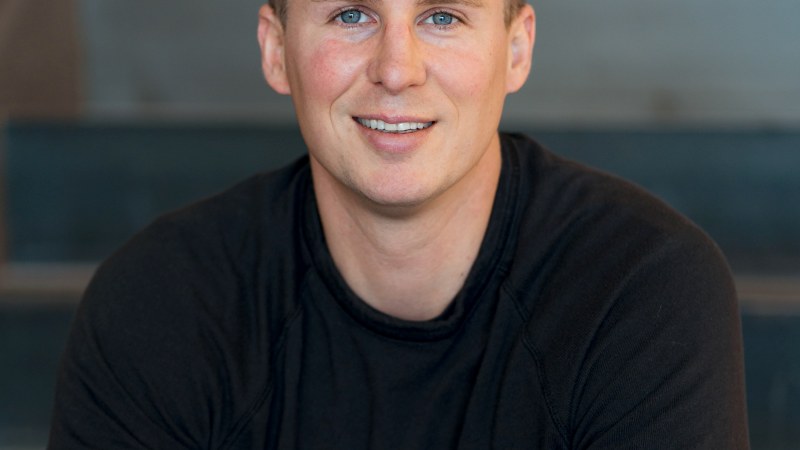
Brett Adcock
Brett Adcock is a serial entrepreneur and founder of Figure AI, the humanoid robotics company valued at $39 billion after a $1B+ Series C in September 2025. Raised on a third-generation farm in central Illinois, Adcock built his first web companies at 16, co-founded and sold talent marketplace Vettery to Adecco for ~$100M in 2018, took eVTOL company Archer Aviation public on the NYSE at a $2.7B valuation, then pivoted to what he calls the hardest problem: building general-purpose humanoid robots. Figure's robots now work autonomously on BMW's production floor and have logged over 30,000 vehicles built. In 2025-2026, Adcock simultaneously launched Hark (personal AI hardware, $700M Series A at $6B valuation) and Cover (school weapon-detection tech). He is currently running three companies at once while publicly estimating his net worth at ~$19 billion.
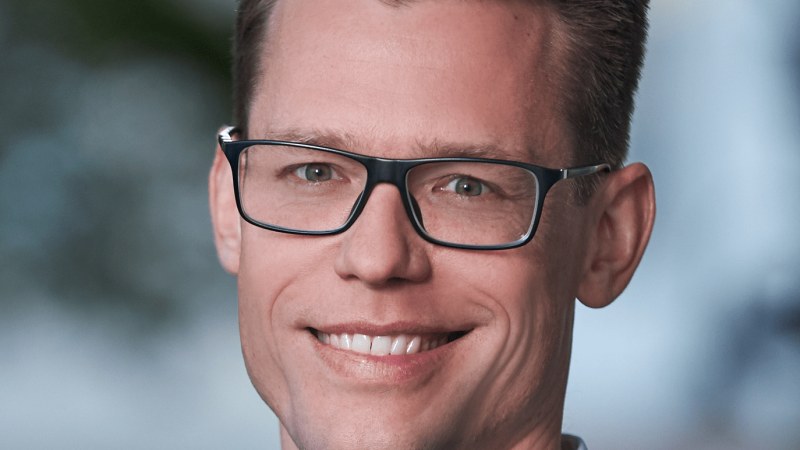
Fabian Gerlinghaus
Fabian Gerlinghaus is the Co-Founder and CEO of Cellares, a South San Francisco biotech company building the world's first Integrated Development and Manufacturing Organization (IDMO) for cell therapy. An aerospace engineer turned life-science entrepreneur, he co-founded Cellares in 2019 after spotting a critical gap: FDA-approved CAR-T therapies were sitting ready while patients died on waitlists because manufacturing couldn't scale. His Cell Shuttle platform — a fully automated, factory-in-a-box system processing 16 patient batches simultaneously — has attracted $630M in funding, a $380M partnership with Bristol Myers Squibb, and FDA's Advanced Manufacturing Technology designation. TIME magazine named it one of 2025's most important inventions.
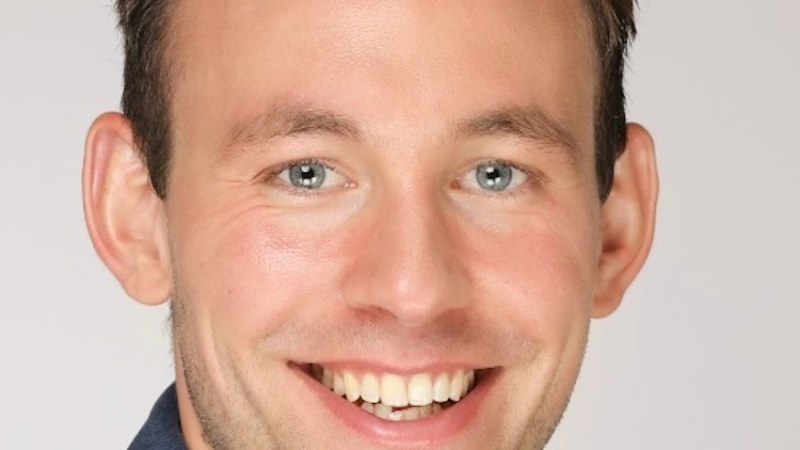
Cornelius Menke
Cornelius Menke is a former Partner at Sequoia Capital, where he spent roughly three years building the firm's European investment portfolio from London. A German national educated at the Stockholm School of Economics, Menke moved from management consulting at Boston Consulting Group to venture capital after an earlier stint inside Klarna's CFO office - one of Sequoia's landmark European bets. At Sequoia, he backed companies across industrial automation, AI infrastructure, and enterprise fintech, co-investing in Robco, Tacto, LangChain, Flow, Pennylane, and Rillet while also running the firm's Arc accelerator cohorts for European pre-seed and seed founders. He departed Sequoia in 2025/2026 and his next move remains to be announced.