Cellares raises $257M Series D led by BlackRock & Eclipse - Jan 2026 $380M Bristol Myers Squibb partnership for global CAR-T manufacturing FDA Advanced Manufacturing Technology designation - first ever for cell therapy platform TIME Magazine: Cell Shuttle named one of 2025's most important inventions Cell Shuttle processes 16 patient batches simultaneously Smart factories under construction in US, Europe & Japan Total funding: $630M raised since founding in 2019 First commercial CAR-T launch on Cell Shuttle platform targeted for 2027 Cellares raises $257M Series D led by BlackRock & Eclipse - Jan 2026 $380M Bristol Myers Squibb partnership for global CAR-T manufacturing FDA Advanced Manufacturing Technology designation - first ever for cell therapy platform TIME Magazine: Cell Shuttle named one of 2025's most important inventions Cell Shuttle processes 16 patient batches simultaneously Smart factories under construction in US, Europe & Japan Total funding: $630M raised since founding in 2019 First commercial CAR-T launch on Cell Shuttle platform targeted for 2027
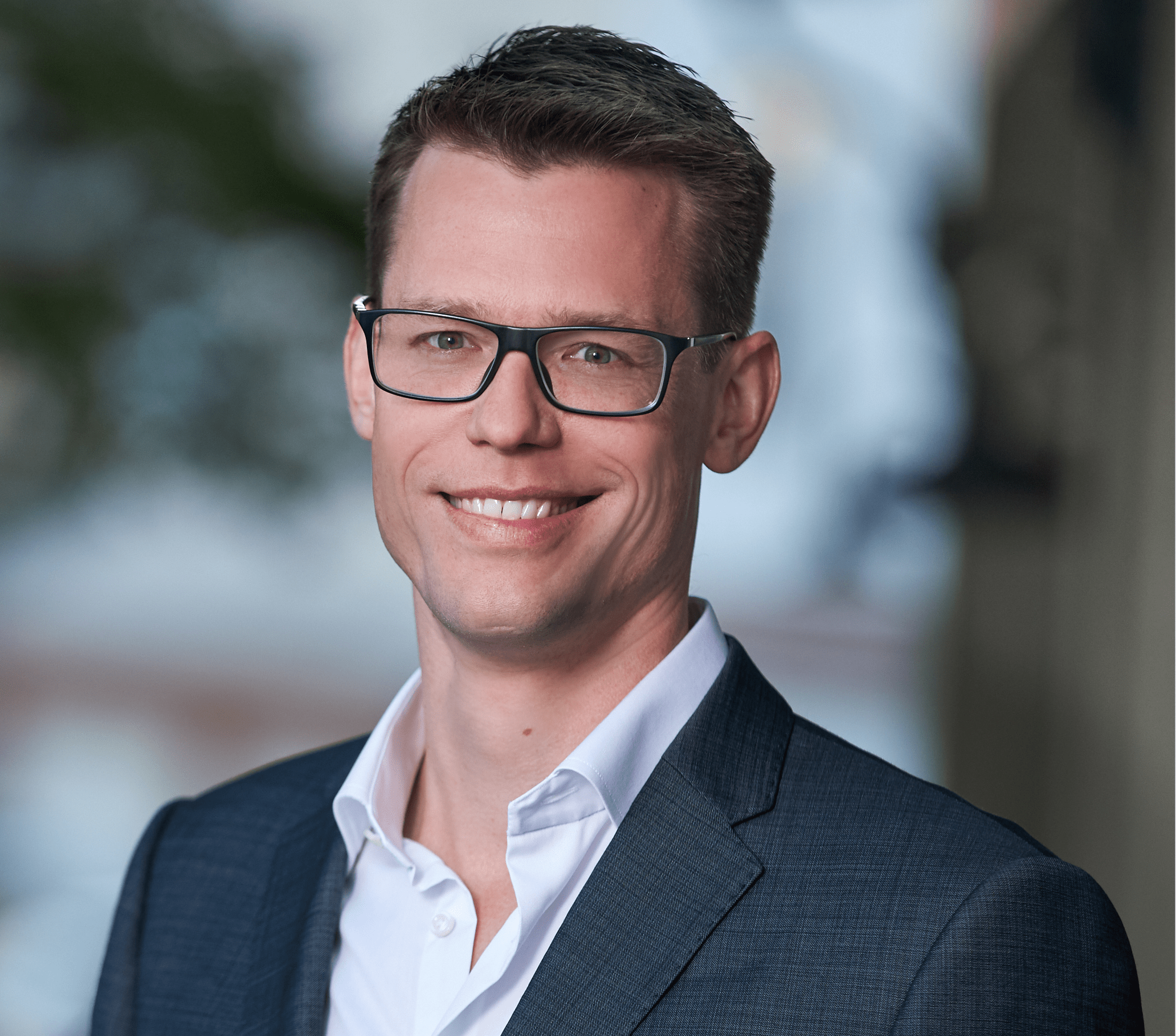
Fabian Gerlinghaus, Co-Founder & CEO of Cellares
Co-Founder & CEO

Fabian
Gerlinghaus

Cellares  |  South San Francisco, CA  |  Biotech Manufacturing

Aerospace engineer. CRISPR pioneer. Industrial-scale cell therapy builder. Gerlinghaus co-founded Cellares in 2019 with a single conviction: the obstacle between patients and cures was never science - it was infrastructure.

$630M Total Raised
16x Batches Simultaneous
10x Productivity vs Manual
300+ Employees
Cellares CEO FDA AMT Designated TIME Inventor 2025 Series D - BlackRock
The barrier to curing more patients is no longer scientific - it is industrial. - Fabian Gerlinghaus, announcing Cellares' $257M Series D, January 2026

At industry conferences in the late 2010s, Fabian Gerlinghaus kept hearing the same thing repeated like a distress signal: pharmaceutical executives and oncologists, standing at podiums, pleading openly for fully automated, fully closed, scalable cell therapy manufacturing. CAR-T therapies had been approved by the FDA. The science worked. Patients were dying anyway - on waitlists, while doses sat unmade.

Nobody was building the factory. Gerlinghaus decided to.

The path from aerospace engineering at the Technical University of Munich to running a bioprocessing company in South San Francisco was not exactly straight. After a stint as a visiting researcher at Stanford working on haptic teleoperation of robots in space - which he later admitted he never took seriously - he joined a four-person CRISPR startup called Synthego in 2014. Over the next five and a half years, he rose to Chief Innovation Officer, co-invented the company's proprietary RNA synthesizer, and helped grow the team from a garage to 240+ people. He took a device from whiteboard sketch to production-ready instrument in two years.

The discipline of that process - understand the requirements, engineer the system, iterate with data - stayed with him. When he left Synthego in January 2019 and sat down with former colleague Omar Kurdi in downtown Palo Alto to talk about what to build next, both men kept arriving at the same problem. They co-founded Cellares in April 2019. By August, they had their first capital. By 2021, they had a working Cell Shuttle prototype and $100M raised.

The Cell Shuttle is, as Gerlinghaus once put it, "a factory-in-a-box." Unlike competitors who spent six years building a single benchtop instrument automating one manufacturing step, Cellares engineered all of them - every unit operation in cell therapy production, for up to 16 independent patient batches, simultaneously. The skeptics were loud. The investors pushed back. The customers raised eyebrows. Gerlinghaus and his team shipped it anyway.

The company's Early Access Partnership Program (EAPP) was part of the reason the Cell Shuttle worked the way it did. Rather than building a platform in a vacuum, Cellares solicited detailed process documentation from biotech and cancer center partners upfront - critical quality attributes, equipment specifications, success criteria - before a single machine was assembled. It was engineering by contract.

In August 2023, Gerlinghaus unveiled the world's first IDMO - Integrated Development and Manufacturing Organization - along with Cellares' pioneering smart factory. In April 2024, Bristol Myers Squibb signed a $380M global manufacturing agreement for CAR-T production across the US, Europe, and Japan. The FDA granted Cellares' Cell Shuttle its Advanced Manufacturing Technology (AMT) designation - the first ever for a cell therapy manufacturing platform. TIME magazine named it one of 2025's most important inventions.

In January 2026, Cellares closed a $257M Series D led by BlackRock and Eclipse, with new investors including T. Rowe Price, Baillie Gifford, and Gates Frontier. Total funding: $630M. Gerlinghaus announced plainly that the company is on a "clear, disciplined path toward becoming a public company." Commercial-scale manufacturing targets 2027.

His math is straightforward: Cellares factories produce as many therapies as ten manual facilities with just 10% of the staff. Manufacturing costs drop up to 50%. Time to IND application falls from 16 months to roughly 8. CAR-T therapies that cost over $300,000 per dose to produce become economically viable at the scale patients actually need.

"You need to understand the requirements," Gerlinghaus has said of building life-science tools without necessarily being a biologist, "and then be good at mechanical engineering, software engineering, controls engineering, systems, and electrical engineering as well as robotics." An aerospace engineer building cancer cures is, it turns out, exactly the right person for the job.

What Cellares Built

$630M
Total Capital Raised
Series D in Jan 2026, led by BlackRock and Eclipse, brought total to $630M across all rounds.
16
Simultaneous Batches
The Cell Shuttle processes 16 independent patient manufacturing batches at the same time.
10x
Productivity Gain
One Cellares smart factory equals ten conventional manual manufacturing facilities.
50%
Cost Reduction
Cellares cuts per-patient manufacturing cost by up to 50% versus traditional CDMOs.
4x
Fewer Process Failures
The Cell Shuttle reduces process failure rates by more than four times over manual methods.
8mo
Time to IND
Cellares can help biotech partners reach IND application in ~8 months versus the industry standard of 16.

From Munich to South San Francisco

~2009-2014
Master's in Aerospace Engineering at Technical University of Munich; Honors degree in Technology Management at CDTM Munich. Inspired by the European Space Agency's student satellite program from high school, he channeled that spark into a double degree in engineering and business.
2014
Visiting researcher at Stanford University, working on haptic teleoperation of robots in space. By his own admission, he was already looking past academia - he knew he wanted to build things in the real world.
2014-2019
Joined Synthego as one of the first five employees (garage startup). Rose to Chief Innovation Officer. Co-invented proprietary RNA synthesizers for CRISPR-Cas9. Helped grow the company from 5 to 240+ employees and brought products to market ahead of competitors.
January 2019
Met with Omar Kurdi in downtown Palo Alto to discuss what to build next. Both kept returning to the same problem: cell therapy manufacturing was completely broken.
April 2019
Co-founded Cellares with Omar Kurdi and Alex Pesch. Incorporated August 2019 with first capital injection.
2021
Raised $100M+, unveiled Cell Shuttle publicly, grew team past 100 employees. First automated platform for end-to-end cell therapy manufacturing demonstrated.
August 2023
Launched the world's first IDMO (Integrated Development and Manufacturing Organization) and pioneering smart factory in South San Francisco. Set a new category in cell therapy contract manufacturing.
April 2024
$380M global manufacturing partnership signed with Bristol Myers Squibb for commercial-scale CAR-T production across US, Europe, and Japan - a watershed deal validating the platform at pharma scale.
2024-2025
FDA grants Cell Shuttle Advanced Manufacturing Technology (AMT) designation - first ever for a cell therapy platform. TIME magazine names Cell Shuttle one of 2025's most important inventions. Bridgewater, NJ smart factory achieves cGMP compliance.
January 2026
$257M Series D closed, led by BlackRock and Eclipse. New investors: T. Rowe Price, Baillie Gifford, Gates Frontier, Duquesne Family Office. Total raised: $630M. Gerlinghaus announces Cellares is on a "clear, disciplined path toward becoming a public company."
2026-2027
Clinical manufacturing support underway in H1 2026. First commercial-scale FDA-approved CAR-T launch on the Cell Shuttle platform targeted for 2027 - which Gerlinghaus says will be the fastest ramp-up of any CAR-T in history.

What Fabian Gerlinghaus Says

"We've never failed to automate a customer's manual process on the platform."

"In 2027, we'll do the first commercial launch of an FDA-approved CAR-T therapy on our platform. That'll be the fastest ramp-up of any CAR-T launched to date."

"We can cut down the time that it takes them from get-go into the clinic by about 50%."

"What's ahead for us in 2025? Execution, execution, execution."

"Operator error and contamination are the two biggest sources of process failure. We eliminate both."

"At these conferences, people were shouting from the rooftops: we need cell therapy manufacturing technologies that are fully automated, fully closed and scalable."

Achievements

  • Co-founded Cellares (2019) and raised over $630M in total capital
  • Secured $380M global manufacturing agreement with Bristol Myers Squibb (April 2024)
  • Obtained FDA Advanced Manufacturing Technologies (AMT) designation for the Cell Shuttle - first ever for a cell therapy manufacturing platform
  • TIME magazine named the Cell Shuttle one of 2025's most important inventions
  • Built Bridgewater Smart Factory (New Jersey) to cGMP-compliance ahead of commercial launch
  • Simultaneously constructing five smart factory facilities globally across US, Europe, and Japan
  • Co-invented RNA synthesizer technology at Synthego; took device from whiteboard to production in two years
  • Helped grow Synthego from 5 to 240+ employees as Chief Innovation Officer
  • Named to The Medicine Maker Power List (2023 and 2025)
  • Cell Shuttle processes up to 16 simultaneous patient batches with 10x productivity gains over manual manufacturing
  • Launched world's first IDMO (Integrated Development and Manufacturing Organization) in 2023
  • Series D backed by BlackRock, Eclipse, T. Rowe Price, Baillie Gifford, and Gates Frontier (Jan 2026)

Education

Technical University of Munich
Master's in Aerospace Engineering
2009 - 2014 (est.)
CDTM Munich
Honors Degree, Technology Management
2009 - 2014 (est.)
Stanford University
Visiting Researcher, Robotics
2014

The Engineer's Path

Gerlinghaus traces his interest in aerospace to high school, when he researched the European Space Agency's SSETI program - a project where students from across Europe built and launched a real satellite. An interview with the head of a propulsion team set his direction.

At Stanford, he worked on haptic teleoperation of robots in space. It was cutting-edge work. He didn't care. He wanted to build companies, not papers. That attitude carried into Synthego - he joined a garage startup when CRISPR was still exotic - and into Cellares, where the pitch he gave skeptical investors wasn't just ambitious, it was technically specific: all unit operations, 16 patients, four years.

Things Worth Knowing

Share This Profile