logistics-automation
(18)
Sola wants to retire your copy-and-paste career
A screen recording becomes a bot. Behind Sola’s simple proposition is a bet that the people doing the paperwork should be able to automate it themselves.
The Tape That Wanted to Run the Supply Chain
A shipping label is a modest place to put an operating system. Trackonomy built one there anyway - then bought the chip and label businesses needed to make the idea travel.
The Inbox That Learned to Move Freight
Freight still runs on the most advanced network of 1998: the inbox, the phone and somebody remembering what to do next. Vooma began by teaching software to survive that chaos - then discovered the clerical mess was the market.
The Company That Hired the Missing Middle
BackOps found a lucrative place to put AI: the awkward stretch between spotting a supply-chain problem and actually fixing it. Its agents do not merely point at the fire - they gather the paperwork, cross the portals, ask for approval, and close the loop.
The 40-Year-Old Software Company Running the Boring, Expensive Parts of Trucking
McLeod Software survived four decades by obsessing over the unglamorous handoffs where freight companies lose time and money. Now the Birmingham firm is wiring AI, smart trailers, and driverless trucks into the same operating system.
Kaleris Wants to Fix the Places Where Freight Forgets to Move
The freight industry has plenty of dashboards. Kaleris is betting that the bigger prize is software that decides what should move next - from a truck at the gate to a crane in a container yard.

Passage
Passage is an AI co-pilot for customs brokers and freight forwarders that automates the tedious paperwork of clearing imported goods. Founded in 2024 by former Google and Flexport engineers Terrell Marshall and Aditya Nadkarni, and backed by Y Combinator's S24 batch, the software reads commercial invoices, bills of lading, and packing lists, checks them for consistency, classifies products under HTSUS tariff codes, drafts filings, and handles routine email correspondence - work that entry writers otherwise do by hand for hours each day.
VersaFleet
VersaFleet is a Singapore-based transport management software (TMS) company that helps businesses automate and optimise last-mile delivery. Its cloud SaaS handles route planning, dispatch, driver and vehicle assignment, electronic proof-of-delivery, real-time job tracking and automated customer notifications. Founded in 2012 by Shamir Rahim, the platform serves FMCG distributors, third-party logistics providers, waste-management operators and staff-transport companies across ASEAN, powering thousands of drivers for firms that deliver on behalf of Fortune 500 brands.

Apptronik
Apptronik is an Austin-based robotics company building Apollo, a general-purpose humanoid robot designed to work alongside people in manufacturing, logistics and other physically demanding settings. Spun out of the University of Texas at Austin's Human Centered Robotics Lab in 2016, the company grew from custom actuator work for NASA into one of the most heavily funded humanoid robot developers, with commercial pilots at Mercedes-Benz and GXO and an AI partnership with Google DeepMind's Gemini Robotics team.
Boon
Boon builds AI agents that automate the paperwork-heavy back office of physical industries. Founded in 2023 by ex-Samsara product leader Deepti Yenireddy, the San Mateo company first launched a workflow platform for commercial fleets - handling order entry, load sourcing, compliance and fuel optimization - and has since pushed into construction, where its agents run preconstruction workflows from blueprint to bid, including takeoffs, clash detection and bid leveling. Boon raised $20.5M across seed and a $15.5M Series A led by Redpoint Ventures and Marathon in December 2024.

Cogniac Corporation
Cogniac Corporation is a Silicon Valley company building an enterprise-grade, no-code computer vision platform that lets non-experts train and deploy AI models on visual data. Founded in 2015 by Ruckus Wireless veteran Bill Kish and Amy Wang, Cogniac turns cameras and images into operational insight - inspecting products, detecting defects, monitoring safety, and automating document handling across manufacturing, transportation, automotive, government, and logistics. Backed by roughly $46M from investors including National Grid Partners, Cisco Investments, and Autotech Ventures, it counts BNSF Railway, Ford, Georgia-Pacific, Doosan Bobcat, and Trimac among its customers.

MiChamba
MiChamba is a Mexico-founded startup that turns WhatsApp into an operational management platform for frontline and deskless teams across Latin America and the US Hispanic market. Instead of forcing workers onto a new app, it layers AI agents - led by an assistant named MarIA - on top of the messaging tool people already use, converting informal chats into trackable tasks, reports, and productivity data. It raised a $2.25M pre-seed round in 2025 and counts Hilton, Pemex, and Repsol among 50+ customers in construction, hospitality, logistics, and industrial sectors.

Rhoda AI
Rhoda AI is a Palo Alto robotics company building foundation models that teach robots to act in the messy physical world by learning from internet-scale video instead of staged lab demos. Its FutureVision system - a Direct Video Action (DVA) model - watches an environment, predicts what happens next, and converts those predictions into motion in a closed loop that updates every few hundred milliseconds. Founded in 2024 and out of stealth in March 2026 with a $450M Series A at a $1.7B valuation, Rhoda targets high-variability manufacturing and logistics work.
ISEE
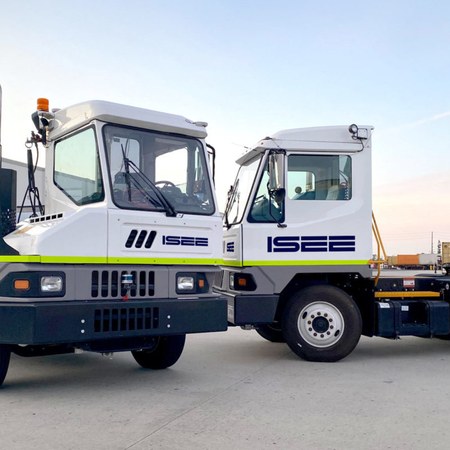
ISEE is an MIT spinout building humanistic, AI-powered self-driving yard trucks that automate the repetitive, dangerous work of moving trailers inside logistics yards and port terminals. Its autonomy system is grounded in cognitive-science ideas like theory of mind, letting trucks reason about intent and handle the unpredictable chaos of a working yard. ISEE claims to be the first company to reach fully autonomous operations in the yard-truck space, with customers including Maersk and Lazer Spot.
Pickle Robot Company
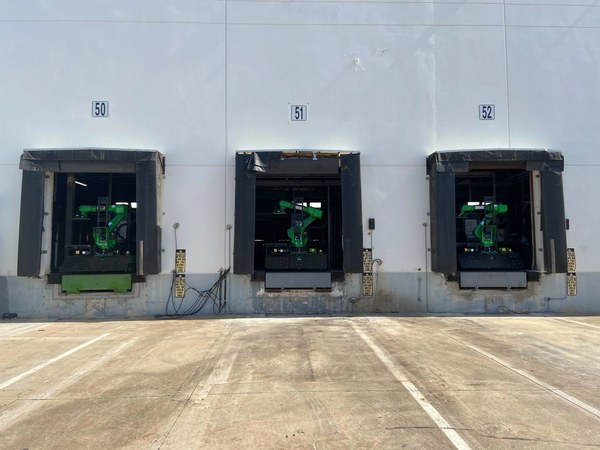
Pickle Robot Company builds Physical AI systems that autonomously unload trucks, trailers, and import containers of non-palletized goods at human-scale or better. Founded in 2018 and based in Cambridge, Massachusetts, Pickle pairs a multi-camera vision system with generative AI foundation models trained on millions of real warehouse data points, mounting a KUKA arm on a custom mobile base that drives into a trailer and clears it in roughly 90 minutes. The company is on a mission to automate inbound and outbound work at one million warehouse doors over the next decade.
Burmester & Vogel
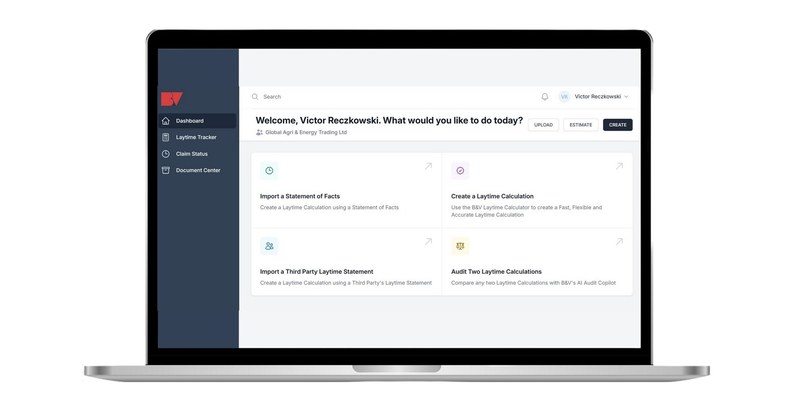
Burmester & Vogel is a Boston-based maritime technology company that uses AI and machine learning to automate laytime calculation and demurrage claim management for the shipping industry. Founded in Hamburg in 1983 as a traditional laytime firm, it has reinvented itself as the maker of the Demurrage AI Copilot - software that digitizes shipping documents, calculates delay time, and audits demurrage claims in seconds. It serves industrial producers, commodity traders, bulk terminals and shipowners across several hundred companies worldwide.

ThredUp
ThredUp is one of the world's largest online resale platforms for secondhand women's and children's apparel, shoes and accessories. Founded in 2009, the Oakland-based company combines automated distribution centers, a managed marketplace, and a 'Resale-as-a-Service' (RaaS) platform that powers branded resale programs for major retailers. It went public on Nasdaq in 2021 under ticker TDUP and frames its mission around extending the life of clothing to reduce fashion's environmental footprint.
HappyRobot
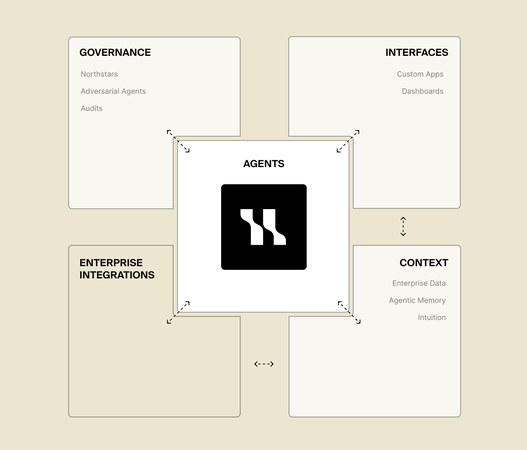
HappyRobot is the AI-native operating system for the real economy, deploying autonomous AI workers that handle phone calls, emails, and complex operational tasks for logistics and supply chain enterprises. Founded in 2022 by Pablo Palafox, Luis Paarup, and Javier Palafox, the company emerged from Y Combinator S23 and has raised $62 million in total funding - including a $44M Series B led by Base10 Partners. HappyRobot's AI agents now serve 150+ enterprise customers including DHL, Ryder, Werner, and Schneider, automating millions of voice minutes and hundreds of thousands of emails annually, reducing appointment scheduling from a week to under 30 minutes and delivering collections ROI exceeding 100x.