Somewhere outside a warehouse, a driver is waiting for somebody to find a trailer. The building may have robots. The transportation team may have live arrival estimates. Yet the patch of asphalt between the gate and the dock can still run on a radio, a clipboard and one veteran who knows that trailer 483 is probably behind the empty reefers. Freight technology becomes oddly primitive at the exact moment a shipment changes hands.
Kaleris lives in that awkward middle. The Alpharetta, Georgia, software company coordinates gates, yards, rail shipments, marine terminals, vessel plans and repair operations. It does not own trucks, cranes or ports. Its job is to give the people and machines that do the moving a reliable answer to three expensive questions: Where is the freight? What condition is it in? What should move next?
That sounds like visibility software, a crowded category full of maps and dashboards. Kaleris is making a more operational claim. A dashboard tells a dispatcher the yard is congested; execution software assigns the next move, updates the inventory record and gives the gate, dock and driver the same instruction. The difference is small in a pitch deck and enormous at 5 a.m. with 200 trailers on-site.
A roll-up disguised as a product map
Kaleris did not begin with a founder sketching an app in a garage. It was assembled. In 2020, technology investor Accel-KKR brought together PINC, ShipXpress and RailcarRx under a new name. PINC supplied cloud yard management and real-time location technology. ShipXpress covered rail and truck transportation for industrial shippers. RailcarRx managed repair work, billing, parts and labor. Each business knew a particular knot in the freight network.
Then came the consequential addition. Accel-KKR acquired Navis in 2021, bringing terminal operating systems and vessel-planning software with decades of maritime history. Kaleris folded Navis into its portfolio the following year. The combination put distribution-center yards and container terminals in the same company - two places separated by miles, owners and operating customs, but joined by the same cargo.
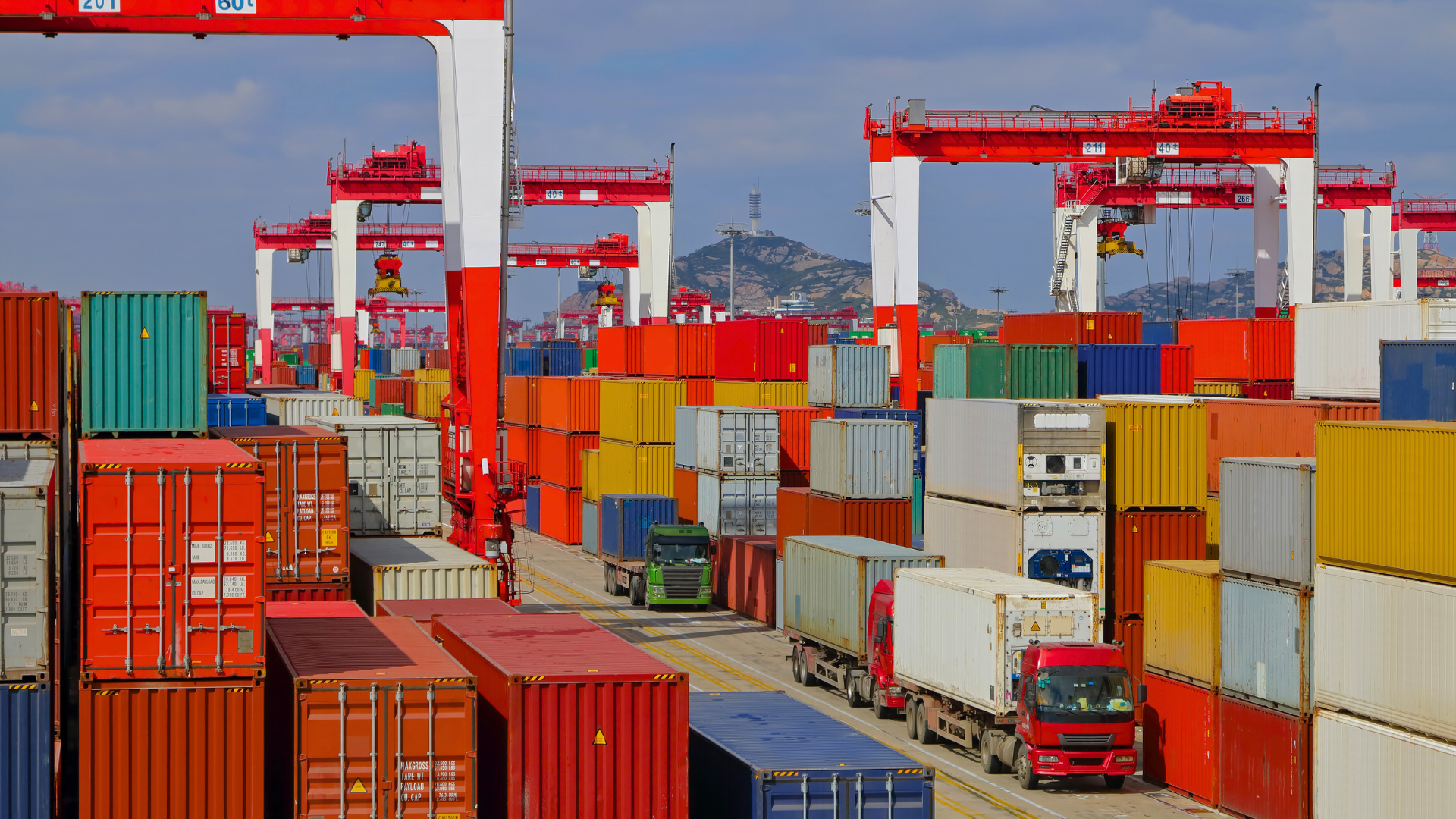
The acquisition trail continued. CAMS Software added grocery transportation in 2024, a wonderfully unforgiving niche where thousands of SKUs, refrigerated loads and sub-24-hour turns punish sloppy dispatching. Locus Software arrived in 2025 with cloud tools for ocean carriers, from quotes and bookings to operational and financial management. Kaleris now sells into the truck yard, the rail desk, the port and the shipping line.
That breadth is the company’s clearest distinction. A shipper can buy yard functionality from a larger suite such as Manhattan Associates, Blue Yonder or SAP. A port can choose a specialist terminal system. A gate can be instrumented by a computer-vision vendor. Kaleris argues that adjacent workflows become more useful when they share operating context. A delayed inbound truck is not merely a dot on a map; it may change a dock sequence, a rail plan or a container move.
“The warehouse is only as fast as its gate” is not a slogan. It is an invoice waiting to happen.
The numbers live at the bottleneck
Kaleris sells to large shippers, manufacturers, grocers, third-party logistics providers, railroads, repair shops, ports, terminal operators and ocean carriers. Publicly named users include Daimler Trucks, Carhartt, Chemours, Kraft Heinz, Georgia Ports Authority, Port Houston and Adani Ports and Special Economic Zone. In August 2026, Kaleris said more than 680 companies in 105 countries used its products.
The sales logic begins with leakage. Detention is the fee that accumulates when equipment waits too long. Demurrage penalizes cargo that overstays at a terminal. Rehandling means moving the wrong container so workers can reach the right one. None looks dramatic in isolation. Repeated across thousands of moves, they become a quiet tax on throughput.
Daimler’s truck operations are a clean example. The company replaced handwritten and radioed move requests with Kaleris YMS, RFID and GPS location data. It reported 99 percent yard accuracy, a 50 percent reduction in trailer move time and a 50 percent cut in carrier detention fees. What failed first was not the trailer. It was the shared record of where the trailer was and what should happen to it.
Chemours faced the same species of problem at high-volume distribution centers. Its Kaleris and Impinj RFID deployment replaced manual spreadsheets with an electronic record of yard activity and reduced detention and demurrage charges by $1.5 million. Carhartt wanted to retire manual yard checks and connect its yard system to existing transportation and warehouse platforms. The recurring trigger was growth making an informal process too costly to tolerate.
At Port Houston, the object being optimized was much larger: 142 rubber-tired gantry cranes serving two terminals that can see as many as 12,000 truck visits a day. Kaleris, port staff and the International Longshoremen’s Association mapped workflows and introduced RTG Optimization in phases. The rollout began with over-the-road truck moves in a small piece of the yard. Lessons from that area shaped custom filters and operator changes before expansion. Port Houston reported productivity improvements of up to 20 percent.
There is no public price list. Enterprise contracts vary by modules, locations, integrations, services and hardware. For its newer OCR gate automation, Kaleris says a high-volume truck yard can typically target payback in six to 18 months. That is an economic threshold, not a promise. A small yard with cheap delays may never save enough minutes to justify cameras, interfaces and process work.
AI arrives after the plumbing
Kaleris’s 2026 releases add a fashionable label to unfashionable tasks. AI Gate Vision reads truck, container, chassis and license-plate identifiers, records damage and checks safety labels as equipment passes the gate. Kaleris reports early use cases with processing under 60 seconds, compared with three to seven minutes for traditional clearance, plus 99 percent data accuracy and dock-throughput gains of 20 to 40 percent.
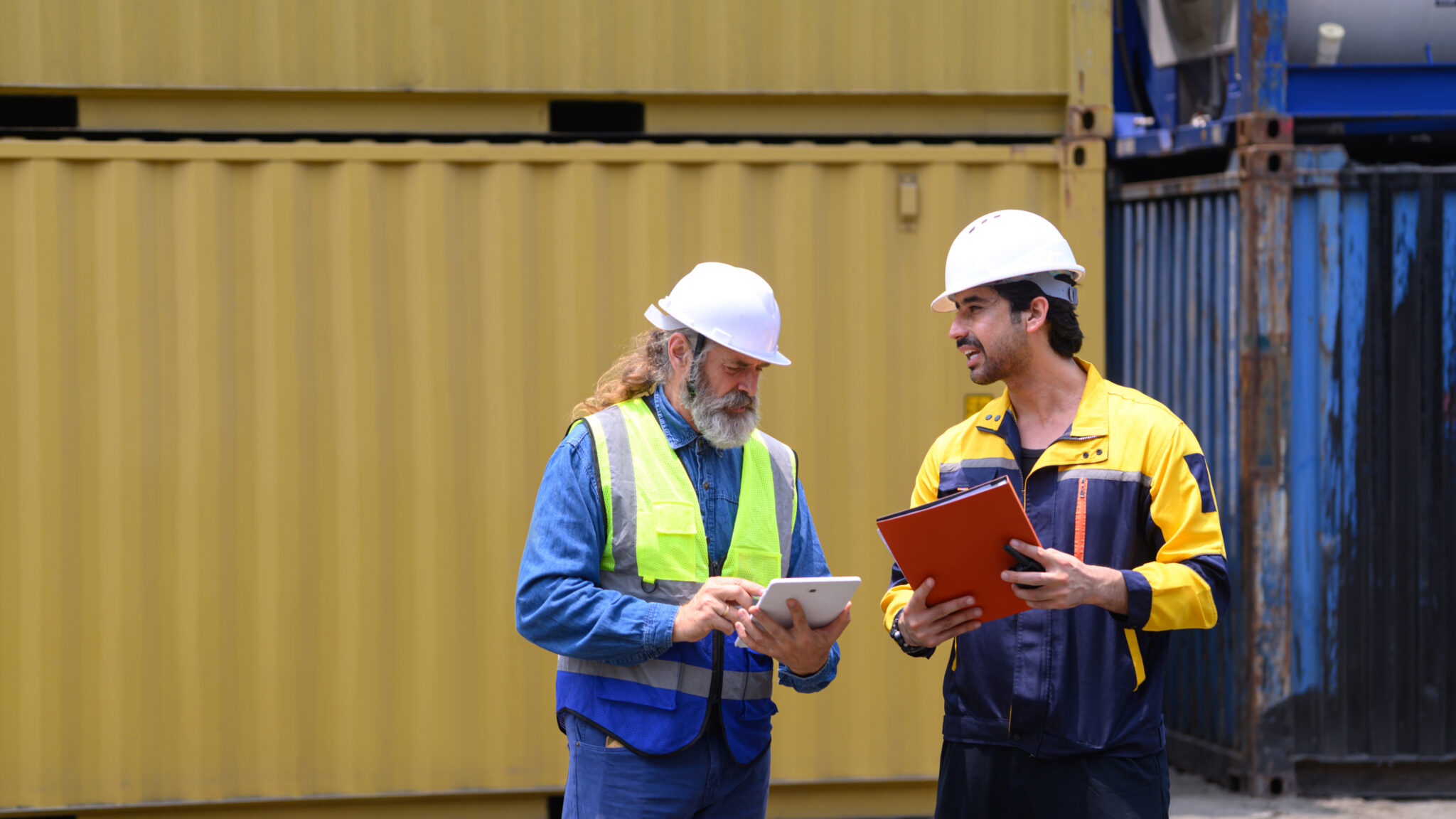
Yard Intelligence Suite applies AI augmentation to container-terminal planning. Operators can describe a yard strategy conversationally, while optimization software weighs how today’s placement decisions affect tomorrow’s work. ColdLink watches reefer temperature, fuel and operating status, allowing a load at risk of spoiling to jump the normal first-in, first-out queue. A planned Cargo Data Exchange Hub aims to connect vessel, carrier and terminal context in 2027.
The interesting part is what sits underneath the AI. Cameras need a trusted appointment and manifest record. Optimization needs accurate locations and equipment status. A conversational planner still needs rules grounded in the terminal’s actual constraints. Kaleris’s older products - identifiers, events, integrations and work queues - are the plumbing that makes the newer layer plausible.
That also explains what can go wrong. Dirty master data turns confident automation into fast confusion. Brittle integrations recreate the silos the platform was purchased to remove. A plan designed without crane operators, gate staff or drivers may be mathematically tidy and operationally ignored. Port Houston’s labor participation and limited first phase were not ceremonial project management. They were part of the product working.
The part worth copying
The practical lesson from Kaleris is not “buy more AI.” It is to begin where delay becomes a bill. Find the queue, rehandle, trailer hunt or gate check that repeats often enough to matter. Map the entire workflow, including the radio calls and unofficial spreadsheets. Establish reliable identifiers. Pick one hard metric. Then run a contained deployment long enough for frontline users to expose the assumptions.
Start with one yard zone, gate lane or move type whose cost can be measured.
Clean asset IDs, event times, appointments and system interfaces before optimizing them.
Put operators and labor representatives in the workflow design, not only the training session.
Tune rules from live use and widen the rollout only after the first metric holds.
The approach is less compelling under several conditions. If a warehouse already runs one enterprise suite and its yard is not a serious constraint, the included module may be adequate. If volume is low, an independent YMS can be elegant overkill. If no one owns data quality or process exceptions, connecting more nodes simply distributes bad information farther. And if management wants labor savings without redesigning the work with labor, adoption becomes the first bottleneck.
Kaleris’s ambition is to make freight legible from ship to shore to yard. The company said its technology handled more than 250 million twenty-foot-equivalent units in 2024, roughly 30 percent of global container traffic. The figure shows reach, but not automatic connectivity; customers still operate different products, versions and processes. Turning an acquisition portfolio into a genuinely shared execution layer is the work ahead.
Still, the company has chosen a useful place to work. Global logistics does not usually stop because nobody drew a dashboard. It stops because a person, machine or system lacks the next reliable instruction. Kaleris is betting that the business of supplying that instruction - at the gate, in the stack and aboard the ship - is worth more than merely watching the dot.