Consider the loading dock door. Open, it looks like an invitation. In a working warehouse, however, an open door answers remarkably few questions. Is the trailer there? Is it secured? Is the leveler stored? Has the driver been told to move? A facility can know where its inventory belongs and still struggle with this little sequence of permissions. 4Sight Connect has built its business around making that sequence visible, shareable and, increasingly, automatic.
- The job: connect dock equipment, gate activity and driver instructions.
- The current toolkit: Auto Dock, FastPass and Data.
- The useful distinction: software informed by what the equipment is actually doing.
Its customers operate warehouses, distribution centers, manufacturing plants, retail facilities and cold stores. These are places where a truck’s arrival starts a chain of decisions across people and machines. The company’s proposition is straightforward: give those decisions better information. A dock’s physical state should be available to the manager looking at a screen, the system planning the next task and the driver waiting outside.
A software story that starts with steel
4Sight Connect belongs to the 4Front Engineered Solutions family, part of ASSA ABLOY. Its lineage runs through loading dock equipment and industrial doors, including the Kelley and Serco brands. That background matters because this particular software problem begins with things that move, lock, lift and occasionally need maintenance. Knowing that a shipment has an appointment is useful. Knowing what the dock equipment is doing adds another kind of evidence.
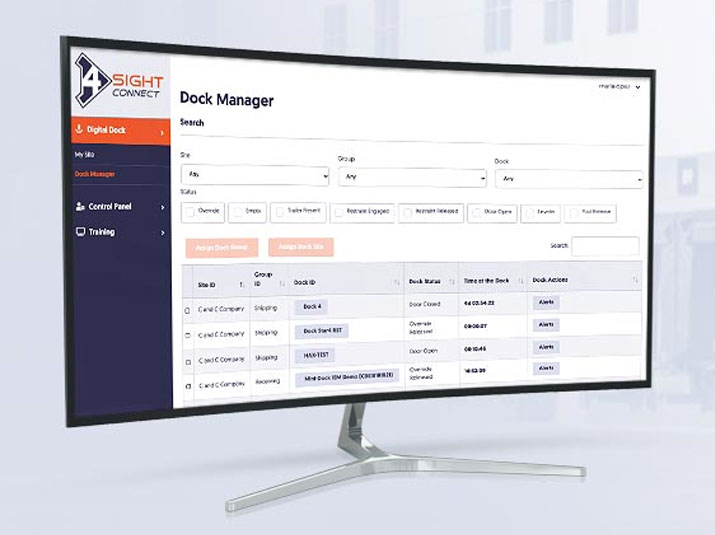
When Digital Dock launched in August 2020, a Kelley or Serco Digital Master Control Panel served as the collection point for equipment status. Paired with an edge device, it sent information to a cloud dashboard accessible from a connected computer or mobile device. The launch also described condition-based maintenance alerts and monitoring of turnaround delays. The humble panel on the wall had acquired a second job: reporting what was happening.
The typo that travels
The company’s own explanation of Digital Dock’s development contains a revealing admission. Incorrect information entered by a facility employee or driver can spread throughout a connected software ecosystem. As its article puts it, “data entry has a ripple effect.” The team described lessons from its existing yard and dock products, attention to ease of use, and the need to make information available to other systems.
Read that as a design lesson: connecting applications only helps when the original observation is reliable. In March 2021, Connect Data gave customers a route from dock equipment into their own processes. Events such as a change in trailer presence or door status could travel through MQTT, with a JSON payload carrying the information. RESTful API access offered another way to retrieve data. An operator could build reports and dashboards around the workflow already in place.
THE SIGNAL PATH / Conceptual illustration, not a performance measurement
There is a wonderfully concrete limit to this idea. Trailer-presence information depends on trailer-presence sensors. Restraint events depend on restraints. The Data launch recommends presence sensors at every dock position and restraints to extend the available information. For a buyer, that makes the first investigation a walk around the dock: which events can the installed equipment actually report, and which decisions will those events change?
The driver gets the message
FastPass addresses the human handoff. Drivers provide a phone number for dock assignment and receive text instructions directing them to a door or waiting area. When the relevant dock becomes free, another message can send them forward. When restraints or dock locks are released, the system can communicate that processing is complete and direct the driver toward checkout. Each message belongs to a particular moment in the visit.
An optional No Touch Access workflow lets drivers use Mobile Xpress in the Connect Hub app to pre-check in and receive arrival prompts and directions. Facility rules may still require physical documents to change hands. That small qualification is instructive: digitizing an arrival does not automatically digitize every procedure surrounding it. The earlier Digital Gate product won MHI’s Best IT Innovation award in 2021, recognition for this operational coordination problem.

Now let the equipment join in
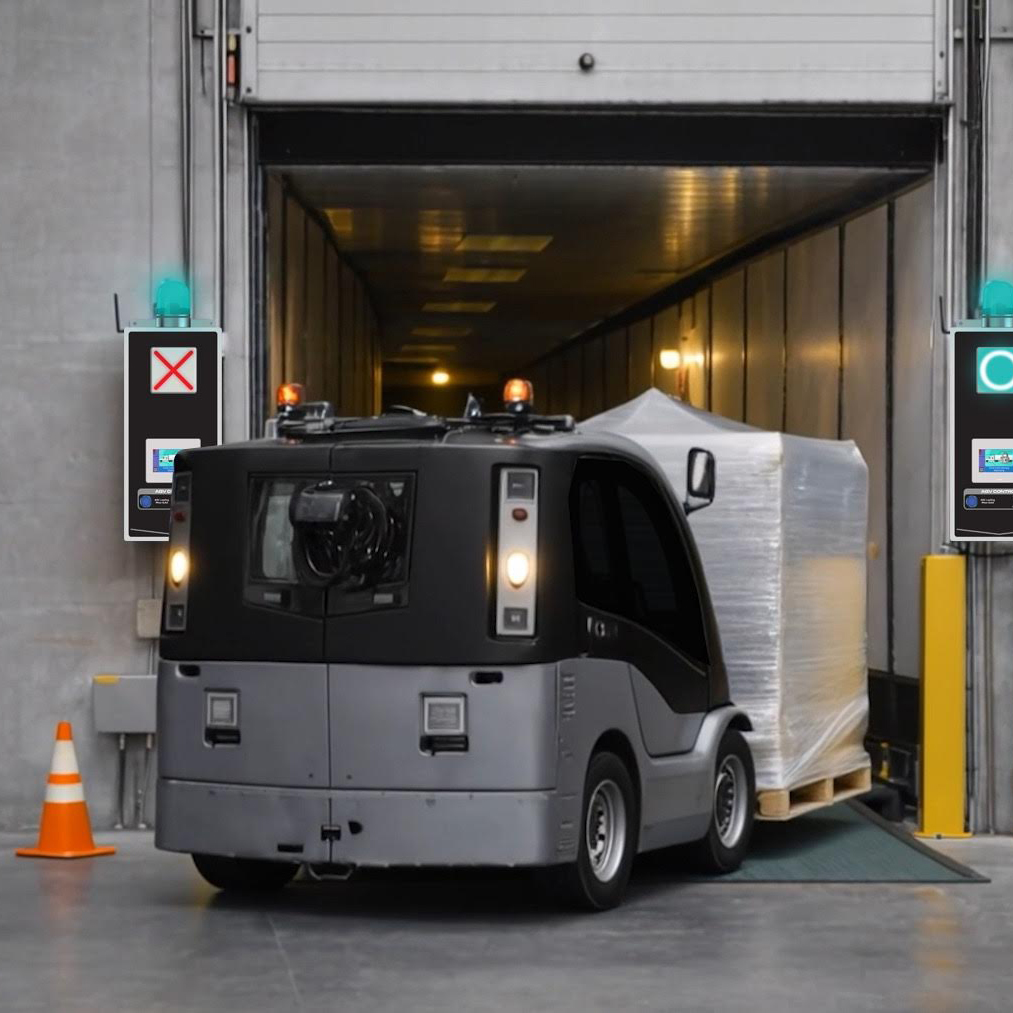
Auto Dock, announced in April 2026, takes the story beyond watching. It coordinates doors, levelers and vehicle restraints with automated vehicles and facility software. Configurable workflows can pause for safety checks, trailer inspections and other required steps. Compatible existing hardware can participate, and facilities can introduce Auto Dock Ready equipment in phases. The attraction is continuity between automation inside the building and activity at the trailer.
“The loading dock is the gateway to the supply chain”
Rhonda Reece · Product manager · Auto Dock launch, 2026
Buy the handoff you need
Commercially, this is enterprise subscription software attached to a physical operation. The published agreement places fees and quantities in order forms and treats professional services separately. A practical budget therefore needs to account for the software, compatible equipment, connectivity and implementation scope. The sensible purchasing unit is a working process: arrival through departure, including the awkward exceptions that a polished demonstration might skip.
4Sight occupies the space between dock hardware, driver coordination and enterprise systems. Opendock offers overlapping scheduling, gate and yard tools; an existing warehouse or yard system may already cover part of the job. The distinctive case for 4Sight is its equipment connection. The lesson readers can copy is modest and useful: identify the physical event, decide who needs it, and give that person or system a clear next action. Start with the door.