georgia-tech
(32)
ATDC opens the startup door for $25 a quarter
Georgia’s technology incubator makes its first rung cheap and takes no equity. The harder part is turning access to coaches, customers, and capital into a business that can stand on its own.

Frank Bryant Sells the Complicated Without Making It Complicated
From industrial clean-air systems to workplace coaching software, Frank Bryant has built a career translating products that require explanation into stories people can act on.

Jennifer Edwards Turned an Industrial Design Degree Into a Career Building Growth Engines
The Euna Solutions CMO began as an industrial designer. Two decades later, she still treats growth the same way: understand the system, make complexity visible, and build something people can actually use.

Matt Luongo Keeps Building the Bitcoin He Was Promised
A pile of unwanted coffee cards led Matt Luongo to Bitcoin. A decade later, the Thesis* founder is still wrestling with the same question: how do you make digital money useful without turning it into another machine for middlemen?

George Parks Found a Million-Dollar Tollbooth in Government Software. So He Started Taking It Apart.
A Georgia Tech coder went to the State Department, met the bureaucracy from the inside, and came back with Archon - a bet that the dullest obstacle in software may be one of the most valuable to remove.
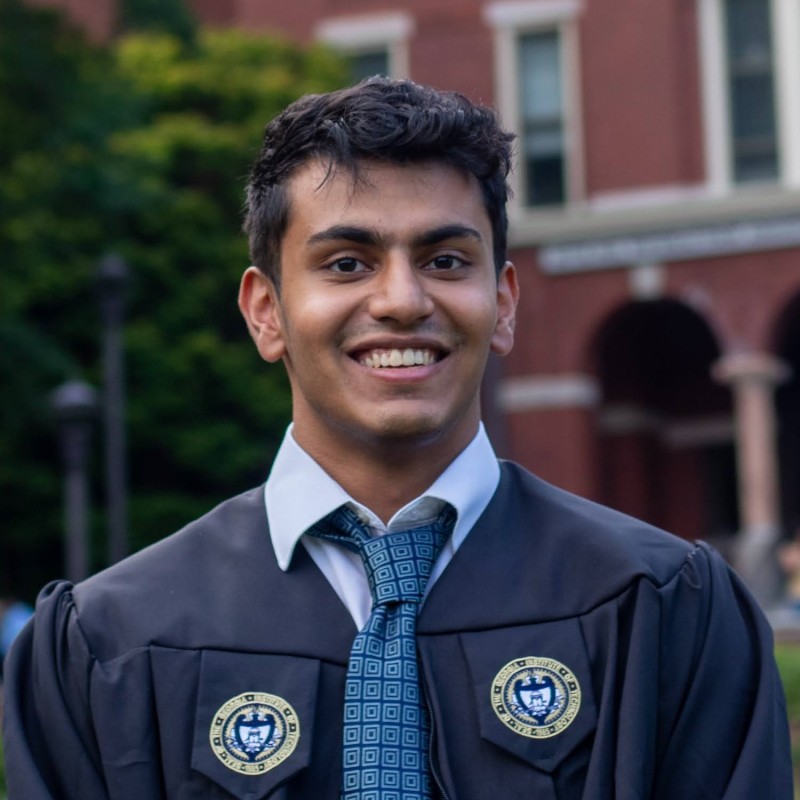
Anshul Ahluwalia Wants Drone Defense to Speak One Language
After building aircraft autonomy at Shield AI, the Georgia Tech computer scientist found his startup idea in defense technology's least glamorous corner: getting incompatible machines to cooperate.
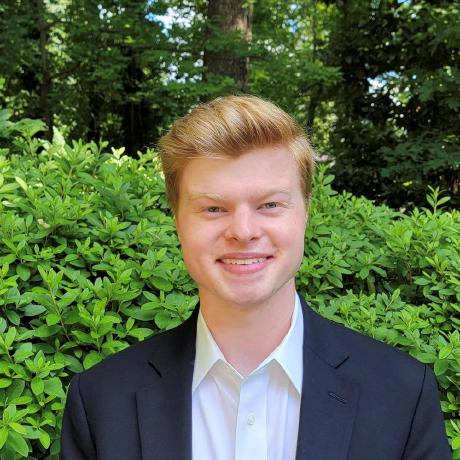
Aidan Pratt Wants to Put AI on the P&L
The Autostep founder has spent years building small machines for annoying work. Now he is chasing a larger question: can companies prove what their AI actually returned?

Musheer Ahmed Is Moving Healthcare’s Error Check to the Moment Before the Bill
A cybersecurity dissertation became an Atlanta company with a precise thesis: the cheapest claim error is the one that never enters the system. Now Ahmed is pushing payment integrity from forensic cleanup toward prevention at “Point Zero.”

Vijay Balasubramaniyan Is Teaching Machines to Hear the Lie
A declined credit card sent a Georgia Tech researcher hunting for truth in the noise. Fifteen years later, his old question - who is really speaking? - has become the defining riddle of synthetic media.
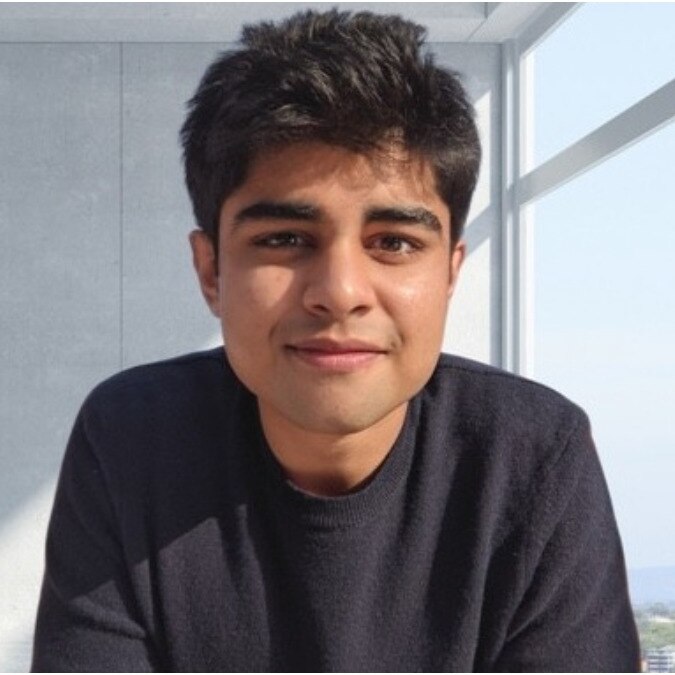
Daksh Gupta Is Building the Bug Catcher for the Age of AI Code
A messy inherited codebase sent three Georgia Tech friends west. Now Gupta is betting that as AI writes more software, an independent reviewer becomes essential infrastructure.

Caitlin Leksana Found a Startup in the Spreadsheet Nobody Wanted to Open
A mechanical engineer, a failed crypto startup and a hundred nervous cold messages led Caitlin Leksana to an overlooked corner of finance. Now she is building Fazeshift around a deceptively hard question: why is getting paid still managed by hand?

Ari Bleemer Found a Business in the Cracks Between a Spreadsheet and a Paving Crew
The former Bain consultant chose an industry most software founders barely notice. By listening before selling, Ari Bleemer turned paving's paper trail into OneCrew's product map.
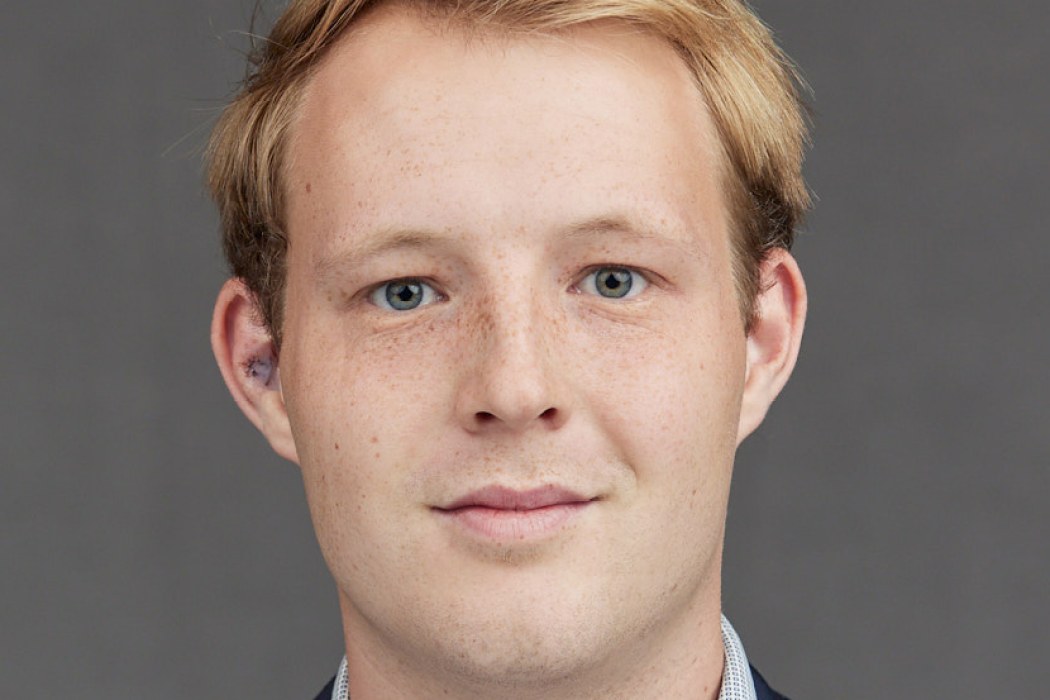
Stef Crum
Stef Crum is the CEO and co-founder of Reditus Space, an Atlanta aerospace startup building reusable spacecraft that return payloads from orbit so companies can manufacture in microgravity. A Georgia Tech PhD in space systems engineering who worked on orbital operations and reentry with NASA and the Space Force, Crum started Reditus with classmate Will Sherman after Georgia Tech's Create-X program, went through Y Combinator's Winter 2025 batch, raised a $7.1 million seed round, and was named to the Forbes 30 Under 30 Transportation and Aerospace list in 2026. His pitch is blunt: the innovation isn't getting to orbit, it's coming back.
Shruti Gupta
Shruti Gupta is the founder and CEO of Zania, a Palo Alto startup building agentic AI 'teammates' that execute governance, risk, and compliance work end to end. Before founding Zania in 2023, she spent years inside security teams at Microsoft Identity, Airbnb, Instacart, and Brex, moving from founding security engineer to CISO. In September 2025 Zania raised an $18 million Series A led by NEA, backed by the Anthology Fund (Menlo Ventures and Anthropic) and a syndicate of operators from Amazon, Airbnb, PayPal, and PwC. Her pitch is simple: stop shipping compliance tools that organize work, and start shipping AI that does the work.
Milind Borkar
Milind Borkar is the founder and CEO of Illuma, a Plano, Texas company that uses passive voice biometrics and synthetic-voice detection to authenticate callers and stop phone-channel fraud at credit unions and community banks. He holds a PhD in electrical and computer engineering from Georgia Tech, is named on 21 patents, and spent a decade at Texas Instruments launching more than 50 products before founding Illuma in 2016.
Rajesh Narasimha
Rajesh Narasimha is CEO and co-founder of Edgetensor, a Dallas-based startup building a multi-camera, edge-AI video telematics platform for fleets, insurance, and automotive OEMs. A Georgia Tech ECE PhD with 16+ years in computer vision and machine learning, he previously worked at Texas Instruments, Samsung Research America, and helped stand up US R&D at metaio (later acquired by Apple).
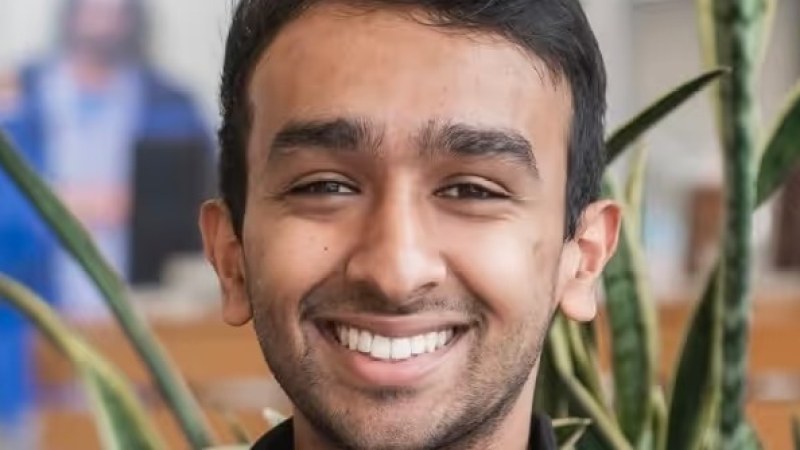
Sohan Choudhury
Sohan Choudhury is the co-founder and CEO of Flint, an AI platform for K-12 schools that lets teachers personalize instruction without adding to their workload. A Georgia Tech Stamps Presidential Scholar who left school in 2020 to build the video-chat startup Gatherly (later acquired), he launched Flint with Jinseo Park in 2023 through Y Combinator's Summer batch. Flint raised a $15M Series A in November 2025 co-led by Basis Set Ventures and Patron, and now serves 400,000+ students and teachers across independent and public schools.

Josh Mackanic
Josh Mackanic is the founder and CEO of CivilGrid, a San Francisco construction intelligence platform that stitches together utility, environmental, and geotechnical site data so engineers stop discovering surprises with a backhoe. A licensed mechanical engineer with a decade inside PG&E and an MBA from Wharton, he has shepherded north of half a billion dollars of gas, electric, and renewable infrastructure into the ground.
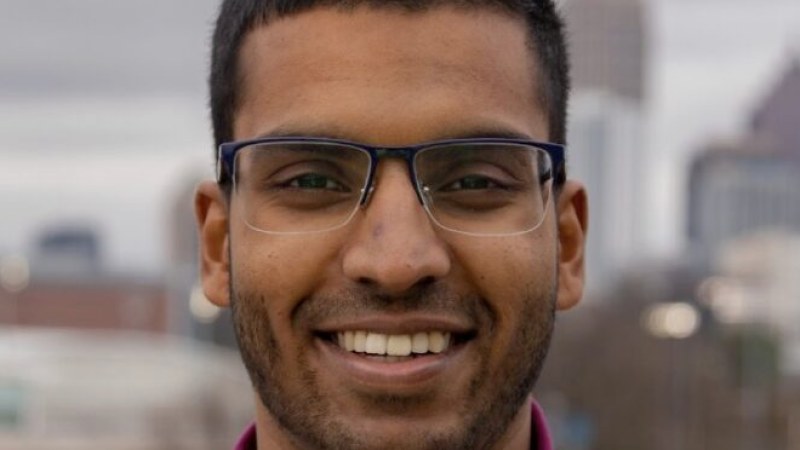
Aditya Vishwanath
Aditya Vishwanath is the co-founder and CEO of Inspirit, a Palo Alto edtech company that brings virtual and augmented reality into middle and high school STEM classrooms. A Georgia Tech computer scientist turned Stanford learning-sciences PhD, he built Inspirit to be the bridge between cutting-edge academic research and the everyday teacher. Before Inspirit he co-founded MakerGhat, a network of makerspaces for youth in low-income Mumbai neighborhoods. He is a Knight-Hennessy Scholar, Schmidt Futures Fellow, Ashoka Fellow, and a Forbes 30 Under 30 honoree in education.
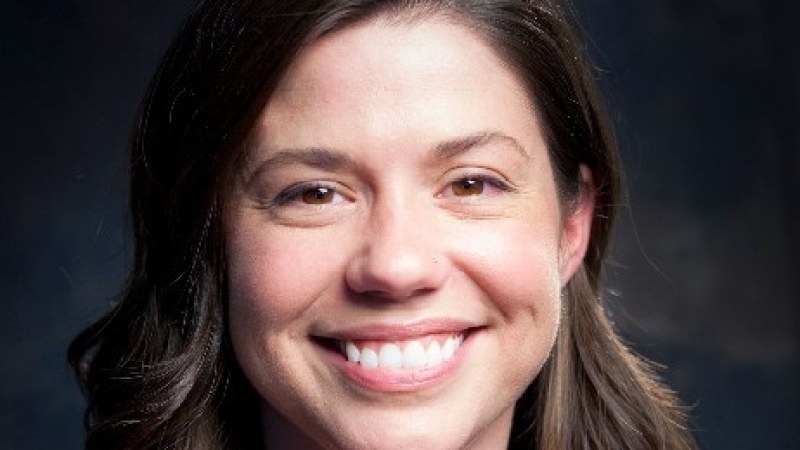
Molly Heacock
Molly Heacock is the incoming CEO of Untold (formerly CARE for AIDS), an Atlanta-headquartered global nonprofit helping people living with HIV move toward a life beyond AIDS through holistic, community-based, faith-integrated care. A public health practitioner who spent a decade as COO and Managing Director before stepping up to lead, she has helped scale a model that pairs medical adherence with economic, emotional, and spiritual support across dozens of communities in Kenya, Tanzania, and beyond. She relocated from Atlanta to Nairobi in 2019 and built her career on the conviction that local, indigenous-led staff and dignity-first care change long-term outcomes.

Terry Kennon
Terry Kennon is a chemical engineer turned investment banker turned clean-energy builder who serves as Executive Vice President and Chief Technology Officer of Proteum Energy in Phoenix, Arizona. He took on the President role in March 2019 after roughly four years as CTO. With more than 30 years across chemical engineering, biofuels investment banking at J.P. Morgan, and renewable-energy entrepreneurship, Kennon now leads Proteum's patented technology that reforms renewable ethanol into low-cost, low-carbon hydrogen and 'designer fuels' - and turns wasted flare gas into usable product. He is a named inventor on the company's core patents and directs both its technology roadmap and its intellectual-property strategy.
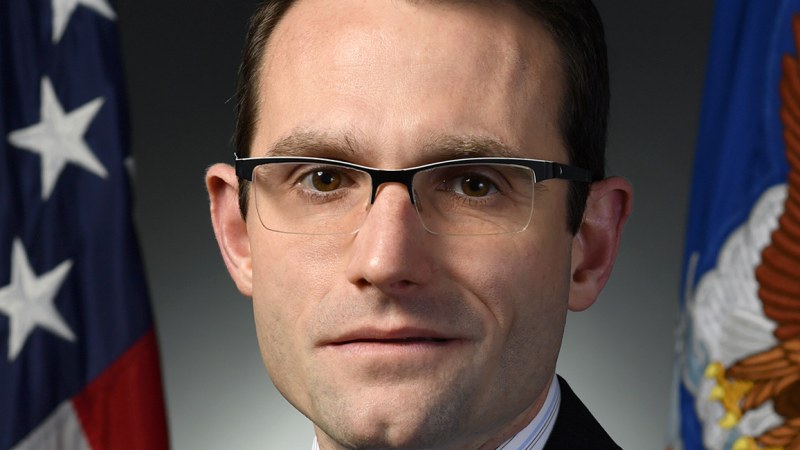
Will Roper
Will Roper is a physicist-turned-defense-strategist who now runs Istari Digital, a Cambridge, Massachusetts startup trying to build an 'engineering metaverse' where machines from satellites to medicines can be designed, tested and certified entirely in software. Before founding Istari in 2022, he was the 13th Assistant Secretary of the Air Force for Acquisition, Technology and Logistics, steering a roughly $40-60 billion annual portfolio, and earlier the founding director of the Pentagon's Strategic Capabilities Office, where he turned a $50 million budget into a $1.5 billion-plus prototype machine that produced drone swarms, hypervelocity guns and fighter-jet AI co-pilots. A Rhodes Scholar with an Oxford doctorate in string theory, he names his ventures after Tolkien wizards and argues America must learn to make hardware behave like software before its rivals do.
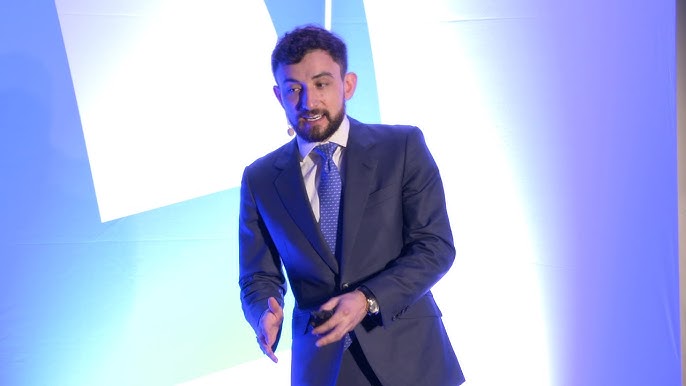
Ian Schmertzler
Ian Schmertzler is co-CEO and co-founder of Dispel, an operational-technology cybersecurity company he started in 2015 with his brother Ethan. A Yale-trained industrial engineer and former crew coxswain, Ian helped build Dispel's zero trust platform around Moving Target Defense - a system that keeps shifting network access points so attackers never find a static target. He serves as a principal investigator on three NIST National Cybersecurity Center of Excellence projects and as vice president of the National Defense Industrial Association's NY-CT chapter, working to keep factories, water utilities, and power grids running quietly and safely.

Lydia Hylton
Lydia Hylton is the co-founder and CEO of Strella, an AI-powered customer research platform that runs adaptive, AI-moderated interviews and synthesizes the results in hours instead of weeks. A Georgia Tech computer engineer and Stanford MBA, she moved from Facebook data science and Bain consulting into venture capital at Redpoint and Bain Capital Crypto before teaming up with her high-school friend Priya Krishnan to build Strella. After a 'Wizard of Oz' MVP and a perfect 12-for-12 design-partner conversion, the company raised a $14M Series A led by Bessemer in October 2025 and now serves Amazon, Duolingo, Chobani, Square and Apollo GraphQL.
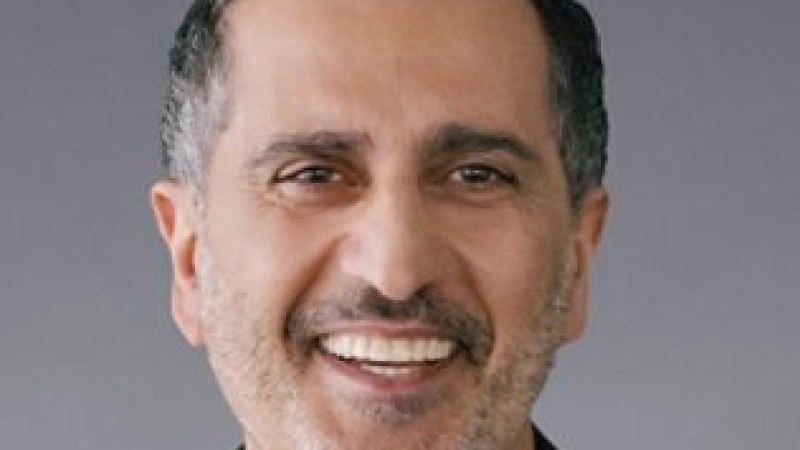
Sassine Ghazi
Sassine Ghazi is the president and CEO of Synopsys, the electronic design automation company whose tools underpin most of the world's advanced chips. He took the top job in January 2024 after 26 years inside the company and steered the $35 billion acquisition of Ansys to close in July 2025.

Akash Talyan
Akash Talyan is a Product Designer at Zip (ziphq.com), a San Francisco-based AI procurement platform valued at $2.2 billion. He leads design for the agent experience team, building the human-AI interfaces that power enterprise procurement automation. With a Master's in Human-Computer Interaction from Georgia Tech and a career spanning Coinbase, Verily Life Sciences, and Lucid Software, Akash brings rare depth to the challenge of making agentic AI workflows feel intuitive to real enterprise users.

Jarvis Johnson
Jarvis Allen Johnson is a Los Angeles based YouTuber and podcaster who left a senior engineering role at Patreon to make commentary videos about content farms, dating shows, and the strange edges of the internet. He co-hosts the Sad Boyz podcast with Jordan Adika, runs eight YouTube channels with a combined audience over four million, and was named to Forbes 30 Under 30 for social media in 2021.
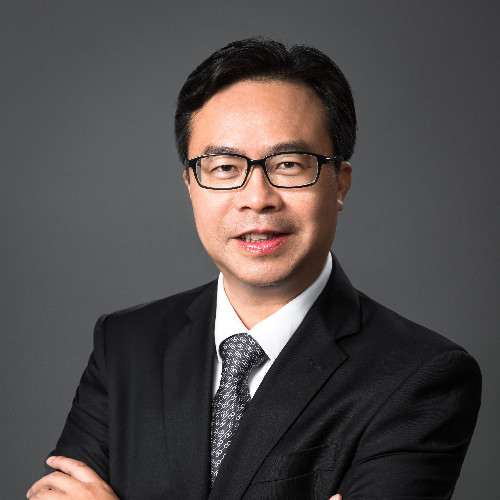
Sheng Liu
Sheng Liu is the CEO of TeraHop and co-founder of InnoLight Technology (now Zhongji Innolight), a company that commands over half the global market share in 800G optical transceivers. A PhD from Georgia Tech, he returned to China in 2008 to fill a domestic gap in high-end optical modules, built InnoLight into a global leader across 400G, 800G, and 1.6T products, and now leads TeraHop - backed by Temasek and ADIA - to power the optical backbone of AI infrastructure worldwide.

Spencer Applegate
Spencer Applegate is a technology operator and investor who built three software companies before becoming Vice President of Strategy & Business Operations and Chief of Staff to the CEO at Gainsight, the leading customer success platform. With a foundation in nuclear engineering from Georgia Tech and an MBA from Harvard Business School, he has moved fluidly between founding startups (Verusen, REscour, PainTheory), deploying capital at growth and buyout funds (M33 Growth, Pacific Lake Partners, Vector Capital), and now running strategy at a $1.25B enterprise SaaS company in San Francisco.
Anirudh Joshi
Anirudh Joshi is the co-founder and CEO of Valar Labs, a Palo Alto-based AI oncology company building tools that let doctors predict whether a specific cancer treatment will work before a patient wastes months on the wrong one. A biomedical engineer trained at Georgia Tech and Stanford, he previously built AI at Microsoft, PathAI, and Curai before co-founding Valar in 2021 with teammates from Stanford's AI in Medicine group. Valar raised $26M total, landing a $22M Series A from Andreessen Horowitz and DCVC in 2024, and its flagship test Vesta — predicting BCG therapy response in bladder cancer — is now live at 20 U.S. hospitals. Named to Forbes 30 Under 30 Healthcare 2025.