The product idea arrived disguised as an annoyance. Anshul Ahluwalia and Cameron Fiore were autonomy engineers, building systems meant to reason through uncertainty at aircraft speed. Yet a stubbornly earthly task kept getting in the way: making somebody else's sensor talk to somebody else's command software, then persuading both to cooperate with a defensive system made by a third company. The machines were sophisticated. Their introductions were awkward.
Inside established defense-technology companies, Ahluwalia saw integrations built carefully for a particular customer and a particular stack. They could work well, but they did not necessarily travel. Change the radar, the camera or the command environment and the engineering began again. He later described these as one-time integrations that did not scale. Fiore had seen a similar pattern at Anduril and Shield AI. Their shared complaint became a company.
Surtr Defense Systems was officially founded in March 2026, when the pair joined Y Combinator's Spring batch. Ahluwalia became CEO; Fiore became CTO. They called their product ParallaxOS. The name is apt. Parallax is what happens when the same object appears to shift as the observer's position changes. A radar, an acoustic array and a camera each view an aerial object differently. Surtr's job is to combine those perspectives without asking a human operator to perform the reconciliation in his or her head.
01 / A career spent reducing complexity
The graph and the aircraft
Ahluwalia's path to that problem ran through computer science at Georgia Tech. As a graduate student, he worked in Alexey Tumanov's Systems for Artificial Intelligence Lab and served as a teaching assistant for a deep-learning course in 2023. Earlier, he had explored transformer pointer networks for estimating lane polylines, a computer-vision problem in which a model has to infer useful structure from a scene. The work sits several turns away from air defense, but the intellectual muscle is familiar: many signals arrive, and the machine must decide which relationships matter.
His 2023 paper, co-authored with Rohit Das, Payman Behnam, Alind Khare, Pan Li and Tumanov, dealt with graph neural network compression. Large models can be accurate and painfully slow. Smaller models can be nimble and forgetful. Their method used attention to determine which intermediate layers of a larger teacher network should align with layers in a smaller student. On a large benchmark, the paper reported a 32.3-times compression ratio and an average accuracy improvement of 1.79 percentage points over comparison approaches.
A research paper and a field computer are not the same artifact. Still, they reveal a recurring preference. Ahluwalia is interested in systems that preserve important structure while reducing operational burden. At Shield AI, that preference left the lab. He worked as an integration and autonomy engineer on Group 3 and Group 5 aircraft, categories that include larger unmanned systems. He was no longer only asking whether a model could run efficiently. He was helping software act through hardware in environments where latency, reliability and imperfect information have consequences.
02 / The wall of screens
Interoperability, translated into attention
Interoperability is a word engineered to make eyes wander. Ahluwalia makes it concrete: imagine an operator looking at a wall of separate screens. One displays radar tracks. Another carries camera video. A third shows acoustic detections. Other interfaces control electronic warfare, interceptors or turrets. The operator becomes the fusion engine, matching objects and judging intent while time slips by. Surtr's pitch is simply one screen rather than fourteen.
ParallaxOS is designed as a hardware-agnostic layer. It ingests data from radar, radio-frequency detectors, electro-optical cameras and acoustic arrays, correlates the tracks and presents a unified threat picture. The system can offer classification and engagement recommendations. Surtr continues to describe a human as part of the decision loop, a significant detail whenever autonomy approaches the use of force.
The openness is both an engineering choice and a business argument. Hardware companies are understandably cautious about handing proprietary data and integration logic to a platform that might also compete with them. Surtr says partners can see how their integrations work and customers control their data. In a market full of guarded interfaces, transparency becomes part of the product.
This is Ahluwalia at his most characteristic: the language is architectural, but the appeal is practical. Better integration means less custom work for vendors, shorter timelines for customers and fewer mental joins for operators. “Interoperability is probably one of the biggest problems in defense tech today,” he said in July. It is the sort of sentence that sounds broad until you picture the screens.
03 / Reality gets a vote
Kyiv, three months in
Surtr did not remain a diagram for long. Shortly after the company became findable online, Brave1, Ukraine's defense-innovation cluster, contacted the founders. Sensor fusion was a live problem. Through the Test in Ukraine program, the team traveled to Kyiv at the end of May 2026, less than three months after the company's official founding.
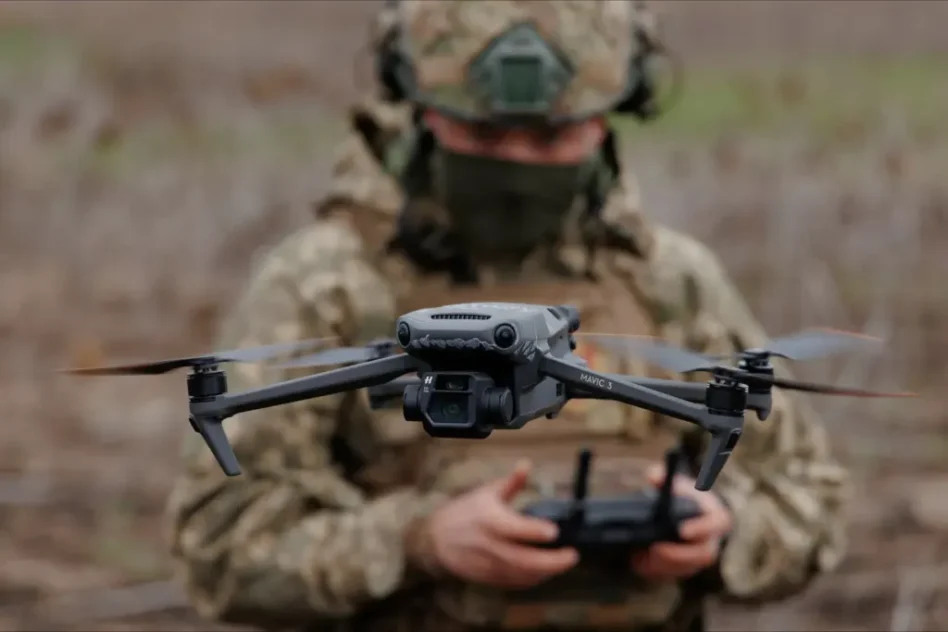
Military operators flew first-person-view drones while the Surtr prototype combined acoustic-array and optical-camera data. The system detected and tracked the aircraft, with Ahluwalia reporting latency below 100 milliseconds. Brave1 described the prototype as showing a good level of technological maturity and offered feedback for adapting it to operational use.
The number is memorable; the founders' description of the visit is more revealing. They said the conversations with operators were the real value. Field feedback is a useful antidote to founder theater. A prototype taken into an operationally relevant setting is no longer allowed to be charming. It must contend with noise, imperfect placement, unfamiliar equipment and users whose patience has been disciplined by stakes rather than demos.
Co-authors research on compressing graph neural networks while preserving useful intermediate structure.
Builds and integrates autonomy for Group 3 and Group 5 aircraft at Shield AI.
Founds Surtr with Cameron Fiore and joins Y Combinator's Spring batch.
Takes ParallaxOS to Kyiv for acoustic and optical fusion tests against FPV drones.
Announces $4.8 million in financing and plans the next set of integrations.
The trip also sharpened the roadmap. The early test used microphones and cameras. Ahluwalia has said the next work includes radars, passive sensors and defensive systems, with turrets among the integrations under consideration. Surtr has also been approved for testing at the Point Defense Battle Lab in North Dakota. Each new connection is supposed to make the operating layer more useful, though each also tests the claim that a repeatable architecture can replace bespoke engineering.
04 / Capital for the seams
A financing round and a longer checklist
In July, Surtr announced a $4.8 million pre-seed round backed by Allegis Capital, Eniac Ventures, Gaingels, Robinhood Ventures, Streamlined Ventures and angel investors. The money is earmarked for a resolutely uncinematic list: engineers, forward-deployed staff, government relations, test hardware, partner integrations, Pentagon program submissions and the licensing required for controlled exports.
That checklist matters because integration companies can drown in their own promise. If every customer requires an expedition, the platform becomes a consulting practice with excellent typography. Ahluwalia's challenge is to prove that open standards and reusable adapters can make each installation faster than the last. The company must stay close enough to hardware to be credible and neutral enough that hardware makers will trust it.
His partnership with Fiore is useful here. Both founders are autonomy engineers, but their experience came through different institutional paths. Ahluwalia brings Shield AI's aircraft-autonomy and integration perspective. Fiore worked on related autonomy problems at Anduril and Shield AI. They arrived at the same frustration independently, which is often stronger evidence than two people admiring the same market report.
Ahluwalia's public style remains spare. When Y Combinator introduced Surtr, he wrote, “Excited to build this with Cameron Fiore.” Seven words, one named collaborator, no prophecy. It is a small detail, but a fitting one. His company is selling coordination. The founder announcement gave the other engineer half the sentence.
05 / What the work is really removing
The operator's invisible job
The most interesting thing about ParallaxOS may not be what it adds. It is the invisible job it proposes to remove. Whenever software systems fail to connect, a person quietly becomes the API. Someone copies a coordinate, compares two tracks, recognizes that a camera blob and a radar return are the same object, then decides which system deserves attention. Organizations become accustomed to this labor because humans are versatile and the workaround technically functions.
Ahluwalia noticed the workaround. His research trained him to look for structure across layers. His aircraft work showed him what brittle integrations cost. Surtr gives that observation a product boundary: accept many feeds, correlate them at the edge, preserve human authority and make the result legible on one screen.
It is an early company with an unfinished integration list and a demanding market. Its first months nevertheless form a coherent little story. Two engineers compared notes. A recurring nuisance became an architecture. An architecture met operators in Kyiv. Their feedback became a roadmap. Capital arrived to extend the experiment.
The ambition is not to build every radar, camera or interceptor. It is to make their differences less exhausting. There is something almost old-fashioned in that: progress through good introductions. In a business fascinated by autonomous machines, Ahluwalia has chosen to work on cooperation, the stubborn human art the machines have not yet mastered by themselves.