The first HavocAI fleet was less naval revolution than garage logic. Paul Lwin wrote code in Python. He and Joe Turner tested it near Turner's parents' lake house. At one point, the hardware was two canoes joined by wooden planks. The founders were not trying to make the ocean's most impressive object. They were trying to make ordinary objects move together without an operator steering each one.
That distinction became the company. Lwin, a former Navy flight officer who came to the United States as a child refugee from Myanmar, and Turner, a former nuclear propulsion officer who had already founded an autonomous underwater-vehicle business, heard a Pentagon official ask industry for thousands of autonomous boats in 2023. They quit their jobs the next day and formed HavocAI in January 2024.
The request was grand. Their response was practical: boats were already plentiful. The hard part was giving one person a clean way to plan a mission, supervise a crowd of machines, combine their sensor feeds and keep the group useful when GPS or communications became unreliable. HavocAI would own that brain, bolt it onto commercial craft, and work with shipbuilders for the rest.
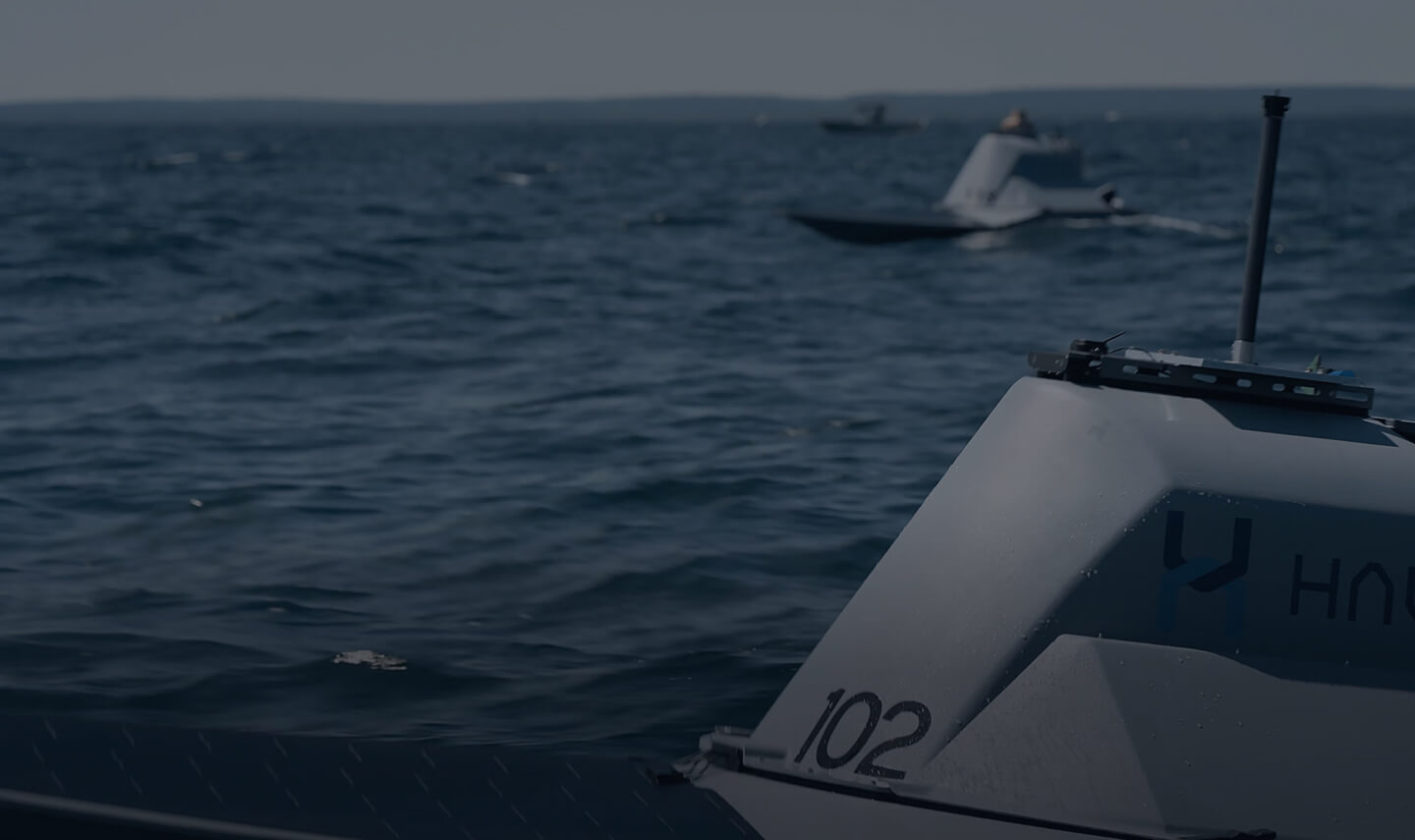
The boat is the decoy. Span of control is the product.
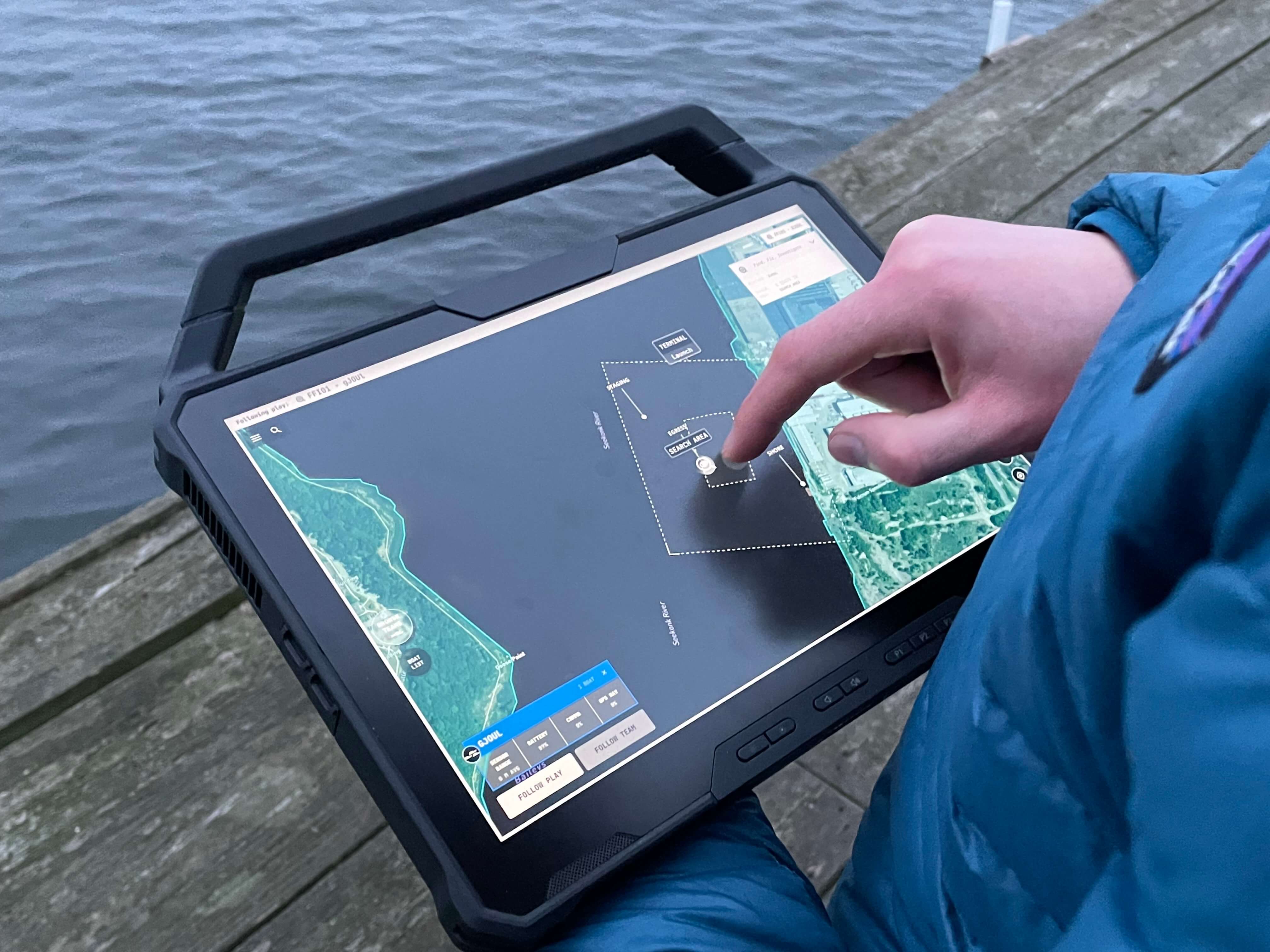
HavocAI now presents four connected software layers. Havoc C2 is the operator's interface. Havoc Insights turns vehicle and sensor streams into alerts and mission context. Havoc Connect passes commands and telemetry through a peer-to-peer overlay across patchy networks. Havoc OS sits on the machine at the edge, where it can continue the mission when a headquarters link disappears.
This is autonomy with a human on the loop, not a promise to delete people from consequential decisions. The operator defines intent and constraints; software handles routing, formation, sensor fusion and task allocation. In a 2025 demonstration, one operator controlled 25 vessels spread across Europe, Rhode Island and San Diego from a single maritime operations center. By 2026, the company said its systems had logged more than 25,000 autonomous hours.
“The boat doesn't matter. Software is the sophisticated piece here.”Paul Lwin, co-founder and CEO
The customer is mainly military today. Public reporting counted 32 HavocAI boats with Department of Defense users across Europe, both American coasts and Hawaii by June 2025. The missions are not abstract: move supplies between exposed Pacific islands, spread sensors over large areas, escort a crewed ship, patrol a port, or search for and track a target. The same architecture also points toward commercial port security, remote logistics, mining and heavy equipment.
A product ladder built from the waterline up
The smallest public face of the fleet is Rampage, a solar-electric surface vessel used for sensing, patrol and teaming. Public cost figures need a configuration label: about $100,000 has been cited for the vessel, while a 2026 profile put the delivered system with software around $200,000. Seahound, at 38 feet, was announced with roughly 1,000 nautical miles of range and a 1,000-pound payload. The 42-foot Kaikoa, built with PacMar Technologies, is aimed at Pacific endurance and logistics. Atlas is a 100-foot craft with published figures of 7,400 nautical miles of range and 36,000 pounds of cargo capacity.
The trick is that all four can run the same software and work in one mission. HavocAI does not need a customer to replace every boat before gaining autonomy. At an Army exercise, its team put the stack onto what Lwin described as essentially a pontoon boat. In Hawaii, it moved onto a 100-footer. That platform indifference is the sales pitch and the engineering burden: every new hull brings different steering, power, sensors, failure modes and sea behavior.
Why “attritable” is a budget word
Illustrative logarithmic scale. Published figures are approximate and configurations differ. A small USV is not a substitute for a frigate; the comparison explains the fleet economics.
That last sentence matters. A cheap sensor boat cannot provide the endurance, weapons, survivability or command facilities of a crewed warship. HavocAI's argument is narrower and more interesting: a navy should not risk a billion-dollar platform and its crew for every task. A $200,000 unmanned craft can force an opponent into bad arithmetic if destroying it consumes a missile that costs far more. It can also fail without becoming a national tragedy.
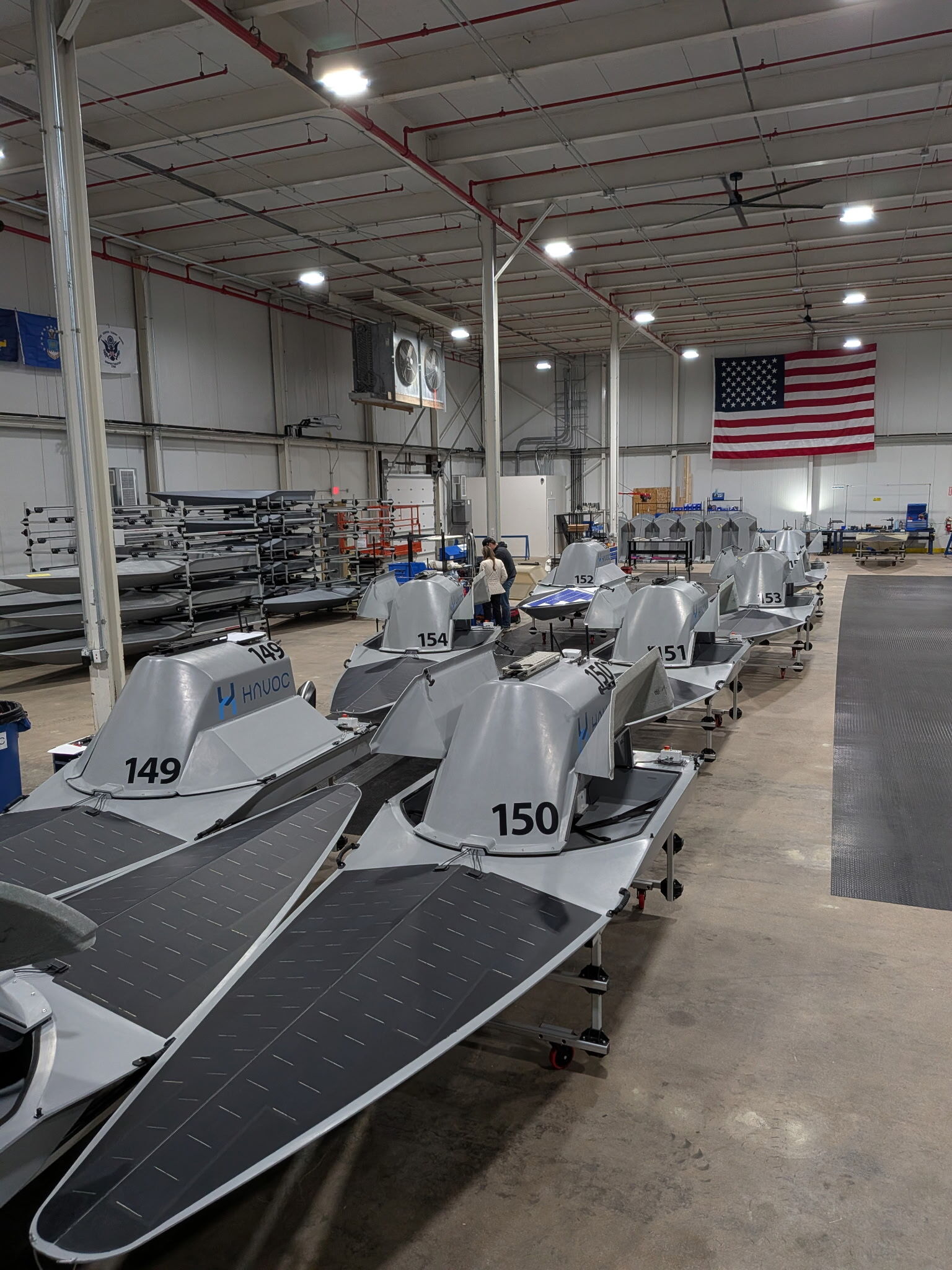
What failed first? The tidy-demo assumption.
HavocAI has not published a neat postmortem naming its first broken part. The honest evidence is messier: the founders describe long days, trial and error, sunburn and repeated retrofits on found boats. That is enough to identify the first discarded assumption. Autonomy could not be a laboratory feature tied to one pristine hull or one perfect radio link. It had to survive real water, mismatched craft and intermittent communications.
A December 2025 trial in Portugal made that requirement visible. Ukrainian officials watched HavocAI's boats and aerial drones coordinate without GPS in a place used for NATO experimentation. Electronic interference is ordinary at the front. A fleet that becomes decorative when its satellite fix disappears is not a defense product.
Customers then changed the scope. HavocAI had started maritime-first, but military buyers kept asking for one command system across sea, air and land. In March 2026, the company acquired Mavrik, a maker of heavy-lift drones, and Teleo, which develops supervised autonomy for heavy machinery. Lwin explicitly said customer demand drove the deals. The product had changed from robot-boat coordination into an all-domain operating framework.
The capital arrived faster than a destroyer
HavocAI raised $11 million in seed funding in September 2024. Thirteen months later it added $85 million from investors including B Capital, In-Q-Tel, Lockheed Martin, Hanwha and Taiwania Capital. A $100 million Series A followed in May 2026. The announced rounds total roughly $196 million, which the company rounds to about $200 million.
That money buys more integrations, production capacity, field support and staying power for government customers nervous about depending on a young supplier. Partnerships stretch the balance sheet further. PacMar builds Kaikoa and Atlas. Lockheed Martin works on medium unmanned vessels and weapons integration. SAIC is connecting HavocAI fleets to Link 16 command infrastructure. Hanwha signed on to jointly develop a 200-foot autonomous vessel and study mass production. The model resembles a software company threaded through an industrial coalition.
It is also vulnerable to that coalition. Dependence on shipbuilders can create schedule and quality problems outside HavocAI's control. Each platform integration can become bespoke work wearing a platform-agnostic label. Government buying cycles move slowly, even when the technology does not. And the competitive list is serious: Saronic, Saildrone, Leidos and Textron on the water; Anduril and Shield AI across broader autonomy.
The playbook worth stealing - and its limits
What can another builder copy? Start with commercial hardware instead of commissioning the perfect chassis. Put the software into the field before the product photography is ready. Instrument everything. Sell operator leverage, not an “AI” sticker. Let partners supply mature manufacturing. Most important, move the same core system up the difficulty curve: one boat, several boats, different hulls, degraded networks, then different domains.
Where the method works
- Hardware already exists and can accept a common control layer.
- Many modest assets beat one exquisite platform.
- Danger, labor or distance makes one-to-many supervision valuable.
- Customers permit rapid field testing and iterative integration.
Where it breaks down
- The mission needs people aboard for judgment, repair or custody.
- Payload and endurance make the “cheap” vehicle expensive anyway.
- Cyber-hardening and integration erase commercial-hardware savings.
- A buyer standardizes on a rival stack with a larger installed base.
The biggest technical risk rises with the hull. Larger vessels carry more fuel and payload, but cost more, present a larger radar target and create larger consequences when autonomy behaves badly. The market risk is consolidation. A maritime expert quoted in a 2026 profile offered the bearish case plainly: the Navy may decide it needs only two or three autonomy solutions. If Anduril's broader Lattice platform or a prime contractor matches HavocAI's specialty, field hours alone may not protect it.
The bullish case is equally plain. Militaries already own a zoo of machines, and the zoo is getting louder. A common brain that makes them cooperate without demanding one operator per robot is a valuable choke point. HavocAI has moved quickly enough to put hardware in customers' hands, collect water time and persuade established defense companies to plug in. The next test is less photogenic than a swarm crossing Narragansett Bay: integration discipline, dependable production and procurement wins at a scale that justifies nearly $200 million.
The two canoes were never the point. They were proof that the founders understood where to begin.