The suit never came home. Vijay Balasubramaniyan had bought it while visiting India during graduate school, only for his American bank to flag the purchase. Then his phone rang at three in the morning. The caller wanted a Social Security number to confirm that Vijay was Vijay. He refused. A stranger on a telephone line was hardly improved by claiming to be a bank. The bank, meanwhile, had no reliable way to know whom it had called. Two parties, one line, zero trust. The transaction was canceled.
Many people would remember the inconvenience. Balasubramaniyan noticed the architecture of the stalemate. Telephone networks had connected the planet for more than a century, yet the call itself could not establish identity. The embarrassment of a declined card and the helplessness of that conversation followed him back to Georgia Tech, where it became a research problem: what evidence hides inside audio before anyone considers the words?
The answer would become a doctoral thesis, a paper called PinDr0p, and eventually an Atlanta cybersecurity company with the same name, minus the zero. The problem has since grown teeth. A fraudulent caller once needed a person, a script and time. A synthetic voice can now imitate authority at machine speed. Balasubramaniyan has spent his career preparing for a future that arrived sounding disconcertingly familiar.
The call has a biography
Balasubramaniyan brought an unusual pair of ears to the question. Before studying security at Georgia Tech, he worked on voice technology across Siemens, Intel, IBM Research and Google. At Siemens and Intel, that meant software connected to old landline switches. At Google, it included voice-over-IP devices. He learned how voices travel before asking how those journeys betray an impostor.
A call accumulates a technical biography. Cellular networks, landlines and internet telephony introduce different compression patterns, noise and distortions. Devices and gateways leave traces. Balasubramaniyan and his collaborators studied those single-ended audio features to estimate a call's provenance. If Caller ID announced one location while the acoustic evidence suggested another route, the contradiction deserved attention.
fingerprint
artifacts
behavior
assessment
The research did not remain politely inside academia. After the 2010 paper appeared at the ACM Conference on Computer and Communications Security, banks began contacting his adviser, Mustaque Ahamad. Did the researchers have a product? Financial institutions did not need another elegant paper; they needed help with callers already trying to pass through their contact centers. Demand arrived before a conventional sales operation.
In 2011, Balasubramaniyan, Ahamad and security entrepreneur Paul Judge founded Pindrop. Its phoneprinting approach combined clues from call audio with authentication and fraud detection. The pitch was less romantic than the science and more useful: score the risk of a call, find anomalies, reduce the irritation imposed on legitimate customers, and catch suspicious activity early.
Turning provenance into a product required more than recognizing a country of origin. A useful system had to operate across uneven call quality, different devices and tangled routes, while producing a judgment quickly enough for a contact-center agent to act. Pindrop added voice biometrics, caller reputation and other signals around the original acoustic analysis. A research result became one layer in a larger decision, because real fraud rarely volunteers a clean laboratory sample.
Recognition followed, though Balasubramaniyan tends to return the conversation to the work. MIT Technology Review included him in its 2013 Innovators Under 35 list. He holds patents in VoIP security and scalability, and has carried the argument about phone fraud to technical and industry gatherings including CCS, ICDCS, RSA, Black Hat and FS-ISAC. Pindrop's patent portfolio grew around audio analysis, authentication, voice spoofing and device intelligence. The institutional achievement is not a trophy cabinet; it is a long record of treating the telephone as a security surface rather than neutral plumbing.
“Phone calls have existed since Alexander Graham Bell, and we still have no way of proving the identity of a caller.”Vijay Balasubramaniyan
A founder trained to listen for differences
There is a tidy founder lesson in the canceled suit, but the more instructive part is what happened next. Balasubramaniyan did not merely automate the bank's suspicion. He reframed the problem as mutual trust. The institution needs confidence in the customer; the customer also needs confidence in the institution. Security that makes every honest person feel like a criminal has solved only half the equation.
That framing shaped Pindrop's expansion from fraud detection into voice authentication, device intelligence, behavioral signals and liveness detection. The company says its products serve major banks, insurers, retailers and other enterprises. In 2024 it secured $100 million in debt financing from Hercules Capital to develop its voice and AI technologies and expand into additional sectors.
Debt was a deliberate instrument. Balasubramaniyan told TechCrunch that it offered growth capital without diluting existing equity. The money was assigned to product development, hiring and expansion at a moment when cheap voice-cloning tools were lowering the cost of a convincing attack. By then, Pindrop said it had analyzed 5.3 billion calls, detected 104 million spoof calls and helped prevent $2 billion in fraud losses. Company figures deserve to be read as company figures, but they give scale to the distance between a midnight call and an industrial defense system.
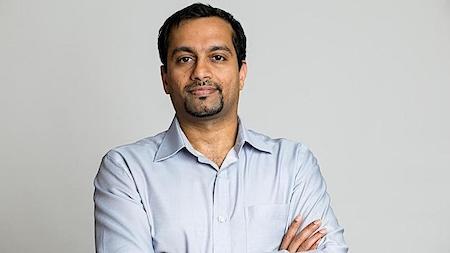
Balasubramaniyan's style still sounds like a researcher who wandered into the chief executive's office and decided to keep both jobs. He talks about data sets, benchmarks and attack patterns, but also about the customer experience. He credits Georgia Tech with teaching students to dig beyond the first plausible idea. His adviser later described the original research as academically strong because it remained attentive to real-world relevance.
That combination explains a subtle choice in Pindrop's deepfake work. Humans tend to recognize what feels familiar. A known face, a boss's cadence or a relative's voice encourages the brain to complete the picture. Machines can instead hunt for differences: a spectral artifact, an odd rhythm, a trace left by a text-to-speech model. Every second of telephone audio offers thousands of samples and thousands of opportunities for a generator to make a microscopic mistake.
“Humans pattern-match a lot. We always look for familiarity in a noisy world. It's easy to fool a human.”Vijay Balasubramaniyan
When the fraud shift never ends
Generative AI changed the economics. Balasubramaniyan has described a fraud operation in which a man employed a dozen people to make calls. The operation later replaced them with a large language model connected to text-to-speech software. The system could hold conversations around the clock. Automation did not invent impersonation; it removed the need for sleep, multiplied the attempts and made a familiar scam elastic.
The tempo changed
The threat also moved beyond the telephone. Video meetings can assemble synthetic faces and voices into a convincing room. Hiring interviews can become identity tests. A live collaboration platform must decide whether every participant is a person and whether that person is the one expected. Balasubramaniyan now describes identity as the central attack surface of digital collaboration, with authenticity built into the interaction rather than checked after the damage.
He is particularly blunt about audio's role. Video receives the marquee because a fake face is visible and theatrical. Yet the voice delivers the instruction: transfer the money, disclose the credential, approve the request. Pindrop's current direction follows that logic from contact centers into meetings, video and agentic interactions, extending an old question across new channels.
Atlanta, with the volume turned down
Pindrop's geography matters to Balasubramaniyan. The company grew through Georgia Tech's research and startup ecosystem, not through an imitation of Silicon Valley. He has argued that working in Atlanta creates useful distance from each new fashion. Ideas born there, in his telling, tend to be rooted in science or engineering because the local conversation does not require everyone to chase the same theme at once.
He stayed close to the institution that gave the company its first room. He speaks with faculty, hires alumni and talks with students about the market. With his wife, he endowed a scholarship. Both immigrants, they described the intended recipients with a phrase more memorable than most scholarship copy: people with “big dreams and small pockets.” It is an aspiration that doubles as a neat description of many founders before the financing arrives.
This loyalty is not nostalgia. It is an operating system built from relationships: a student, an adviser and an experienced security founder; researchers who could explain an acoustic anomaly; institutions willing to reveal how fraud behaved in practice; graduates trained to keep digging. Pindrop's history is a network story disguised as an audio story.
The original problem remains charmingly stubborn. A voice enters a channel and asks to be believed. Caller ID can be spoofed. Familiarity can be manufactured. Urgency can bully judgment. Balasubramaniyan's answer is to make trust evidentiary, layered and continuous. Device, network, voice and behavior each contribute a fragment. No single clue gets to play monarch.
The lost suit has long since become incidental. What matters is the irritation it exposed: modern communication was remarkably good at carrying a voice and remarkably poor at vouching for it. Now that machines can borrow the voice itself, the gap looks less like a curious flaw and more like the central design brief. Balasubramaniyan is still listening to the line. It has become much noisier, and much more interesting.