The drive from San Francisco to Los Angeles should have taken six hours. It took eight. Aidan Pratt and his small team kept pulling onto the shoulder of Interstate 5, opening a laptop and checking AWS compute runs. They left at six in the evening, reached Los Angeles at two in the morning, spent two days inside one customer's office, and arrived back in San Francisco at four in the morning. The trip was absurd in the useful way that early company stories often are: it exposed both the problem and the temperament chasing it.
Pratt went south because a workflow is difficult to describe from memory. People omit the workaround they perform every Tuesday, the report they rebuild without thinking, the software detour that became muscle memory. A video call catches the official process. Sitting beside someone catches the work. “You cannot understand how a team really works from a Zoom call,” Pratt wrote afterward.
Autostep, the company he founded in 2025, is an attempt to make that close observation continuous. Its desktop software maps how work moves across an organization, looks for repetition, bottlenecks, waiting and administrative loops, then ranks those patterns by cost and impact. The answer is not automatically an agent. It may be a process change, a standard workflow, a tool the company already buys, or a custom agent built inside existing software.
“Most companies can tell you what they spend on AI. Almost none can tell you what came back.”Aidan Pratt, on Autostep's premise
A childhood of useful contraptions
Long before enterprise AI acquired its budget line, Pratt was making small things behave. In a 2021 interview, he said he had been building apps since he was nine. His personal archive suggests that software was only one aisle in the workshop. It lists Mindstorms, rockets, RC planes, shoebox subwoofers, a 3D-printed skateboard, an electric skateboard, Raspberry Pi weather displays, aluminum melting and an RGB surfboard. The archive divides time with cheerful archaeology: a “Pre-SaaS era” follows the agentic and pre-agentic periods.
The product names reveal an appetite for the overlooked nuisance. Pophurdle blocked popups. LazyAidan sent him a text when code broke. NudgeNinja drafted follow-ups. Copystack stored multiple clipboard items. Some ideas were sensible, some playful, and many were shelved. The list is valuable precisely because it has not been polished into a prophecy. It looks like a workbench after years of experiments.
One project became an early public lesson. Hitsnag let a user push ideas, tasks and articles from email into tools such as Notion, Trello and Google Docs. Pratt entered it in Georgia Tech's Startup Exchange Fellowship while still in high school, despite the program being oriented toward college students. He won. By the time he appeared at CodeLaunch in 2021, he said the product had about 1,300 users. His later project history put the number above 5,000.
He was candid about why projects ended. One failed to meet a market need. Another ran into monetization trouble. A privacy-minded browser extension gave way to Hitsnag because the latter seemed to offer a larger opportunity. He was learning to distinguish an irritating detail from a business, a useful filter for anyone with a crowded ideas folder.
“I like being useful.”Aidan Pratt, age eighteen
Georgia Tech as a launchpad
Pratt enrolled at the Georgia Institute of Technology in 2021 and studied computer science, with work centered on machine learning and artificial intelligence. The attraction was not merely the curriculum. He had wanted Georgia Tech since childhood and spoke about its startup energy with the enthusiasm of someone who had finally obtained a key to the building.
On campus he helped build a startup community, made products and found routes into venture and operating roles. The 2023 8VC Fellowship placed him at Default.com, a sales technology company focused on inbound lead automation. His fellowship biography also lists earlier experience at Atlanta Ventures, Cherry Technologies and Fusen World, plus a Kleiner Perkins engineering fellowship. Later came a General Catalyst fellowship and work at Opto Investments, where he contributed to an LLM-powered document search project for investment operations.
Portway, built from 2023 into 2024, made another useful bridge. The project aimed to expose a codebase's functions to AI tool calling when code was pushed. Pratt now describes it as arriving before Model Context Protocol, the standard that later made this category legible. Portway did not become the destination. It did sharpen a recurring idea: software needs structured context before it can act well.
Measure before you mechanize
The market Autostep entered is full of agents seeking tasks. Pratt's framing begins one step earlier: discover the work worth changing. A company installs Autostep across its organization without assembling a thicket of integrations. The software identifies human and agent tasks, attaches costs, and estimates where capacity may be recovered. Only then does the team decide what to do.
This matters because automation is unusually capable of preserving nonsense. Give a needless approval chain an agent and the chain may move faster while remaining needless. Add AI to a report nobody reads and the tokens become tiny paid witnesses to organizational inertia. Autostep's less fashionable answer is often to remove or redesign the work.
Pratt calls the discovery process “context mining.” Repeated emails, decks, reports and data entry become structured patterns that people and agents can query. In a Demo Day update, he said one customer went from ten MCP calls to more than 1,000 after a product release. The figure is a glimpse of scale, not proof of value by itself. That distinction is the entire point of the product: activity and return need separate columns.
Autostep therefore talks in two ledgers. Human ROI asks where people lose capacity, what a task costs and how many hours a change could return. Agent ROI asks whether an AI workflow produces enough outcome to justify its token cost. Finance has spent generations naming the movements of money. Digital knowledge work remains comparatively misty. Pratt wants to give it edges.
The founder in the field
The Los Angeles drive offers the cleanest view of his operating style. There is energy in the story, but the useful detail is proximity. Pratt and the team spent two days in the customer's office because quiet workarounds rarely announce themselves in a requirements document. They watched closely enough to see what employees had stopped seeing.
That instinct has been visible for years. At eighteen, Pratt advised young builders to do what they cared about and remove “can't” from their vocabulary. The line is youthful. The behavior behind it was specific: knock on one door, accept the referral to another, enter the program anyway, and let an idea be criticized. His public project archive shows the other half of optimism - a willingness to put things down.
Colleagues have described his curiosity, high energy and product-minded communication. His own writing is crowded with unfinished essay titles: “Proactive Automation, Not Reactive Automation,” “Risk Identification,” “Intelligence Layers,” and “Build Your Playground.” He labels the page with a confession that he still needs to write them. The workshop, once again, is left visible.
A system of record for work
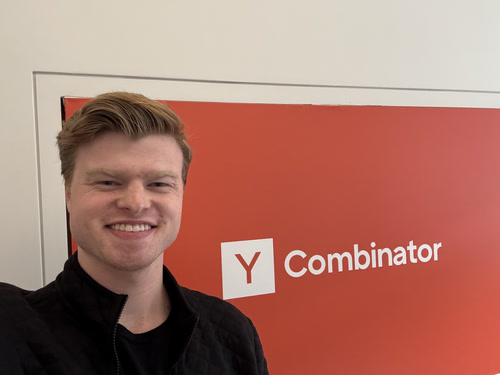
Autostep joined Y Combinator's Spring 2026 batch with backing from Neo. By Demo Day, Pratt said the company had tripled revenue and was raising a seed round. In August it was hiring founding engineers and a GTM and operations chief of staff in San Francisco. The company is small enough that its thesis still has fingerprints on it.
The long bet is larger than workflow cleanup. Pratt wants Autostep to become a system of record for work, a place where a company can see capacity, judge AI payoff and perhaps eventually reward people for working more intelligently. That ambition carries difficult questions. Work is not a row of identical bolts. Observation can illuminate waste, but metrics can also flatten judgment. A useful system will need to distinguish the expensive task from the valuable pause, and the recurring pattern from the human exception that makes it work.
Pratt's history offers a reason he may enjoy that ambiguity. He has moved between code, products, venture, financial operations, campus communities and an improbable number of small inventions. The common subject is not AI so much as friction: where it hides, what it costs, and whether a machine should touch it.
Somewhere between the shoebox subwoofer and the company-wide workflow map, the scale changed. The impulse did not. Find the annoying thing. Look at it closely. Build something useful. Then, this time, put the result in the ledger.