ev-charging
(21)
Nadav Gur Has Spent 25 Years Making Invisible Systems Behave
Before apps were obvious, he built a travel assistant. Before conversational search was fashionable, he spun one out of SRI. Now Nadav Gur is applying the same systems instinct to the awkward economics of shared clean energy.

Nikhil Bharadwaj Put the Cloud on Notice
The Xeal co-founder learned EV charging’s least glamorous lesson in concrete garages: if the network disappears, the product cannot. His answer was to move the essential work closer to the plug.

Neha Palmer Is Building the Places Where Electric Fleets Get Their Power
The former Google energy strategist learned that scale begins long before a machine switches on. At Terawatt, she is turning land, grid connections and dependable operations into the quiet infrastructure of electric transport.

Daniel Lim Is Teaching Electricity to Pay Attention
The Crocus co-founder began with a stubbornly practical question: why collect oceans of energy data if nobody uses them to change what happens next? A decade later, his answer stretches from factory meters to EV chargers and software-controlled transformers.
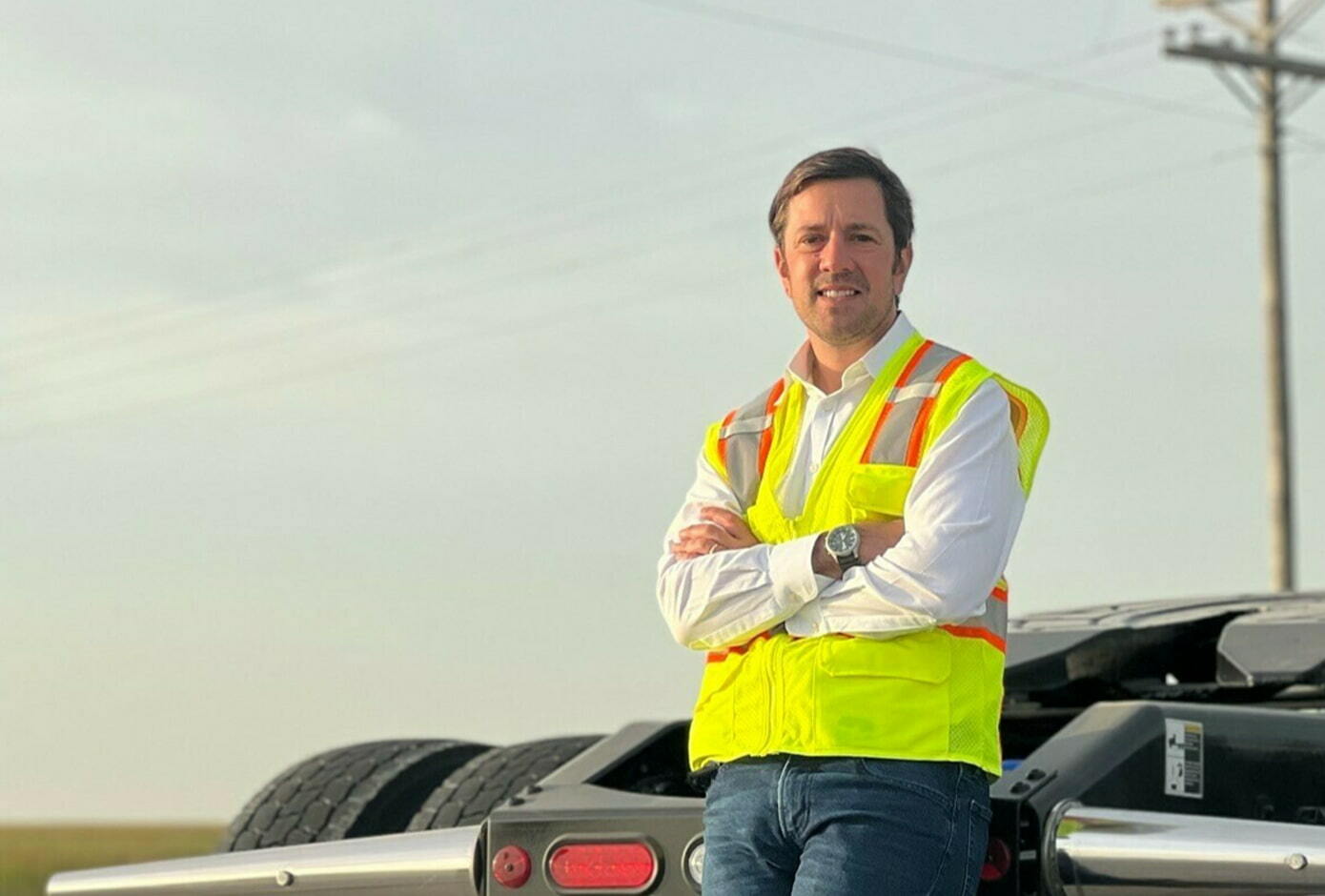
Pip Decker Learned Climate Policy in Washington. Then He Got a Truck License.
The Current co-founder has spent two decades turning climate policy into equipment that works - from Caribbean wind farms to electric semis, charging depots and a commercial driver's license of his own.

Zinny Weli
Zinny Weli is the co-founder and CEO of RoboDock, a Y Combinator (W26) startup building robots that run the depots for autonomous and electric vehicle fleets - handling charging, plug-in, and post-trip inspection without human labor. A mechanical engineer trained at the University of Michigan and Stanford, she previously owned the charging system for Amazon's Astro home robot at Lab126 and led the autonomous charging tower for Zipline's delivery drones from concept to multi-city deployment. She started RoboDock with Celine Wang, whom she first met at Stanford as her teaching assistant.

Giuseppe Incitti
Giuseppe Incitti is the CEO of Sitetracker, the Montclair, New Jersey enterprise software company whose platform helps utilities, telecom operators, and EV charging companies manage the deployment and lifecycle of high-volume infrastructure assets. Since taking over in 2016 he has grown the company from about 30 employees to roughly 400 and raised more than $200M in equity and debt, including a $66M Series D in 2022. A Stevens Institute engineer who started in investment banking at Morgan Stanley and JPMorgan before operating roles at TIBCO and MongoDB, Incitti is a vocal advocate that digital transformation is no longer optional for the companies building the grid, the network, and the charging stations of the next decade.

Shwan Lamei
Shwan Lamei is co-founder and CEO of Emulate Energy, a Lund- and Boston-based software company that turns everyday household devices - heat pumps, EV chargers, home batteries, solar inverters - into a coordinated 'virtual battery' that utilities can dispatch on flexibility and balancing markets. Trained as an industrial engineer at Lund University, he spent 15 years in industrial B2B sales and corporate development at SWEP and Dover before starting Emulate in 2020 with a childhood friend whose MIT postdoctoral research became the technical seed of the company. In April 2025 Emulate closed a EUR 5M Series A led by Helen Ventures to scale its DER orchestration platform across Scandinavia, the DACH region and the United States.
Vishal Kapadia
Vishal Kapadia is the Chief Executive Officer of LineVision, a Boston-based company that bolts non-contact sensors to high-voltage power lines and, through dynamic line rating, squeezes as much as 40% more capacity out of wires already in the ground. He took the top job in June 2025 after co-founder Hudson Gilmer moved to chairman. Before LineVision he ran energy transformation at Walmart, where he built a coast-to-coast EV fast-charging plan and oversaw more than 2 GW of clean energy; earlier he was CFO and CCO of Orsted's onshore renewables business and led renewable-energy investing at Morgan Stanley. Across his career he has financed or developed over 15 GW of energy and mobility infrastructure.
David Kim
David Kim is the co-founder and CEO of Monterra, a San Francisco software company that helps EV charging contractors and developers design, quote, and propose charging projects in minutes instead of days. Before Monterra, he spent years working with utilities and energy companies designing EV charging programs, deploying smart grid infrastructure, and planning energy efficiency initiatives, with earlier stops at The Cadmus Group, Boston Consulting Group, and Accenture, plus a graduate degree from MIT Sloan. He co-founded Monterra in 2022 with Kelson Reiss and raised a $2.5M pre-seed led by Base10 Partners in November 2023 to speed the buildout of EV charging infrastructure with software and AI.

Heather Hochrein
Heather Hochrein is the founder and CEO of EVmatch, a peer-to-peer electric vehicle charging network she likens to Airbnb for chargers. What began as a master's thesis project at UC Santa Barbara's Bren School became a venture aimed at the least glamorous corner of the EV revolution: helping renters and apartment dwellers find a place to plug in. A self-described accidental business owner with roots in energy efficiency and workforce development, she has spent over a decade arguing that the clean energy economy only works if it is also a just and equitable one.

Paul Huelskamp
Paul Huelskamp is the co-founder and CEO of Anode Technology Company, a San Francisco startup building AI-orchestrated mobile microgrids and battery energy storage systems that deliver grid-independent electricity to EV depots, data centers, construction sites, and live events. A renewable-energy financier turned hardware founder, he previously built and ran Moxion Power, which raised more than $110 million to replace diesel generators before it went bankrupt in 2024. In 2025 he returned with a leaner, software-first venture and $9 million in seed funding from Eclipse Ventures, determined to 'finish what we started.'
Sam Richardson
Sam Richardson is the CEO of Volley Automation, a robotics and software company that uses AI-enabled automated guided vehicles to densify parking garages, fitting up to twice as many cars in smaller footprints. A former Hamilton College quarterback turned channel-sales and operations leader at companies like Hewlett-Packard, Fellowes Brands and SGS & Co, he now runs Volley from a 35,000-square-foot research and demo facility the company opened in Denver in 2026 after relocating from South San Francisco. Based in Nashville, he is steering robotic parking projects across New York, Tennessee, Florida, California and Massachusetts.
Bryan Frist
Bryan Frist is the CEO and co-founder of Yoshi Mobility, a Nashville-based automotive services startup that began by delivering gasoline to cars in San Francisco and has grown into a fleet maintenance, virtual vehicle inspection, and mobile EV charging company backed by General Motors, ExxonMobil, Bridgestone, and Y Combinator. A Princeton and Harvard Business School graduate and son of former U.S. Senate Majority Leader Bill Frist, he also runs the early-stage investment firm Friale Ventures and has raised more than $90M for Yoshi at a valuation north of $200M.

Glen Stancil
Glen Stancil is the founder and CEO of Merge Electric Fleet Solutions, a Houston-based company that helps fleet operators go electric without the headaches. A co-founder of EVgo and founder of eMotive Solutions, he has spent a decade in vehicle electrification, with his teams deploying more than 1,500 charging sites across 40 states and roughly $300 million in EV infrastructure. He pairs an electrical engineering degree from UT Austin with a Stanford MBA, and earlier did stints at McKinsey, NRG Energy and Reliant Energy. Launched in 2021 with backing from Pickering Energy Partners, Merge raised a Series A in December 2021 to make fleet electrification simple, affordable and scalable.

Katie Siegel
Katie Siegel is the co-founder and CEO of Flipturn, the New York software company building the control center for electric fleet and charger operations. An MIT-trained engineer who was among the first dozen builders at Samsara before its IPO and co-founded Impira (acquired by Figma), she now points her fleet-software expertise at the least glamorous, most consequential problem in electrification: keeping commercial EV chargers actually working. Flipturn has raised about $26.5M, including an $11M Series A led by CRV, and counts the City of Seattle, Purolator, Republic Services, and Swift Transportation among its customers.

Sanjiv Sanghavi
Sanjiv Sanghavi is the co-founder and CEO of Texture, a New York company building an operating system for the distributed energy grid that ingests data from batteries, solar, EVs, chargers and smart devices and lets utilities act on it in real time. He co-founded ClassPass before fitness was a category, ran product as CPO at the supply-side energy giant Arcadia, and now wires together a fragmented grid that was built to push power one direction and is being asked to do the opposite. Texture has raised roughly $23M and counts more than 50 OEM integrations including Tesla, FranklinWH and SolarEdge.

William Fitzhugh
William Fitzhugh is the co-founder and CEO of Adden Energy, a Harvard spin-out scaling a self-healing, solid-state lithium-metal battery that has charged in as little as three minutes and survived more than 10,000 cycles in lab cells. A Harvard PhD in applied physics, he is trying to turn a coin-cell breakthrough into a roll-to-roll pilot line and, eventually, batteries that let an EV recharge in the time it takes to fill a gas tank.

John Grady
John Grady is the CEO of Ayla Networks, a San Jose-based IoT and smart home software platform that powers over 15 million connected devices and 250 billion annual transactions for brands like SharkNinja, De'Longhi, Canadian Tire, and Schneider Electric. A Boston College and Indiana University Kelley School of Business graduate with 20+ years in technology sales and operations, Grady rose through roles at Brown Brothers Harriman, Covad Communications, Pace PLC, ChargePoint, and Solar Mosaic before joining Ayla in January 2022 as Head of Global Sales and ascending to CEO in 2024. Under his leadership, Ayla was ranked the #1 US-based Smart Home Platform by ABI Research and announced a major Google Cloud partnership in April 2025.

Steve Kelley
Steve Kelley is a serial clean-energy entrepreneur and CEO of L-Charge, the Sunnyvale-based pioneer of off-grid ultra-fast EV charging for commercial fleets. With six successful startup exits and over two decades building energy and mobility ventures, Kelley co-founded Green Charge Networks (acquired by Engie), scaled InCharge Energy's revenues nearly tenfold, and in October 2025 took the helm at L-Charge to push its grid-free Charging-as-a-Service model nationwide. Under his leadership, L-Charge closed a $10 million funding round in January 2026, enabling fleet operators to electrify in weeks rather than months by bypassing grid bottlenecks entirely.
Arch Rao
Arch Rao is the Founder and CEO of SPAN, a San Francisco-based clean energy hardware company that reinvented the home electrical panel. A Stanford-trained mechanical engineer and former Tesla Energy leader who helped launch Powerwall, Powerpack, and SolarCity products, Rao founded SPAN in 2018 with a singular mission: rapidly decarbonize American homes by making the century-old electrical panel smart. SPAN's intelligent panels enable circuit-level control, real-time energy monitoring, solar and battery integration, and grid demand response - turning a neglected utility box into the command center for home electrification. With over $522M in total funding and backing from Wellington Management, Fifth Wall, Robert Downey Jr.'s FootPrint Coalition, and Amazon's Alexa Fund, SPAN is building the grid-edge infrastructure layer for the coming decades of home electrification.