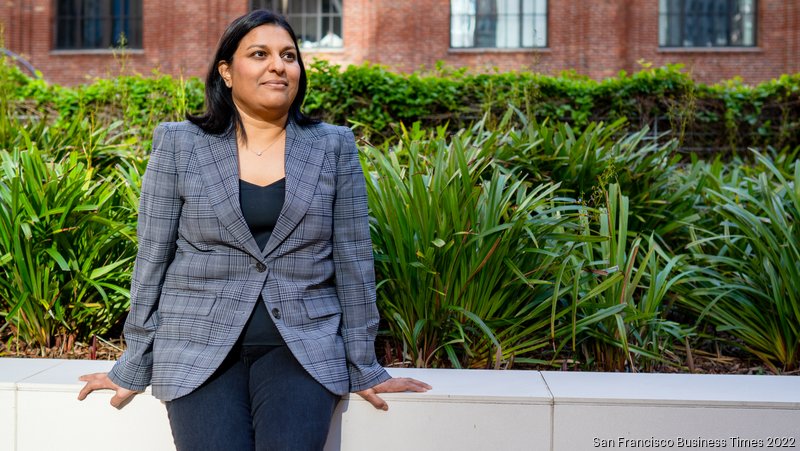
The most revealing vehicle in Neha Palmer's garage was not really in her garage. Around San Francisco, she told a business newspaper in 2023, she often preferred BART or a Vespa Elettrica. The scooter plugged into an ordinary wall, skipped the gas station and could be parked with the sort of ease that city residents treasure. It was a modest proof of concept for a very large idea: electrification feels natural when the infrastructure disappears into the day.
Palmer's professional life has been spent on everything required to produce that feeling. Pipes, substations, power contracts, parcels of land, interconnection studies, capital and maintenance all sit behind the simple act of switching something on. As chief executive and co-founder of Terawatt Infrastructure, she is assembling those pieces for commercial electric and autonomous fleets. The vehicles may attract the cameras. Her work begins where the camera usually stops.
Chapter oneThe career that makes sense backward
As a child in Walnut Creek, California, Palmer read about Marie Curie and found a hero. She later called Curie's story the "geek's princess story," a phrase with both affection and precision. It gave scientific ambition a character and a plot. Palmer studied civil engineering at Cal Poly San Luis Obispo, entering classrooms where she could be the only woman. The field trained her to think in physical systems and long time horizons.
Her first energy job was on the natural-gas side of Pacific Gas and Electric. Gas was then discussed as a cleaner alternative to coal. She moved into commodities trading, earned an MBA in finance from Northwestern University's Kellogg School of Management and became an energy investment banker at Goldman Sachs. A stint in clean-tech investing followed. She later returned to PG&E, where the work included early large-scale solar and wind projects. The sequence can look restless on paper. In practice, it supplied engineering, markets, money and project development, one layer at a time.
At Google, the collection snapped into focus. Palmer was the company's first hire devoted solely to energy for data centers. During nearly a decade there, the fleet grew from a handful of American and European sites to dozens around the world. Those buildings needed immense quantities of dependable electricity. Her team worked across electric infrastructure, procurement and clean supply, helping Google match its annual electricity consumption with renewable energy.
A data center is a severe teacher. It cares little for slogans and deeply for uptime. The site must be right. The grid must be capable. Power contracts must survive volatility. Equipment must work at three in the morning. Palmer watched corporate demand help renewable energy mature and fall in cost. She began asking where the same mixture of purchasing power, infrastructure and practical economics might unlock another transition. Transport was the answer.
“The energy transition shouldn't mean subsidies or sacrifices: it should make economic and operational sense.”Neha Palmer, 2026
The missing layerA fleet cannot charge on optimism
In 2020, Palmer spoke with manufacturers preparing electric vehicles for fleet customers. She noticed an assumption hiding in the sales plan: operators would buy the vehicles and somehow work out charging themselves. Yet a fleet manager who excels at routes, fuel and vehicle utilization has no obvious reason to excel at utility interconnections or energy-dense real estate. Charging one car is a device problem. Charging dozens of vans, robotaxis or heavy trucks on a commercial schedule is an infrastructure problem.
Palmer met the founders at Keyframe Capital, and Terawatt began operating in 2021. Its answer was full stack. Find and acquire land where fleets actually move. Secure large grid connections, often years before a site is needed. Design and install chargers, storage or onsite generation. Add software, reservations and energy management. Maintain the equipment and give customers one accountable operator. The finished product is less a plug than an electric fueling system.
That distinction explains why Palmer often compares charging sites with data centers. Both are energy-intensive facilities whose usefulness depends on location, electrical capacity and constant operations. It also explains Terawatt's unusual position between industries. The business touches real estate, utilities, construction, software, transport and project finance. Charging hardware is visible, but the defensible work lives in the joins.
Useful frictionThe hard thing is the business
Heavy-duty trucks make the constraints vivid. Their batteries are large, their schedules expensive and their stopping time closely watched. Palmer has described charging one in less than 30 minutes as the industry's holy grail. Reaching it requires very high power, but speed alone is insufficient. A station must accommodate the geometry of a truck, stand near a useful freight route and deliver electricity when multiple vehicles arrive. A charger in the wrong place is an elegant answer to no one's question.
Terawatt announced a network of charging centers along Interstate 10 from the Los Angeles area toward El Paso, and later opened a medium- and heavy-duty site in Rancho Dominguez near the ports of Los Angeles and Long Beach. The company has also leaned into autonomous fleets, whose vehicles can travel more hours and return repeatedly to operational hubs. A robotaxi needs somewhere to charge, but potentially also a place for cleaning, calibration and data operations. The depot becomes a launchpad.
Infrastructure asks founders to make commitments before the market looks settled. Utility timelines are long. Land is finite. Construction is costly. In 2022, Palmer led Terawatt through a $1 billion institutional capital raise, her first process of that magnitude. She compared fundraising with matchmaking, complete with both sides metaphorically swiping left and right. The deal finally closed around six in the morning. Exhausted, she celebrated at Diamond Cafe in Noe Valley. The future of freight, apparently, can begin over breakfast.
In June 2026, Terawatt secured a five-year senior facility with $150 million committed and the option for another $150 million. The debt structure matters because it signals how the category is changing. Charging depots are moving from venture proposition toward financeable infrastructure, assets that banks can examine in terms they know: land, contracted demand, power capacity and operating cash flows.
Operating systemMake the better choice obvious
Palmer's public argument is not that fleet operators should accept inconvenience in exchange for virtue. She wants the electric option to compete on service and cost until it becomes the rational choice. This is the lesson she carried from corporate renewable procurement. Early demand encourages supply, experience and investment; scale pushes down cost; improved economics invite more demand. Moral urgency may begin the conversation, but a reliable product keeps it moving.
Her own style appears unusually comfortable with complexity and unusually impatient with mystique. Interviews return to the same plain nouns: land, power, location, uptime. The vocabulary is useful because infrastructure punishes abstraction. Palmer has also been candid about the changing work of leadership. A culture suited to five people cannot simply be stretched over fifty. As a company grows, she has said, parts of it must be reinvented while its fundamental commitments remain.
Representation is one of those commitments with personal weight. Palmer remembers being the only woman in some engineering classes. With seniority, she became more conscious that people noticed a woman of color leading an energy company. Her childhood book about Curie had shown her what a scientist could look like. Visibility, she understood, can quietly enlarge someone else's sense of the possible.
“From day one, our focus has been fleets and their very specific challenge: charging lots of vehicles at one time.”Neha Palmer, 2025
The long roadOrdinary is the destination
Terawatt's 2026 roadmap described a company of more than 80 people, five open sites and projects intended to double its network during the year. Palmer's ambition has widened with the market: commercial trucks remain part of the plan, while electric rideshare and autonomous fleets create demand now. The common requirement is a dependable place where many vehicles can draw serious power.
There is a pleasing reversal in the work. At Google, Palmer helped supply clean electricity to machines that moved information while staying put. At Terawatt, she supplies electricity to machines whose entire purpose is motion. The underlying discipline barely changes. Choose the location. Understand the load. Work patiently with the grid. Build for uptime. Allow the customer to think about something else.
Outside work, Palmer cooks, reads several books at once and chases snow with her family. She met her husband on a ski trip. These details offer a gentler version of the same instinct: movement, terrain, many lines through a complicated landscape. Yet her professional aspiration is almost comic in its humility. She wants charging sites eventually to be as unremarkable as gas stations, background infrastructure that simply keeps the country moving.
That is the paradox of infrastructure. Success makes it less visible. The depot opens, the reservation holds, the charger works and the vehicle leaves. No one applauds the interconnection agreement. The truck keeps its route. The rider gets a car. The city carries on. Palmer is building for that quiet moment, when a once-unfamiliar system becomes ordinary enough to trust.