employee-communications
(18)
Allvia is buying the missing pieces of HR
Payroll can run on time while the rest of HR falls behind. Allvia is assembling the people who run the systems, manage the benefits, and explain the decisions.

The Agency That Makes Boring Things Matter
Borshoff built a forty-year Indianapolis institution by doing an unfashionable thing very well: making utility notices, corporate risks and civic institutions feel consequential to ordinary people.

The Design Agency That Outgrew the Word Design
For forty years, JK kept adding answers to the same question: how do you make people care? In 2026, its name finally caught up with the work.

The Agency That Fired 40% of Its Clients
MikeWorldWide gave up $2.5 million in unprofitable business, cut its client roster by 40%, and grew anyway. The arithmetic explains a 40-year-old PR firm that would rather own its choices than merely look large.

The Tiny Target That Made Encore Bigger
A 19-person Texas agency found its edge by aiming at smaller audiences: economic developers, plant workers and people whom generic marketing tends to miss.

The Tiny Firm That Bet the Factory Floor Could Tell a Better Story
Paul Oakley left the corporate communications suite to build an agency for products that resist a quick pitch. The wager was simple: go narrower, learn the machinery, and make complexity useful.

The Benefits Guide Nobody Was Supposed to Read
Smith Communication Partners built a business around a stubborn workplace truth: the message has not landed until somebody knows what to do next. Its best work turns legal thickets, benefit choices and corporate change into useful instructions - sometimes with a superhero fighting Dr. Distraction.

The Message Inside the House
Most agencies help a company talk to the market. Full Tilt starts with the harder question: does the company sound believable to the people already inside it?

The Agency That Markets to the People Already Inside the Building
Think Marketing has spent 23 years doing something most agencies split in two: persuading customers on the outside and helping employees make sense of change on the inside.

The Safety Company That Knows Your Training Is Already Fading
Intertek Catalyst built a business around an awkward fact: the safety lesson everyone understood on Monday may be gone by Friday. Its answer is part agency, part classroom and part behavioral nudge - repeated until the right action becomes habit.
Blue makes the case for reading the benefits email
The employee communications agency turns benefit changes into campaigns people can use. Its work reveals how much depends on the unglamorous details: access, timing and a clear next step.

Purple Iris Communications and the business of making expertise readable
A former journalist’s B2B agency turns technical knowledge into something people can use. A six-week ESG assignment shows how much of that job happens before the sentences shine.

Poppulo Quit Chasing Customers. Now It Helps Bosses Reach 50 Million Employees
The Irish software company escaped a crowded email market by going narrow. Three decades, several mergers, and 600,000 screens later, it is betting that the next corporate battleground is not sending more messages - it is proving that anyone noticed.

Mike Hicks Has Spent a Career Making Workplace Software Feel Less Like Work
From BlackBerry to Igloo, Beezy, and Appspace, the Kitchener executive has followed one stubborn idea: workplace technology should remove friction, not manufacture another tab to keep open.

Appspace Put the Office on One Dashboard - Now It Has to Prove One Platform Beats the Pile
Appspace spent two decades turning office screens into a business. Then hybrid work blew up the definition of an office - and pushed the company into a bigger, riskier bet: one operating layer for every workplace surface.
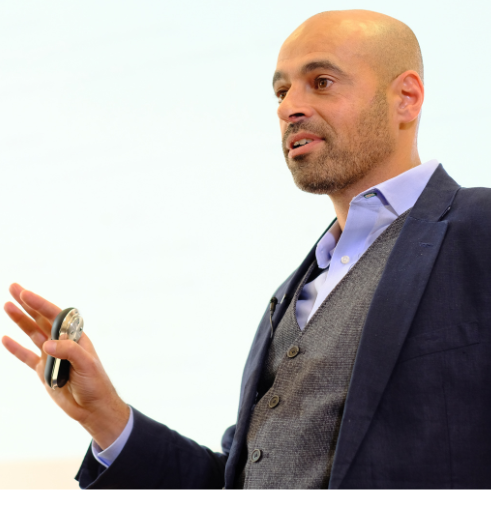
Tarek Kamil Built a Career Around One Question: What Is Worth Making?
A school-board volunteer project became Cerkl, but the deeper pattern began much earlier: use software to save people time, make information relevant, and choose the path with fewer regrets.

The Iron Range Kid Who Turned 25,000 Screens Into a Sale to Vista Equity
A hockey player from the Iron Range raised $350,000 from hometown investors and built a digital signage company that ran 25,000 screens. Twenty years later, a Vista Equity Partners firm bought it.

Daniella Vallurupalli
Daniella Vallurupalli is the Vice President and Head of Global Communications at Cloudflare, the internet infrastructure and security company. She joined Cloudflare in 2014 when it had fewer than 80 employees and built its communications organization from the ground up. Today she oversees all internal and external communications across public relations, corporate and employee comms, analyst relations, social media, and visual storytelling for one of the most recognized brands in cloud networking and cybersecurity.