There is a particular kind of sentence that appears in industrial business. It contains a polymer, an acronym, two regulatory regimes, and a promise that will be tested by a buyer who has been in the trade for 27 years. The sentence is correct. It is also, in the wrong hands, almost impossible to care about.
Tiny Mighty Communications built a business in the space between those two facts. The Brentwood, Tennessee agency works with manufacturers and industrial organizations whose products are engineered, specified, regulated, or distributed. Its clients sell into long cycles and dense networks: the employee explaining a change, the dealer carrying the line, the engineer comparing performance, the journalist checking a claim, the investor wondering whether management has a plan. Everyone needs the story. Nobody needs quite the same version.
That is the quiet provocation behind Tiny Mighty. Most agencies sell breadth. Founder Paul Oakley decided that breadth was the problem.
The agency he could not find
Oakley spent years inside the sorts of companies Tiny Mighty now serves. His route ran from agency work in Chicago to Dow, with assignments in Houston, Switzerland, and Brazil, and later to a vice president role at Bridgestone in Nashville. He saw global brands from the communications buyer's chair. The outside consultants were often able. What he thought many lacked was the accumulated feel for technical products, multinational operations, public affairs, sustainability, and the peculiar patience of B2B.
In 2019, after years of discussing entrepreneurship with close colleagues, he chose the now-or-never option. The preparation was charmingly undramatic. Oakley and his wife spoke with a financial adviser. He interviewed roughly a dozen former colleagues who had already started businesses. He updated LinkedIn and began calling prospective clients. A person who would become a highly valuable client noticed the LinkedIn change and asked whether Oakley could help.
Even the communications expert hired a communications expert. An outside consultant helped turn the name, identity, logo, and website into a coherent package. The lesson is easy to borrow: expertise does not cancel blind spots. It merely helps you recognize which ones are expensive.
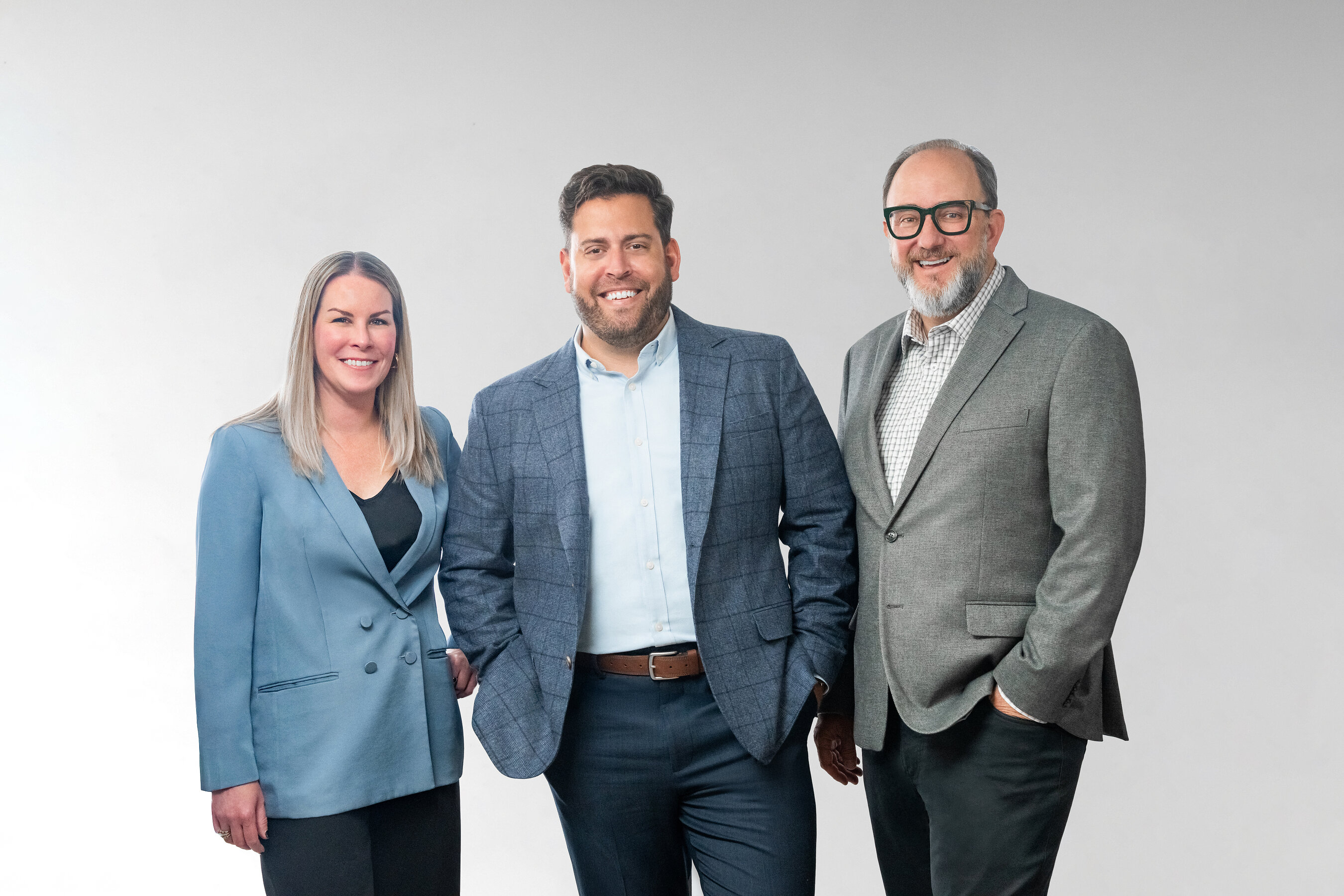
“Reputation often reaches the room before a company does.”Paul Oakley, founder and CEO
First, twenty hours of listening
The firm's work begins before the press release. Its Mission & Message Alignment process is part audit, part interview series, part corporate therapy. For RevHD, a Nashville maker of heavy-duty wheel-end components, Tiny Mighty logged more than 20 hours talking with employees, customers, and representative firms. It benchmarked four competitors, examined digital and media performance, reviewed events and associations, and built a multi-year communications plan.
The early output was measurable: 15 earned-media clips and 275,294 impressions through the third quarter of 2025. More important, the publicity followed the diagnosis. The first product was not coverage. It was agreement about what made the company matter.
The same instinct appears in a global plant-genetics assignment. Tiny Mighty interviewed 16 leaders and collaborators across functions and regions, audited everything from intranets and newsletters to signage, then created an employee value proposition, message map, strategy, and playbook. At Holley Performance Brands, the puzzle was a portfolio of more than 60 brands facing new leadership and an integration effort. The response connected employee communications, investor relations, executive messages, culture content, and external storytelling around one transformation narrative.
- 01Name the business priority
- 02Interview the people closest to it
- 03Map every audience that can alter the outcome
- 04Build one message system, then adapt it
- 05Measure action, not merely output
A trade show conversation today, a purchase next year
Tiny Mighty calls its broader approach Specified Market Influence. The phrase is new; the market behavior is not. In a consumer purchase, the distance from impression to transaction can be short. In a specified market, a technical article may educate an engineer, who later influences a committee, which approves a vendor that a distributor must carry. Regulation limits the claims. A trade show meeting supplies trust. An employee conversation can strengthen or quietly spoil the whole chain.
This is where the firm sits in the market. It is not a software platform and not merely a press office. It sells senior counsel and execution across strategy, media relations, employee and change communications, sustainability reporting, customer and sales materials, digital campaigns, creative content, events, and measurement. Clients can buy a defined project - research, messaging, a survey, a website, an event - or integrated ongoing support alongside internal marketing and communications teams.
Its publicly named work crosses RevHD, GDM, Holley, Miele, Nashville Electric Service, Chris-Craft and parent Winnebago Industries, the Nashville Public Education Foundation, and the Nashville Child and Youth Collaborative. The common denominator is not a logo category. It is a decision environment in which too many people can misunderstand the same important thing.
What it costs, and what that number cannot tell you
A Nashville Public Education Foundation filing records this amount paid to Tiny Mighty for communications in the fiscal year ending June 2023. Scope, duration, and deliverables determine agency cost; Tiny Mighty does not publish standard pricing.
That filing offers a rare look at agency economics, but it should not be stretched into a universal quote. The firm reported more than $2 million in 2023 top-line revenue when it celebrated its fifth anniversary in 2024. By then it described 12 professionals plus contract-based collaborators. The model is a compact core surrounded by specialists in digital operations, design, sustainability, legal counsel, and strategy. In other words: keep responsibility close, add expertise when the brief requires it.
The first thing to fail was timing. Founded in August 2019, Tiny Mighty entered its first full calendar year just as the pandemic scrambled client plans and business confidence. Oakley's public account of that period is not a turnaround fairy tale. He focused on what he could affect, accepted what he could not, and stayed flexible. The more consequential change came later as the firm made its positioning explicit: industrial and manufacturing depth, not generalist sprawl.
That choice appears to have paid. Tiny Mighty says it logged five years of year-over-year growth, climbed Nashville's PR-firm rankings, and in August 2026 debuted at No. 3,599 on the Inc. 5000. The list recognition arrived with a refreshed brand that put technical, specified, regulated, relationship-driven markets at the center. The change was less a pivot than an admission of what had been working.
The useful limit
There is a reason this method cannot be pasted onto every brief. It needs access. Leaders must be willing to explain the business priority. Employees, customers, and partners must be available for candid interviews. Subject-matter experts must tolerate the questions required to make technical truth intelligible. And someone must agree what a meaningful outcome looks like.
It fits when
The product is technical, the buying path is long, credibility compounds, and several audiences can affect the decision.
It strains when
The client wants instant attention, withholds expertise, cannot name the business objective, or treats every channel as a separate order.
The reader does not need an industrial agency to borrow the central trick. Before producing anything, write down what the business needs people to understand, believe, or do. Talk to the people closest to the problem. Draw the audience map. Use one set of proof points across channels, adjusted for what each audience genuinely needs. Then count changes in understanding or behavior, not the weight of the deliverables folder.
Tiny Mighty's name makes the idea sound playful. Its best evidence is methodical. A small agency went deep into a market full of enormous objects and slow decisions. It discovered that the complicated sentence was not an obstacle to the story. Properly examined, it was the story.