The interesting thing about a corporate crisis is how quickly a room full of accomplished people can become fascinated by the wrong clock. The lawyers watch the court calendar. The chief executive watches the share price. Someone in marketing watches a social feed refresh itself into ugliness. Meanwhile, a reporter has a deadline in 47 minutes and three sources willing to explain the company to the world.
This is the moment Sitrick And Company sells. Not the press release, exactly, and not the handsome executive portrait. The Los Angeles firm sells a way of operating when facts are incomplete, advice conflicts and silence has started to acquire meaning. Its founder, Michael Sitrick, has condensed the idea into a line sturdy enough to survive decades of media change: if you do not tell your story, someone else will.
Founded in 1989, Sitrick works in corporate, financial, transactional and crisis communications. The categories sound broad until you inspect the client problem. A restructuring has creditors, employees and reporters. A lawsuit has a judge and a public. A short-seller attack has investors, regulators and an algorithmically accelerated rumor mill. The firm's specialty is the overlap - the place where one sentence can reach all of those audiences and mean something different to each.
A newsroom wearing a consultant's badge
Sitrick's durable difference is a hiring decision. The firm recruits people who have already sat on the other side of the phone: editors and reporters from The Wall Street Journal, The New York Times, Bloomberg, the Los Angeles Times, Forbes and the New York Post, alongside former corporate executives, lawyers and a retired three-star general. Michael Sitrick's explanation is characteristically practical. It is easier, he says, to teach a journalist public relations than to teach a public-relations person what news is.
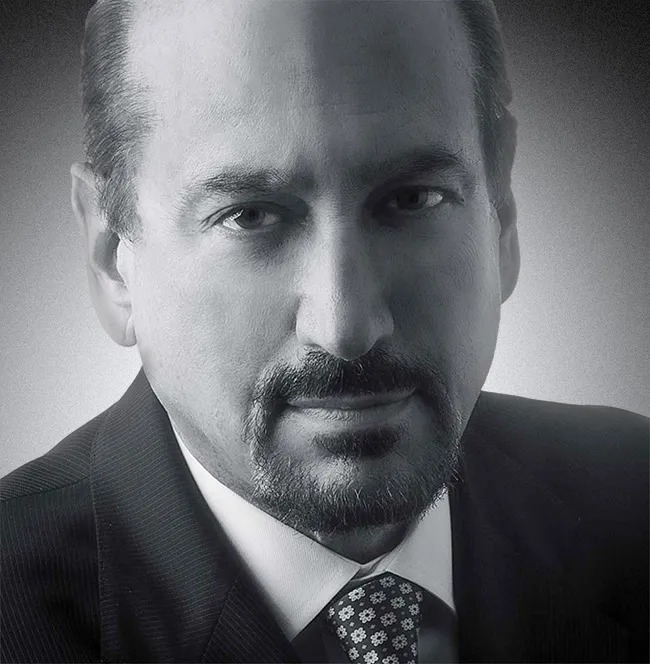
That is more than a clever recruiting slogan. Reporters know that the first official statement is rarely the whole story. They look for documents, inconsistencies, incentives and people who suddenly stop returning calls. A team trained in those habits can pressure-test its own client's account before the account meets a skeptical newsroom. It can also package complicated material in a form an editor can use before the clock runs out.
You can fill the information void with facts, or you can leave it empty and it will be filled with rumors.Michael Sitrick
The first thing to fail in many crises is therefore not the message. It is the internal fact-gathering system. Operations knows one piece, counsel guards another and leadership assumes communications can write around the gaps. “No comment” feels prudent inside the room because it contains no obvious error. Outside the room, it becomes an invitation. The story still runs; only the company has declined to help frame it.
Build one chronology and label what is known, alleged and unknown.
Put legal, operations and communications around the same facts.
Name every audience and the action each one may take.
Answer on the news clock without outrunning the evidence.
The product is judgment by the hour
Sitrick does not sell software seats or a tidy menu of monthly content. It sells senior attention through retainers and hourly work. The menu includes crisis planning, media strategy, litigation support, restructuring communications, reputation repair, investor messaging, proxy contests, mergers and product recalls. A public client list stretches from Fortune 100 companies to startups, municipalities, entertainers and athletes. In 2016, the roughly 50-person firm said it signed about 250 clients a year. Many arrived because something had already gone wrong.
What does that judgment cost? There is no current public rate card, but several historical snapshots make the economics unusually visible.
These are dated, engagement-specific disclosures, not today's price list. Their value is in showing the model: scarce senior judgment, sold when delay can cost more than advice.
The business works because crisis demand is spiky and consequential. A company may not need this team in an ordinary quarter. Then a data breach, indictment, proxy fight or factory accident makes an idle communications function painfully expensive. Sitrick's compact senior staff can enter beside outside counsel and financial advisers without pretending the media problem lives in a separate building.
What clients buy
A defensible narrative, direct access to experienced counsel, newsroom fluency and coordination across audiences that can change the outcome.
What they do not buy
A magic eraser. Communications cannot repair a dangerous product, contradict documents or substitute for operational change.
From the court docket to the podcast queue
The clearest market niche is litigation PR. Courts decide legal claims, but customers, employees and investors do not wait for final judgments. They interpret motions, leaks and televised arguments in real time. Sitrick works with lawyers on message development, media training, courtroom monitoring and the release of information. Its restructuring practice applies the same discipline to a different cast: creditors, suppliers, employees and communities trying to decide whether the business will still exist next month.

In 2025, that expertise became The Intersection, a podcast hosted by Sitrick and senior partner Sallie Hofmeister. The guests are litigators, and the subject is the border between a court of law and the court of public opinion. It is marketing, certainly, but more revealing than a slogan. The firm is showing its work through cases: which audience mattered, which fact changed the direction and why a legally sound response could still be publicly disastrous.
An ownership plot twist
The firm's corporate history contains its own abrupt turn. Resources Connection, now RGP, acquired Sitrick and restructuring adviser Brincko Associates in 2009 in a combined cash-and-stock deal worth $43.3 million. Sitrick kept its identity and Michael Sitrick kept leading it. In May 2026, RGP sold the Sitrick business to an entity called Sitrick, LLC for $1.9 million as part of a broader effort to simplify its portfolio.
RGP reported a roughly $2.4 million loss on the sale and a separate $4 million cash payment to Michael Sitrick equivalent to the severance in his employment agreement. RGP retained certain office leases and subleased Los Angeles and New York space back to Sitrick.
The two transaction prices should not be treated as a rise-and-fall chart. The 2009 figure covered two businesses and included contingent economics; the 2026 purchase price was tied to realizable client receivables, while RGP retained some liabilities. Still, the divestiture restored a useful clarity. Sitrick is again a focused specialist rather than an “other” segment inside a much larger consulting company.
The catch: the facts must survive the next question
There is a tempting caricature of crisis PR in which a gifted operator bends reality through sheer force of telephone calls. Sitrick's actual advantage is less cinematic. The team finds the fact that changes how a reporter understands the dispute, then gets it into the conversation quickly enough to matter. That only works when the fact is true, documentable and relevant. A clever phrase collapses if the next email contradicts it.
It also works poorly when leaders want reputation repair without operational repair. If the product remains unsafe, the conduct continues or management withholds material facts from its own advisers, communications becomes another layer of exposure. The model is strongest when legal and communications teams can share a chronology, decision-makers are reachable and the organization is willing to correct something as well as explain it.
What can a smaller company copy? Not the famous phone book, and probably not the four-figure hourly rate. Copy the sequence. Prepare a verified chronology before drafting adjectives. Decide who owns each fact. List the audiences by the decisions they can make, not by vague labels like “the public.” Rehearse the five hostile questions nobody wants to hear. Establish who can approve an answer at midnight. And remember that speed is useful only after accuracy has been given a head start.
A crisis begins with an event, but it grows through interpretation. For 37 years, Sitrick And Company has worked in that narrow distance between the two. The firm's lesson is severe because it is true: the story will be told. The remaining question is whether the people who know the facts arrive before everyone who merely has a theory.