developer-platform
(28)
Beacon found 160 formulas hiding inside a million
Wall Street keeps its cleverest ideas in surprisingly ordinary spreadsheets. Beacon turns that private ingenuity into shared infrastructure - and Clearwater paid to bring the machinery inside.
Corva makes the oilfield’s expensive minutes visible
A failed drilling motor can turn a good day into a costly detour. Corva connects wellsite data, engineering models and the people who can act on them - before the bill gets bigger.
Automatic Labs gave old cars a new voice. Then the line went dead.
A plug-in adapter made ordinary cars report their troubles, remember their journeys and call for help. Automatic’s rise and shutdown reveal the bargain hidden inside a connected device.
Skillz and the price of a fair fight
Skillz turned the spare-minute mobile game into a contest with cash at stake. The harder contest has been building a business that can afford to keep people playing.
The Company Teaching AI Agents to Finish the Job
Composio began with coding agents that could not reliably code. The founders found a sturdier business in the messy work those agents left behind: permissions, changing APIs, and the long maintenance of a finished task.
Seerslab Lost the Selfie - and Found the Machine Behind It
A pioneering camera app was overtaken by larger rivals. Seerslab's answer was to stop fighting for the selfie and start selling the vision engine underneath it - then put that intelligence into streets, shops and a pair of glasses.

The App That Failed - and the API That Learned to Drive
Two brothers tried to make an app talk to a car. The app went nowhere. The obstacle became Smartcar - a translation layer now sitting between mobility businesses and more than 40 automakers.
TrueLayer Wants to Make the Card Number Obsolete
The London fintech started by turning stubborn bank systems into tidy APIs. Ten years, two acquisitions and a bruising reset later, it is attempting something larger: a European payments network that can handle debit, recurring charges and credit without a card in sight.
Genesis Global’s $270 Million Bet: Wall Street Will Pay to Build Faster
Banks have spent decades choosing between rigid vendor software and expensive custom code. Genesis Global raised roughly $270 million to sell them a third option - reusable financial-market plumbing that can still be made their own.

Algolia’s First Search Product Flopped. The Pivot Now Handles 1.75 Trillion Queries a Year
A beautiful offline-search engine met a market that would not pay. One customer request later, two French engineers turned the same hard-won speed into an API business used by Under Armour, Lacoste, Slack and thousands more.
Tuya Put the Cloud in 1.2 Million Device SKUs - Then Learned the Price of Being Everywhere
Tuya became the invisible plumbing behind a crowded smart-device aisle. When the pandemic boom snapped, it stopped chasing every customer and rebuilt around larger accounts, software-rich hardware and AI that can finally do more than switch on a bulb.

Brilliant Labs Keeps Rebuilding the Same $349 Bet: AI Glasses You Can Rewrite
The Singapore startup learned that putting AI in your sightline is easy to demo and hard to live with. Halo is its third attempt - thinner, longer-lasting, more private, and open enough for developers to make the glasses useful in ways the company has not imagined.
Azion
Azion wants to make the edge feel less like a map of servers and more like a programmable workbench. Its bet: the next important application will be built, secured and observed closer to the people using it.

Blaxel
Blaxel is a San Francisco cloud infrastructure startup building what its founders call the 'AWS for AI agents.' Its platform runs autonomous agents on isolated microVMs that resume in roughly 25 milliseconds, alongside a distributed agent filesystem, programmable networking, and an AI gateway for model routing and failover. Founded in 2024 by a six-person team of repeat cloud builders who previously sold a data platform to OVHcloud, Blaxel went through Y Combinator's Spring 2025 (X25) batch and raised a $7.3M seed round led by First Round Capital. It already processes millions of agent requests daily across 16 regions.
Terminal
Terminal is a universal API for telematics data in commercial trucking and fleet management. It connects to hundreds of telematics service providers - GPS, safety events, fault codes, dash-cam media, driver hours - and delivers that data in one normalized feed, so insurers, fleet software, logistics firms and fintechs can build products without wiring up hundreds of one-off integrations. Often called 'the Plaid of trucking,' the Toronto company was founded in 2023, went through Y Combinator's S23 batch, and has raised $26M to date.

Vonage
Vonage is a cloud communications company that lets businesses and developers add voice, video, SMS, messaging and network-based verification to their apps and customer operations. Once a pioneer of home internet phone service, it reinvented itself as a platform business built on APIs, unified communications and contact-center software, and is now a wholly owned subsidiary of Ericsson operating as its Global Communications Platform.
Evervault
Evervault is a developer-first encryption platform that lets companies collect, store, process and forward highly sensitive data - especially payment card data - without ever handling it in plaintext. Founded in 2019 by Irish entrepreneur Shane Curran, the New York and Dublin based company pairs a dual-custody encryption model with products for card payments, secure enclaves and network proxying. It processes over $5 billion in transaction volume and generates more than 100 million encrypted tokens per month for customers including Ramp, Rippling and CarTrawler.
Knock
Knock is a New York-based notification and customer-engagement infrastructure company that gives developers a single API and dashboard to design, manage, and deliver messages across in-app, email, SMS, push, and chat channels. Founded in 2021 by former Frame.io leaders Sam Seely and Chris Bell, Knock lets product and engineering teams ship cross-channel notification workflows without building and maintaining an in-house system, and now powers messaging for companies like Vercel, Webflow, Amplitude, and Clay.

Superblocks
Superblocks is a New York-based enterprise software company that lets organizations build, deploy, and govern AI-generated internal applications. Its AI agent, Clark, turns natural-language prompts into full-stack apps backed by extensible React code, while enforcing an enterprise's existing security policies, data permissions, design standards, and audit requirements. The company positions itself as the governed, IT-controlled answer to consumer 'vibe coding' tools, serving teams that need to ship internal software quickly without introducing security and compliance risk.

Vim
Vim is a healthcare technology company that builds a middleware and developer platform connecting data to clinical workflow at healthcare's 'last mile' - the point of care. Its EHR-agnostic Vim Connect layer sits on top of popular electronic health records, pulling in insights and applications from payers, health plans, and digital-health innovators and surfacing them directly inside a provider's existing workflow. By automating tasks such as care gap closure, diagnosis capture, prior authorization, referral management, and chart retrieval, Vim helps payers and providers align on value-based care while reducing administrative burden for clinicians.

HackerRank
HackerRank is a technical skills platform that helps companies screen, interview, and hire developers based on what they can actually build rather than what their resume claims. Founded in 2009 by Vivek Ravisankar and Hari Karunanidhi, the company runs a two-sided model: a community where millions of developers practice coding challenges, and an enterprise product that lets 3,000+ companies - including a large share of the Fortune 100 - assess candidates with real-world coding tests, live pair-programming interviews, and, increasingly, AI-assisted evaluation and proctoring.

Inngest
Inngest is a durable execution platform that gives developers reliable background jobs, workflows, and AI-agent orchestration without managing queues or infrastructure. Founded in 2021 by Tony Holdstock-Brown and Dan Farrelly, the San Francisco company combines event streams, queues, and durable step functions into SDKs for TypeScript, Python, and Go, plus AgentKit for multi-agent systems. It has raised roughly $30 million, most recently a $21M Series A led by Altimeter in 2025, and processes over 100 million executions a day for teams including SoundCloud, Resend, and Replit.

Medplum
Medplum is an open-source, API-first, FHIR-native healthcare developer platform - a 'Firebase for Healthcare' that gives engineers a HIPAA- and SOC2-ready backend so they can ship custom EHRs, patient portals, and clinical workflows without rebuilding the plumbing.

Mentra
Mentra is a San Francisco startup building MentraOS, an open-source operating system and app store for smart glasses, alongside Mentra Live, a 43-gram AI camera-glasses device. Founded in 2024 by MIT-dropout Cayden Pierce and Alex Israelov after they collaborated on the OpenSourceSmartGlasses project, Mentra wants to be the Android of smart glasses - a neutral software layer that lets developers ship apps and lets people actually use the hardware in the real world.
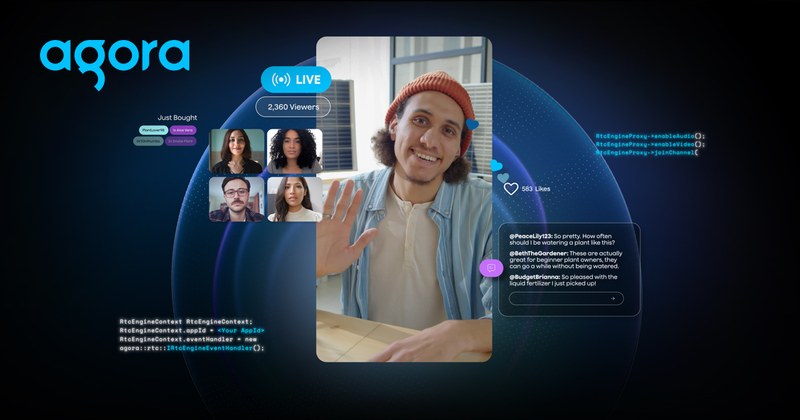
Agora
Agora is a real-time engagement platform that gives developers simple APIs and SDKs to embed live voice, video, interactive streaming, chat, and conversational AI into apps and devices. Trusted by more than 1,700 organizations across social, live shopping, education, telehealth, and gaming, Agora's network reaches devices worldwide with sub-second latency. The company trades on Nasdaq under the ticker API.

Daily
Daily is a San Francisco developer platform for real-time voice, video, and AI. Founded in 2016 by Kwindla Hultman Kramer and Nina Kuruvilla, the company runs a global WebRTC mesh that powers video calling for products like Pitch, AppFolio, Kumospace, and HotDoc, and it created Pipecat - the open-source orchestration framework now used as the backbone for production voice agents at companies like NVIDIA, Cresta, and Epic.
Vapi
Vapi is a San Francisco developer platform for building, testing, and deploying conversational voice AI agents over phone and web. It abstracts the messy plumbing of speech-to-text, LLMs, text-to-speech, and telephony so developers can ship human-sounding voice agents in minutes, with sub-500ms latency and enterprise-grade compliance.
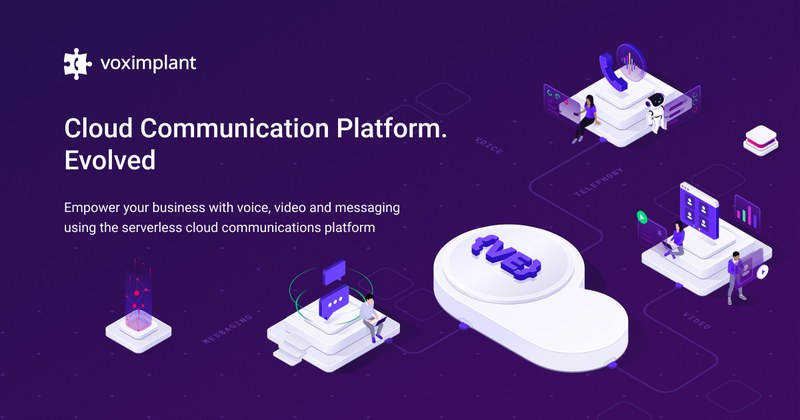
Voximplant
Voximplant is a cloud communications and voice AI orchestration platform that lets developers and enterprises add programmable voice, video, messaging and AI agents to their apps without managing telecom infrastructure. Spun out of click-to-call pioneer Zingaya, it powers billions of calls a year for brands like Hyundai, Burger King, KFC, Glovo and Rappi.