The first thing to fail was a drilling motor. In the Haynesville Shale, Trinity Operating was seeing equipment failures turn into nonproductive time and rising costs. A broken motor below ground is a particularly inconvenient kind of broken motor: reaching it interrupts the very job it was sent down to do.
Trinity had something useful already - its own analysis of equipment damage and a machine-learning model. The question was how to put that knowledge in front of the drilling team while the equipment was still working. This is where Corva enters the story. The Houston software company supplied the pipelines, application hosting and mobile access. Trinity supplied the engineering judgment.
- Corva connects oilfield data to live analytics, alerts and custom apps.
- Operators and service companies can deploy their own models through its Dev Center.
- Its Nabors partnership connects predictive recommendations to compatible rig controls.
- The commercial test is fewer failures and less wasted time, measured against comparable work.
A motor, a model, a $100,000 problem
The resulting Damage Index app compared active-well performance with earlier wells and recommended weight on bit, rotational speed and mud-flow settings. Those choices could favor longer equipment life or a faster rate of penetration. Speed, after all, is a rather hollow achievement if the motor expires before the finish.
Corva’s published Trinity case study reports an 84% reduction in motor failures and approximately $100,000 saved per well through fewer failures, unplanned trips and interruptions. It says development took weeks rather than the typical months. These are reported results from that deployment, with its particular equipment and geology. Their wider significance is the arrangement: the customer did not have to surrender its expertise to use someone else’s software infrastructure.
reduction in drilling motor failures
Approximately $100,000 saved per well in the published case.The oilfield borrows an app store
Founder Ryan Dawson came from product design. Before Corva, he co-founded thirteen23, an incubator whose clients included Netflix, Microsoft and Twitter. An oilfield was a different setting for the same practical challenge: making sophisticated software useful to the person facing the problem.
Corva’s drilling platform launched commercially in 2018. Completions followed in 2019, extending the approach to the work that prepares wells for production. By 2021, the company had introduced Dev Center. Its retrospective explains the decision plainly: Corva could not solve every industry problem itself. Customers and partners had knowledge worth turning into applications.
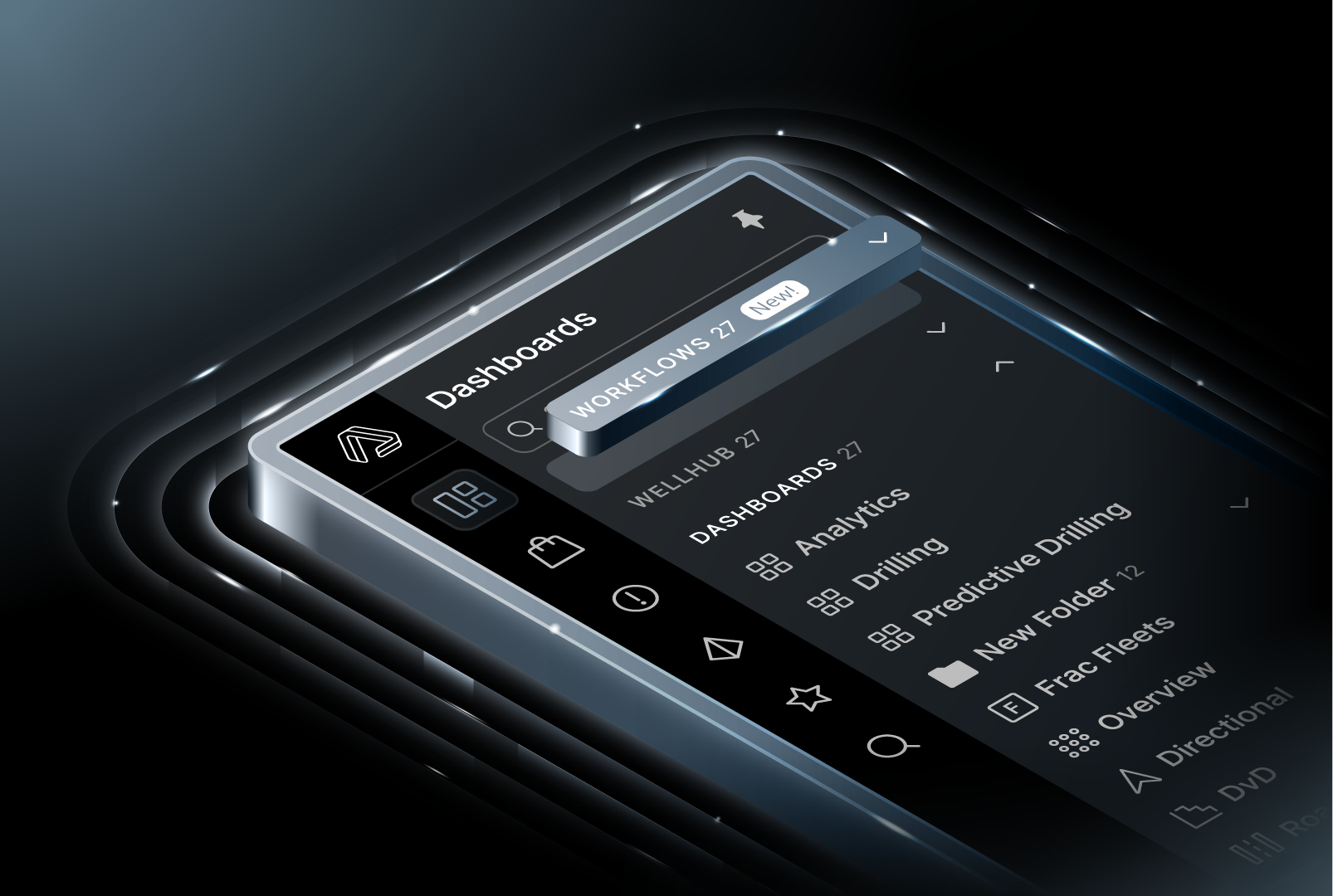
Dev Center offers software development kits, APIs, reusable interface components and cloud deployment. Developers can publish an app to the Corva App Store or restrict it to their own team. Engineers and data scientists can build with programming tools rather than commission an entire mobile platform. Corva’s public GitHub includes Python frameworks and example applications - a useful way to inspect the machinery beneath the sales pitch.
A recommendation learns to turn a knob
A model can recommend a setting. Someone still has to apply it. That last step mattered enough to reshape Corva’s drilling proposition.
Nabors’ account of the collaboration says Corva had field-tested AI advisory tools since 2018. Connecting them to Nabors’ SmartROS rig-control platform supplied closed-loop control of the auto driller. The alliance announced in April 2023 joined Corva’s applications and developer tools with rig automation, allowing the analysis to reach the equipment through a cloud connection.
In September 2023, Nabors reported a Delaware Basin trial across four wells: average rate of penetration rose 36%, while average vibration fell 9.7%. Predictive Drilling was used for 80% of lateral footage on the first pad. Adoption is an unusually revealing number. A clever system that the crew declines to use has a very modest effect on the well.
Four wells remain four wells. A rate-of-penetration gain measures drilling speed, not an identical percentage reduction in the entire well budget. The integration also depends on compatible controls. For a buyer, the useful questions concern the baseline, the drilling conditions and whether the workflow fits the people who must live with it.
- 01MeasureWellsite streams
- 02CheckData quality
- 03InterpretEngineering models
- 04ActCrew / rig controls
The clock that found 40 missing hours
Some improvements require a predictive model. Others require a better clock. A Haynesville completions operator had diligently recorded 65 hours of nonproductive time. Corva’s automated timestamps and time-allocation analysis revealed another 40 hours. The missing time had been happening all along; it had simply escaped the accounting.
The published case identifies nearly 105 hours in total and estimates potential annual savings of up to $1.7 million per crew. Potential is the operative word. Discovering waste creates an opportunity to change the work; it does not deposit the savings into a bank account.
105 hours identified in total. Segment widths represent hours.
Corva Completions adds automated staging, anomaly detection, operational visibility and predictive guidance to fracturing and wireline workflows. A field team and an office engineer can look at the same activity as it unfolds. The point is to make a delay specific enough that somebody can do something about it.
Give the data its own report card
There is an awkward prerequisite to all this prediction: the inputs must deserve belief. Corva’s Fusion product aggregates reporting-system records, equipment streams and vendor data. It connects with systems including WellView, OpenWells and WellEZ, accepts API and email inputs, and supports WITSML providers.
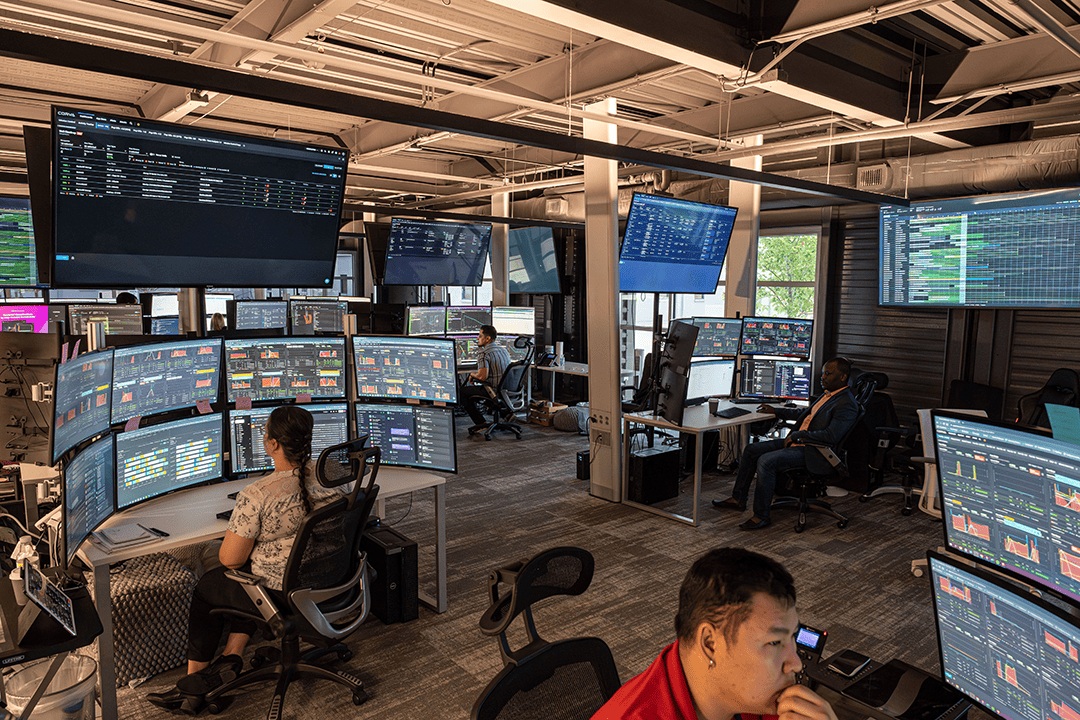
Fusion makes data quality visible through health scores and more than 70 checks. Corva says more than 50 energy experts monitor quality around the clock. That is a telling detail for a company selling AI. The product includes people watching what arrives, helping resolve problems before a suspicious measurement becomes an authoritative recommendation.
Architecture matters, too. In a case involving an unnamed Middle Eastern national oil company, Corva deployed an in-country, on-premise solution, automated daily drilling-report ingestion and supplied offset-well analysis. The company reports a 9% drilling-efficiency improvement. The customer’s residency requirements determined where the software could operate. A cloud diagram alone would not have settled the matter.
“Accelerate the future of energy.”
Corva’s stated mission
A platform with its boots on
Corva sells enterprise software to operators and service companies, combining applications, data infrastructure and support. Its public buying journey begins with a demo. Evaluating the expense means considering integration work, deployment requirements and the operational outcome alongside the software contract.
Its market sits between internal engineering tools, specialist analytics vendors and the digital offerings of large oilfield service companies. SPE’s reporting places Corva and Well Data Labs in that competitive landscape alongside the larger providers. Corva’s distinctive proposition is the combination of live data, custom applications and partner-enabled automation.
Those partners complicate any tidy competitor list. Baker Hughes announced a collaboration in January 2023 to expand well-construction applications through Corva, including Dev Center. Nabors expanded its alliance into RigCLOUD in April 2025, joining edge and cloud infrastructure with Corva analytics. An incumbent can compete for one workflow and help distribute another.
The company calls its employees “Corvanauts” and lists end-to-end ownership, transparency, radical candor and rapid iteration among its values. The vocabulary has a little space-program swagger. The business remains firmly terrestrial: models must survive contact with geology, equipment and a working crew.

The next well is the test
In September 2026, Corva announced a renewed agreement with YPF, building on its role in the operator’s Real-Time Integration Center for drilling and interventions. The next phase aims toward increasingly autonomous well construction in Vaca Muerta. That is a stated direction, rather than a claim that every well already runs itself.
The useful lesson travels beyond oil and gas. Start with a failure people recognize. Give its measurements a quality check. Put the relevant expertise into the workflow, then compare the outcome with similar operations. Trinity’s motor problem makes that sequence unusually concrete.
It also explains the conditions. Unreliable inputs, unsuitable models, inaccessible controls or a crew that cannot use the recommendation can interrupt the sequence. A faster dashboard cannot repair those gaps by itself. Corva’s proposition earns its keep when the distance from observation to action actually gets shorter - and the next well’s accounting agrees.