cloud-modernization
(40)
Airolabs.ai wants your AI agents to survive their debut
Airo sells enterprise AI by the fleet. Its more interesting proposition is what happens after the applause: someone stays to manage the agents, the integrations and the bill.

Technology Partners built an IT business by showing its cut
A transparent staffing margin was the opening move. Technology Partners now tackles the harder problem: getting the people, the software, and the leadership to work together.

Creative Capsule builds the team that survives your first idea
A delivery startup changes its market. A car marketplace outgrows its database. Creative Capsule sells the engineering continuity that lets a business change its mind without starting from scratch.

Chenoa and the strange value of the missing hour
An insurance submission took two hours. Chenoa helped bring it down to ten minutes. The interesting part is what happened between the inbox and the underwriter.

SID Global Solutions and the art of making the boring pay
A returned product, an unused API, a question at the DMV. SID Global Solutions builds its business around the small delays that become expensive when everyone has them.

Sparity and the expensive habit of starting over
A dashboard carries more baggage than it appears to. Sparity’s business is helping companies change their technology without losing the calculations, routines, and hard-won knowledge inside it.

NeoITO and the trouble with a successful prototype
The first version wins you customers. The next version has to survive them. NeoITO has made a business of helping software cross that awkward border.
Mindex and the Discount That Became a Software Business
A Rochester software firm gave a school district a discount and kept the product rights. Two decades later, its own aging software became the proving ground for the modernization it sells to everyone else.
SmarTek21 and the Fortune Hidden Between Systems
A telecom invoice, an insurance server, a soccer dashboard: SmarTek21 makes its case in the awkward spaces between systems. Its AI business starts with a surprisingly old problem - getting the right information to the right place.
Logic and the curious cost of selling more
A retailer can sell more and keep less. Logic, now part of Accenture, works in the awkward space between a promising shopping experience and the systems that make it pay.

Softweb Solutions and the price of starting over
A semiconductor team kept rebuilding what it already knew. Softweb’s answer reveals a useful truth about enterprise AI: the expensive part often happens before the clever part.

Wayfair’s AI Future Starts With Its Old Code
Thousands of applications stand behind Wayfair’s push for better shopping experiences. Matt Ferrari explains why Pythian’s ability to understand the business—and code alongside his team—mattered to the choice of partner.

Coherent Solutions knows where the software gets stuck
The Minnesota engineering company has spent three decades building the systems behind other brands. Its next bet: helping businesses turn faster AI tools into software that actually ships.

Perficient Makes Its Living in the Mess Between Your Systems
The EQT-owned consultancy is betting that enterprise AI needs more than a clever model. Its work starts with the websites, customer records and workflows that big companies struggle to connect.
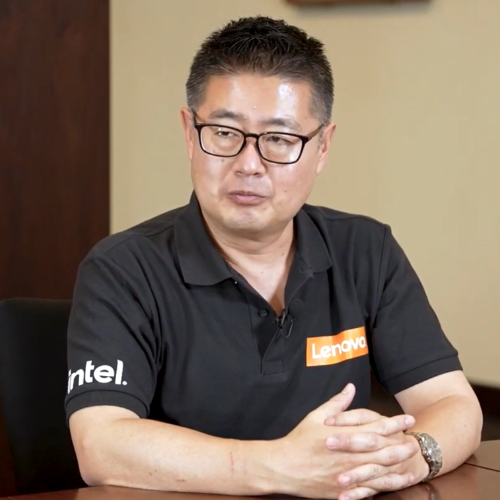
Masayoshi Nakano Has Spent 30 Years Teaching New Technology to Speak Human
From SharePoint to Watson to cloud data, Masayoshi Nakano has built a career around a deceptively difficult job: making the next wave of enterprise technology legible before it becomes ordinary.
Wizeline Quit Selling Software. Now It Teaches Enterprises How to Ship It
Wizeline began with a dashboard that told product managers what to build. Its more valuable discovery was that big companies needed help doing the building - and now it is betting the same lesson can drag enterprise AI out of pilot purgatory.
MindK’s Bet: The Best Outsourcing Shop Thinks Like a Product Company
MindK started as one developer in Ukraine. Now it sells a harder promise: bring the judgment of a product team to the messy software that healthcare providers, sustainability consultants and growing SaaS companies cannot buy off the shelf.

Amdocs Runs the Boring Machinery Behind Your Phone - Now It Wants AI in the Control Room
For four decades, Amdocs made money where telecom gets painfully complicated: orders, bills, care and network operations. Its next act is aOS, an agentic layer meant to coordinate the whole machine - if carriers trust AI close to the cash register.
The $1 Million Workflow Fix: How Speridian Modernizes Government Without Ripping Everything Out
A 23-year-old IT consultancy found its sharper edge in the least glamorous corner of software: permits, claims, benefits and case files. Its playbook is simple - modernize the work first, and spare the expensive rip-and-replace when you can.
Strata Analytics Turned Data Consulting Into a Product Factory - Then Made AI Prove Itself
The 20-year-old firm sells the unglamorous work behind enterprise AI - clean data, migrated systems and accountable humans - then packages the repeatable parts as software.

CitiusTech Bet Everything on Healthcare. Now It Has to Make AI Behave.
For two decades, CitiusTech refused to become a general-purpose IT shop. That stubborn focus built a valuable healthcare specialist - and now gives it a credible shot at making enterprise AI survive contact with clinical reality.

The Nearshore Software Firm Betting Its Next Act on Engineers Who Conduct AI
Growth Acceleration Partners spent years selling proximity: senior Latin American engineers working in the same hours as U.S. clients. Now it is selling leverage - using AI agents to compress expensive software work while keeping humans on the hook for what ships.

The $9.6 Billion Engineering Shop Behind Products You Already Use
GlobalLogic does not sell the shiny app. It sells the people, process and increasingly the AI that get the app shipped - a quiet model that survived a brutal first shock and ended in Hitachi's $9.6 billion bet.

ISHIR Survived the Dot-Com Crash. Now It Wants to Be Your AI Co-Founder
A $1,000 outsourcing experiment nearly died with the dot-coms. Twenty-six years later, ISHIR is betting that the next valuable tech vendor will look less like a code shop and more like an accountable co-builder.
Calfus Bet Its Consulting Shop on AI Agents. Now It Has to Make Enterprise Software Finish the Job
The Pleasanton firm grew up fixing ERP, data and software problems. Its next act is Aetherion - a governed AI-agent platform designed to turn impressive demos into finished enterprise work.
Blue Trail Software Learned the $0 Prompt Is Often the Most Valuable One
The San Francisco software firm sells something less fashionable than magic: accountable engineering. One troubled AI recruiting system shows why architecture, not another clever prompt, became the product.

Ashish Kataria Wants You to Watch the Work Before You Buy the Software
At Epik Solutions, the founder and CEO starts transformation with a stubbornly analog move: watch how people actually work. His playbook favors workflow maps, measured adoption and patient growth over fashionable software decisions.

Zhensen Huang Spent a Decade in the Quiet Part of Building
Before the awards, the contracts and the AI workshops, Precise Software Solutions was a two-person company with a long runway and no obvious breakthrough. Huang's useful lesson is what happened during the wait.
Cavallo Technologies Is Selling Banks the Part of AI Nobody Demos: Getting It Into Production
The Burnaby consultancy has made a business of the awkward middle between an impressive AI prototype and a governed system people can actually use. Its playbook - narrow the first use case, measure the answers, preserve permissions and ship in weeks - is unusually copyable.

The 23-Year-Old Company Wiring AI Into Enterprise Plumbing
Jade Global built its business in the unglamorous gaps between enterprise systems. Now it is turning that integration muscle into AI agents, data-readiness tools, and managed operations for companies that cannot afford a messy handoff.