A returned product can be in two places at once. Physically, it is back with the retailer. Digitally, it is still missing. In a retail case described by SID Global Solutions, returned items took up to 24 hours to reappear in inventory. The stock existed. The opportunity to sell it again was waiting for the computers to agree.
There is something wonderfully absurd about this. A business can move a parcel across a city and then spend a day persuading its own records that the parcel has arrived. SID works in that interval: between an event and the systems that ought to respond to it.
- SID modernizes the software, cloud infrastructure and connections behind enterprise services.
- Its SAMi platform gives APIs a catalog, developer access, subscriptions and billing.
- Banking, retail and public services supply concrete examples of its work.
- The useful lesson: measure the broken handoff before buying the fashionable tool.
01 / The day hiding inside the database
SID’s published inventory case describes three problems: slow relisting, manual updates that left systems out of sync, and reseller outlets trying to fulfill orders with stale stock information. Each sounds small until a customer orders something the business cannot deliver, or fails to order something it could.
The implementation used Confluent Kafka to carry inventory changes as events. Kafka Streams processed returns; connectors used change data capture to pick up database updates; kSQLDB maintained current inventory views for reseller outlets. SID reports that the 24-hour relisting delay became an immediate update. The client is unnamed, so this remains a supplier-reported result.
For a buyer, the interesting detail is the choice of problem. “We need a streaming platform” is a shopping instruction. “Returned stock takes a day to become sellable” gives the engineers a test they can pass. SID’s account is useful because it connects an architecture to a recognizable commercial inconvenience.
02 / An API needs a shop window
APIs are software interfaces that let applications request data or actions from other systems. A bank can expose a service to a fintech partner; a retailer can connect inventory to a sales channel. But an interface that exists somewhere in a company is not automatically easy to find, understand or use.
That second problem is the territory of SAMi, SID’s proprietary platform. The company calls it both Smart API Marketplace and Smart API Monetization Platform. The vocabulary varies; the commercial idea is consistent. Put a usable front door around digital services, then manage what happens after someone walks through it.
SAMi’s public product materials describe a catalog, developer tools, sandbox testing, access and subscription controls, analytics and monetization. Its documentation gets more specific: product owners can set rate plans, developers can create applications and teams, and the platform can track subscriptions and billing. The audience includes engineers, product managers and business owners, whose interests do not always arrive in the same meeting.
- 01PublishPackage a service with documentation.
- 02DiscoverLet a developer find it and try it.
- 03SubscribeApprove access and assign a plan.
- 04OperateTrack usage, bills and support.
SID’s place in the market follows from that distinction. It implements and integrates platforms such as Google Apigee, while adding its own products and delivery services around them. Enterprise buyers can also hire a large systems integrator or assemble gateway, portal and billing components internally. SID’s proposition is the combination of that work under one provider. Whether it is the better choice depends on the required integrations and who will maintain them.
03 / The elegance of a cancellation button
Enterprise software is at its most revealing when it admits to paperwork. SAMi’s September 2023 release notes list work on automatic recurring payments and the addition of a cancellation button. They also record a limitation: a canceled rate-plan subscription did not offer a prorated refund or continued access through month-end.
These are historical, version-specific details. They offer a useful way to inspect a product: ask about the awkward transaction, rather than only the happy path. API monetization involves entitlements, renewals, cancellations and disagreements about money. The checkout deserves as much scrutiny as the gateway.
What does it cost? SAMi’s public pricing page, checked in October 2026, lists a free tier, a $49-per-month Developer tier, a $99-per-month Professional tier and custom Enterprise pricing. The listed monthly API-call allowances are 50,000, 500,000 and two million respectively for the first three plans.
Enterprise: custom pricing. Platform subscriptions are one component of an implementation budget.
SID separately advertises project-based, retainer and dedicated-team engagements. A bank buying a portal, legacy integration and ongoing operations is buying a broader service than a developer subscribing to software. A useful procurement brief asks who pays for infrastructure, migration, support, security review and future changes. A small subscription number cannot answer those questions on its own.
04 / The chatbot’s less glamorous colleague
SID’s Delaware DMV case brings the same logic to a public counter. According to the company, the agency faced lobby waits averaging 35 to 40 minutes, limited live-chat hours and manual transactions that sent people into offices. The stated friction was access to assistance as well as the handling of the transaction itself.
SID describes implementing DELLA, a generative AI virtual lobby, with Google Vertex AI, Dialogflow CX, translation services and document-processing tools. Its case study outlines a pilot, incremental improvements, staff training and continuing feedback. It reports round-the-clock assistance and reduced waits, without supplying a precise before-and-after wait-time measurement.
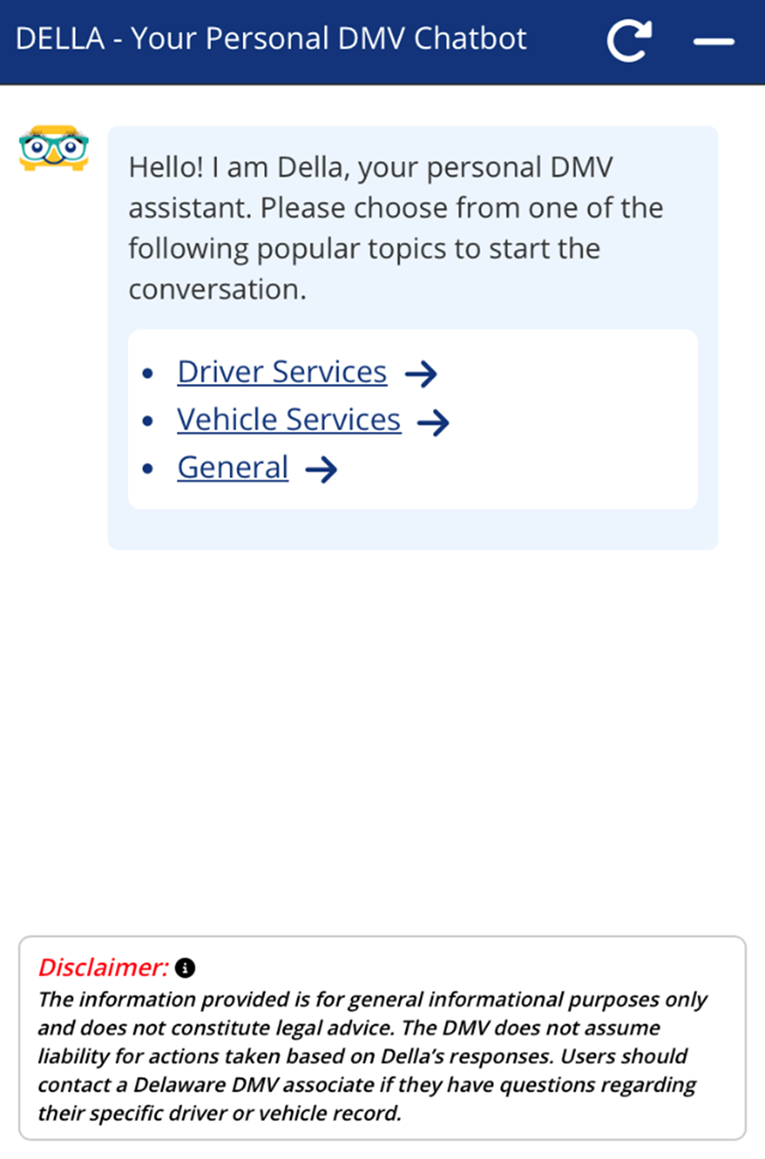
The delightful detail is an index-refresh utility. When the DMV website changes, this component refreshes the AI data-store indexes. A chatbot with yesterday’s instructions can be a remarkably efficient distributor of yesterday’s mistakes. Keeping the answer current is ordinary maintenance, and ordinary maintenance is much of the job.
This example also suggests the conditions a buyer should test. Multilingual conversation helps when people need information and navigation. It cannot, by itself, repair a broken underlying transaction. Permission-aware enterprise assistants likewise depend on accurate content, working integrations and staff who can handle exceptions. SID’s pilot-and-feedback process is a practical model to copy.
05 / The people behind the plumbing
SID’s history narrative dates its beginnings to 2006 in enterprise architecture, ERP, consulting and staffing. It marks a shift toward platforms and accelerators in 2012, cloud and API management in 2015, and an AI-first strategy in 2023. The sequence makes sense as an expansion of the work around enterprise systems.

In June 2024, SID announced a planned $20 million investment in Philippines engineering and delivery hubs. Contemporary reporting described Manila as the main headquarters for the expansion. In an ANC interview shared by the company, founder Venkat Madipadaga also discussed the SID.U digital engineering certification program. The announcement describes a commitment; it does not establish how much has since been spent.
The company’s careers materials promise training, mentoring and flexible work arrangements. Those are employer commitments. Their relevance to customers is straightforward: custom integrations need people who understand the systems after the launch presentation has ended. The investment and training plans make delivery capacity part of SID’s commercial story.
06 / Give the agent a key, then count the doors
SID’s latest direction brings APIs and AI agents together. Its September 2026 Apigee/MCP guide proposes starting with an API inventory, choosing a handful of low-risk candidates, validating authentication and audit trails, and piloting one real workflow before expanding access. Its own instruction is admirably compact:
“govern first, expose second.”
SID Global Solutions / September 2026 Apigee & MCP guide
The emphasis fits SID’s earlier work. An agent able to request actions from enterprise systems still needs an identity, permissions, limits and a record of what it did. The new interface changes who is making the request. It leaves plenty of familiar integration work underneath.
That is the useful thread through this company: pick the connection that fails in practice, make it observable, and improve it in stages. For a retailer, the test is whether a return becomes sellable. For an API owner, whether a partner can get access and a bill makes sense. For a citizen, whether a question gets a current answer. The glamorous technology gets the invitation. The handoff decides whether anyone stays.
Follow the connections
Explore SID Global Solutions, SAMi, the company’s writing and its Apigee/MCP guide.
Find SID on LinkedIn, X, Instagram and Facebook. Watch the ANC founder interview or browse its YouTube videos.