The sofa is easy to see. The software behind its arrival is considerably less obvious. Someone must match a driver to a job, track the journey, collect payment and tell the customer when to open the door. Then the customer changes: a retailer wants hundreds of deliveries, and its ordering system would prefer to talk to your system directly. The app that launched the business has become one small part of it.
- The offer: continuing engineering teams for SaaS companies and software-dependent businesses.
- The distinction: local client collaboration paired with delivery teams in India, with business knowledge carried from one release to the next.
- The evidence: retail integrations, rebuilt data pipelines and machine learning applied to everyday operational problems.
This is the territory occupied by Creative Capsule. It helps companies build software, but its more interesting proposition concerns what happens after the first version. A launch establishes a starting point. Customers, regulations and economics supply the revisions. Someone needs to keep the technical history while the business writes a new chapter.
01The first idea is rarely the last
Bungii began with a wonderfully legible idea: request a pickup truck from your phone. Creative Capsule started working with the founders in March 2016 and delivered version 1.0 that October. An investor, Kevin Winkley, had recommended the firm after working with it on a healthcare business.
The original consumer proposition had a catch. People needed a truck less frequently than they needed a ride. Retail deliveries were initially a smaller share of activity, but a growing one. During the pandemic, personal hauling contracted and retail demand became more urgent.
Creative Capsule helped extend the platform with a delivery portal and enterprise APIs. Retailers could first try the portal, then integrate more deeply when their volume justified it. The lesson is pleasingly practical: make the next commitment proportional to the evidence.
“We actually don’t want clients to spend all their money on engineering.”
Salil Talauliker / Co-founder, in the Bungii case study
That remark deserves a place in a founder’s notebook. Engineering competes with selling the product, explaining it and finding customers. A feature can be beautifully made and still be an extravagant answer to a question nobody has asked.
02The people behind the handoff
Julia Terenjuk and Salil Talauliker founded Creative Capsule in Kansas City in 2003. Its own history names automated financial reporting for Hallmark Cards as the first big break, in 2004. By 2009 it was opening a development office in Goa and building Go Meals for Sanofi-Aventis. The work already crossed the boundary between business systems and software carried in a pocket.


Today, the firm describes a blended model: ideation, requirements and UX collaboration in the United States or Switzerland; architecture, development and QA delivery in India. Each client gets a dedicated group, with visibility into individual team members and their qualifications. The intended advantage is familiarity accumulated over time.
Its software-company practice says some relationships have lasted more than twelve years, through leadership changes and buyouts. That is a revealing unit of measurement. The useful asset is partly the team’s memory: which trade-off was deliberate, which workaround is temporary, and which apparently minor rule belongs to a customer’s actual business.
03When the database becomes the business problem
OneRequest’s car marketplace faced a different limit. Its daily inventory covered more than 2.5 million cars, with vendor data taking six to eighteen hours to process. The centralized database architecture dated from the MVP phase. Latency and infrastructure costs were increasing together.
Creative Capsule introduced distributed processing using AWS Glue and Apache Spark, with Delta Lake and S3 storage. The work took a little over two and a half months. Its case study reports a 70% reduction in processing time and 50% reductions in DevOps time and operational expenses.
Less time waiting. Less money running.
The redesign still encountered memory errors. Increasing worker capacity helped initially but raised the bill. Archiving older data and partitioning tables reduced the work each job needed to perform. Another dedicated instance had been idle 90% of the time; replacing its polling job removed that instance. Capacity was one lever. Doing less unnecessary work was another.
04A photograph is a surprisingly difficult receipt
A driver uploads a picture. Has the right item arrived? Bungii’s proof-of-delivery checks had relied heavily on people comparing images. Unrelated photographs, duplicate submissions and inconsistent lighting made the task slow and subjective.
Creative Capsule built a pipeline for image similarity and invalid-image detection. The team tested several model families. Swin Transformers produced marginally higher accuracy, but latency and memory demands counted against them. ResNet and Vision Transformers offered a more workable balance. The case study reports 70% less manual validation effort, leaving operations staff to concentrate on exceptions.
In a separate delivery-time project, the old formula combined map estimates, entered service durations and fixed buffers. It struggled with scheduled jobs and variations between partners and places. The replacement used historical delivery data and XGBoost, tested through a controlled geographic rollout and monitored in Power BI before expansion.
Reported reduction in major delivery-time errors in the Bungii scheduling case study. This is an error-reduction claim, not a claim of 94% absolute prediction accuracy.
These examples make the firm’s AI offering easier to understand. Its wider menu includes enterprise search, retrieval-augmented generation, predictive analytics and agentic systems. In the documented logistics work, the target is concrete: a misleading photograph or a delivery window that makes a driver wait.
05The other customer wears a lab coat
Creative Capsule also works in healthcare and pharmaceutical software, where a pleasing interface must coexist with approval workflows and sensitive information. It develops financial and health-record applications, analytics dashboards and digital marketing tools. Publicly named customers include Brightree, Alkermes and Celularity.
The Veeva practice illustrates the detail involved. A Digital Briefcase can synchronize media from Vault PromoMats while preserving its regulatory workflow. A speaker directory brings information from several sources into one searchable interface. Approved Email helps representatives send relevant, compliant information and capture interactions. These are tools for existing professional workflows, rather than a new habit the customer must learn from scratch.
One anonymous biopharmaceutical client’s ALS awareness campaign had outgrown its WordPress setup. Multilingual and regional content depended on plugins and workarounds. Creative Capsule moved it to Drupal, migrating more than 850 gallery items and 1,700 form submissions, cleaning data and training the client’s team. The reported gain included fewer paid plugins and more manageable content governance. Migration succeeded only when the people publishing the stories could use the new system.
06The economics of remembering
Creative Capsule sells B2B services through continuing development relationships. Customers buy access to a coordinated mix of engineering, design, testing, data and infrastructure skills. The blended local and offshore pricing model is part of the proposition; the continuing relationship supplies the context.
It sits between building an entire internal department and distributing work across separate contractors. An internal team can preserve knowledge too. A specialist contractor may be appropriate for a tightly bounded task. Creative Capsule’s argument is strongest when the product keeps changing and several disciplines must change with it. Its own approach explicitly favors lasting relationships over one-off projects.
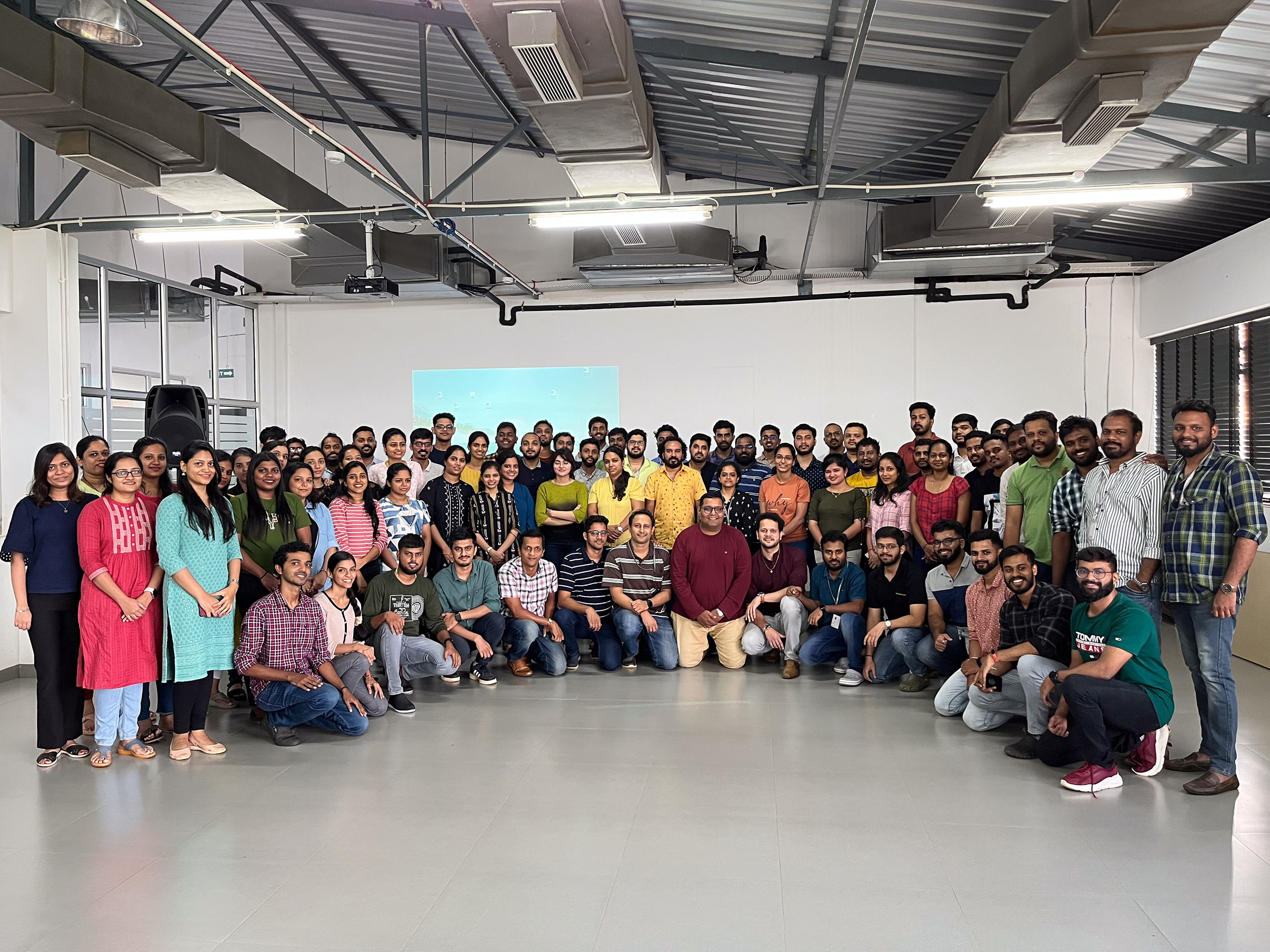
The employment proposition supports that model. The company offers technical, management, analysis and QA career paths, mentoring and flexible work arrangements. Its career page names staff with thirteen to fifteen years of tenure. Gina Parab’s published account traces a move from support into QA and leadership. Retaining people can preserve client knowledge; mentoring gives that knowledge somewhere to go.
In March 2026, Creative Capsule announced ISO 27001:2022 certification for its information security management system. In June it marked a year working with OneImaging. Those updates fit the same business: software that continues to carry sensitive information, serve customers and require care long after its debut.
07What to borrow before you hire
The useful ideas here travel well. Let customers test a service before demanding a full integration. Measure idle infrastructure before buying more of it. Evaluate an AI model’s operational cost alongside its accuracy. Train the people inheriting a migrated system. Preserve enough engineering context to explain yesterday’s decisions.
Each lesson has conditions. Predictive models need representative data and monitoring. Distributed teams need visible ownership and candid communication. A continuing engineering relationship needs continuing work. For a small, isolated deliverable, that investment in shared context may be excessive.
The question to put to any software partner is therefore unusually simple: when the business changes its mind, who will understand what needs to change next? Creative Capsule has built its offer around staying close enough to answer.
Visit Creative Capsule ↗ · Explore its project stories ↗ · News & updates ↗