In the version of entrepreneurship that travels fastest, a founder spots an opening, assembles a team and watches the numbers bend upward. Zhensen Huang's story contains the bend. It also contains something more instructive: years in which almost nothing looked inevitable. Precise Software Solutions was established in Rockville, Maryland, in 2003. By the beginning of 2013, it still had two employees. A decade is a long time to remain close to the starting line.
Huang knew the terrain. He had worked inside large federal IT contractors and held technical and managerial roles, including senior principal at SRA International and director at FINRA. He had also spent six years at the University of Maryland, Baltimore County, earning a master's degree and a Ph.D. in information systems. His training was in how technology, people and institutions fit together. The company he imagined would have to do the same.
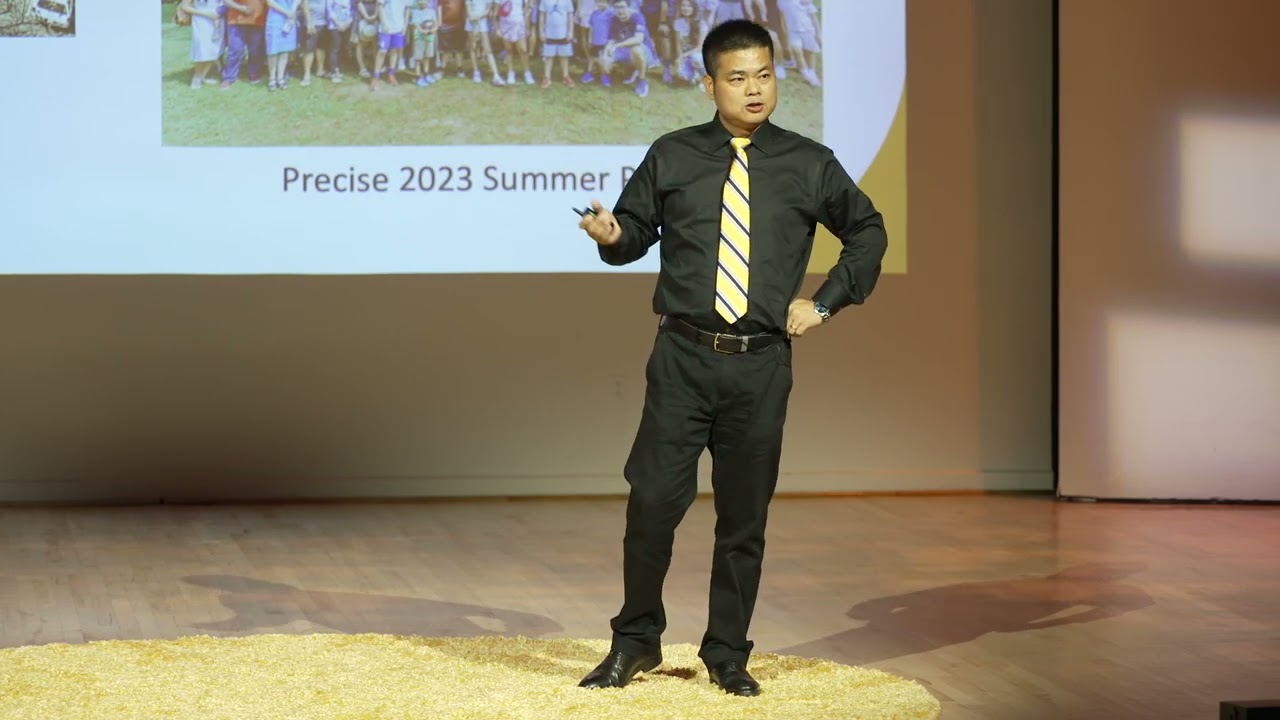
The origin reaches farther back. At a UMBC talk in 2023, Huang described growing up in a small rural village in China and emigrating to the United States, a future he had once struggled to picture. The title of his talk was "Create Possibility - On Campus and in Business." That phrase captures his career better than the usual founder vocabulary. Possibility, in Huang's telling, is something assembled: education, relationships, patient preparation and the willingness to notice a door when it opens.
The year the slope changed
In 2013, Precise began supporting information technology systems at the U.S. Food and Drug Administration. The assignment placed the small company inside a demanding public mission, where software has to survive procurement rules, security obligations, old infrastructure and the daily needs of regulators. The work rewarded context as much as code. Precise grew to 16 employees in 2014 and added eight more the following year.
Then came a second door. Precise entered the Small Business Administration's 8(a) Business Development Program in 2016. The program helps qualifying small businesses compete for federal work through training, counseling and access to contracting opportunities. Huang later described the experience with an image unusually vulnerable for a chief executive: "Looking back, it's as if I had been walking around in the dark. Then someone held up a light for me. That light was the 8(a) Program."
Within a year of joining, Precise's revenue rose from $8.3 million to $17.5 million. By 2017 it reported $17.6 million in annual revenue, and the following year it landed at No. 938 on the Inc. 5000 with 528 percent three-year growth. These figures describe acceleration. They also give the quiet decade a different meaning. Huang had spent years learning how federal customers buy, where larger contractors become slow and why technical responsiveness earns trust.
“Dream big, be humble, and work hard.”Zhensen Huang's operating mantra
Build for the company that has not arrived yet
Huang's most revealing business anecdote involves accounting software. Early in Precise's life, the cheaper option would have served the company in front of him. He chose a higher-grade system capable of supporting the growth he expected. When that growth arrived, Precise avoided the expense and disruption of switching systems mid-stride.
It is a small decision with a large idea inside it. Founders are told to preserve cash, stay flexible and delay irreversible commitments. Huang identified infrastructure that would become harder to replace as the company grew. He paid early for organizational memory, cleaner handoffs and fewer future distractions. Ambition entered the books before it showed up in headcount.
The complementary choice was cultural. Jeffrey Page, then a Precise executive, described a workplace where employees could ask questions of anyone, including the CEO. Huang said he surrounded himself with bright minds he could learn from because he knew he did not have every answer. The posture sounds gentle. Its operational consequence is sharp: expertise gets permission to travel upward, and inconvenient information has a better chance of reaching the person who can act on it.
Buy durable infrastructure where switching costs compound. Keep the rest of the company curious enough to change its mind.
Huang treats humility as a repeatable practice. Asked what he would tell aspiring entrepreneurs, he recommended mentors, passion and active attention to blind spots. "You can't learn and grow," he said, "if you don't actively seek out your blind spots." He was a first-time CEO who kept saying so, even after the company had given him plenty of reasons to project certainty.
A university relationship that kept compounding
UMBC is the recurring institution in Huang's biography. He earned his M.S. in 2000 and Ph.D. in 2004, returned as an adjunct graduate faculty member, hired alumni into Precise and stayed involved with the university through advisory and fundraising work. He has co-chaired the Department of Information Systems Advisory Board. In 2024, UMBC honored him as an outstanding alumnus.
The relationship offers a practical picture of networking. Huang did not treat the university as a credential left at the bottom of a résumé. He taught, recruited, advised, spoke and gave. Each return trip made the bridge sturdier for people crossing after him. His public comments frequently connect gratitude with responsibility, as though receiving help creates a debt best paid forward rather than settled backward.
That instinct widened beyond campus. In 2020, Precise employees organized a donation challenge that raised more than $22,000 for Manna Food Center. The company donated $20,000 to the ACLU and contributed to UMBC's emergency fund for students. Huang established the Precise Foundation in 2021. Beginning the following year, it partnered with LearnServe International to bring high school students together around social entrepreneurship.
Modernization after the novelty wears off
Precise's recent work sits in the industry's loudest territory: cloud infrastructure, data platforms, machine learning and artificial intelligence. Huang's language around those tools stays attached to public work. At a 2025 workshop organized with Google Public Sector and Carahsoft, he spoke about AI in federal health as a matter of collaboration and meaningful change. The event included hands-on work with tools such as Vertex AI, Gemini and Agentspace.
In July 2026, Huang joined two other federal technology CEOs for a conversation about enterprise modernization, workforce choices and investment discipline. The underlying question was familiar from Precise's own history: how does a company turn a promising technology into a measurable mission outcome? Federal agencies carry legacy systems for reasons ranging from cost to continuity. Moving them safely requires an operator who respects what the old system still does while designing what comes next.
Huang's path makes him a fitting participant in that discussion. He has lived through several layers of modernization: software engineering, government consulting, company infrastructure, cloud adoption and now AI. His enduring subject is less glamorous and more durable. It is the coordination problem. Put capable people around a difficult mission, let questions cross titles, install systems before growth makes them urgent and preserve enough humility to update the plan.
Awards accumulated along the way. The SBA named him Maryland's 2019 Small Business Person of the Year. He entered the FedHealthIT100 in 2022, and the Montgomery County Chamber of Commerce named him its Small Business Leader of the Year that same year. Precise appeared on the Inc. 5000 three times. The accolades validate a result. They reveal less than the starting condition: two people, a public mission and a founder still asking for directions.
“Embrace the present and envision the future.”Zhensen Huang at UMBC GRIT-X
The useful version of Huang's story ends where it began, before the outcome was obvious. Patience did not mean waiting for luck. It meant accumulating a working understanding of the customer, building relationships that could carry trust and choosing a few systems sturdy enough for an organization still out of view. When the FDA work and the 8(a) program created openings, Precise had somewhere for the opportunity to go.
That is the quiet part of building. The chart has not turned upward yet. The founder is still learning the job. The future is mostly an expense line and a belief. Huang spent years there, then carried its habits into the growth that followed.