A phone bill is a monthly magic trick. Tap a screen, change a plan, roam abroad, stream a movie, add a watch, trade in a handset - and weeks later thousands of tiny decisions are supposed to collapse into one number that is both correct and explainable. When it works, nobody applauds. When it fails, the customer calls, the regulator notices and the carrier begins leaking money. Amdocs has spent more than four decades living inside that unlovely but essential problem.
The company is not a consumer brand. It is a builder and operator of the software behind product catalogs, order capture, charging, billing, customer care, service delivery and network operations. Its buyers are the companies whose names appear in the corner of your phone: T-Mobile, AT&T, Verizon, Vodafone, Telefónica, Bell, Telstra, Orange and other large service providers. Amdocs helps them change systems without pausing the business those systems run.
The cash register has a nervous system
Amdocs is routinely filed under “billing software,” which is like describing an airport as a place that prints boarding passes. The bill is the visible artifact. Before it appears, a carrier must define an offer, check eligibility, take the order, reserve inventory, activate service, measure usage, apply promotions and taxes, collect payment, handle disputes and update the network. Every step talks to old databases, newer cloud services and products from other vendors.
That end-to-end view is Amdocs’ useful difference. Oracle, Salesforce and ServiceNow can own important slices. Ericsson, Nokia, Netcracker and Huawei reach deeply into network and support systems. Systems integrators can assemble a program from many suppliers. Amdocs’ pitch is that it knows the entire telecom journey, supplies much of the software and remains accountable after launch. It develops the engine, installs it and often stays in the driver’s seat.
“Amdocs’ moat is made of exceptions: roaming rules, family discounts, device financing, tax logic and forty years of things that looked easy on a whiteboard.”YesPress analysis
From phone books to phone networks
The origin is pleasingly analog. In 1982, people around Israel’s Golden Pages directory business developed software to handle directory billing. Morris Kahn and Boaz Dotan formed Aurec Information & Directory Systems to sell it. Southwestern Bell bought half the company in 1985, and the name became Amdocs. The business soon moved from directory publishers into wireline carriers, then mobile operators.
The expansion followed the customer’s complexity. Managed services arrived in 1999. Acquisitions added customer management, network inventory, service fulfillment, charging, media and cloud migration. Cramer Systems brought network operations in 2006. Openet, bought for roughly $180 million in 2020, strengthened 5G charging and policy. Sourced added cloud expertise in a roughly $75 million deal in 2021. In early 2026, Amdocs closed its purchase of real-time charging specialist Matrixx Software.
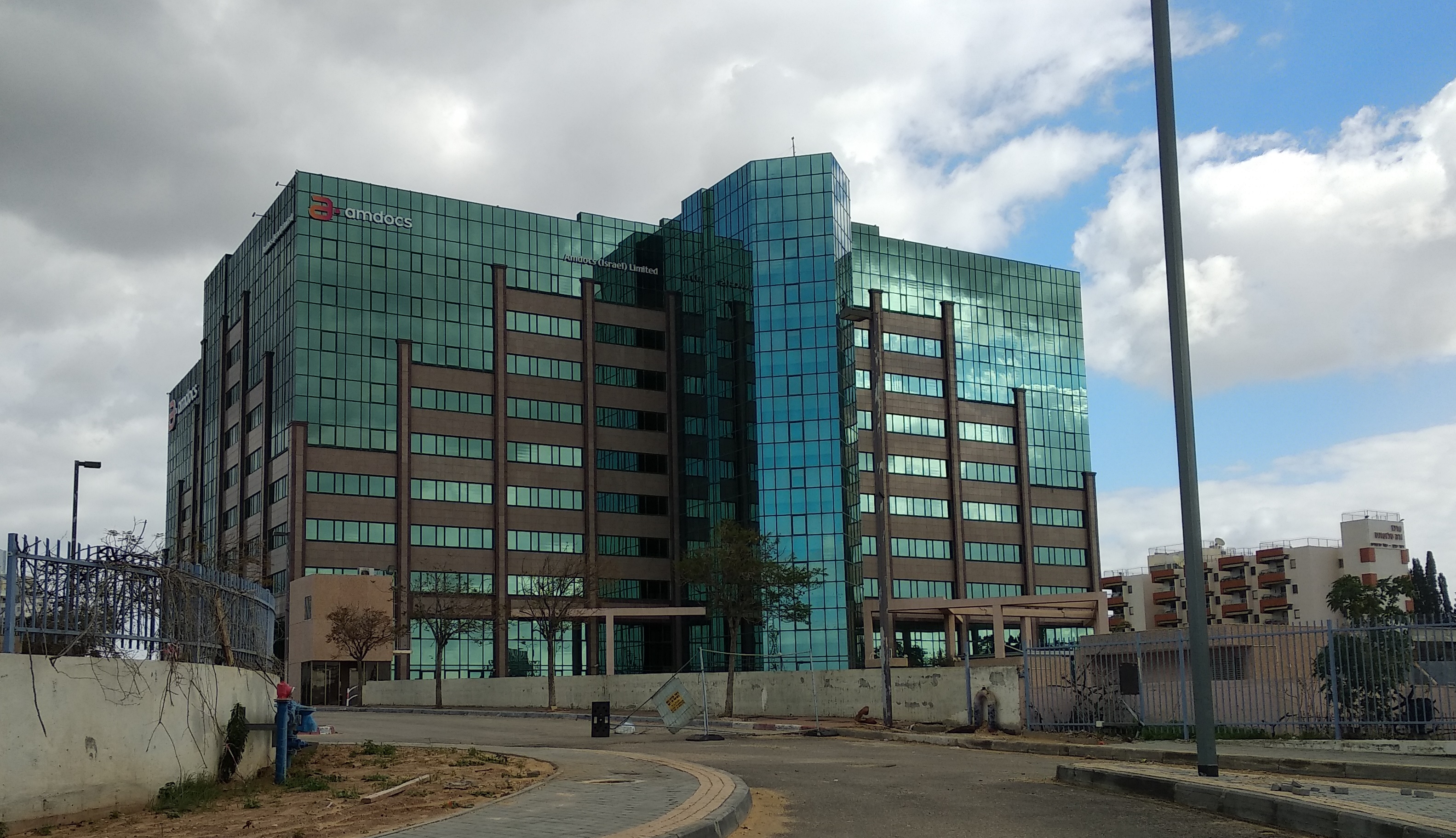
What it costs - and why there is no checkout button
Amdocs does not publish a neat per-seat price because a Tier-1 carrier is not buying seats. It is buying software, migration, integration, testing, cloud capacity, operating staff and a promise that the next billing run will still happen. Contracts are negotiated and frequently multi-year. The transformation price is rarely made public; the cost is measured as much in project risk and organizational attention as in license fees.
The company’s own spending makes the strategic direction clearer. Amdocs disclosed about $217 million in cash for two acquisitions completed in the first half of fiscal 2026, with most of it going to Matrixx. That bought a modern, real-time charging product and customer relationships across large operators. On the customer side, the return can be concrete: one documented BSS move to AWS removed the on-premises footprint, saved millions in capital expense and cut operating expense by 10 percent over five years.
The service contract is the product’s long shadow
Fiscal 2025: $2.996B of $4.533B revenue came from managed services
This is the business-model tell. Amdocs is not merely shipping code and hoping for renewals. It embeds people and process around systems that customers cannot casually turn off. The result is recurring revenue and a backlog that reached $4.26 billion in the third quarter of fiscal 2026. The tradeoff is concentration: large customers matter a great deal, and North America has historically supplied roughly two-thirds of revenue.
For the carrier, continuity buys time. A product manager can introduce a bundle without rebuilding charging from scratch. A care agent can see the order, service and invoice in one journey. A network team can automate fulfillment while keeping approval gates around risky actions. Executives can move selected workloads to AWS, Azure or Google Cloud without pretending every old system will disappear on the same date. This is where Amdocs sits in the market: deeper and more telecom-specific than a general CRM, broader than a specialist charging vendor, and more productized than a consulting firm that begins every engagement with an empty slide.
That position is not frictionless. Customization can make upgrades harder. A carrier that lets one supplier own catalog, care, charging and the operating runbook creates a formidable switching project for its future self. Competitors can offer a narrower cloud service with a faster start; internal teams can argue that the strategic core belongs in-house. Amdocs wins when the cost of coordination and failure outweighs the appeal of a lighter stack. It loses when complexity is being preserved out of habit.
What failed first? Travel, not the billing run
The best public example of Amdocs under pressure is refreshingly mundane. A Southeast Asian service provider was weeks from moving its full business-support environment to AWS when COVID-19 shut down travel. The implementation plan assumed people could be in the room. That assumption failed first.
The team changed its mind about how a critical go-live had to be delivered. It pivoted to remote execution, launched on schedule and moved the carrier’s BSS footprint out of its data centers. The lesson is not “remote work saves everything.” It is that the migration factory, runbooks, testing and decision rights need to exist before the emergency. Video calls were the transport layer, not the capability.
Now put an agent above it all
Amdocs launched the generative AI framework amAIz in 2023, working with NVIDIA technology on Microsoft Azure. By 2026, the framing had expanded into aOS, an “agentic operating system” for telecommunications. Underneath sits Cognitive Core, a layer of telecom-specific knowledge, agent libraries and controls. Above it are agents intended to work across business and network workflows.
The distinction matters. A generic model can summarize a call. A telco agent may need to understand why a charge was prorated, whether an offer conflicts with another promotion, which order failed, what network action is permitted and when a person must approve the next step. Amdocs believes the accumulated context in its data models and operating history gives it an advantage. The first serious commercial proof arrived in 2026 through engagements including T-Mobile and Liberty Latin America, while work with e& and NVIDIA won a GSMA award for agentic customer care.
There is also a reason to keep the confetti in the cupboard. Carriers cannot let an enthusiastic agent improvise a tax rule or disconnect a network element. aOS will succeed where actions are bounded, data is clean enough, outcomes can be measured and humans retain escalation authority. It will struggle where the underlying catalog is contradictory, ownership is fuzzy or “AI transformation” is being used to avoid basic systems cleanup.
Industrial complexity
- Millions of subscribers
- Multiple legacy stacks
- High billing and uptime risk
- Need for ongoing operations
Clean-sheet simplicity
- Small customer base
- Few products and integrations
- Strong in-house platform team
- Need for instant self-service pricing
The part worth copying
A founder cannot copy Amdocs’ customer list or four decades of telecom archaeology. The operating pattern, however, travels well. Choose a workflow that matters after the demo. Learn the exceptions until they become product. Make implementation repeatable. Stay accountable for the outcome. Then modernize in layers instead of demanding a heroic rip-and-replace.
- Start near the money. Billing, ordering and revenue assurance earn budget because errors are visible and costly.
- Turn service work into product knowledge. Every migration teaches which edges should be automated next.
- Sell continuity, not novelty. The buyer values a safer Tuesday morning more than a louder launch day.
- Let the new layer coexist. aOS sits above existing systems because carriers replace cores slowly and selectively.
- Know when to walk away. A narrow SaaS operator may need a smaller tool, not an industrial transformation partner.
Amdocs’ fiscal 2025 headline revenue fell 9.4 percent, largely because it deliberately ended low-margin, non-core activities representing about $600 million of the prior comparison base. On a pro forma constant-currency basis, continuing revenue grew. That decision is the quieter version of its AI bet: remove work that adds scale without enough value, then put more capital behind cloud, charging and domain-specific automation.
The company’s future will not be decided by whether aOS can produce a clever answer onstage. It will be decided at 2 a.m., when an agent spots a broken order, understands the customer promise, proposes the right network action and knows when not to touch anything. That is less cinematic than general intelligence. It is also exactly the sort of boring machinery on which Amdocs built the business.