A teddy bear is an unlikely starting point for a $955 million software deal. It has no procurement department, cannot approve a subscription and is famously indifferent to quarterly targets. Yet the idea of a bear that could hold a conversation helped send Philipp Heltewig towards the business he would spend the next nine years building. The stuffing was eventually dispensable. The conversation engine was where the company began.
In 2016, Heltewig co-founded Cognigy in Düsseldorf with Sascha Poggemann and Benjamin Mayr. In September 2025, NiCE completed its acquisition of the company. Heltewig stayed, becoming NiCE's Chief AI Officer and General Manager of NiCE Cognigy. Between those dates lies a story about a familiar entrepreneurial difficulty: finding a paying use for something you would happily spend Sunday morning making.
Heltewig had already built a substantial career in enterprise software. His attraction to voice AI was personal, too. He liked science fiction and the prospect of speaking to a computer as naturally as one speaks to another person. The computer on Star Trek offered a rather more appealing destination than another decade of web content management. Business experience supplied the luggage.
First, you had to type the future yourself
His earliest computer belonged to his older brother. Heltewig inherited the Commodore 64 and began programming at nine, although he has questioned whether copying code from magazines deserved that grand description. You typed the lines, hoped you had copied them correctly and waited for a game to emerge. Entertainment required a little clerical devotion.
There is a useful distance between that childhood experience and the interface he later wanted to build. At one end, a child learns the machine's language, character by character. At the other, the machine is expected to understand the person's language. The ambition makes sense without requiring the childhood to have been a business plan. Few nine-year-olds are conducting market segmentation between games.
His education and working life took him beyond Germany. He studied business information systems at the University of Münster and Queensland University of Technology in Brisbane, and later completed Harvard Business School's High Potential Leadership Program. Australia became more than a stop on an academic itinerary. He worked at SAP Australia, built Sitecore's Australia and New Zealand operation, and eventually became an Australian citizen.
Today, the German-Australian description has substance behind it: an education in two countries, years spent selling and building software businesses, and a continuing connection to Australia's technology market. Düsseldorf is his base. His working frame of reference has long stretched further.
Australia taught him what a platform needs
By February 2008, Sitecore Australia was opening its doors. A local developer who had worked with Heltewig welcomed the appointment and the prospect of more support and technical resources. Eleven Australian partners were already in the picture. For a software platform, these relationships matter: the people who implement the product help determine whether the next customer gets something useful.
Two years later, Heltewig was describing an Australia and New Zealand customer base of more than 150 companies and partnerships with more than 45 digital agencies. Sitecore was adding a sales executive to expand the business. The figures give his early career a texture that a job title alone misses. He was learning to grow a business through customers, partners and people on the ground.
That experience preceded global sales leadership and the CIO role at Sitecore. When he moved into conversational AI, he brought the habits of someone who had already worked with enterprise buyers. A platform needed people who could explain it, implement it and support it. The software might travel by download; the business still travelled through relationships.
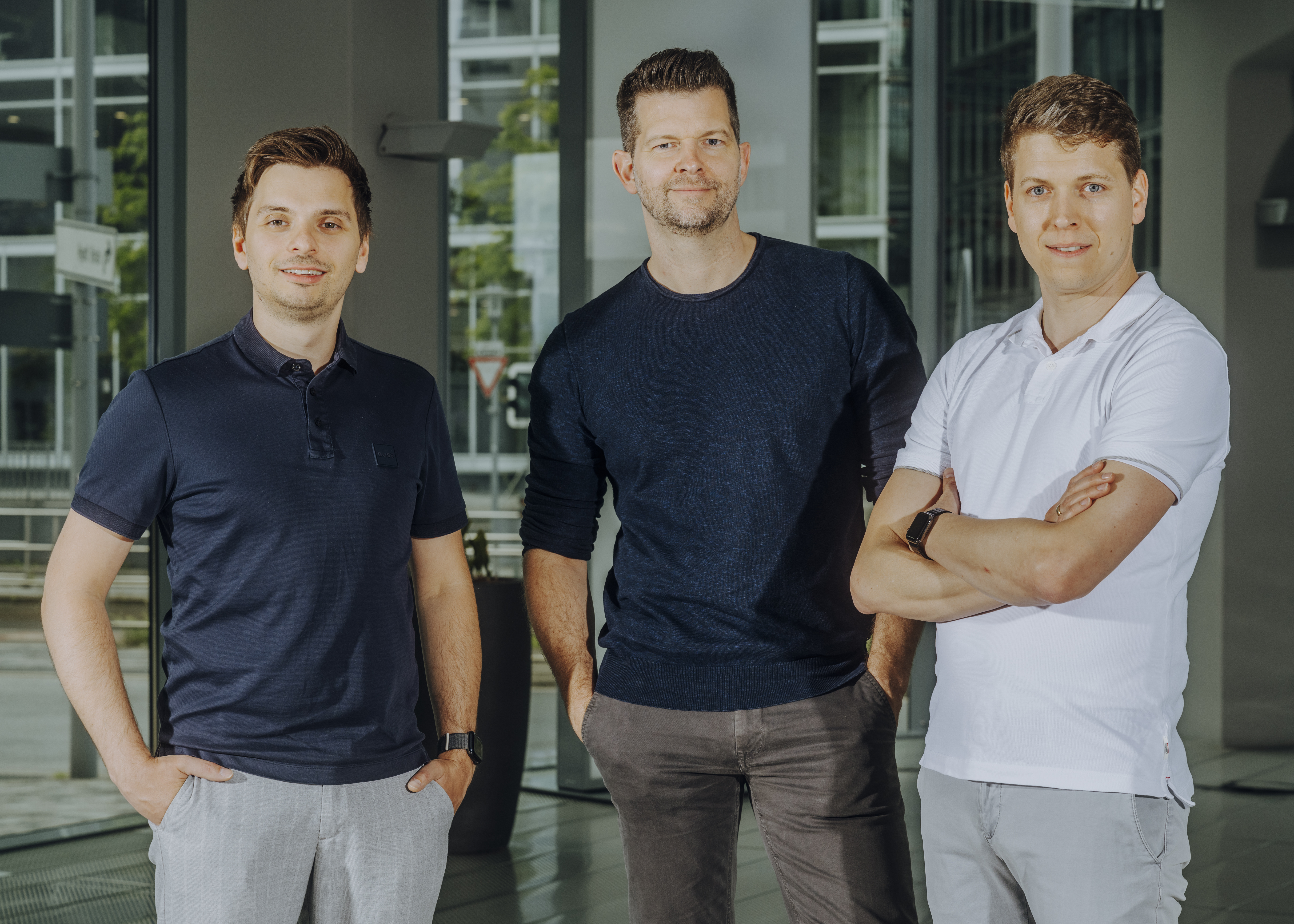
The bear lost its job. The software kept working.
The talking toy survives in Cognigy's history because it makes the change of direction so easy to grasp. Heltewig and Poggemann originally wanted to develop a speaking teddy bear. Their eventual business provided software that could answer questions in text or voice. A character had given way to a capability.
The shift was already visible in October 2016. In their early accelerator interview, the founders described moving from a product-centred concept towards a platform for voice integration. Their immediate ambitions were wonderfully concrete: establish the company and hire programmers. They also wished they had spent less time on presentations and more time working on the product.
The little details are better than retrospective grandeur. A productive day began with coffee and a brief conversation with the team. Headphones were essential in the shared workspace. Even a company devoted to getting computers to talk required a reliable way to stop hearing everyone else.
By November 2019, Cognigy had raised $6 million in its second financing round and had locations in the United States and Australia. The founders were discussing how chatbots could help employees as well as customers. Ordering copier paper might be less cinematic than asking a starship computer a question, but it has the advantage of being something an office actually needs done.
“I want to bring about that sci fi future.”
Philipp Heltewig, 2021 podcast interview
The money followed a more useful conversation
In June 2021, Cognigy announced a $44 million Series B led by Insight Partners. Its customer list included Lufthansa and Bosch. Teddie Wardi joined the board. The funding was intended to expand customer growth, partnerships and platform capabilities. For Heltewig, the business was becoming a larger version of the enterprise problem he already understood: make the software useful, then make it available in more places.
DTCP added $15 million in February 2022, bringing the Series B to $59 million. By June 2024, Eurazeo Growth was leading a $100 million Series C, with existing investors participating. Cognigy said more than 1,000 brands relied on its platform. These are dated milestones, rather than a promise about what happened next. They show how far the company had travelled from the shared workspace.
Selected rounds. The 2022 figure includes the original Series B; it is not a separate $59m raise.
NiCE announced its agreement to acquire Cognigy on July 28, 2025, at an approximate transaction value of $955 million. The acquisition closed on September 8. The distinction between a financing round and a sale matters here. The first funds a company's next stage; the second changes its ownership. Heltewig's next stage would take place inside NiCE.
After the sale, another job to do
At closing, NiCE described a distribution network of more than 25,000 existing customers. Cognigy would remain available as a standalone offering as well as through the combined platform. The acquisition offered a larger route to market for software Heltewig had helped build. His title changed; his working subject remained AI and customer experience.
Back in Sydney in 2026, he recounted something NiCE CEO Scott Russell had told him during the acquisition process: the intention was for NiCE to become more like Cognigy. It is a revealing aspiration for an acquired founder. Bringing the product into a larger company was one task. Retaining the smaller company's pace and approach was another.
Düsseldorf also marked his achievement. He was named its 2025 Düsseldorfer des Jahres in the business category. The recognition placed him among people whose work had shaped the city. For a career with years in Australia and international customers, it supplied a distinctly local punctuation mark.
The computer has to know its limits
The science-fiction enthusiasm has always had a practical counterweight. In a 2021 conversation, Heltewig emphasised that helping customers across text and voice meant handling both the interaction and the systems behind it. A pleasant exchange had to connect to the machinery of the enterprise. That was the unglamorous work inside the appealing idea.
By June 2026, his argument centred on trust. He described hybrid agents that combine prescribed processes with AI reasoning. He wanted companies to define what information an agent could access, how outputs would be checked and where human judgment belonged. These are operational questions with consequences for the person at the other end of the conversation.
In September, he sharpened the point around the tools and permissions surrounding a model. Looking up a customer, updating a case and sending a confirmation involve different powers. Each needs boundaries. His argument was that permissions should be enforced independently of the model, with tool use available for audit. The fluent voice is only the part the customer hears.
One Philipp was already speaking elsewhere
At NiCE World, Heltewig's talking-computer ambition acquired an unusually personal form. Ailias created an interactive digital human in his likeness. While the real executive gave presentations and met customers, delegates could ask the digital version questions about AI and customer experience in multiple languages. The science-fiction fan had become part of the demonstration.
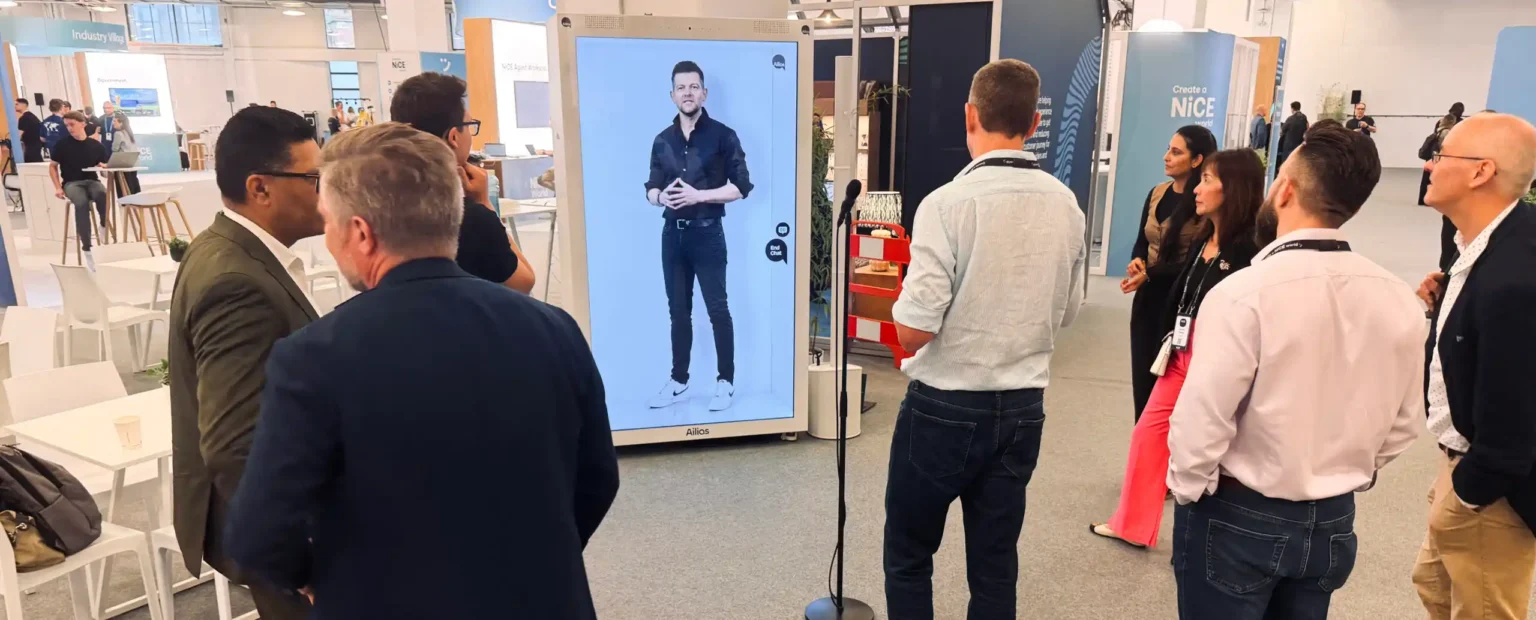
It is an amusing image, and a neatly bounded example. The digital double had prepared knowledge and a particular purpose. It could extend the conversation while its human counterpart was busy elsewhere. Even an executive devoted to automation can only attend one meeting at a time.
His newer concern is what happens when customers acquire assistants of their own. In October 2026, he argued that agents could pursue refunds or comparisons people previously abandoned because the effort was too great. His prediction is that service demand will grow as that friction falls. Businesses would then need to handle conversations initiated by people and by their software representatives.
The teddy bear offered one imagined conversation. Heltewig's present work concerns the systems that let many such conversations become useful actions. The setting has changed from a toy to a contact centre, and occasionally to a display bearing his own face. The question that keeps the story moving is pleasingly ordinary: can the computer actually help?