There is a wonderfully unphotogenic moment in every enterprise AI project. The chatbot has answered the canned question. The conference-room audience has nodded. Then somebody from security asks which customer records it can see, somebody from finance asks what each answer costs, and somebody from operations asks who gets paged when it lies at 2 a.m. Cavallo Technologies has planted its flag in that moment.
The privately held Canadian consultancy, founded in 2018 and headquartered in Burnaby, does not sell a general-purpose chatbot or a magical new model. It sells implementation: modern data platforms, AI agents, analytics, cloud applications, cybersecurity systems and financial-crime controls. The firm says it has more than 60 specialists spread across Canada, offices in Toronto, Montreal and Calgary, and more than 90 certifications across Databricks, Azure and AWS. Its sharpest positioning is narrower still. Cavallo calls itself a Databricks-exclusive systems integrator, built to move projects out of proof-of-concept purgatory and into regulated production.

What the company actually does
Cavallo enters when an organization has valuable data trapped in old systems, a promising AI use case that cannot clear governance, or a security and compliance workload that has outgrown manual handling. Its engineers migrate SAS, Teradata and Netezza estates to Databricks; build streaming pipelines and analytics; develop retrieval and natural-language query systems; automate anti-money-laundering reviews; and design security data products that ingest logs from Microsoft Defender, Azure Monitor and Entra.
The customer list is shaped by consequence. Vantage Bank Texas publicly described using Cavallo and Databricks to centralize disparate information and develop an AI loan-policy assistant. Coastal Community Bank selected the consultancy during its banking-as-a-service expansion to help build a modern data platform for faster, safer sharing. Cavallo also advertises work for insurers, government, healthcare, education, manufacturing, energy, transportation and logistics - industries where a plausible answer is much less useful than a traceable one.
This is a services business with a product habit. Public pricing is not listed, and the disclosed customer stories do not attach a contract value. Instead, Cavallo has built a shelf of accelerators - starter systems for SAS migration, data contracts, entity resolution, SIEM/SOAR, customer risk, wealth management, digital twins and AML investigations. They are not self-serve software subscriptions. They are a way to begin a bespoke engagement several floors above the lobby.
The commercial logic is straightforward. A reusable accelerator reduces the expensive discovery and scaffolding common to every project; Cavallo then earns fees for architecture, implementation, integration, training and the trip through production. The client still pays Databricks and cloud operating costs, while telemetry shows how usage grows. That structure rewards Cavallo for depth on one platform and gives a buyer something tangible to inspect before commissioning custom work. It also explains why the demo catalog is so broad: each video is part engineering artifact, part sales conversation and part proof that the team has already encountered a recognizable version of the problem.
The eight-week proof
The clearest view of Cavallo's method comes from a 2026 maritime project. A large containership operator had operational data in Databricks, but ordinary employees still waited on analysts for routine answers. Manuals, procedures, reports and market material lived in separate documents and inboxes. Cavallo built a supervisor agent that routed questions to specialist assistants: some retrieved documents, others translated plain English into database queries, and another made charts. Microsoft Teams became the front door.

The sequence matters. Cavallo reports a proof of concept in the first week, a v1 with deployment automation, Teams integration and per-user authentication by week four, then more data domains, feedback storage and management dashboards by week eight. More than 200 employees gained self-service access. Everyday queries that had taken days came back in seconds, and the company says the diversion of routine requests saved thousands of hours annually.
Pick one queue
Choose a recurring, bounded question that currently waits on a specialist.
Write the exam
Build expected answers before tuning the agent, not after users complain.
Keep permissions
Query as the signed-in user so the agent inherits existing access rules.
Instrument it
Log quality, latency, feedback and model cost through every release.
The clever part was not a prompt. The team assembled more than 200 business questions with expected answers and reran that test set whenever a model, tool or instruction changed. Each employee's existing permissions followed the query through Microsoft Entra ID. Dev, test and production stayed separate. Model calls and billing landed in governed tables. Feedback sat next to usage data. Cavallo made the agent take an exam, wear a badge and submit an expense report.
What failed first
At the Databricks Data + AI Summit Hackathon for Good in 2026, the brief offered four attractive applications for a dataset of 10,000 Indian healthcare facilities: a trust desk, a medical-desert planner, a referral copilot or a data-readiness tool. Cavallo's first instinct was to let an AI model judge whether each facility's claims were credible. Then the team inspected the records.
The foundation was cracked. Some rows conflated several hospitals, mixing locations and capabilities from unrelated facilities. A confident referral interface built on top would have been a faster route to a bad decision. That discovery changed the team's mind. It chose the less glamorous data-readiness track and scored roughly 118,000 facility-specialty claims using evidence, source authority, corroboration, location consistency and recency. The model extracted evidence from messy text; transparent rules made the final score. Failed rows went to review instead of killing the entire pipeline. The system won the 36-hour challenge.
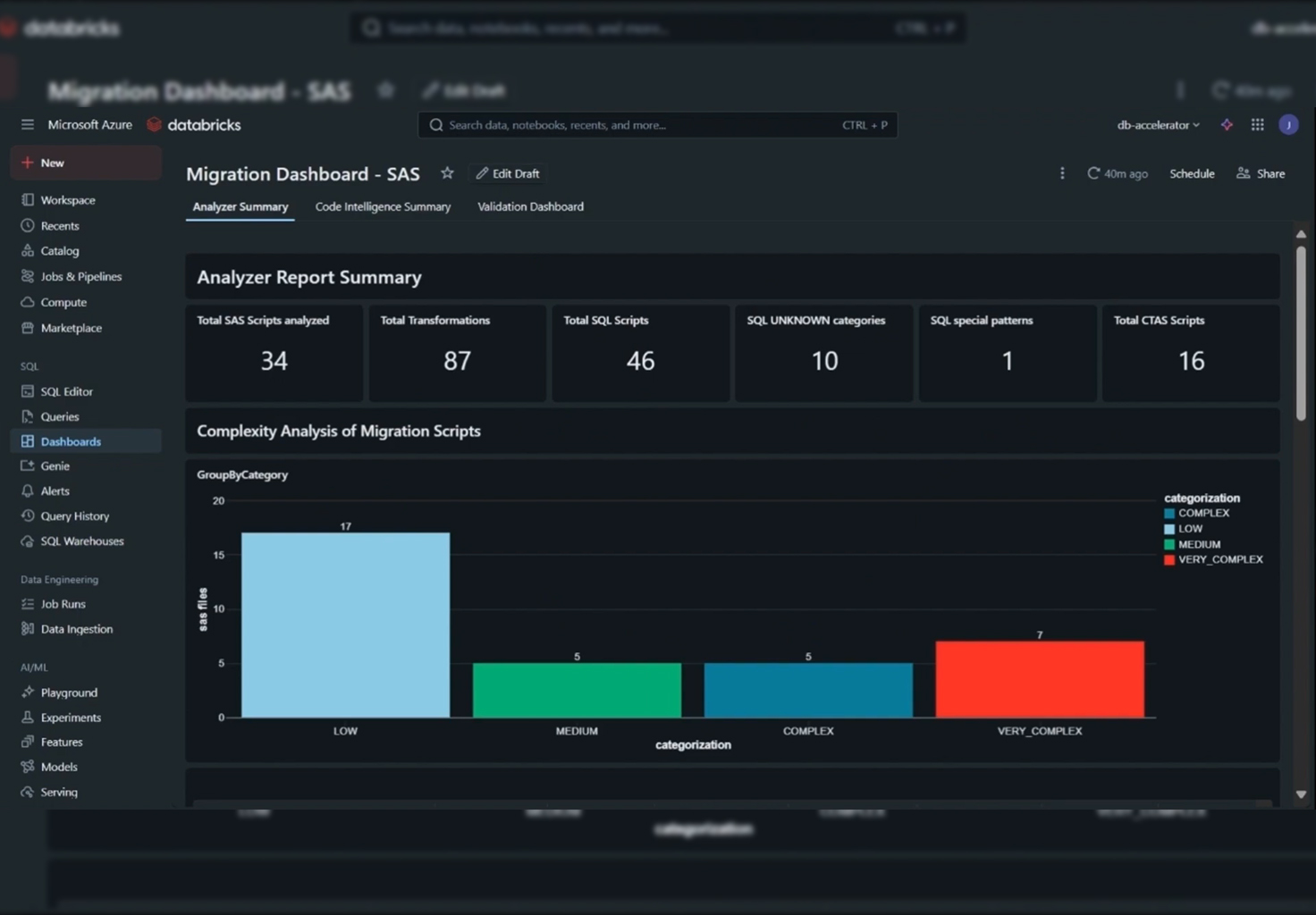
That episode explains Cavallo better than the certification count. Its differentiator is an instinct to relocate the product around the failure. If source identity is unreliable, build a review queue. If users cannot wait for analysts, put governed queries in Teams. If SAS migration looks like one giant rewrite, inventory the estate, score complexity, convert in batches and reconcile outputs before switching anything off.
The bank test
Banking gives that discipline a measurable edge. Vantage Bank's lenders had dense policy material and manual review steps. The joint team reportedly produced a functional AI assistant on the first day, then spent the following months making it operational: citations for compliance, automatic policy updates, leadership dashboards and compute that could scale down after hours. Twelve months later, public case material reported 94 percent accuracy on complex lending questions and an 87 percent productivity improvement.
Those numbers should not be mistaken for a universal benchmark. They belong to a bounded corpus, a particular workflow and a long period of iteration. The lesson is in the constraint. Cavallo did not ask an agent to understand all of banking. It asked one to answer lending-policy questions, show where the answer came from, update when policies changed and expose its performance to the people responsible for the bank.
Where the playbook works - and where it does not
Cavallo sits between giant consulting firms and an internal platform team. Accenture, Deloitte, Capgemini and Slalom can offer wider transformation programs and more geographic reach. A capable in-house group can own more context and avoid consultant handoffs. Cavallo's counteroffer is concentration: Canada-based delivery, a dense cluster of Databricks credentials, reusable starting points and recent production examples in financial services, security and operational AI.
It fits when
The organization already has a serious Databricks commitment, a named workflow owner, data worth governing and a narrow problem whose improvement can be measured.
It breaks when
The buyer needs platform neutrality, treats cleanup as somebody else's job, cannot define correct answers or wants an agent without funding the operating system around it.
There is also platform concentration risk. Going deep on Databricks lets a 60-person team accumulate expertise, reuse deployment patterns and move quickly. It also means the approach is less compelling for an enterprise committed to Snowflake, a custom open-source stack or a multi-platform procurement strategy. Accelerators do not erase messy dependencies, missing owners or contradictory policies. They shorten the known road; they do not pave land that has not been surveyed.
The same concentration shapes the culture. Cavallo's updates read like a rolling certification scoreboard, but the more revealing rituals are internal hackathons and bilingual user-group sessions. Engineers are expected to learn in public, teach customers and convert platform features into working patterns. That is useful in a market where documentation moves faster than enterprise procurement. It can also become brittle if badges substitute for domain judgment. The strongest public projects pair engineers with lending, compliance, security or operational experts who can define what a correct result means.
The part worth copying is almost comically ordinary. Pick a painful queue. Establish the correct answers. Start with the people who already own the work. Preserve their permissions. Release in small stages. Track quality and cost together. Put the interface in a tool employees already open. Give uncertain cases somewhere to go. Only then add more agents.
Cavallo's pegasus logo suggests flight. Its actual business is closer to air-traffic control: routes, permissions, handoffs, instrumentation and a healthy suspicion of anything that looks impressive before it can land. In enterprise AI, that may be the more valuable animal.