autonomous-driving
(15)
Argo AI taught cars to drive. Then its backers changed direction.
Ford and Volkswagen backed a machine that could navigate city streets. Argo’s harder assignment was reaching a profitable business before its investors ran out of patience.
Innoviz and the long wait to look away
A laser sensor helped BMW let drivers look away from the road. For Innoviz, the harder task is turning years of engineering into a business that can afford the wait.
Wayve Raised $2.5 Billion to Teach One AI Driver Every Road
The London company skipped hand-coded rules and high-definition maps for a driving model that learns from experience. Its harder test begins now: turning an elegant research bet into ordinary cars and rides people can actually buy.
Phantom AI Stopped Chasing the Robotaxi - and Sold the Safety Layer Every Truck Was Missing
A bruising highway demo exposed the gap between autonomy theater and dependable safety. Phantom AI spent the next eight years making the less glamorous bet - affordable software that can see a pedestrian, fuse a radar return and help an ordinary vehicle stop.
Tesla Wants to Sell You a Car - Then Replace the Grid Around It
The company that made the electric car feel inevitable is now trying to turn vehicles, batteries, chargers and software into one enormous machine. The cars still pay most of the bills, but Tesla's next argument is about infrastructure.
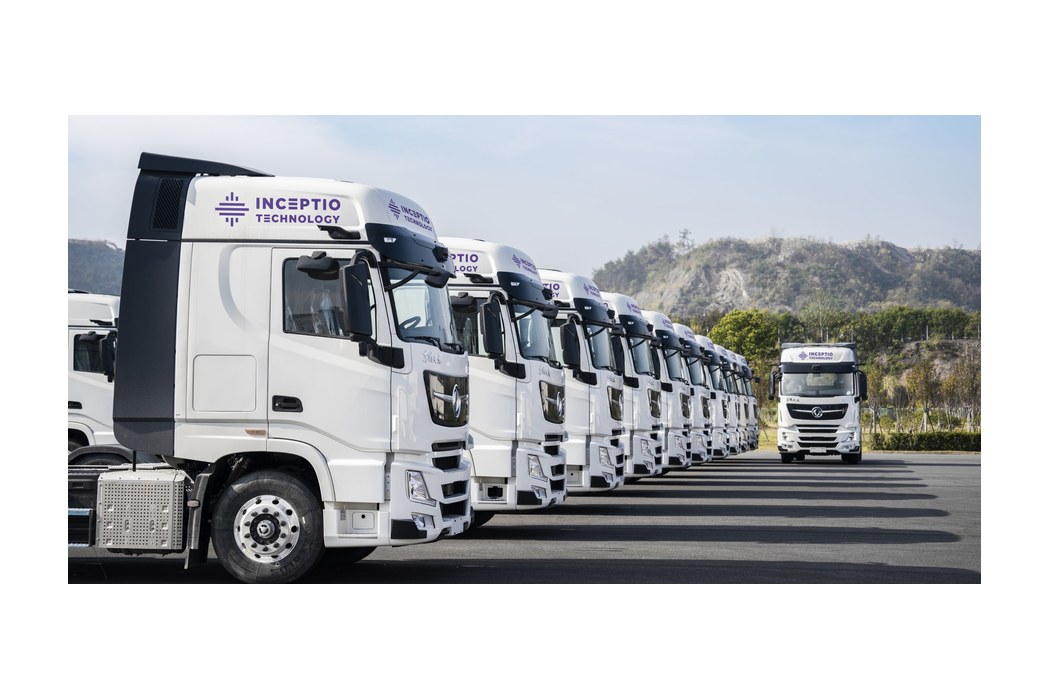
Inceptio Technology
Inceptio Technology is a developer of full-stack autonomous driving systems for heavy-duty trucks, headquartered in Shanghai with an R&D center in Fremont/Santa Clara, California. Founded in 2018 by Julian Ma, it works with truck OEMs to mass-produce Level 3 highway-capable trucks and operates one of the largest real-world autonomous freight fleets in the world. Its proprietary XUANYUAN and T-NOA systems power more than 4,000 trucks that have logged over 400 million kilometers of commercial operation for customers including JD Logistics, Nestle, Budweiser and Deppon Express, as it charts a data-driven roadmap toward scalable Level 4 autonomy.
Ettifos
Ettifos is a South Korea-based, 5G-focused V2X (vehicle-to-everything) company building the communication layer that lets cars, roadside infrastructure, and pedestrians exchange safety and traffic data in real time. Its flagship SIRIUS platform uses a software-defined modem that can switch between LTE-V2X and 5G-V2X with a software update, and its plug-and-play V2X-AIR onboard unit brings standards-compliant connectivity to both new and existing vehicles. Founded in 2018, the company works with partners like Keysight, Autotalks, Audi, and Kapsch TrafficCom, and closed a Series B round in 2025 to scale a C-V2X hardware accelerator chip and expand into U.S. and European markets.
Nullmax
Nullmax is an AI company building vision-only, map-free autonomous driving software for mass-produced cars. Founded in Silicon Valley in 2016 by former Tesla Autopilot engineer Lei Xu and headquartered in Shanghai, it develops MaxDrive, a chip- and sensor-agnostic driving stack, and Nullmax Intelligence (NI), an end-to-end, multimodal system that reads the road with cameras instead of lidar or high-definition maps. Its technology ships in production vehicles from major Chinese automakers.
Stardust AI
Stardust AI is a San Francisco-founded, data-centric AI company that helps enterprises turn raw, messy, multimodal data into the high-quality datasets that machine-learning models actually need. Through its Rosetta auto-labeling platform, its MorningStar data engine and its COSMO dataset offerings, Stardust annotates and manages 2D/3D/4D data spanning images, video, point clouds, audio and text - with heavy expertise in autonomous driving and large language models. The company works with names like SAIC Motor, BYD, Geely, Bosch, ZF, Xiaomi and JD.com, and pitches a simple thesis for the AI era: whoever controls the data controls the model.
Superb AI
Superb AI is a computer vision AI company that builds an end-to-end MLOps and DataOps platform, letting teams label, curate, train, and deploy vision models on images, video, and 3D LiDAR data. Founded in 2018 and a Y Combinator alum, it uses AI-assisted automation to shrink the slow, manual work of preparing training data, and serves enterprise customers across autonomous driving, manufacturing, security, and public sector from offices in San Mateo and Seoul.
Deepen AI
Deepen AI is a Silicon Valley company building the data lifecycle infrastructure for autonomous systems and physical AI. Its platform combines multi-sensor data annotation, sensor calibration (LiDAR, camera, radar, IMU), and validation tools that carmakers, robotics firms, and AV developers use to turn raw sensor data into reliable training data. Founded in 2017, Deepen also co-created Safety Pool, a global scenario-sharing initiative launched with the World Economic Forum and WMG at the University of Warwick.
AXONNE
AXONNE is a fabless Silicon Valley semiconductor company building high-speed Automotive Ethernet connectivity for the software-defined, AI-defined vehicle. Founded by ex-Marvell engineering leaders, it designs PHY transceivers and bridge chips - led by its Cyton PHY implementing IEEE 802.3ch Multi-Gigabit Automotive Ethernet - that move 1Gbps to 10Gbps over a single twisted pair or coax, wiring cameras, radar and lidar into the compute clusters that drive ADAS and autonomous systems.
DeepRoute.ai
DeepRoute.ai is a Shenzhen-headquartered autonomous-driving company building full-stack self-driving software, from Level-4 robotaxi systems to mass-market driver-assistance for production cars. Its DeepRoute IO 2.0 platform - powered by a 40-billion-parameter Vision-Language-Action (VLA) foundation model running on NVIDIA DRIVE AGX Thor - is being shipped by Great Wall Motor and a handful of other OEMs.
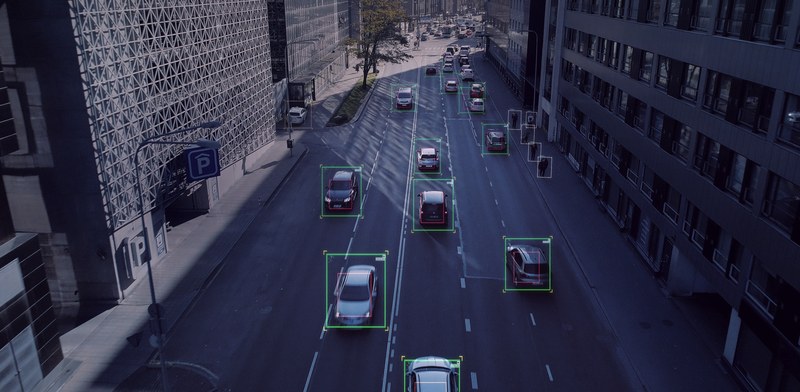
STRADVISION
STRADVISION is a Korean automotive AI company building SVNet, a deep-learning vision perception software that lets cars see and understand the road in real time. Its lightweight networks run on low-power automotive chips and ship in production vehicles from more than a dozen global automakers.
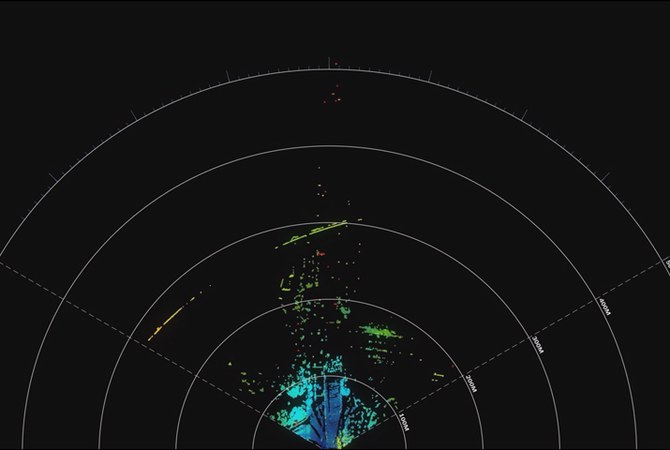
Seyond
Seyond (formerly Innovusion) is a Sunnyvale-based maker of image-grade LiDAR sensors and perception software for autonomous vehicles, ADAS, smart infrastructure, robotics and industrial applications. Best known as the long-range LiDAR supplier behind NIO's ET7, ET5 and ES7, the company has shipped more than 250,000 Falcon units and is pushing solid-state designs into mass production.