DISPATCH - SEOUL, MAY 2026
Somewhere in Pohang, an engineer is squinting at a histogram of false positives at dusk. The car is parked. The model is training. The road, eventually, will be safer because of an argument about how many milliwatts a stop sign deserves.
Every minute, more than two cars roll off an assembly line somewhere on earth with STRADVISION software inside them. The company is not famous. Its founder is not on a podcast circuit. Its product runs quietly behind your rearview camera, in a chip that costs less than a steak dinner, watching the road in a way you would never trust a human intern to. This is the strange shape of victory in automotive AI - you win by being invisible.
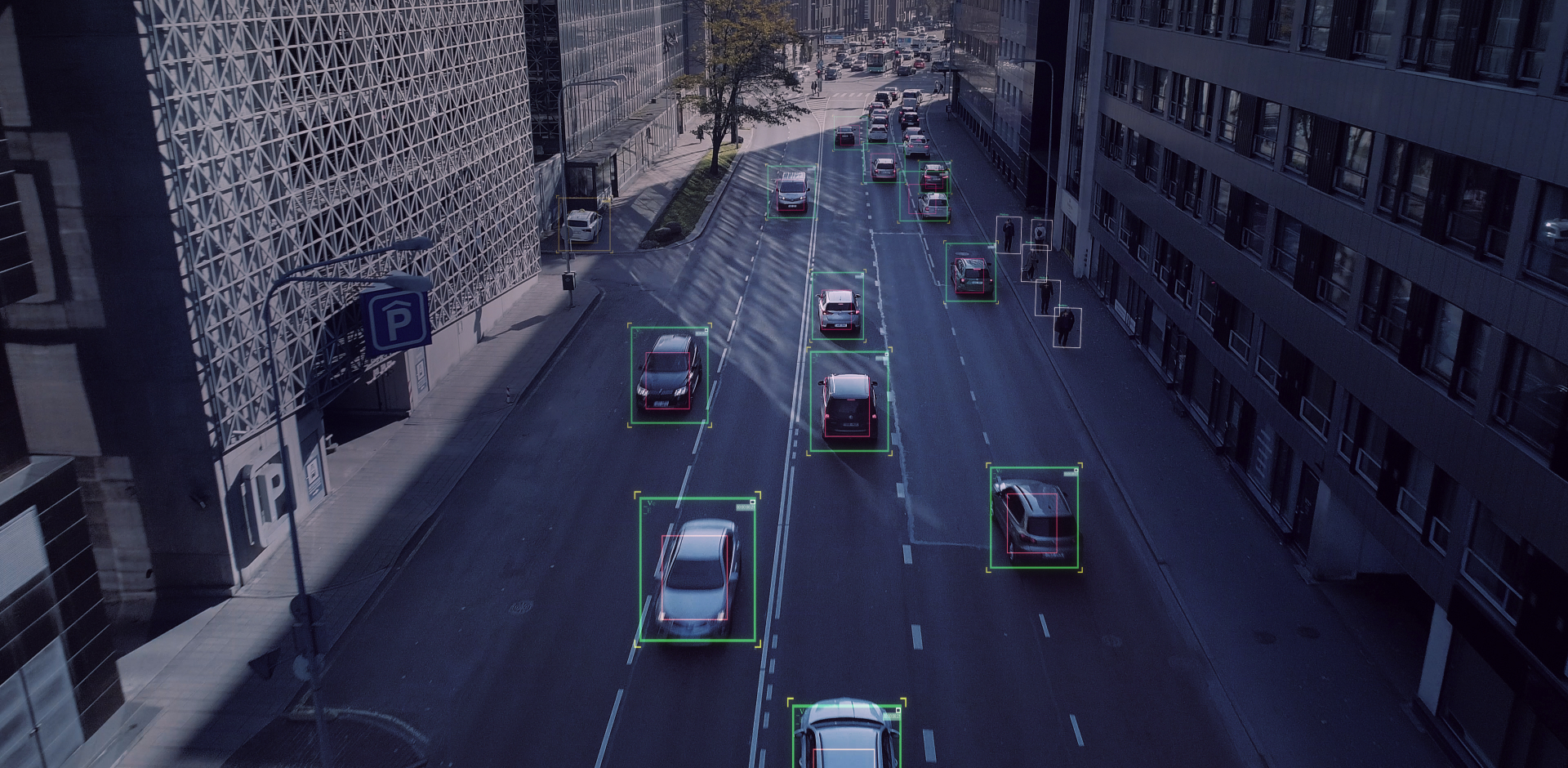
STRADVISION is a 350-person software company headquartered in Seoul, with outposts in San Jose, Detroit, Tokyo, Shanghai and Dusseldorf. Which is a tidy way of saying they have an office in every city with an OEM design center and a coffee shop. The flagship product, SVNet, is a deep-learning perception stack - the bit of software that turns a forward-facing camera into something that can identify a pedestrian, read a speed sign at dusk, or tell the difference between a plastic bag and a child. As of the first half of 2025, the company says SVNet has been deployed across more than 50 vehicle models from 13 automakers, surpassing four million cumulative installations.
The ProblemCars Were Blind, Then Compute Got Cheap
In 2014, when Bongjin Jun and his co-founders started the company, the autonomous-vehicle conversation was a circus of Silicon Valley promises. Robotaxis next year. Steering wheels obsolete by Tuesday. The STRADVISION bet was almost rude in its modesty: forget the robotaxi, fix the regular car. Take the cameras that already shipped in millions of vehicles, and pair them with neural networks small enough to run on the cheap automotive silicon that automakers were actually willing to buy.
The problem they saw was simple, and a decade later it still is. Vision perception is a data problem and a hardware problem at the same time. The networks that win on a server with a 700-watt GPU are useless to a Tier-1 supplier trying to certify a part that draws less than 10 watts inside a car that has to last 15 years and not crash. There was a gap. STRADVISION decided the gap was the business.
The BetBe Hardware-Agnostic, Be Patient, Be Certified
Most AI companies sell software the way a chef sells dinner - cooked once, eaten once. STRADVISION sells software the way a violin maker sells violins. Every project is a multi-year program with an automaker. Every release goes through ASPICE process audits and ISO 26262 functional safety reviews. The team has ISO 27001 on the wall. There is a quiet pride here about being the AI company that knows what an FMEA is.
The strategic trick is portability. SVNet runs on NVIDIA, Renesas, Texas Instruments, Qualcomm, AMD, and Horizon Robotics chips - because no automaker wants to bet a platform on a single silicon vendor, and no Tier-1 wants to rewrite the perception layer when the BOM changes. The company calls this hardware-agnostic. Their competitors call it annoying.
Cumulative deployments shipped in production vehicles by H1 2025.
Across 13 global automakers since commercialization in 2019.
Spread across six countries, three continents, and one obsession.
From investors including Aptiv, ZF Friedrichshafen and Mirae Asset.
The ProductSVNet, and the Art of Knowing What to Cut
SVNet is not one thing. It is a family. FrontVision handles single front-camera ADAS - the workhorse for Level 2 and Level 2+ programs. MultiVision Gen 2 wraps the car in a surround perception field. There is a HD-mapless navigation pipeline for OEMs who do not want to depend on map data that goes stale every quarter. There is meta-learning, knowledge distillation, hard example mining - the unglamorous techniques that let a small network keep up with a big one because somebody, somewhere, did the work to compress it without breaking it.
The interesting craft is not in the model architecture. It is in the discipline. The team will tell you, with the controlled enthusiasm of people who have read too many automotive specs, that the right perception model is the one you can ship. Not the one with the best benchmark. The one that survives temperature, vibration, dust, age, and a tier-1 integration engineer in Stuttgart who needs the API to not change next quarter.
The Long RoadSTRADVISION, In Order
- 2014Founded in Korea by Bongjin Jun and team, betting on production ADAS over robotaxi hype.
- 2019SVNet commercialized; first vehicle programs begin shipping with the perception stack.
- 2021Gold Award at AutoSens for Best-in-Class Software for Perception Systems.
- 2022Closes $88M Series C round led by Aptiv and ZF Friedrichshafen.
- 2022Frost & Sullivan Global Technology Innovation Leadership Award.
- 2024Next-gen SVNet announced on Horizon Robotics Journey 3 SoC.
- 20254M+ cumulative installations; preliminary KOSDAQ application filed.
- 2026CES showcase of SVNet FrontVision on Renesas R-Car X5H; Seeing Machines partnership unveiled.
The ProofNumbers That Settle the Argument
A perception company can claim almost anything in a demo. The honest test is how many cars ship with the code, on how many platforms, with how many independent customers. STRADVISION is comfortable being measured on that.
SVNet by the Numbers
Scale is relative. The point is that none of these are theoretical - every install is a VIN somewhere.
The roster of chip partners reads like the casting list for a particularly nerdy heist movie. Renesas R-Car. NVIDIA TensorRT. Qualcomm. AMD. Texas Instruments. Horizon Robotics. Arm. The point is not that STRADVISION worked with each of these - the point is that the OEM does not have to care which one the program picked. The same perception stack lands on the chip the procurement team negotiated for.
The MissionSafer Cars, Quieter Software
Junhwan Kim, who now leads the company as CEO, talks about STRADVISION the way infrastructure people talk about water mains. The mission is not to dazzle. The mission is to be reliable enough that a regulator, a Tier-1 quality team, and a parent buckling a toddler into a car seat all reach the same shrugging confidence: the system sees what it needs to see.
The values fall out of the mission. Optimize for the cheapest plausible chip, because that is the chip a car will actually use. Comply with the toughest plausible safety standard, because someone will eventually audit you against it. Ship on schedule, because automakers do not move their launches to accommodate a research detour. Inside the company there is a clear understanding that AI in cars is not won by the cleverest team - it is won by the team that can do the cleverness on a deadline, repeatedly, for fifteen years.
The TomorrowWhy This Matters Past 2026
The next chapter is already drafted in the partnerships. The Arm collaboration on AI-defined vehicles points to a world where compute moves inside the vehicle's central brain rather than living in twenty scattered ECUs. The Seeing Machines partnership at CES 2026 connects exterior perception to driver monitoring - the inside and outside of the car learning to talk to each other. The Renesas R-Car X5H demo points to the next chip generation where everything STRADVISION has built has more headroom than it knows what to do with.
The KOSDAQ filing is the public-market punctuation mark on a private-market decade. It is also, if you read the company politely, an invitation - to OEMs in Europe and North America who have not yet placed an order, to investors who suddenly noticed that "AI in cars" stopped being a slide and started being a SKU. STRADVISION is closing the gap between AI as a marketing word and AI as a part number. The world's cars are getting safer at exactly the rate that gap closes.
CodaBack to the Histogram at Dusk
Return to that engineer in Pohang. The histogram is still on the screen. The false positives at dusk have moved a little to the left. Somewhere in San Jose, a manager will pull this build into the next vehicle program. Somewhere in Stuttgart or Detroit or Shanghai, a Tier-1 will integrate it into a control module. And then, in the most undramatic possible ending, a stop sign somewhere on a wet road in 2027 will be read correctly, and a car will brake when it should, and nothing will happen. That is the product. That is the win. Quiet, invisible, and counted in cars.