ai-underwriting
(44)
Entera’s real estate bet: sell the machinery
The founders learned to buy rental homes with data. Then they found a different business: helping other investors turn scattered houses into a repeatable operation.

Button Finance wants you to keep your mortgage. And borrow again.
A cheap first mortgage can be worth keeping. Button Finance builds its business around the borrowing that comes next, using digital underwriting to turn home equity into cash.

Mulberri wants the paperwork out of underwriting
The insurance software company began by helping small businesses buy cover. Now it is tackling the inbox, the spreadsheet and the quiet administrative chores that keep underwriters from underwriting.

The Loan That Learned to Read Three Countries
Efficient Capital Labs found a peculiar gap in startup finance: a software company can be global, while its lender still thinks one country at a time. Its answer is a fast, data-heavy loan built around recurring revenue - and a sharper question about when speed is actually worth paying for.

Scienaptic Wants Credit Unions to Stop Buying Scores - and Start Buying Decisions
A New York fintech is making a pointed bet: the useful output of lending AI is not another score, but an auditable answer. Its credit-union customers say that answer is helping them approve more borrowers without loosening the risk dial.
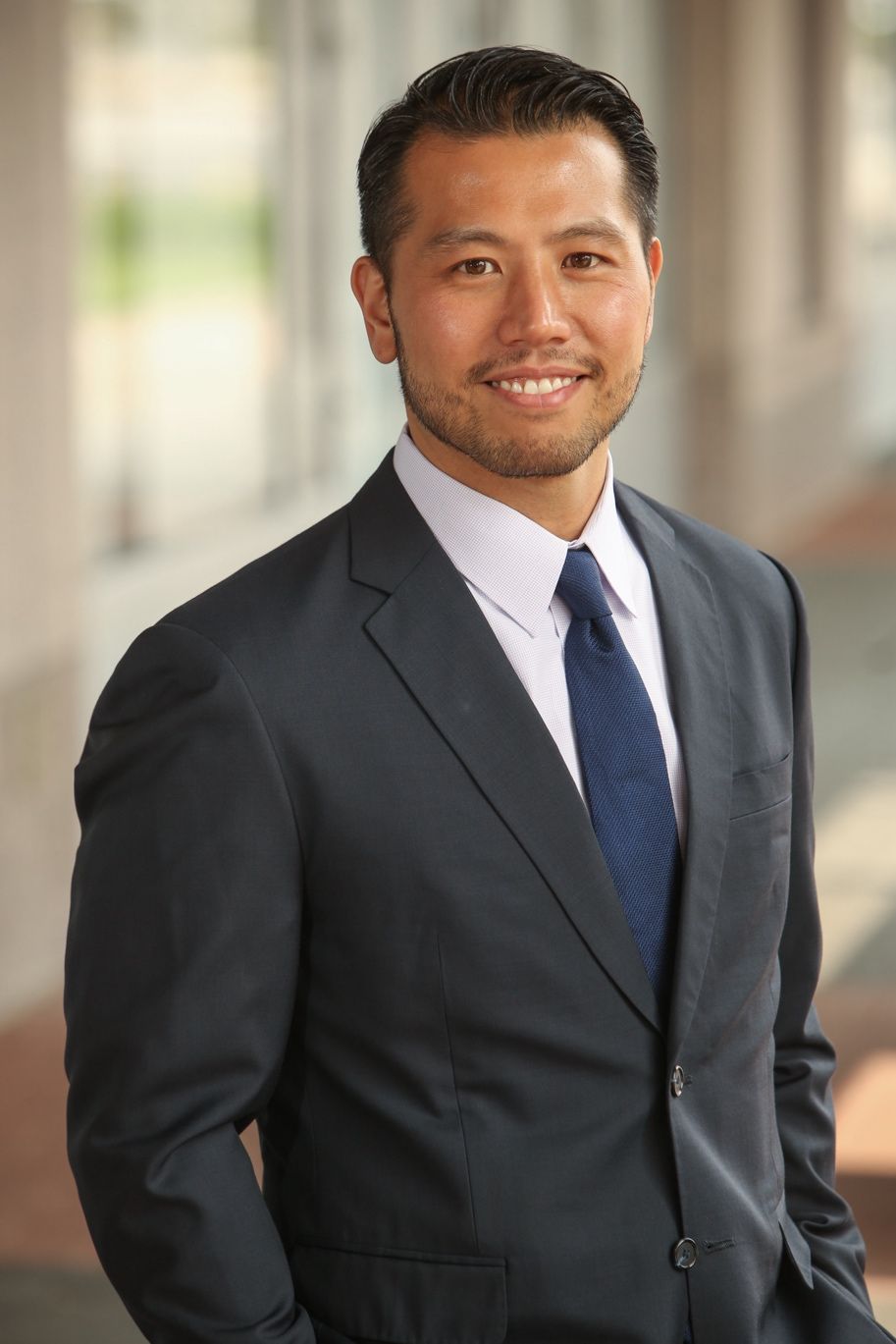
Jeffrey Chen Is Betting That Boring Discipline Can Fix Commercial Auto
After consulting, enterprise software, two exits and three CEO seats, Jeffrey Chen has chosen one of insurance's least forgiving problems - and a playbook built around saying no.

Rohit Arora Built a Lender for the Hours Banks Ignore
Nearly half of Biz2Credit's applicants arrive after business hours or on weekends. Rohit Arora built his career around that inconvenient fact - and the larger idea that a business deserves to be read in real time.

Shivani Siroya Built a Credit Bureau Out of Curiosity
Before Tala became a multinational lender, its founder spent years listening at kitchen tables, lending her own money and learning to code. The useful lesson is not about fintech. It is about getting close enough to a problem that the spreadsheet starts talking back.
Nesto Started as a Mortgage Website. Then It Bought the Plumbing Banks Need.
The Montreal fintech discovered that a clean interface could not fix a mortgage process it did not control. So it became the lender, the servicer and the software supplier - then bought a 50-year-old institution to give the machine scale.

Tala Bet the Credit Score Was Wrong - Now 14 Million Borrowers Power Its AI
Shivani Siroya built a lender for people the credit bureaus could not see. A decade, 14 million customers and $8 billion in disbursements later, Tala wants to turn that hard-won repayment history into the credit layer for the global majority.

Torpago Quit Chasing Ramp - and Turned the Banks Into Customers
Brent Jackson built a credible corporate-card challenger, then decided he was fighting in the wrong arena. Torpago's sharper bet is to give community banks the software, controls and operational muscle to run modern card programs under their own names.

NFTYDoor Turned a 45-Day HELOC Into a Weekend Product - Here’s the Workflow Lenders Can Copy
The McLean fintech found its wedge in the boring handoffs that make home-equity lending crawl. After an acquisition and a return to independence, its most useful lesson is not “add AI” - it is to own the whole wait.

The Insurance Policy That Watches the Weather, Not the Wreckage
Arbol turns rainfall, wind speed and temperature into financial triggers. Its wager is that climate insurance can move faster when the argument over damage is replaced by a line in the data.

RentFlow
RentFlow is a New York fintech, part of Y Combinator's Summer 2024 batch, that builds a 'Buy Now, Pay Later' layer for commercial rent. It pays landlords their full rent on the 1st of the month, then lets business tenants repay in smaller installments synced to their real cash flow. The company pairs payments infrastructure with AI underwriting that reads transaction-level and behavioral signals to price flexibility, aiming to keep otherwise-healthy small and medium businesses from being pushed into default by a single fixed lump-sum bill.

Flow48
Flow48 is a Dubai-based fintech that gives small and medium businesses in emerging markets fast access to working capital by turning their future revenue and unpaid invoices into upfront cash. Founded in 2022 by serial entrepreneur Idriss Al Rifai, the company uses a proprietary, data-driven underwriting engine to approve non-dilutive, collateral-free financing of up to $20 million, typically disbursing funds within 24 to 48 hours. Operating across the UAE and South Africa with expansion into Saudi Arabia, Flow48 raised a $69 million Series A in February 2025 to close the SME funding gap that traditional banks leave open.

Fluid
Fluid is a Singapore-based B2B payments platform that lets suppliers and marketplaces offer their business buyers flexible credit terms and installments at the point of purchase. Its AI underwriting engine approves buyers in seconds, pays suppliers on day one, and automates reconciliation - bringing consumer-grade buy-now-pay-later mechanics to business commerce across Southeast Asia. Founded in early 2023 by former Atome and Uber operators, Fluid has raised US$7M and serves 3,000+ businesses across Singapore and Malaysia.

Otonomi
Otonomi is a New York-based insurtech that sells parametric insurance for cargo delays and disruptions across air, ocean, and e-commerce parcel shipments. Instead of the traditional claims process, its platform uses AI/ML underwriting, real-time shipment tracking, and blockchain-backed settlement to quote in seconds and pay out automatically once a delay crosses a defined threshold - regardless of cause. Founded in 2021 by Yann Barbarroux and Jeremy Sutton, the company targets freight forwarders, shippers, and brokers moving time-critical goods such as pharmaceuticals, perishables, high-tech components, and automotive parts.
Foresight
Foresight is a San Francisco-based commercial insurtech that ties safe work practices to insurance savings. It writes workers' compensation coverage for hard-to-place middle-market businesses in industries like construction, manufacturing, agriculture and landscaping, bundling its Safesite safety platform, virtual safety coaching and AI-informed underwriting into every policy to prevent injuries, reduce claims and lower rates.

David Fontain
David Fontain is the co-founder and CEO of Foresight, a San Francisco insurtech that pairs workers' compensation coverage with its own safety technology, Safesite. An Australian who grew up on the Gold Coast and started out in investment banking, he built Foresight after a childhood friend died in a preventable workplace accident. The company underwrites for hard-to-place middle-market businesses in industries like construction and manufacturing, using an 'engage and save' model that rewards safer companies with faster premium relief. Foresight has raised tens of millions from investors including OMERS Ventures, and its technology is credited with cutting workplace incident frequency by double digits.

Slice Labs
Slice Labs is a New York-based insurtech that builds cloud-based, digital-first insurance products. Founded in 2015 by Tim Attia, Stuart Baserman and Ernest Hursh, Slice pioneered the first on-demand, pay-as-you-go insurance in the US and later opened its Insurance Cloud Services (ICS) platform so insurers, carriers and technology companies could launch their own digital products. Its Slice Mind engine applies machine learning and, more recently, large language models to underwriting, risk scoring and claims. Today Slice operates as a tech-driven provider of Excess & Surplus (E&S) insurance for small-to-midsize commercial businesses across 40+ US states.

Gage Caligaris
Gage Caligaris is the founder and CEO of Ledgebrook, a tech-enabled managing general agent (MGA) modernizing the Excess and Surplus (E&S) specialty insurance market. A Harvard-trained applied mathematician and former Barclays commodity derivatives trader, he spent eight-plus years as an actuary at Liberty Mutual, where he became the fastest person ever to pass the Casualty Actuarial exams and later scaled a new-mobility products line from under $50M to over $450M in gross written premium. He founded Ledgebrook in 2022 to pair modern engineering with deep insurance expertise, reaching a $100M run rate in under two years and raising an oversubscribed $65M Series C in 2025. In 2026 he was named an EY Entrepreneur Of The Year New England Award winner.

Anzen
Anzen is a San Francisco insurtech building Anzen Pro, an AI-powered operating system for commercial insurance distribution. It reads brokers' emails, attachments and forms, turns unstructured submissions into structured data, routes each account to the right underwriters across a network of 130+ carriers and 500+ underwriting contacts, then compares quotes and generates proposals automatically. Started in 2020 as a marketplace for executive risk coverage, Anzen now helps thousands of retail agents automate submissions, quoting, compliance, renewals and claims - work that has stayed stubbornly manual in the commercial insurance industry.

Shepherd
Shepherd is a San Francisco insurtech that writes commercial insurance for builders and infrastructure operators. Founded in 2020, it pairs proprietary AI underwriting with real-time construction data to price and issue excess liability, primary casualty and builder's risk policies in hours rather than weeks. Once focused on middle-market general contractors, Shepherd now insures the physical layer of the AI boom - data centers, semiconductor plants and energy assets - having covered more than $400 billion in project value across 1,500-plus policies for 600-plus customers.

Tim Attia
Tim Attia is the co-founder and CEO of Slice Labs, a New York insurtech he launched in 2015 to sell insurance the way the on-demand economy actually works - in bite-size, pay-per-use chunks bought the moment a homeshare host or rideshare driver needs it. Trained as an electrical engineer at McGill and shaped by three decades moving between consulting firms and insurance carriers, Attia built Slice into a cloud platform (Insurance Cloud Services) that lets incumbents like AXA XL, Progressive, Lenovo and Microsoft spin up digital insurance products, and more recently he has been pushing the company toward AI, machine learning and large language models to automate underwriting and claims.

Arlo
Arlo is a New York-based health insurance startup rebuilding coverage for small and mid-sized businesses. It pairs AI-driven underwriting with value-based care and cost transparency to offer level-funded plans that make big-company benefits available to teams of roughly 10 to 150 employees, without the big-company admin. Founded in 2022 by former Palantir team lead Jan-Felix Schneider and ex-Finch engineering lead Karthik Bhaskara, Arlo raised a $4M seed round in 2025 led by Upfront Ventures and works with reinsurer Nationwide.

Tirios
Tirios is an Austin-based proptech platform that lets everyday investors buy fractional shares of single-family rental homes for as little as $100. It uses AI to source and underwrite properties, records ownership on blockchain via tokenization, and manages the homes end-to-end - collecting rent, paying expenses, and distributing quarterly dividends. Founded in 2021 by former Icahn Enterprises executive Sachin Latawa, Tirios is SEC-qualified under Regulation A+ and pitches itself as a vertically integrated, low-fee way to make real estate investing accessible to millennials and first-time investors.

Jan-Felix Schneider
Jan-Felix Schneider is the co-founder and CEO of Arlo, a New York health insurance company rebuilding coverage for small and mid-sized businesses from the ground up. A former Palantir deployment strategist and McKinsey consultant who grew up in Germany, he pairs a Columbia data science background with a plain conviction that people should not go broke while insured. Under his lead, Arlo underwrites its own level-funded plans, supports members directly, and builds its own technology - scaling to tens of thousands of covered lives and hundreds of employer groups, reaching profitability, and raising a $4M seed in 2025.
Sachin Latawa
Sachin Latawa is the founder and CEO of Tirios, an Austin-based proptech platform that lets everyday people invest in single-family rental homes for as little as $100. Before building Tirios, he ran real estate for Carl Icahn's empire as CFO of Real Estate at Icahn Enterprises, where he managed more than $1.1 billion in assets across homebuilding, distressed assets, resorts, offices and industrial property. He now pairs that institutional pedigree with AI-driven underwriting and blockchain tokenization to crack open a $10 trillion asset class that, by his own count, only about 5% of people can actually reach.

Clearco
Clearco is a Toronto-based fintech that gives ecommerce and direct-to-consumer brands fast, non-dilutive growth capital - founders raise money without giving up equity or signing personal guarantees. Using AI to read revenue, marketing spend and sales data, Clearco offers cash advances, invoice funding and rolling capacity repaid as a share of revenue. Founded in 2015 as Clearbanc by Michele Romanow and Andrew D'Souza, the company has deployed more than $3 billion to over 10,000 brands and, after a 2023 recapitalization, relaunched a rebuilt funding platform under CEO Andrew Curtis.

Delos Insurance Solutions
Delos Insurance Solutions is a San Francisco insurtech and managing general agent that uses satellite imagery, fire science, and machine learning to insure California homeowners in wildfire-prone areas that traditional carriers have abandoned. Founded by two aerospace engineers, Delos models wildfire risk at the individual-property level using NASA Earth-observation data, climate science, and hundreds of risk parameters, allowing it to write coverage on homes the rest of the market deems uninsurable.