BREAKING Kalepa puts AI in the underwriter's chair — and keeps the underwriter in charge
◆ Munich Re Specialty, Bowhead & SECURA running on Copilot
◆ $14M Series A led by Inspired Capital
◆ InsurTech100 four years running
◆ Billions of data points read per submission
◆ Founded 2018 · New York City
Dispatch / Who they are now
An underwriter opens a laptop. The risk is already explained.
It is a Tuesday morning at a commercial insurance carrier somewhere. A submission lands: a restaurant in Ohio wants general liability coverage. A few years ago, this meant a half-day of detective work - pulling the loss runs apart, squinting at a website, guessing at the square footage, hoping the broker mentioned the deep fryer. Today the underwriter opens Kalepa's Copilot and the deep fryer is already on the screen. So is the prior claim nobody mentioned. So is a clean, structured read of a business that arrived as a messy PDF.
Kalepa is the company behind that screen. It builds AI software for the people who decide what insurers will cover and at what price - a job that has run on judgment, spreadsheets, and gut instinct for roughly two centuries. Kalepa's bet is that judgment is still the point. The forty tabs were never the point.
The problem they saw
Underwriting drowns in the wrong kind of work.
Commercial insurance has a peculiar disease: the most valuable thing about a risk is usually the thing nobody wrote down. The application says “restaurant.” It does not say “restaurant with a rooftop bar, a history of slip-and-fall claims, and a lease that expired in March.” That information exists - scattered across loss runs, websites, public records, and the broker's vague email - but assembling it is slow, manual, and easy to skip when the queue is two hundred submissions deep.
So underwriters do the human thing. They triage on instinct, quote the easy ones, and let the genuinely interesting risks - the ones where money is made or lost - get the same fifteen minutes as everything else. The result is a portfolio shaped less by deliberate strategy than by whoever had time that week. Kalepa looked at this and saw not a staffing problem but a reading problem. The data was there. Nobody could read it fast enough.
The founders' bet
A physicist and an intelligence officer walk into insurance.
It sounds like the opening of a joke. It is, in fact, the cap table. Paul Monasterio earned a PhD in computational physics and nuclear science from MIT - the discipline of modeling systems too complex and too dangerous to guess about. Daniel Hillman came from systems engineering at Penn and a stint leading intelligence work in the Israel Defense Forces - the discipline of turning scattered, unreliable signals into a decision someone has to stand behind.
Neither of them was an insurance lifer, which is either reckless or exactly the point, depending on how you feel about insiders. In 2018 they made a bet that looks obvious now and looked premature then: that the same machinery used to model reactors and parse intelligence could be aimed at the unglamorous, enormous business of pricing risk. They named the product Copilot - a deliberate word. Not autopilot. The underwriter keeps the controls.
The word that matters: “Copilot”
Plenty of startups promise to automate the human out of the loop. Kalepa promised the opposite. Copilot does the reading, the cross-referencing, and the scoring; the underwriter does the deciding - and can see why the machine flagged what it flagged. Transparency is the feature, not the footnote.
Marketing word choice as company philosophy, exhibit one.
The product
One platform, the whole submission journey.
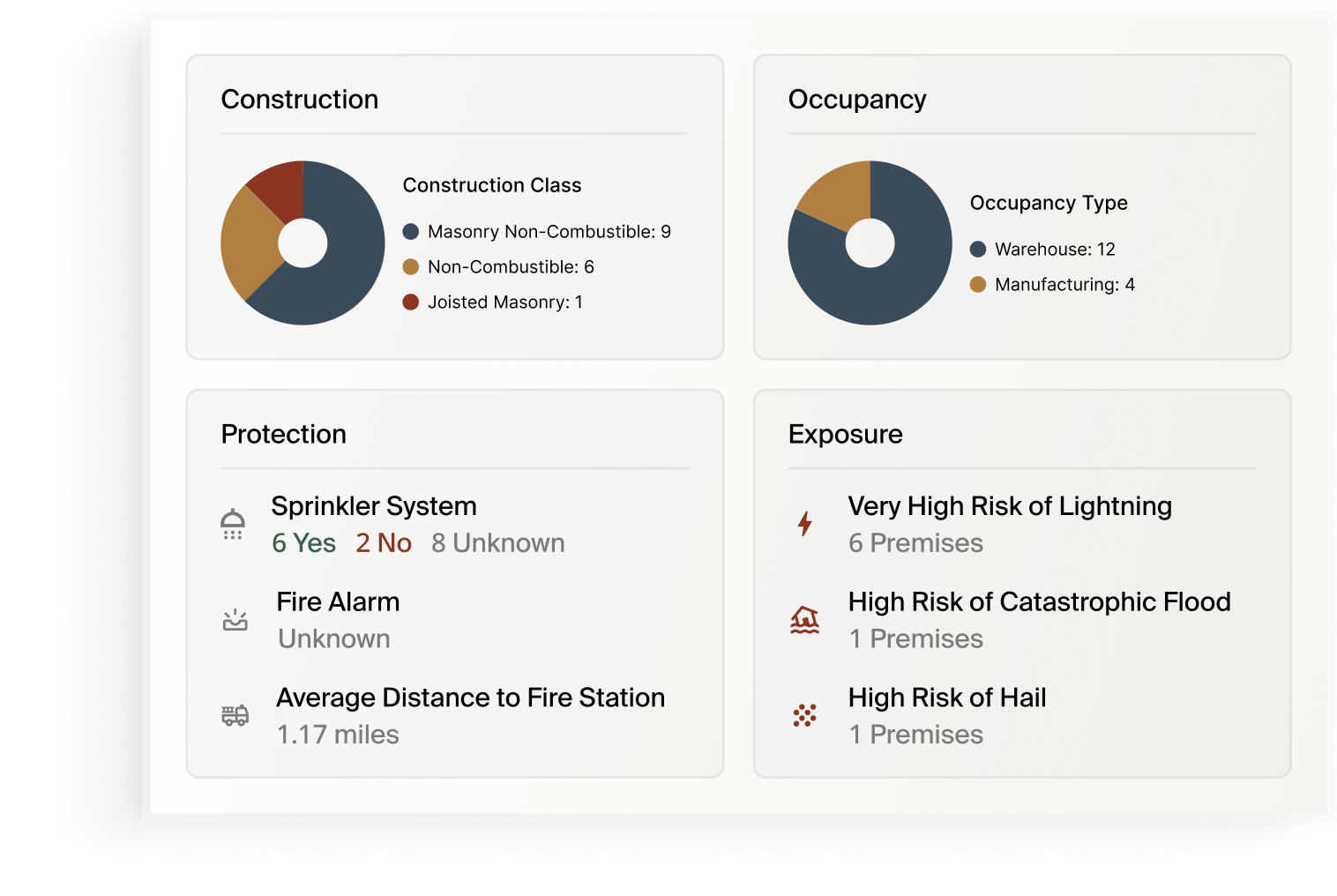
Copilot is not a single clever trick. It is the entire underwriting workflow, modularized, with AI doing the parts humans are bad at - reading fast, reading everything, never getting bored on submission number 198. A messy email becomes structured data. A business gets classified to the right NAICS code. Loss runs get extracted. Hidden exposures get surfaced. A risk gets scored, and the score comes with its reasoning attached.
The proof
The carriers who could build it themselves bought it instead.
Here is the test for any insurtech: do serious, conservative, deeply skeptical insurance companies actually run it? For Kalepa, the answer is a list. Munich Re Specialty - North America deployed Copilot for a deeper read on its exposures. Bowhead Specialty, fresh off its IPO, adopted it for risk selection. SECURA, a mutual insurer older than the airplane, chose it in 2025. Canopius and Hinterland signed on. More than fifteen carriers in total.
These are not companies that adopt software for the novelty. Bowhead's CEO Stephen Sills put it plainly: “No one has impressed us as much as Kalepa.” That is the kind of sentence an insurer says only after the procurement committee has finished trying to say no.
The mission
Trust, restored to a business built on it.
Insurance is a promise: pay now, and we will be there when the worst happens. That promise only holds if the people making it can actually see the risk they are taking on. Mispriced risk does not just hurt a carrier's quarter - it erodes the thing the whole industry runs on. Kalepa's stated mission, “professional-grade AI for profitable underwriting,” is really an argument about trust: better-informed decisions make for promises that can be kept.
The company's culture follows from the work. It hires people who understand both deep technology and financial services - a rarer combination than it should be - and spreads them across more than ten countries. The discipline it sells is the discipline it claims to practice: don't guess, show your reasoning, keep the human accountable for the call.
The competitive landscape, briefly
Kalepa shares the field with insurtech names like Cytora, Akur8, Planck, Federato, Send, and Convr - plus the most stubborn competitor of all, the carrier's own in-house tooling. The differentiator Kalepa leans on is breadth: not one module, but the full submission-to-bind workflow, with the reasoning exposed at every step.
The hardest rival to beat is always “the way we already do it.”
Why it matters tomorrow
The Tuesday morning, rewritten.
Return to that underwriter and the Ohio restaurant. In the old version, the deep fryer stays hidden, the expired lease never surfaces, and the policy gets priced on a guess dressed up as expertise. In Kalepa's version, the risk arrives pre-read. The underwriter spends the saved hour on the thing only a human can do: deciding whether this is a risk worth taking, and what it is worth.
That is the change Kalepa is after - not fewer underwriters, but underwriters pointed at the part of the job that actually requires them. As more carriers wire AI into the point of decision, the quiet advantage goes to whoever reads the most, the fastest, with the clearest reasoning. Kalepa has spent since 2018 making the case that this is a reading problem with a solvable answer. The list of carriers running Copilot suggests the industry is starting to agree. The coffee, for the record, still gets cold.