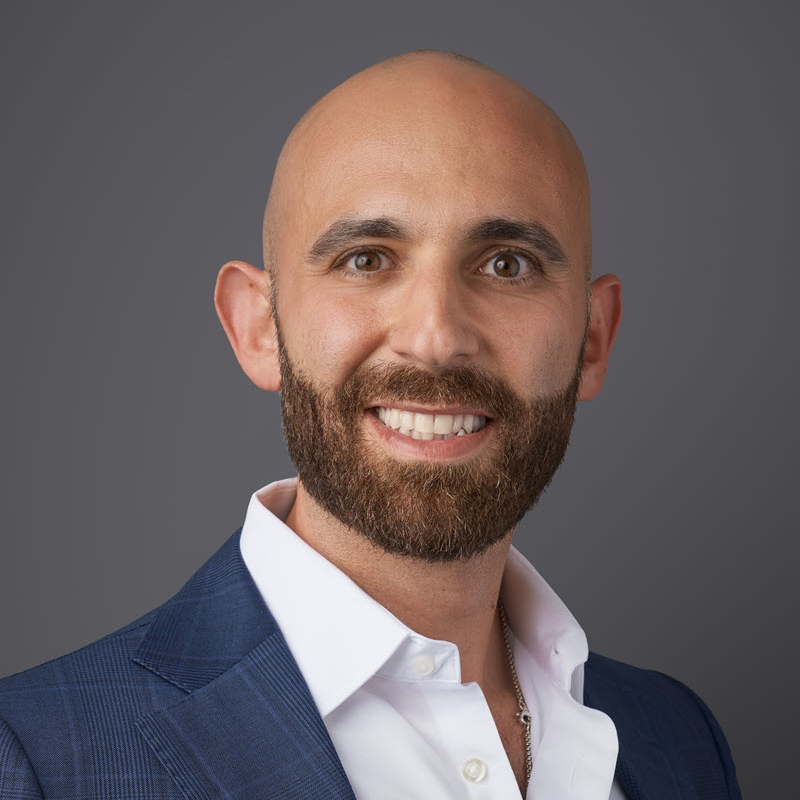
Alex Kamenetskiy is the Managing Director, COO and CFO of Munich Re Ventures, the venture arm of a 145-year-old German reinsurer that, on paper, has no business being good at venture capital. Insurance balance sheets are about controlling tail risk. Venture is about embracing it. The two don't usually like each other.
And yet, since Kamenetskiy walked into the Embarcadero offices in 2018, MRV has gone from a $50 million off-balance-sheet line of capital to a multi-fund, billion-dollar platform writing checks alongside Lightspeed and the rest of Sand Hill Road. The team grew from seven to thirty. The cadence changed. The way the firm read its own portfolio changed.
He is not the dealmaker on the magazine covers. He is the one writing the operating manual underneath. The job description on the Munich Re website reads, simply: Managing Director, COO/CFO. Three titles. One pair of hands.
Ask anyone in corporate venture what the hardest part of the job is and they will tell you: not the deals. The deals are the fun part. The hard part is convincing a regulated parent company that a fund needs to behave like a fund, not like a department. Founders need term sheets in days, not quarters. LPs - even when the LP is your own corporate parent - need reporting that looks institutional. The back office has to be invisible and unbreakable at the same time.
This is the job Kamenetskiy walked into. He had done a version of it before.
Before Munich Re, he was a founding member of MGV - Monsanto Growth Ventures - which Monsanto stood up to invest in the next generation of agtech and climate tools. There were two original members. Kamenetskiy was one of them. He built the operations. He sat on deal teams. He helped invest in more than ten companies. And then, in a move that tells you something about how he thinks, he left the venture side of the table to go work inside one of the portfolio companies. The Climate Corporation, which Monsanto eventually acquired for around a billion dollars, hired him as Finance & Supply Chain Lead. He used the seat to open Brazil. He used it to open Europe.
Then he did the MBA at Olin, the business school at Washington University in St. Louis, on top of an undergraduate degree from Indiana's Kelley School of Business. Two solid Midwestern finance programs. A line of green-eyeshade training underneath the Patagonia vest.
When Munich Re Ventures came calling, the resume mattered, but the angle mattered more. He had been the analyst building the model. He had been the operator missing payroll runway by a week. He had sat in board meetings on both sides of the door. A firm that intended to compete with institutional VCs needed someone who knew what an institutional VC's back office actually looked like - and Kamenetskiy had built one already.
The quote is small. The discipline behind it is not. The pitch that most corporate venture units make to founders - "we are like the others, but with strategic value" - tends to fall apart in the operating details. Slow signing. Layered approvals. Reporting requirements that founders read as fishing expeditions. The reason MRV gets quoted as one of the better-run corporate venture programs is that the operating details don't fall apart.
Global Corporate Venturing, the industry trade publication, named him one of its 50 Emerging Leaders in 2023. A year later, he was promoted again, formally moving into the Managing Director title. By then the joke inside the firm was that "COO" stood for "Closes Operations Overnight."
The portfolio reads like a tour of the next decade's risk surfaces. Cybersecurity and privacy. Climatetech. Healthtech. Insurtech. The future of transportation. These are not random themes - they are the things a global reinsurer wakes up worrying about, dressed up in venture clothes. Munich Re writes policies on cyber breaches; MRV invests in the startups trying to prevent them. The parent worries about climate-driven catastrophes; the fund backs the companies modeling them. The strategy is so legible you could explain it to a board in two sentences. The execution is harder, and that is the part Kamenetskiy owns.
If there is a unifying philosophy in the way he talks about building the firm, it is a wariness of ego. He hires for the hang. He has said, in print, that he looks for people he would actually want to spend time with - that culture, not raw resume, is what scales. The phrase he reaches for is "family-like environment." It is the kind of phrase that, in most firms, is wallpaper. At MRV the headcount went from seven to thirty in roughly the period the rest of venture spent firing people. So the wallpaper is doing some work.
There is also the matter of geography. He runs the COO/CFO function out of San Francisco, for a fund whose ultimate parent is in Munich. Time zones do not care about your culture deck. Half of his job is being the translation layer - between American venture pace and German actuarial rigor, between a founder's pitch and a treasury committee's framework. He does this without making a scene of it, which is, of course, the whole skill.
You can read the rise of Munich Re Ventures in a single chart: a line that bends from $50M to $1B+ across four years and keeps going. You can also read it in what isn't there. There is no public blow-up. No headline-grabbing implosion. No partner walking out the door to start a fund-of-one. The story is the absence of story. Which, for a CFO, is the highest compliment available.
What's next is easy enough to map. The firm has its sectors. The platform has its scale. The team has its bench. The interesting question is whether the model - a reinsurer-backed CVC behaving like an institutional VC, run by an operator-turned-investor with a finance background - becomes the template other carriers copy. The smart money says yes, eventually. The smart money usually says yes about Munich Re.
And somewhere on the eighteenth floor of 2 Embarcadero Center, the man who built the operating spine of the thing is, presumably, doing what he has done every quarter for eight years: closing the books, hiring slowly, defending the culture, and refusing to let the back office become a story.