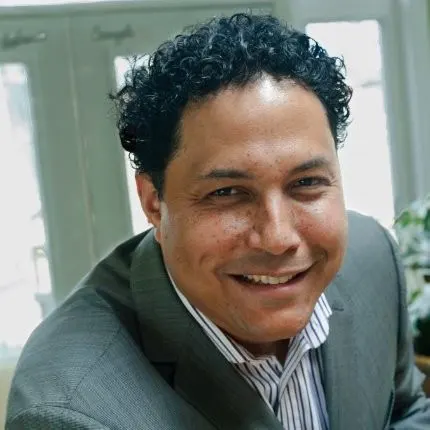
The Story
A policy you can buy for one afternoon
Insurance, as an industry, mostly sells you protection you do not need. You buy a full year of auto coverage for a car that sits in a garage six days a week. You buy homeowners coverage that quietly assumes you would never dream of letting a stranger sleep in the spare room. The product is priced for the average, and the average person is a fiction. Tim Attia, an electrical engineer by training, looked at this arrangement and did the thing engineers do, which is to ask why the system was built this way and whether it could be built differently.
The answer he arrived at, and the company he built around it, is Slice Labs. Attia co-founded Slice in New York in 2015 and has run it as CEO since that October. The pitch is deceptively small: insurance you buy for the hour, the shift, the single stay - pay-per-use, on-demand, bite-size coverage that switches on the moment you need it and off the moment you do not. In 2017 Slice sold what has been described as the first on-demand insurance product in the United States, aimed at homeshare hosts renting out their spare bedrooms, backed by the reinsurance giant Munich Re. It also began testing pay-per-use coverage for rideshare drivers ferrying passengers for Uber and Lyft.
This is a more radical idea than it sounds, because insurance is not really a product. It is a regulated promise, priced by actuaries, sold through agents, and settled through a claims process that everyone involved has agreed to find tedious. To sell a policy that lasts three hours, you have to rebuild all of that machinery so it can turn on and off in real time, price a risk that only exists sometimes, and pay a claim without a human touching it. Attia's bet was that the plumbing could be rebuilt, and that the on-demand economy - the drivers, the hosts, the gig workers - was a market that traditional carriers had structurally no way to serve.
Insurance products must be tailored and designed for the digital age with the customer experience at the forefront of everything.
Tim Attia
What Slice became is less a consumer insurance brand than a set of rails. Its Insurance Cloud Services platform - ICS, in the company's shorthand - lets established insurers and technology companies spin up digital insurance products quickly: ideate, experiment, test, deploy, in weeks rather than the years the industry is used to. The customer names on the other end of those rails are not small. Slice has launched digital products including contractors general liability, cyber and homeshare insurance in partnership with AXA XL, Progressive, Lenovo and Microsoft. If you have bought a certain kind of embedded coverage inside an app in the last few years, there is a reasonable chance the machinery underneath it traced back, in some form, to the model Attia was selling.
The claims process got the same treatment. Slice launched automated claims settlement - a claim filed, assessed and paid without the customer waiting on hold or the insurer paying an adjuster to shuffle paper. Attia's framing of why is characteristically first-person: the team, he said, redesigned the claims experience into one they would want for themselves. Easy, transparent, intuitive, frictionless. It is a low bar that the insurance industry has spent a century failing to clear, and stating it as an ambition is, in context, mildly subversive.
The Engineer's Instinct
From McGill circuits to insurance code
Attia holds a degree in electrical engineering from McGill University, and the training shows in how he talks about insurance - not as a marketing problem but as a systems problem, gaps and risks to be solved. His career before Slice was three decades of moving between the two worlds the company now tries to fuse: technology and management consulting on one side, insurance carriers on the other. He began at a large consulting firm and led CGI's Southeast U.S. operations out of Atlanta, building a foundation in insurance services delivery. In the early 2000s he co-founded Ajengo, a property-and-casualty insurance startup - an early, pre-smartphone attempt at the same instinct he would later scale.
Before founding Slice he was Executive Vice President of Sales and Marketing at BOLT Solutions, where he expanded the company's digital distribution capabilities and worked alongside co-founder Ernie Hursh, and he spent time with Exigen Insurance Solutions. He also served as a board director at Workface Inc., a customer engagement platform. It is a resume of someone who understood the incumbents from the inside well enough to know exactly which of their habits to attack. Slice is not the work of an outsider storming the castle. It is the work of someone who worked in the castle for thirty years and left with the floor plans.
Insurance companies are resilient, and they can continue to be resilient if they move quickly and decisively. If they don't, they stand the chance to be left behind.
Tim Attia, on incumbents
Culture
The business cards have no titles
Here is a detail that says more than a manifesto would. At Slice, Attia had the business cards printed with no titles on them. He explained it as a way to reaffirm the company's distributed decision-making culture - the idea that decisions should be made by whoever is closest to the problem, not whoever has the most impressive word under their name. Coming from a CEO, whose own title is the one being erased, it is either a genuine conviction or an unusually committed piece of theater. Either way, it is the kind of choice an engineer makes: strip the component that is not load-bearing.
That flatness maps onto how Attia describes the future of insurance itself, which is a future with fewer intermediaries. He has predicted the decline of traditional agent and broker distribution, the rise of automation and machine learning, and the replacement of comprehensive, year-long coverage with risk-specific policies that appear in real time, tailored to the exact circumstance. The insurance you never had to shop for, because it was already there, embedded in the buying experience you were already in.
What's Next
Teaching old carriers new tricks
A decade in, Slice has repositioned around artificial intelligence. The company now describes itself as using AI, machine learning and large language models to automate underwriting and strip out the inefficiencies that make insurance slow and expensive - real-time quoting, instant policy issuance, automated document handling, fraud detection, regulatory reporting. It is the logical extension of the original idea: if the goal was always to make insurance instant and specific, then the tools that can read, price and issue a policy in the time it takes to tap a screen are the tools you want. Attia has continued to be a visible advocate for this shift, speaking in 2025 at the William Blair Insurance, Banking & Wealth Technology Conference and appearing in InsurTech NY's MGA Lab program, where he is described as a thought leader on insurance distribution, embedded products and the evolution of MGA infrastructure.
Whether large language models should be underwriting your insurance is a question the industry is still arguing about, and reasonable people can disagree about how much of the AI framing is substance and how much is the going rate for a 2025 pitch deck. But the underlying continuity is real. Attia has spent ten years, and thirty before that, on one stubborn premise: that insurance is a system built for a world that no longer exists, and that whoever rebuilds the machinery to match how people actually live - by the hour, by the shift, on demand - gets to write the next version of it. Slice is the argument. The titleless business card is the footnote.